Neck
7 structured phenotype dimensions · drawn from peer-reviewed scales
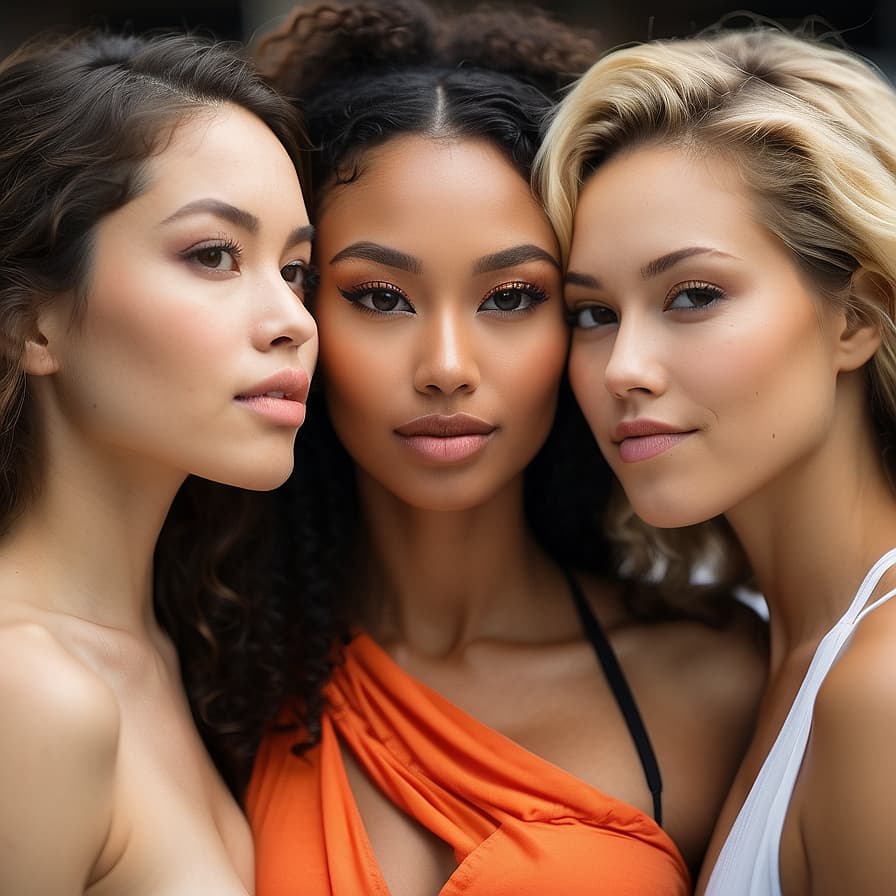
Neck
General Description: The neck is the part of the body that connects the head to the torso. It contains vital structures like the spinal cord, trachea, and blood vessels.
Ethnic Variations: Neck length and circumference can vary across different ethnic groups, influencing overall body proportions.
Cultural Significance: In some cultures, the neck is considered an aesthetic feature, with longer necks often being a beauty standard.
AI Character Design Considerations: Varied neck dimensions should be considered in AI character design to reflect the diversity of human anatomy.
Neck — taxonomy
7 dimensions · 7 photo-assessable · v1.0.0 · UBERON: UBERON:0000974
Cervical region morphology: neck length and thickness, cervicomental angle, laryngeal prominence, sternocleidomastoid visibility, posterior neck. Dimensions are drawn from craniofacial anthropometry (Farkas) and cervicofacial-aesthetics literature (Ellenbogen-Karlin, Connell). The cervicomental angle is the central aesthetic landmark of the neck region; laryngeal prominence (Adam's apple) is sex-dimorphic.
Dimensions
Neck length
photo-observableordinal · neck_length_proportional
Vertical neck length proportional to face height.
Farkas LG (1994). Anthropometry of the Head and Face, 2nd Edition. Reference: cervical length (gnathion to suprasternal notch) proportional to overall facial height.
Valid values (3)
shortShort— Neck length less than approximately 70% of facial height.averageAverage— Neck length approximately 70-100% of facial height (Farkas reference range).longLong— Neck length substantially greater than facial height; swan-neck appearance.
Neck thickness
photo-observableordinal · neck_thickness_proportional
Neck thickness relative to head width.
Aligned with sports-medicine descriptors of cervical-girth norms; reference values vary substantially with sex and training.
Valid values (3)
thinThin— Neck substantially narrower than head; minimal cervical musculature.averageAverage— Neck width proportional to head width.thickThick— Neck width approaches or exceeds head width; pronounced cervical musculature or subcutaneous fullness.
Cervicomental angle
photo-observablecategorical · ellenbogen_karlin_cervicomental
Angle between the submental plane and the anterior neck.
Ellenbogen R, Karlin JV (1980). Visual criteria for success in restoring the youthful neck. Plastic and Reconstructive Surgery, 66(6): 826-837. Reference: cervicomental angle 105-120° as the youthful aesthetic norm.
Valid values (3)
sharp_youthfulSharp / youthful (~90°)— Crisp angular transition between submental plane and neck; aesthetic ideal.balancedBalanced (~105-120°)— Within Ellenbogen-Karlin reference range.obtuse_agedObtuse / aged (>130°)— Reduced angle definition; common with submental fat or platysmal banding.
Laryngeal prominence (Adam's apple)
photo-observableordinal · thyroid_cartilage_prominence_qualitative
Visibility of the thyroid cartilage prominence. Sex-dimorphic — typically more prominent in adult-male physiognomy due to differing thyroid-cartilage angles.
Anatomic descriptor aligned with otolaryngology and gender-affirming-care literature on thyroid-cartilage prominence (chondrolaryngoplasty references).
Valid values (4)
minimalMinimal— Thyroid cartilage barely visible; typical of female adult physiognomy.moderateModerate— Visible but not pronounced thyroid cartilage.prominentProminent— Pronounced Adam's apple; typical of male adult physiognomy.very_prominentVery prominent— Substantial thyroid-cartilage projection.
Sternocleidomastoid visibility
partly photo-observableordinal · scm_visibility_qualitative
Visibility of the sternocleidomastoid muscle as a distinct surface landmark.
Aligned with surface-anatomy descriptors used in sports medicine and aesthetic-medicine literature.
Valid values (4)
not_visibleNot visible— SCM not discernible at the skin surface; soft-tissue coverage obscures muscle outline.subtleSubtle— SCM faintly visible during rotation or tension.definedDefined— SCM clearly visible at rest as a distinct landmark.highly_definedHighly defined— Pronounced SCM definition; very low body-fat percentage in the cervical region.
Platysmal banding
partly photo-observablecategorical · platysmal_band_classification
Visibility of platysmal bands — the vertical neck cords that become more visible with aging or low body-fat percentage.
Connell BF, Shamoun JM (1997). The significance of digastric muscle contouring for rejuvenation of the submental area of the face. Plastic and Reconstructive Surgery, 99(6).
Valid values (4)
absentAbsentsubtleSubtle— Platysmal cords barely visible at rest.moderateModerate— Visible cords at rest; aging-related change.markedMarked— Pronounced cords creating a 'turkey-wattle' appearance.
Neck skin quality
photo-observableordinal · neck_skin_qualitative
Skin quality in the cervical region — common site for visible aging changes.
Aligned with the Connell-Shamoun and Ellenbogen-Karlin neck-aesthetics descriptors.
Valid values (4)
smooth_youthfulSmooth / youthfulaverageAverage— Some texture or fine lines visible.loose_laxLoose / lax— Visible cervical skin laxity; redundant skin folds.wrinkledWrinkled— Pronounced cervical wrinkles or 'necklace lines'.
References (3)
- Farkas LG (1994). Anthropometry of the Head and Face, 2nd Edition. Raven Press.
- Ellenbogen R, Karlin JV (1980). Visual criteria for success in restoring the youthful neck. Plastic and Reconstructive Surgery, 66(6): 826-837.
- Connell BF, Shamoun JM (1997). The significance of digastric muscle contouring for rejuvenation of the submental area of the face. Plastic and Reconstructive Surgery, 99(6).
Top-coverage ethnic groups
Groups with the most image-grounded phenotype data — sorted by Data Depth score
- Soninken=39 · 85/100
- Tatarsn=70 · 85/100
- Uzbeksn=59 · 85/100
- Tuluvasn=52 · 84/100
- Irishn=49 · 84/100
- Iranunn=48 · 83/100
- Makassaresen=46 · 83/100
- Icelandersn=57 · 83/100
- Igbon=52 · 82/100
- Welshn=66 · 82/100
- Ibann=39 · 80/100
- Belarusiansn=62 · 80/100
- Ga-Adangben=35 · 79/100
- Estoniansn=73 · 79/100
- Javanesen=72 · 79/100
- Minangkabaun=51 · 79/100
- Mandinkan=54 · 79/100
- Tajiksn=37 · 79/100
- Ossetiansn=33 · 78/100
- Kadazan-Dusunn=33 · 78/100
- Kikuyun=34 · 78/100
- Garhwalisn=41 · 78/100
- Susun=26 · 77/100
- Tigrayansn=60 · 76/100