Estonians Erotic
Estonia, Setomaa
Uralic / Finnic / Estonian
Christianity / Protestantism
Võros, Setos
Western Europe
About Estonians People
Estonians are a Baltic-coast people whose closest cultural kin sit not south across the land border but north across the Gulf of Finland. The language gives this away immediately: Estonian is Finnic, part of the small Uralic family that includes Finnish, Karelian, and the more distant Hungarian — surrounded on the map by Indo-European Latvians, Russians, Swedes, and Germans, but linguistically unrelated to any of them. The grammar runs on fourteen cases and a vowel inventory that includes the famously difficult õ, a sound Estonians use as a kind of shibboleth.
The country itself is flat, forested, and pocked with bogs and roughly 2,200 islands, the largest being Saaremaa and Hiiumaa. Population is small — around 1.3 million — and the cultural memory of being small sits close to the surface. Estonia spent most of the past eight centuries under someone else's flag: Danish, then the Baltic German nobility under the Teutonic Order, then Swedish, then Russian, then briefly independent between the wars, then Soviet, then independent again in 1991. The Singing Revolution of the late 1980s, in which mass choral gatherings became a vehicle for restoring sovereignty, is not a metaphor Estonians use loosely. Song festivals — the laulupidu — still draw tens of thousands of singers every five years.
Religion is officially Lutheran, a legacy of the Reformation reaching the region through German-speaking landlords in the sixteenth century, but Estonia is one of the least religiously observant countries in Europe by survey measure. Older folk belief, with its sacred groves and forest spirits, never fully receded; it coexists comfortably with a secular present.
The internal branches matter. The Võros of the southeastern uplands speak Võro, distinct enough from standard Estonian that it is treated by many linguists as a separate Finnic language rather than a dialect; it has its own literary tradition and orthography. The Setos, across the southeastern frontier in Setomaa — a region split by the Estonian-Russian border — are Orthodox rather than Lutheran, a remnant of having lived for centuries under the Pskov church rather than the Baltic German one. Seto culture keeps a polyphonic women's singing tradition called leelo, recognized by UNESCO, and a ceremonial king elected once a year as the earthly stand-in for an absent patron saint. These are not folkloric relics — they are practiced.
Typical Estonians Phenotypes
Reference for AI generation — hair, eyes, skin, facial structure, build
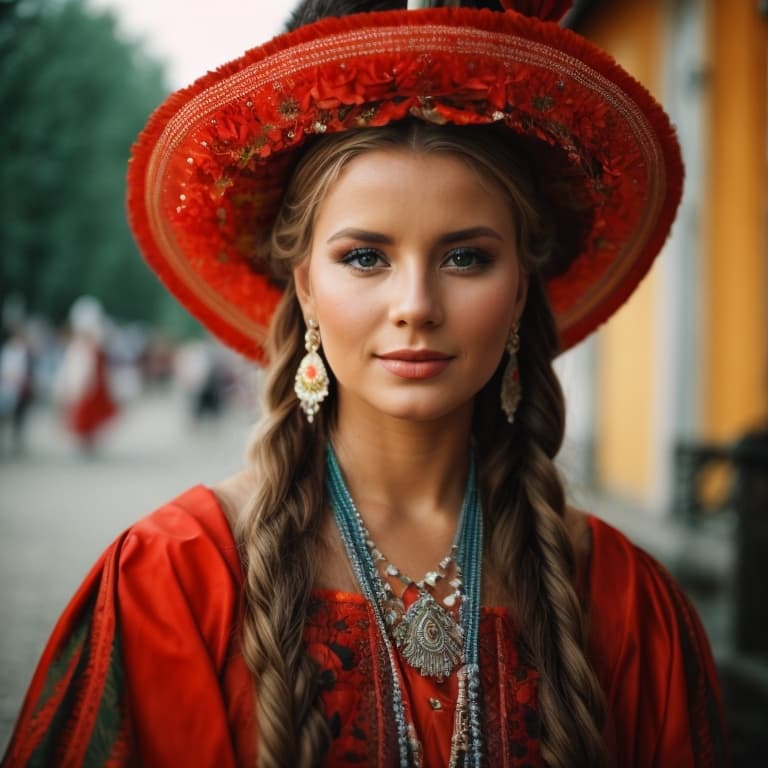
Estonians sit at the pale, flaxen-northern end of the European phenotype range — closer to Finns and coastal Swedes than to their Latvian or Russian neighbors, with the structural lightness that comes from a Finnic founding population layered with several centuries of Baltic-German and Swedish admixture along the coast. Hair runs predominantly blond to ash-blond in childhood, often darkening to mid- or dark-blond in adulthood; light brown is common, true black rare. Texture is overwhelmingly straight to softly wavy, fine in diameter, and tends to lose pigment early — silvering by the late thirties is unremarkable. Natural red occurs at low but visible rates, usually as auburn rather than copper.
Eyes are predominantly light: blue and grey-blue dominate, hazel and green appear regularly, and brown is the minority phenotype, more often seen toward the southeast among Setos and Võros. The eye shape is set wide with a flat or absent epicanthic fold and a relatively low-set, often slightly hooded upper lid — a Finnic signature. Skin runs Fitzpatrick I–II, cool-toned, freckles readily, and burns before it tans; rosacea-prone flushing across the cheeks and nose is common in adulthood.
The facial structure is typically broad and flat-planed: high, wide cheekbones, a comparatively short midface, a straight nose with a low-to-medium bridge and narrow alar base, and a squared jaw rather than a tapered one. Lips tend toward thin to medium, with a defined cupid's bow. Build is tall and long-limbed — Estonian women are among the tallest in the world, and supermodel Carmen Kass is a fair anchor for the lean, long-torsoed, small-busted proportions seen in the population. Men carry the same vertical build with broader shoulders and lower body fat than southern European averages.
Setos and Võros in the southeast show a slightly heavier brow, more frequent brown eyes, and darker hair on average, reflecting older Finnic-Slavic contact zones; coastal and island Estonians trend lighter and more Scandinavian in profile.
Data depth
79/100Coverage of image-grounded phenotype observations · drives AI generation diversity
- Sample size
- 40/40· 73 images
- Image quality
- 24/30· 48% high
- Confidence
- 15/20· mean 0.72
- Source diversity
- 0/10· wikipedia
- ·Wikipedia-only source — not population-representative
Observed Distribution — Image Sample
Empirical observations from analyzed photographs · supplementary signal, not population truth
Sample: 73 images analyzed (73 wikipedia). Quality: 35 high, 33 medium, 4 low, 1 very_low. Avg analyzer confidence: 0.72.
Skin tone (Fitzpatrick): II (90%), III (4%), unclear (5%)
Hair color: gray/white (59%), black (12%), blonde (11%), light/medium brown (8%), other (4%), dark brown (1%), unclear (4%)
Hair texture: straight (73%), wavy (11%), bald (4%), shaved (7%), covered (1%), unclear (4%)
Eye color: blue (44%), dark brown (10%), hazel (8%), brown (3%), other (1%), green (1%), unclear (33%)
Epicanthic fold: 0% present, 92% absent, 8% unclear
Caveats: Sample is 100% Wikipedia notable people — skews toward male, public-life, and modern figures, not population-representative.
Last aggregated: May 7, 2026
Explore phenotype categories
Structured taxonomy with peer-reviewed scales · 22 anatomical categories
Notable Estonians People
100 reference figures — sourced from Wikipedia
- Andres Alver — born 1953)
- Dmitri Bruns — 1929–2020)
- Karl Burman — 1882–1965)
- Eugen Habermann — 1884–1944)
- Georg Hellat — 1870–1943)
- Otto Pius Hippius — 1826–1883)
- Erich Jacoby — 1885–1941)
- Herbert Johanson — 1884–1964)
- Peep Jänes — born 1936)
- Louis I. Kahn — 1901–1974) (USA)
- Raine Karp — born 1939)
- Alar Kotli — 1904–1963)
- Edgar-Johan Kuusik — 1888–1974)
- Ernst Gustav Kühnert — 1885–1961)
- Vilen Künnapu — born 1948)
- Elmar Lohk — 1901–1963)
- Ülar Mark — born 1968)
- Margit Mutso — born 1966)
- Robert Natus — 1890–1950)
- Uno Prii — 1924–2000)
- Raivo Puusepp — born 1960)
- Jacques Rosenbaum — 1878–1944)
- Eugen Sacharias — 1906–2002)
- Olev Siinmaa — 1881–1948)
- Elmar Tampõld — 1920–2013)
- Hardo Aasmäe — 1951–2014), geographer, politician, encyclopedist
- Friedrich Akel — 1871–1941), politician, former head of state
- Andrus Ansip — born 1956), politician, former prime minister
- Jaan Anvelt — 1884–1937), politician
- Ado Birk — 1883–1942), politician
- Kaarel Eenpalu — Karl Einbund, 1888–1942), politician, former head of state
- Ene Ergma — born 1944), politician
- Magnus Gabriel De la Gardie — 1622–1686), politician (Sweden)
- Karoli Hindriks — born 1983), entrepreneur
- Toomas Hendrik Ilves — born 1953), journalist, politician, former president
- Ernst Jaakson — 1905–1998), diplomat
- Jüri Jaakson — 1870–1942), politician, former head of state
- Steve Jurvetson — born 1967), businessman (United States)
- Kaja Kallas — born 1977), politician, former prime minister
- Siim Kallas — born 1948), politician, former prime minister
- Carmen Kass — born 1978), supermodel, businesswoman, and politician
- Tunne Kelam — born 1936), politician
- Tõnis Kint — 1896–1991), politician, prime minister in exile
- August Koern — 1900–1989), diplomat, foreign minister in exile
- Juhan Kukk — 1885–1942), politician, former head of state
- Mart Laar — born 1960), historian, politician, former prime minister
- Rein Lang — born 1957), journalist, businessman, politician
- Robert Lepikson — 1952–2006), businessman, politician
- Elmar Lipping — 1906–1994), politician, foreign minister in exile
- Hjalmar Mäe — 1901–1978), politician, head of self-administration during German occupation
- Tiit Made — born 1940), journalist, politician
- Linnart Mäll — 1938–2010), orientalist, politician
- Harry Männil — 1920–2010), businessman, art collector
- Heinrich Mark — 1911–2004), politician, former prime minister in exile
- Jaan Manitski — born 1942), businessman, politician, former foreign minister
- Lennart Meri — 1929–2006), writer, filmmaker, foreign minister, president
- Jüri Mõis — born 1956), businessman, politician
- Ülo Nugis — 1944–2011), politician, economist
- Kristiina Ojuland — born 1966), politician, former foreign minister
- Lembit Öpik — born 1965), politician (United Kingdom)
- Rein Otsason — 1931–2004), economist, businessman
- Siiri Oviir — born 1947), politician
- Ivari Padar — born 1965), politician
- Tõnis Palts — born 1953), politician, businessman
- Arvi Parbo — Sir Arvi Parbo (1926–2019), businessman (Australia)
- Juhan Parts — born 1966), politician, former prime minister
- Leida Peips — born 1937), milker and political figure
- Ants Piip — 1885-1942), politician, former head of state
- Jüri Pihl — 1954-2019), politician
- Konstantin Päts — 1874–1956), journalist, politician, first president of Estonia
- Jaan Poska — 1866–1920), diplomat, politician
- Jüri Ratas — born 1978), politician, former prime minister
- August Rei — 1886–1963), diplomat, politician, former head of state, prime minister in exile
- Alfred Rosenberg — 1893–1946), politician, ideologist, war criminal (Nazi Germany)
- Arnold Rüütel — born 1928), agricultural manager, politician, former president
- Edgar Savisaar — born 1950), politician, former prime minister
- Mart Siimann — born 1946), politician, former prime minister
- Johannes Sikkar — 1897–1960), politician
- Artur Sirk — 1900–1937), officer, lawyer, politician
- Otto Strandman — 1875–1941), politician, former head of state
- Rein Taagepera — born 1933), political scientist, politician
- Jaak Tamm — 1950–1999), politician
- Andres Tarand — born 1940), politician, former prime minister
- Indrek Tarand — born 1964), politician, journalist
- Enn Tarto — 1938–2021), anti-Soviet dissident, politician
- Otto Tief — 1889–1976), military officer, politician
- Jaan Tõnisson — 1868–1941?), journalist, politician
- Anton Uesson — 1879–1942), politician, engineer
- Jüri Uluots — 1890–1945), lawyer, politician
- Priit Willbach — born 1953), businessman, politician
- Jüri Vilms — 1889–1918), lawyer, politician, first deputy prime minister
- Tiit Vähi — born 1947), businessman, politician, former prime minister
- Aleksander Warma — 1890–1970), navy officer, diplomat, prime minister in exile
- Julius Aamisepp — 1883–1950), agricultural scientist
- Johannes Aavik — 1880–1973), linguist
- Jüri Allik — born 1949), psychologist
- Paul Ariste — 1905–1990), linguist
- Karl Ernst von Baer — 1792–1876), biologist
- Girsh Blumberg — born 1959), American - Estonian experimental physicist
- Karl Ernst Claus — 1796–1864), chemist
Generate Estonians AI Content
Use this ethnicity's phenotype data to create AI-generated content with accurate physical traits and cultural context.
Open Creator Studio