
Austrians Erotic
Austria, South Tyrol
Indo-European / Germanic / German / Bavarian
Christianity / Catholicism
Significant populations in United States, Canada, and Australia
Western Europe
About Austrians People
Austrians are German-speaking, but the German they speak is mostly Bavarian — the same dialect continuum that runs across the border into southern Germany and down into South Tyrol in northern Italy. That linguistic fact tells you most of what you need to know about how Austrians sit in the map of Europe: closer in everyday speech to Munich than to Hamburg, and culturally entangled with the Alpine south more than with the North Sea Protestant world. Standard German is the written and broadcast register, but in homes, pubs, and small towns the Bavarian-Austrian dialects do the actual work, and the gap between dialect and standard can be wide enough that northern Germans sometimes need subtitles.
The country itself is the rump of something much larger. For centuries Austria was the seat of the Habsburg empire, an institution that ruled Czechs, Hungarians, Croats, Italians, Poles, Slovenes, and others from Vienna and left a deep multi-ethnic residue in the capital — surnames, food, music, manners — that distinguishes Vienna from the alpine provinces west of it. The 1918 collapse cut the empire down to a small German-speaking core, and 1938's Anschluss folded that core briefly into Nazi Germany; postwar Austria rebuilt around an explicit identity of not being German, which is why insisting on Austrians as a distinct nationality rather than a regional flavor of Germans is a live political stance, not a pedantic one.
Catholicism is the historical ground beneath nearly everything — the baroque churches in every village, the holiday calendar, the wayside crosses on hiking trails, the saint-day names — though active religious practice has thinned, and the cultural Catholicism of Austria today coexists with a fairly secular daily life. South Tyrol, now part of Italy but German-speaking and culturally Austrian, remains a sore spot in the national memory: it was severed in 1919, Italianized hard under Mussolini, and is today a protected autonomous province where Austrian identity persists in language and custom.
The diaspora — substantial communities in the United States, Canada, and Australia — mostly reflects two waves: Habsburg-era and interwar economic migration, and the postwar exodus of Jewish Austrians and political refugees. Distinctive habits worth noting: a serious coffeehouse culture in which sitting for hours over one melange is the entire point, a formal mode of address that uses academic and professional titles more rigorously than almost anywhere else in Europe, and a strong regionalism in which a Tyrolean and a Burgenländer think of themselves as quite different sorts of people before they think of themselves as Austrian.
Typical Austrians Phenotypes
Reference for AI generation — hair, eyes, skin, facial structure, build
Austrian phenotype sits squarely in the Central European Alpine range, closer to Bavarian and Swiss-German populations than to the lighter Nordic cluster to the north. Hair runs predominantly mid-brown to dark brown, with a meaningful minority of dark blond and a smaller share of natural black; pure flaxen blond is uncommon outside childhood. Texture is typically straight to lightly wavy, fine to medium in thickness. Greying tends toward a clean salt-and-pepper rather than yellowing — visible in older actors like Klaus Maria Brandauer and Christoph Waltz.
Eye color is mixed: blue and grey-blue are common but not dominant, hazel and green together likely account for the largest share, and warm brown is well represented, particularly in the south and east. Eyelids are standard European with no epicanthic fold; lash line and brow tend toward defined rather than heavy. Skin is Fitzpatrick II–III, with neutral to slightly warm undertones — paler and pinker in Tyrolean and Vorarlberg populations near the Swiss border, marginally olive-tinged in the southeast toward Styria, Carinthia, and South Tyrol where Slavic and northern Italian admixture is older and visible.
Facial structure trends toward a straight to slightly aquiline nose with a moderate, well-defined bridge and narrow alar base — the Alpine "Roman-leaning" profile rather than the snub Nordic shape. Cheekbones are present but not high or wide; jaws are squared in men, soft-angled in women. Lips are medium, with the upper lip often thinner than the lower. Stature averages around 179 cm for men and 166 cm for women, with a robust, broad-shouldered Alpine build — Schwarzenegger is an outlier in mass but not in frame proportions.
Sub-group variation is mostly geographic rather than ethnic. South Tyroleans skew slightly darker in hair and eye and a touch more olive in skin; Vorarlbergers and western Tyroleans are paler and more Alemannic; Viennese populations, with centuries of Czech, Hungarian, and Balkan inflow, show the widest internal range — darker hair, broader eye-color spread, and more variable facial proportions than the rural west.
Data depth
76/100Coverage of image-grounded phenotype observations · drives AI generation diversity
- Sample size
- 40/40· 80 images
- Image quality
- 26/30· 53% high
- Confidence
- 10/20· mean 0.69
- Source diversity
- 0/10· wikipedia
- ·Wikipedia-only source — not population-representative
Observed Distribution — Image Sample
Empirical observations from analyzed photographs · supplementary signal, not population truth
Sample: 80 images analyzed (80 wikipedia). Quality: 42 high, 31 medium, 7 low, 0 very_low. Avg analyzer confidence: 0.69.
Skin tone (Fitzpatrick): II (84%), III (6%), V (3%), unclear (8%)
Hair color: gray/white (46%), black (29%), blonde (10%), light/medium brown (6%), dark brown (5%), red/auburn (1%), unclear (3%)
Hair texture: straight (39%), wavy (44%), curly (6%), coily (1%), bald (3%), shaved (1%), covered (6%)
Eye color: dark brown (28%), blue (16%), hazel (10%), brown (5%), green (3%), other (1%), unclear (38%)
Epicanthic fold: 0% present, 93% absent, 8% unclear
Caveats: Sample is 100% Wikipedia notable people — skews toward male, public-life, and modern figures, not population-representative.
Last aggregated: May 7, 2026
Explore phenotype categories
Structured taxonomy with peer-reviewed scales · 22 anatomical categories
Notable Austrians People
100 reference figures — sourced from Wikipedia
- Helmut Berger — 1944–2023), actor
- Senta Berger — born 1941), actress
- Klaus Maria Brandauer — born 1943), actor
- Wolfgang Cerny — born 1984), actor
- Marie Geistinger — 1836–1903), actress and opera singer
- Gilla — born 1950), also known as Gisela Wuchinger; singer and actor from the disco era
- Käthe Gold — 1907–1997), stage actress
- Liane Haid — 1895–2000), first Austrian movie star
- Attila Hörbiger — 1896–1987), actor
- Christiane Hörbiger — 1938–2022), actress
- Paul Hörbiger — 1894–1981), actor
- Maria Hofstätter — born 1964), actress
- Boris Kodjoe — born 1973), actor
- Melanie Kogler — born 1985), television and theatre actress
- Brigitte Kren — born 1954), actress
- Hedy Lamarr — 1914–2000), actress; also co-inventor of spread spectrum radio technology; be…
- Karl Merkatz — 1930–2022), actor (most notable for his role as a Viennese in "Mundl")
- Birgit Minichmayr — born 1977), actress
- Hans Moser — 1880–1964), comedy actor
- Reggie Nalder — 1907–1991), actor
- Nina Proll — born 1974), actress
- Maximilian Schell — 1930–2014), actor
- Arnold Schwarzenegger — born 1947), bodybuilder, actor, became U.S. citizen, governor of the U.S. sta…
- Ursula Strauss — born 1974), actress
- Erich von Stroheim — 1885–1957), actor and film director
- Christoph Waltz — born 1956), actor
- Maria Weiss — mezzo-soprano and actress
- Oskar Werner — 1922–1984), actor
- Sybil Danning — 1952 Actor, producer, writer
- Maria Auböck — born 1951), landscape architect
- Bernhard Cella — born 1969), conceptual artist
- Johann Georg Danninger — 19th-century bronzesmith
- Karl Duldig — 1902–1986), Austrian-Australian sculptor
- Albin Egger-Lienz — 1868–1926), painter
- Karl Ehn — 1884–1957), architect, designer of the Karl-Marx-Hof
- Trude Fleischmann — 1895–1990), photographer
- Ernst Fuchs — 1930–2015), artist
- Xenia Hausner — born 1951), painter
- Gottfried Helnwein — born 1948), artist, born in Vienna
- Kurt Hentschlager — born 1960), new media artist
- Friedensreich Hundertwasser — 1928–2000), artist
- Gustav Klimt — 1862–1918), artist, helped found Vienna Secession
- Oskar Kokoschka — 1886–1980), painter
- Alfred Kubin — 1877–1959), graphic artist
- Adolf Loos — 1870–1933), architect, born in Brno (Moravia, present-day Czech Republic)
- Josef Lorenzl — 1892–1950), sculptor
- Hans Makart — 1840–1884), history painter, designer and decorator
- Inge Morath — 1923–2002), photographer
- Richard Neutra — 1892–1970), architect
- Josef Pögl — 1867–1956), painter, winner of the Vienna Arts Prize
- Wolf Prix — born 1942), architect, co-founder of Coop Himmelb(l)au
- Willy Puchner — born 1952), photographer
- Arnulf Rainer — 1929–2025), painter
- Johann Michael Rottmayr — 1656–1730), Baroque painter
- Egon Schiele — 1890–1918), painter
- Margarete Schütte-Lihotzky — 1897–2000), architect and political activist
- De Es Schwertberger — born 1942), artist
- Harry Seidler — 1923–2006), architect
- Helmut Swiczinsky — 1944–2025), architect, co-founder of Coop Himmelb(l)au
- Aloys Wach — 1892–1940), painter
- Otto Wagner — 1841–1918), Jugendstil architect behind much of turn-of-the-century Viennese …
- Ferdinand Georg Waldmüller — 1793–1865), painter
- Felix de Weldon — 1907–2003), sculptor
- Franz West — 1947–2012), artist
- Olga Wisinger-Florian — 1844–1926), painter
- Wolfgang Ambros — born 1952), pop musician
- Louie Austen — born 1946), composer and musician
- Ernst Bachrich — 1892–1942), composer and conductor
- Caroline Bayer — 1758–1803), 18th-century violinist and composer
- Alban Berg — 1885–1935), composer
- Alfred Brendel — 1931–2025), pianist
- Anton Bruckner — 1824–1896), composer
- Friedrich Cerha — 1926–2023), composer and conductor
- Carl Czerny — 1791–1857), pianist and composer
- Anton Diabelli — 1781–1858), publisher, editor and composer
- Carl Ditters von Dittersdorf — 1739–1799), composer
- Karlheinz Essl — born 1960), composer and electronic musician
- Falco — 1957–1998), pop musician
- Christian Fennesz — born 1962), electronic musician
- Bernhard Gál — born 1971), composer and artist
- Georg Friedrich Haas — born 1953), composer
- Natascha Hagen — born 1974), singer-songwriter
- Nikolaus Harnoncourt — 1929–2016), conductor
- Joseph Haydn — 1732–1809), composer
- Michael Haydn — 1737–1806), composer, younger brother of Joseph Haydn
- Yung Hurn — born 1995), hip-hop musician
- Udo Jürgens — 1934–2014), singer-songwriter
- Herbert von Karajan — 1908–1989), conductor
- Bernhard Lang — born 1957), composer
- Thomas Lang — born 1967), drummer and composer
- Joseph Lanner — 1801–1843), composer
- Left Boy — born 1988), singer
- Elisabeth Leonskaja — born 1945), pianist, Austrian Cross of Honour for Science and Art, First Clas…
- Gustav Mahler — 1860–1911), composer
- Marianne von Martinez — 1744–1812), composer, singer
- Penny McLean — born 1948), singer with the disco group Silver Convention
- Wolfgang Amadeus Mozart — 1756–1791), musician and composer
- Olga Neuwirth — born 1968), composer
- Gerhard Potuznik — electronic musician
- César Sampson — born 1983), singer
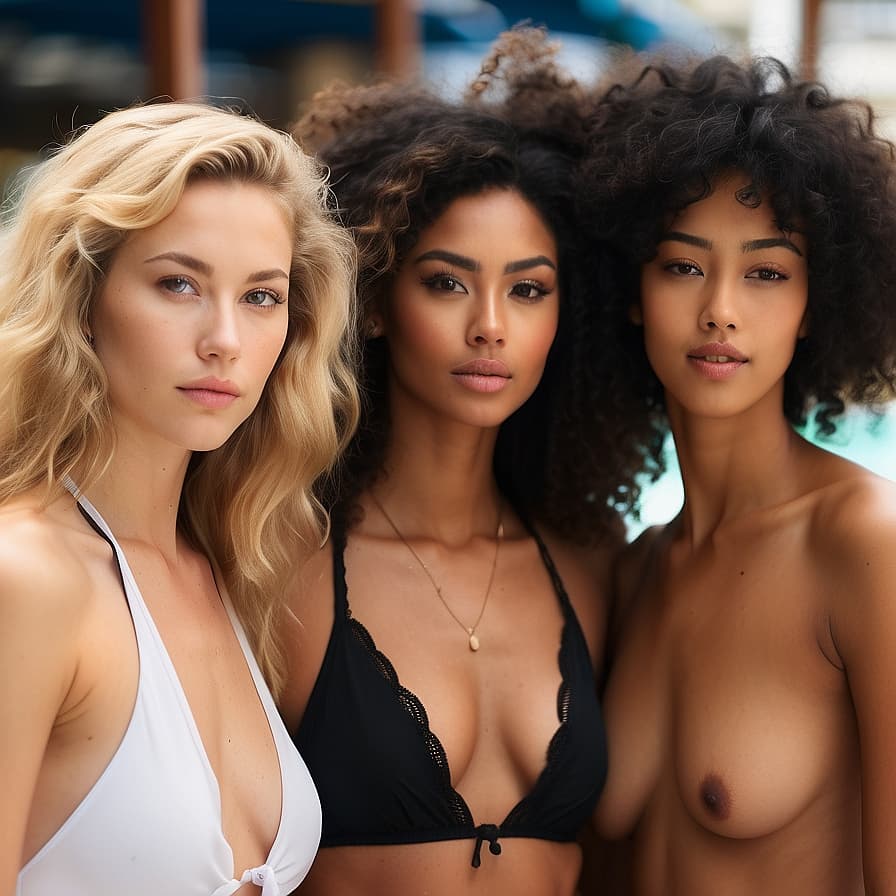
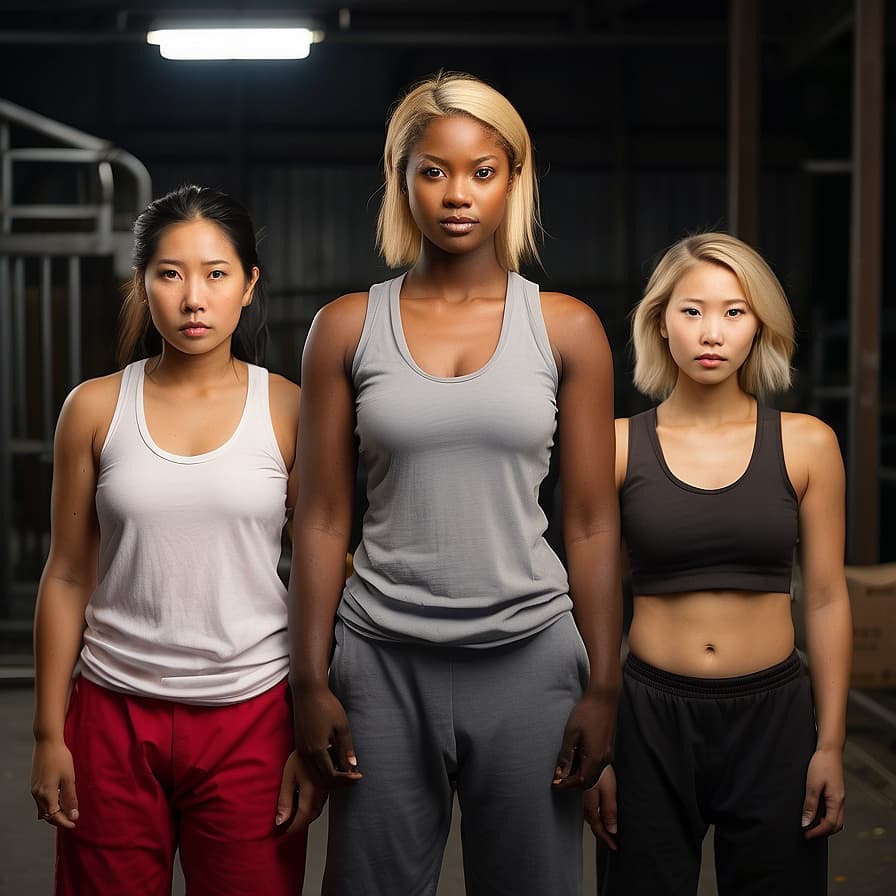
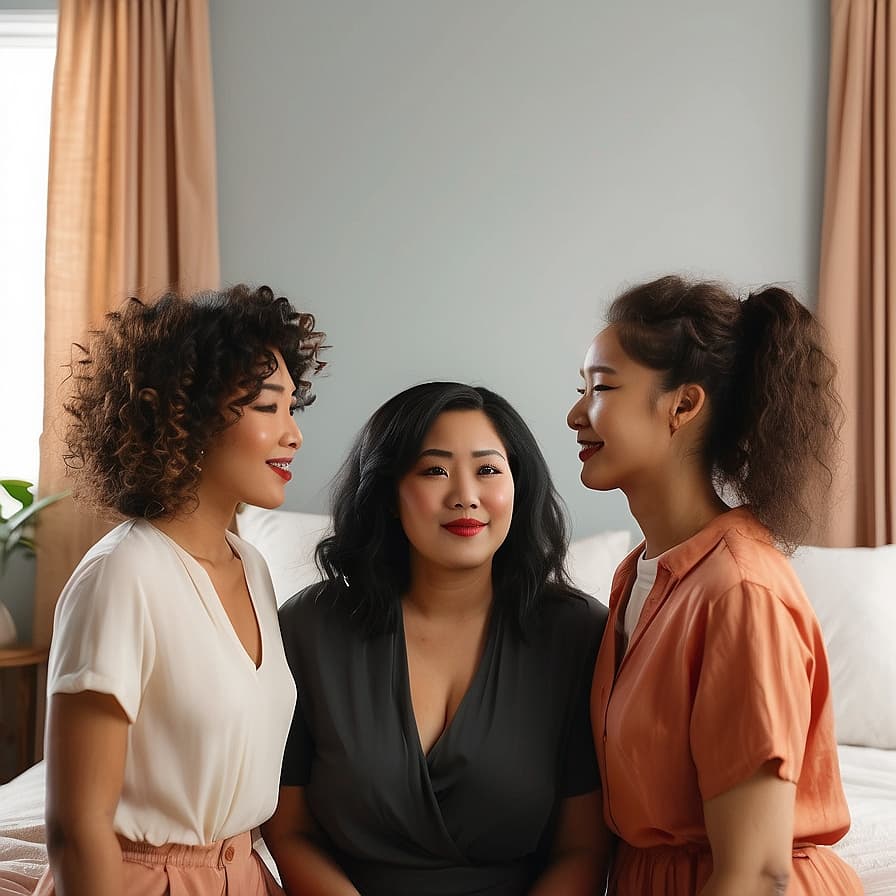
Generate Austrians AI Content
Use this ethnicity's phenotype data to create AI-generated content with accurate physical traits and cultural context.
Open Creator Studio