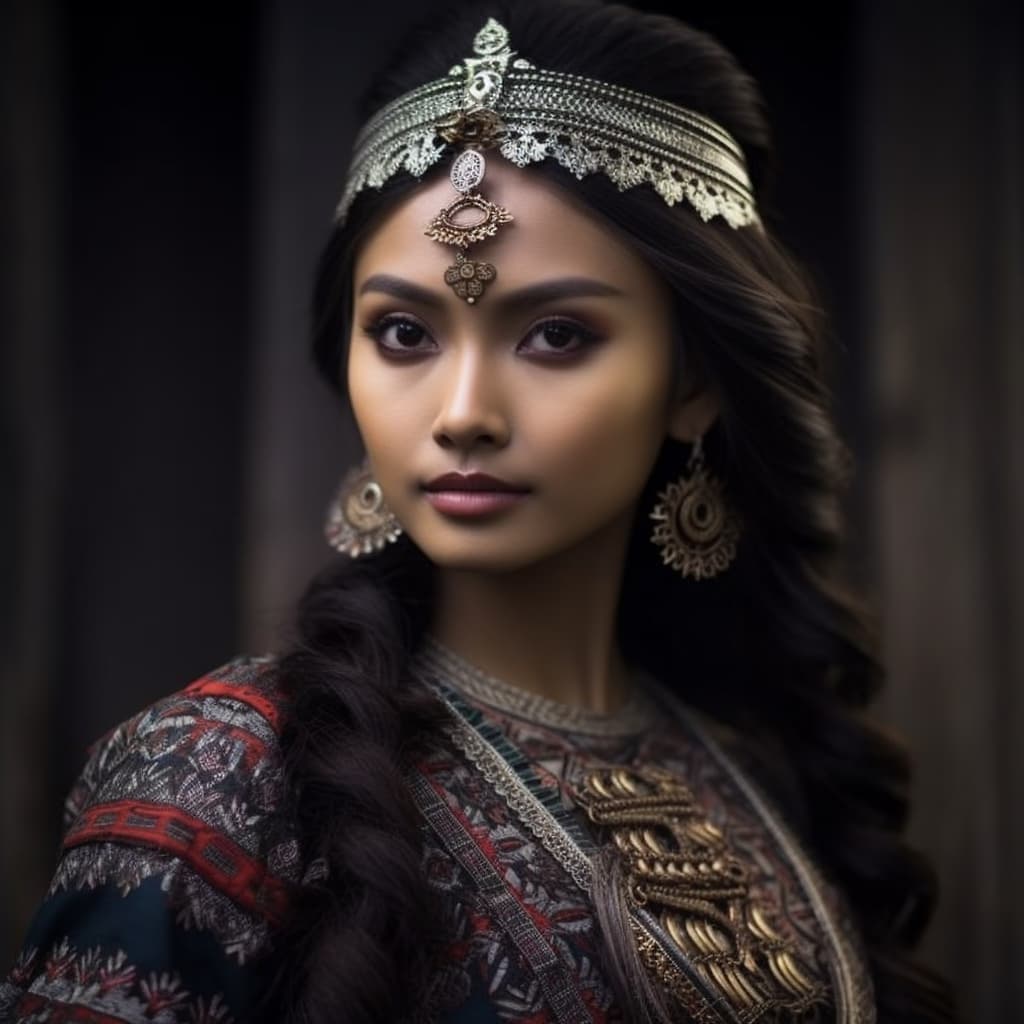
Javanese Erotic
Java (Indonesia)
Austronesian / Javanese
Islam / Sunni Islam
Cirebonese, Osing, Tenggerese, Boyanese, Samin, Banyumasan, along with significant populations in Malaysia, Suriname, China, and Saudi Arabia
Southeast Asia
About Javanese People
The Javanese are the largest ethnic group in Indonesia and one of the largest in Southeast Asia — somewhere over a hundred million people, most of them concentrated on the central and eastern parts of Java, the volcanic island that has been the political and demographic center of the archipelago for more than a thousand years. The land itself shapes the culture: a narrow island ribbed by active volcanoes whose ash makes the rice paddies extraordinarily productive, which in turn supported the dense court societies of Mataram, Majapahit, and the older Hindu-Buddhist kingdoms whose temples — Borobudur, Prambanan — still stand in the interior. That long settled history gives Javanese culture an unusually layered quality. Islam arrived in the 15th and 16th centuries and is now the religion of the overwhelming majority, but it sits on top of older Hindu, Buddhist, and animist strata that never fully went away, and the resulting synthesis — sometimes called kejawen or Javanese Islam — coexists with more orthodox Sunni practice, occasionally uneasily.
The Javanese language is Austronesian, distantly related to Malay, Tagalog, and the languages of the Pacific, but its most distinctive feature is internal: it has elaborate speech levels — ngoko, madya, krama — that encode the relative status of speaker and listener so thoroughly that a single sentence can be reformulated into several mutually almost-unintelligible registers. Choosing the wrong level is a social mistake, and learning to navigate them is part of growing up. This linguistic etiquette matches a broader cultural emphasis on restraint, indirection, and the careful management of interpersonal harmony — values summed up in concepts like rukun (social concord) and halus (refinement).
Sub-groups vary noticeably. The Osing of the eastern tip and the Tenggerese of the Bromo highlands retain pre-Islamic religious practice — the Tenggerese are Hindu, and still throw offerings into the volcano during the Yadnya Kasada festival. The Banyumasan of the western interior speak a blunter, more egalitarian dialect and tend to regard the courtly refinement of Yogyakarta and Surakarta with mild skepticism. The Samin are the descendants of a 19th-century resistance movement against Dutch colonial taxation and remain known for a stubborn, principled simplicity. Beyond Java itself, Dutch-era labor migration produced sizable Javanese communities in Suriname and Malaysia, where the language and the cuisine — gamelan music, wayang shadow puppetry, dishes like gudeg and rendang's Javanese cousins — have persisted across generations.
Typical Javanese Phenotypes
Reference for AI generation — hair, eyes, skin, facial structure, build
Javanese phenotype sits firmly within the Austronesian/Southern Mongoloid range, but with softer, less angular features than mainland Southeast Asian populations and noticeably finer facial bone structure than neighboring Malay groups. Hair is overwhelmingly black to very dark brown, straight to gently wavy, with a fine-to-medium shaft — true coarse hair is uncommon, and natural curl is rare outside of mixed lineage. Greying tends to come late and stays cool-toned rather than yellowing.
Eyes are dark brown, ranging from near-black to a warmer cocoa in lighter-skinned individuals. The epicanthic fold is present in the majority but is typically partial and soft rather than the full monolid common further north — many Javanese have a low, delicate double crease, giving the eye a long almond shape with a slight upward outer tilt. Lashes are straight and moderately dense.
Skin tone spans Fitzpatrick III to V, clustering around a warm light-to-medium brown with golden or olive undertones — Joko Widodo sits near the lighter end of the typical range. Coastal and rural laboring populations skin trend deeper and more reddish-bronze; aristocratic and inland Central Javanese lineages (Yogyakarta, Surakarta) often run paler with yellow undertones, a distinction historically tied to court culture.
The face is typically oval to softly heart-shaped, with a relatively flat midface, low and broad nasal bridge, and rounded alar wings — high or narrow noses are uncommon and read as distinctive. Lips are medium-full and well-defined, the lower often slightly fuller than the upper. Cheekbones are present but rounded rather than sharp, and jawlines tend toward the gentle side.
Build is petite by global standards: adult male mean height sits around 165 cm, female around 154 cm, with slim-to-lean frames, narrow shoulders, and a tendency toward central weight gain with age rather than peripheral. Sub-group variation is modest — Tenggerese highlanders of the Bromo region show paler, ruddier skin and slightly heavier builds from cooler-climate adaptation, while Osing and Banyumasan populations skew darker and more weathered.
Data depth
79/100Coverage of image-grounded phenotype observations · drives AI generation diversity
- Sample size
- 40/40· 72 images
- Image quality
- 24/30· 47% high
- Confidence
- 15/20· mean 0.72
- Source diversity
- 0/10· wikipedia
- ·Wikipedia-only source — not population-representative
Observed Distribution — Image Sample
Empirical observations from analyzed photographs · supplementary signal, not population truth
Sample: 72 images analyzed (72 wikipedia). Quality: 34 high, 26 medium, 8 low, 4 very_low. Avg analyzer confidence: 0.72.
Skin tone (Fitzpatrick): II (6%), III (13%), IV (65%), V (7%), unclear (10%)
Hair color: black (51%), gray/white (38%), blonde (1%), light/medium brown (1%), dark brown (1%), unclear (7%)
Hair texture: straight (64%), wavy (13%), curly (1%), coily (1%), shaved (1%), covered (18%), unclear (1%)
Eye color: dark brown (85%), brown (1%), hazel (1%), unclear (13%)
Epicanthic fold: 79% present, 14% absent, 7% unclear
Caveats: Sample is 100% Wikipedia notable people — skews toward male, public-life, and modern figures, not population-representative.
Last aggregated: May 7, 2026
Explore phenotype categories
Structured taxonomy with peer-reviewed scales · 22 anatomical categories
Notable Javanese People
100 reference figures — sourced from Wikipedia
- Ki Hajar Dewantara — pioneer of education in Indonesia.
- Winai Dahlan — director of Halal Science Center, Chulalongkorn University
- Poerbatjaraka — specialist in Javanese literature
- Selo Soemardjan — sociologist
- Siti Fadilah — Indonesian cardiology research specialist and former Minister of Health of In…
- Soedarsono Hadisapoetro — agriculture scientist
- Kartini — Indonesian national hero, pioneer of Javanese women rights
- Munir Said Thalib — human rights activist (also of Arab descent)
- Affandi — expressionistic painter
- Basuki Abdullah — Indonesian realist and naturalist painter
- Djoko Pekik — painter and sculptor
- Guruh Sukarnoputra — choreographer
- Iwan Tirta — Indonesian batik designer
- Soeki Irodikromo — Surinamese painter
- Reinier Asmoredjo — Surinamese painter
- Marina Joesoef — Indonesian painter and photographer (Javanese father)
- Raden Saleh — aristocratic painter in the 19th century
- Ayu Utami — author, known for the novel Saman
- George Junus Aditjondro — Indonesian sociologist
- Koentjaraningrat — Indonesian anthropologist
- Mpu Prapanca — Buddhist monk and poet, author of the Nagarakretagama
- Pramoedya Ananta Toer — author, known for the novel Bumi Manusia
- Subagio Sastrowardoyo — poet, essayist and literary critic
- Willibrordus S. Rendra — dramatist and poet
- Ronggowarsito — poet from the court of Kraton Surakarta
- Dahlan Iskan — owner of Jawa Pos Group and President Director of PLN Indonesia
- Setiawan Djody — owner of Setdco group
- Tommy Suharto — founder of Humpuss group
- Garin Nugroho — film director
- Febian Nurrahman Saktinegara — film director
- Rudy Soedjarwo — film director
- Gajah Mada — Majapahitan prime minister who became famous with his palapa oath
- Airlangga — founder of the Kahuripan kingdom
- Hayam Wuruk — king from Rajasa dynasty and the fourth monarch of Majapahit during the empir…
- Joko Tingkir — founder and first king of the Sultanate of Pajang
- Jayabaya — king and prophet in ancient Kediri kingdom
- Ken Arok — founder of Rajasa dynasty whose descendants became the ruling house of Singha…
- Ken Dedes — wife of Ken Arok
- Raden Wijaya — king from Rajasa dynasty and the first monarch of Majapahit
- Rakai Pikatan — king of Sanjaya dynasty in the 9th century AD, builder of Prambanan Hindu tem…
- Samaratungga — king of Sailendra dynasty, builder of the Borobudur Buddhist temple in Centra…
- Airlangga Hartanto — 28th Ministry Industry of Indonesia
- Bambang Soesatyo — 17th Speaker of People's Representative Council
- Boediono — former governor Bank of Indonesia and 11th Vice President of Indonesia
- Joko Widodo — 7th President of Indonesia
- Radius Prawiro — former governor Bank of Indonesia
- Subroto — economist and part of the Berkeley Mafia
- Setya Novanto — 16th Speaker of People's Representative Council
- Susi Pudjiastuti — 1st CEO Susi Air
- Sri Mulyani Indrawati — Indonesian minister and Managing Director of the World Bank Group
- Widjojo Nitisastro — Indonesian minister
- Adipati Dolken — Indonesian actor and model (also of German descent)
- Adinia Wirasti — Indonesian actress and model
- Adjie Massaid — Indonesian actor, model, and politician
- Amara — prominent Indonesian singer, model, actress and practitioner of Muay Thai
- Anjasmara — Indonesian actor and yogist
- Ario Bayu — Indonesian actor and model
- Aziz Sattar — Singaporean and Malaysian actor, comedian, singer, and director
- Basuki — Indonesian comedian
- Benyamin Sueb — Indonesian comedian, actor, and singer (Javanese father)
- Christian Sugiono — Indonesian actor and model (also of Chinese, German descent)
- Dian Sastrowardoyo — Indonesian model and actress
- Didi Petet — Indonesian actor
- Devi Dja — Indonesian-born American actress, dancer, and singer
- Dwi Sasono — Indonesian actor
- Kasma Booty — Malaysian actress and film star
- Luna Maya Sugeng — model, actress, singer and presenter (also of Austrian descent)
- Mariana Renata — half-Indonesian), model
- Maria Selena — Indonesian actress
- Mark-Paul Gosselaar — actor (Javanese mother)
- Maudy Ayunda — Indonesian actress, model, activist, singer, and writer
- Nadine Alexandra — half-Indonesian), actress
- Nadine Chandrawinata — half-Indonesian), actress and model
- Nicholas Saputra — Indonesian actor (half Javanese-half German)
- Pandji Pragiwaksono — Indonesian stand-up comedian
- Pradikta Wicaksono — Indonesian singer and actor
- Pierre Coffin — French director and animator (Javanese mother)
- RIo Dewanto — Indonesian actor and model
- Roy Marten — half-Indonesian), Indonesian actor, model and producer
- Sheila Majid — Malaysian singer
- Tio Pakusadewo — prominent Indonesian actor
- Tora Sudiro — Indonesian actor
- Tukul Arwana — Indonesian comedian and late night talk show host
- Widyawati — Indonesian actress
- Yoshi Sudarso — Indonesian actor
- Yuki Kato — Indonesian actress, model, and television presenter (half Javanese-half Japan…
- Aiman Witjaksono — Indonesian journalist, news anchor, and interviewer
- Bambang Harymurti — editor-in-chief of Tempo
- Goenawan Mohamad — founder of Tempo
- Ahmad Yani — Indonesian Revolutionary Hero
- Bambang Darmono — Indonesian major general
- Bambang Soegeng — Indonesian independence hero
- Bambang Hendarso Danuri — chief of the Indonesian National Police
- Djatikoesoemo — Indonesian independence hero
- Djoko Suyanto — former commander of the Indonesian army
- Endriartono Sutarto — former commander of the Indonesian army
- Gatot Soebroto — Indonesian independence hero
- Katamso — Indonesian revolutionary hero
- Kyai Ronggo Ngabehi Soero Pernollo — Chinese-Javanese police chief, bureaucrat and founder of the Muslim branch of…
- Leonardus Benjamin Moerdani — former commander of Indonesian army






Generate Javanese AI Content
Use this ethnicity's phenotype data to create AI-generated content with accurate physical traits and cultural context.
Open Creator Studio