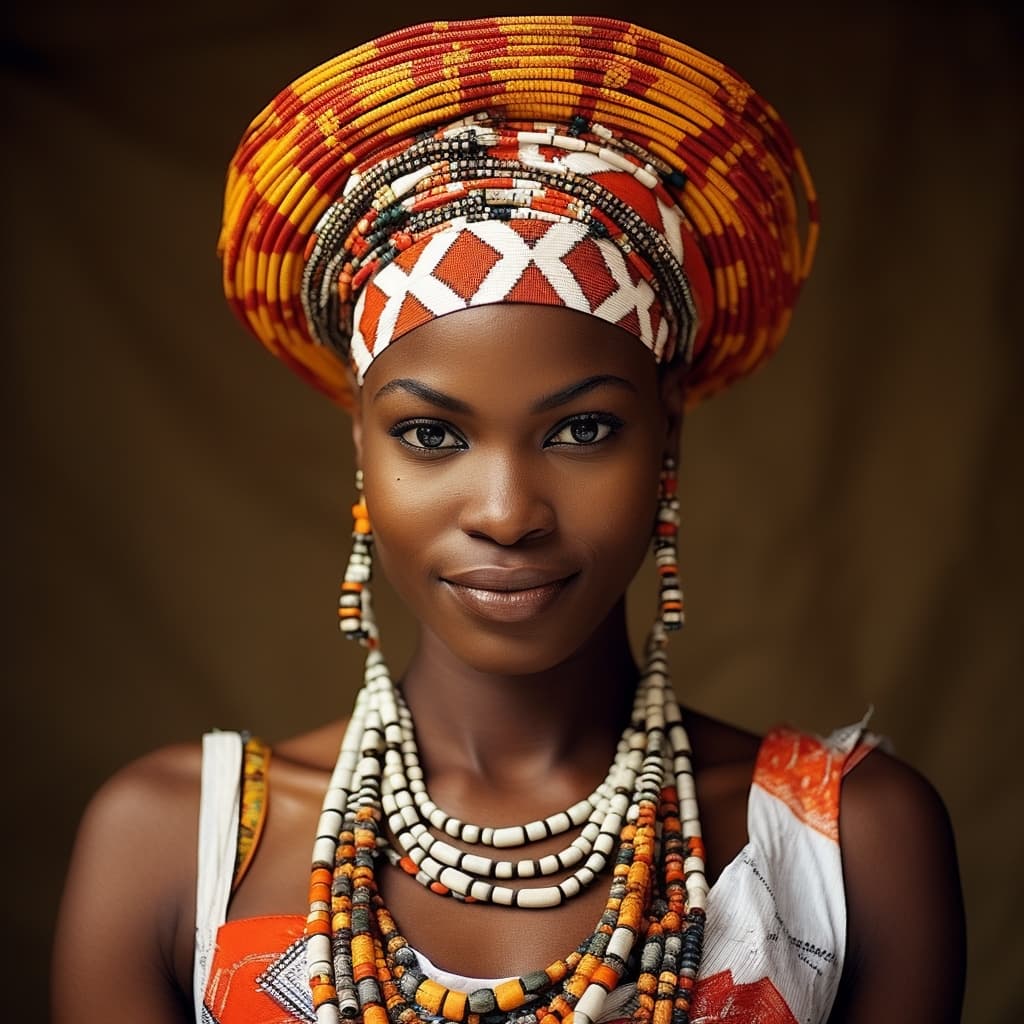
Susu Erotic
Guinea, Kambia (Sierra Leone)
Niger–Congo / Mande / Susu
Islam
Western Africa
About Susu People
The Susu are a coastal people of Guinea, concentrated along the Atlantic strip around Conakry and pushing north into the Kambia district of Sierra Leone. Their reputation in the region is mercantile: traders, fishermen, and middlemen who have long worked the seam between the inland Mande heartlands and the saltwater economies of the coast. Conakry itself grew up around them, and Susu functions as a working lingua franca in much of lower Guinea, spoken comfortably by Fula, Baga, Nalu, and Landuma neighbors who may not share the language at home.
Linguistically, Susu sits in the Mande branch of Niger–Congo, closely related to Yalunka — close enough that speakers often describe the two as siblings rather than cousins. The standard story among the Susu themselves is that the two groups were once a single people who split during the long southward and westward migrations out of the Futa Jallon highlands, pressed toward the coast in the eighteenth century by the Fula jihads that established the Imamate of Futa Jallon. That displacement is the inflection point most Susu families will name if asked where they came from: not a deep mythic origin, but a remembered political defeat that landed them on the coast and turned a highland people into fishermen and traders within a few generations.
Islam is universal in practice and has been for long enough that it no longer reads as recent — the conversion ran through the nineteenth century and is now woven into naming, marriage, dietary habit, and the weekly rhythm of Friday prayer. It coexists, as it does across much of West Africa, with a layer of older practice: initiation societies, particularly for boys passing into adulthood, retain real social weight, and the figure of the karamoko, the Quranic teacher, often doubles as a source of protective amulets and consultation that an outside observer might not classify as strictly orthodox. The Susu have not generally produced the centralized clerical hierarchies their Fula neighbors built in the highlands; religious authority is more dispersed, more local, and more entangled with family.
Day-to-day, the culture is shaped by the coast — rice, smoked fish, palm oil, and a cuisine dominated by groundnut and leaf sauces — and by a strong tradition of women's market trade, which gives Susu women a visible economic role that sets the tone of household life as much as any formal religious or political structure does.
Typical Susu Phenotypes
Reference for AI generation — hair, eyes, skin, facial structure, build
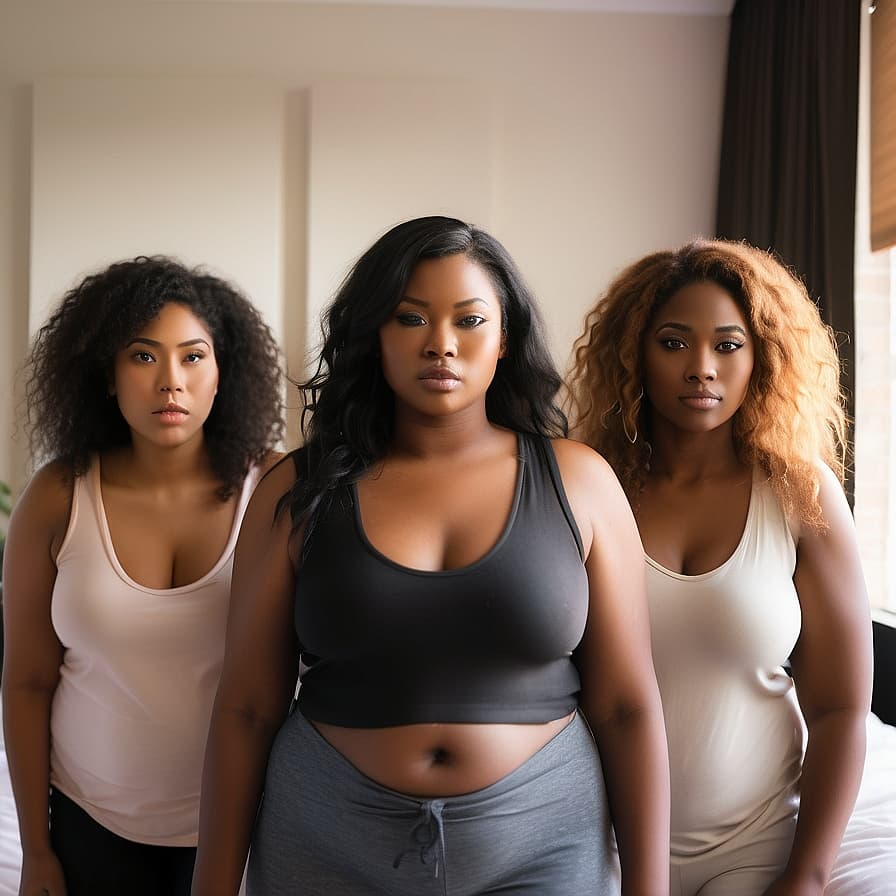
The Susu phenotype sits firmly in the West African coastal-Mande range, with the population concentrated along the Atlantic littoral of Guinea and into Kambia District in Sierra Leone. Skin tone runs from medium-dark to deep brown — Fitzpatrick V to VI dominates, with reddish and warm-mahogany undertones common, and true blue-black skin less frequent than among neighbouring inland populations. Hair is uniformly Type 4 — tightly coiled, springy, and dense — almost always black or near-black; meaningful colour variation is essentially absent. Most men keep it cropped close; women often wear it braided, threaded, or under headwraps tied in the Fouta-coastal style, so the underlying hair pattern is usually inferred rather than seen.
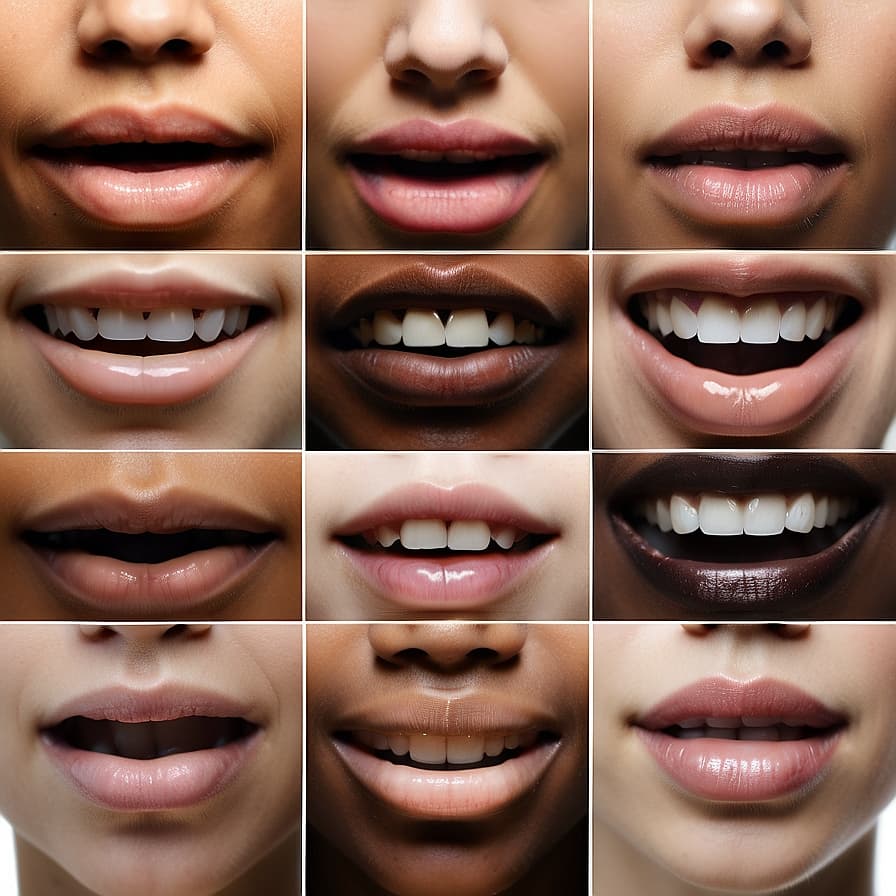
Eyes are dark brown to near-black, set under a relatively flat brow with no epicanthic fold. Eye shape tends to be wide and almond, with a clean upper lid crease. Noses commonly have a moderately broad alar base and a low-to-medium bridge — narrower and straighter than the West African average for some individuals, a residue of the Mande corridor's long contact with Sahelian and Mandingo populations to the east. Lips are full but proportioned, the upper lip often well-defined rather than rolled. Cheekbones are usually broad and high; jawlines among men can be notably square, a feature visible in the long political lineage from Lansana Conté onward.
Build is athletic and lean rather than heavy. Stature is moderate — adult men typically 170–178 cm, women 158–165 cm — with long limbs relative to torso, narrow hips on men, and well-developed shoulders; the steady output of footballers and the swimmer Facinet Bangoura reflects a population with low average body fat and strong fast-twitch musculature. Women tend toward a balanced figure with defined waist and rounded hips, less pronounced steatopygia than further south. Coastal Susu show slightly lighter skin and finer features on average than the Yalunka highland branch, who skew darker and more robustly built.
Data depth
77/100Coverage of image-grounded phenotype observations · drives AI generation diversity
- Sample size
- 30/40· 26 images
- Image quality
- 27/30· 54% high
- Confidence
- 20/20· mean 0.86
- Source diversity
- 0/10· wikipedia
- ·Wikipedia-only source — not population-representative
Observed Distribution — Image Sample
Empirical observations from analyzed photographs · supplementary signal, not population truth
Sample: 26 images analyzed (26 wikipedia). Quality: 14 high, 12 medium, 0 low, 0 very_low. Avg analyzer confidence: 0.87.
Skin tone (Fitzpatrick): V (4%), VI (96%)
Hair color: black (96%), blonde (4%)
Hair texture: straight (4%), coily (92%), shaved (4%)
Eye color: dark brown (100%)
Epicanthic fold: 0% present, 100% absent, 0% unclear
Caveats: Sample is 100% Wikipedia notable people — skews toward male, public-life, and modern figures, not population-representative.
Last aggregated: May 7, 2026
Explore phenotype categories
Structured taxonomy with peer-reviewed scales · 22 anatomical categories
Notable Susu People
90 reference figures — sourced from Wikipedia
- Fodé Bangoura — Guinean politician and former Minister Secretary General to President Lansana…
- Karim Bangoura — Guinean diplomat
- Mafory Bangoura — was a radical activist for the independence of Guinea
- Mahawa Bangoura — Guinean diplomat
- Abdoul Kabèlè Camara — Guinean politician
- Arafan Camara — Guinean politician
- Makalé Camara — Guinean diplomat
- M'Balia Camara — Guinean independence activist
- Zeinab Camara — Guinean politician
- Lansana Conté — former President of Guinea from 1984 to 2008
- Abdulai Conteh — former Vice president of Sierra Leone
- Kandeh Baba Conteh — Sierra Leonean politician
- Ahmed Ramadan Dumbuya — Sierra Leonean politician
- Ibrahima Kassory Fofana — former Prime Minister of Guinea
- Mohamed Said Fofana — former Prime Minister of Guinea
- Soumaoro Kanté — was a Thirteenth-century king of the Sosso Empire
- Fodé Soumah — Guinean politician
- Facinet Touré — Guinean politician and former soldier of the French colonial army
- Kerfalla Yansané — current Ambassador of Guinea to the United States
- Osman Foday Yansaneh — Sierra Leonean politician
- Mamady Youla — former Prime minister of Guinea from 2015 to 2018
- Kandeh Yumkella — Sierra Leonean politician
- Mohamed Bangoura — Guinean drummer
- Momo Wandel Soumah — Guinean musician
- Maciré Sylla — Guinean musician
- Abdoul Karim Bangoura — Guinean footballer
- Alhassane Bangoura — Guinean footballer
- Alkhaly Bangoura — Guinean footballer
- Facinet Bangoura — Guinean swimmer
- Ibrahima Bangoura — Guinean footballer
- Ismaël Bangoura — Guinean footballer
- Ismaël Karba Bangoura — Guinean footballer
- Kilé Bangoura — Guinean footballer
- Lappé Bangoura — Guinean football coach
- Mamadama Bangoura — Guinean judoka
- Mamadouba Bangoura — Guinean footballer
- Momar Bangoura — French footballer
- Ousmane Bangoura — Guinean footballer
- Pierre Bangoura — Guinean footballer
- Sambégou Bangoura — Guinean footballer
- Yady Bangoura — Guinean footballer
- Mohamed Bangura — Sierra Leonean footballer
- Abdoul Camara — Guinean footballer
- Abou Mangué Camara — Guinean footballer
- Alsény Camara — Guinean footballer
- Aguibou Camara — Guinean footballer
- Dede Camara — Guinean swimmer
- Ibrahima Sory Camara — Guinean footballer
- Kémoko Camara — Guinean footballer
- Mady Camara — Guinean footballer
- Naby Camara — Guinean footballer
- Souleymane Camara — Senegalese footballer
- Abdoulaye Cissé — Guinean footballer
- Abdu Conté — Bissau-Guinean footballer
- Ibrahima Sory Conté — Guinean footballer
- Naby Diarso — Guinean footballer
- Boubacar Fofana — Guinean footballer
- Ibrahima Sory Sankhon — Guinean footballer
- Chérif Souleymane — Guinean footballer
- Issiaga Soumah — Guinean footballer
- M'mah Soumah — Guinean judoka
- Morlaye Soumah — Guinean footballer
- Naby Soumah — Guinean footballer
- Ndèye Fatou Soumah — Senegalese sprinter
- Richard Soumah — Guinean footballer
- Seydouba Soumah — Guinean footballer
- Soriba Soumah — Guinean footballer
- Lamin Suma — Sierra Leonean footballer
- Sheriff Suma — Sierra Leonean footballer
- Abdoul Karim Sylla — Guinean footballer
- Naby Keïta — Guinean footballer
- Idrissa Sylla — Guinean footballer
- Issiaga Sylla — Guinean footballer
- Kanfory Sylla — Guinean footballer
- Mohamed Lamine Sylla — Guinean footballer
- Mohamed Ofei Sylla — Guinean footballer
- Momo Sylla — Guinean footballer
- Morciré Sylla — Guinean footballer
- Morlaye Sylla — Guinean footballer
- Sekou Oumar Sylla — Guinean footballer
- Djibril Fandjé Touré — Guinean footballer
- Momo Yansané — Guinean footballer
- Ibrahima Yattara — Guinean footballer
- Mohamed Yattara — Guinean footballer
- Naby Yattara — Guinean footballer
- Souleymane Youla — Guinean footballer Naby KeitaGuinean Footballer
- Tigui Camara — Guinean entrepreneur
- Ousmane Conté — Lansana Conté's son
- Souleymane Sylla — Guinean actor
- Harry Yansaneh — Sierra Leonean journalist

Generate Susu AI Content
Use this ethnicity's phenotype data to create AI-generated content with accurate physical traits and cultural context.
Open Creator Studio