Bassa Erotic
Bassaland (Liberia)
Niger–Congo / Kru / Bassa
Christianity / Protestantism
Western Africa
About Bassa People
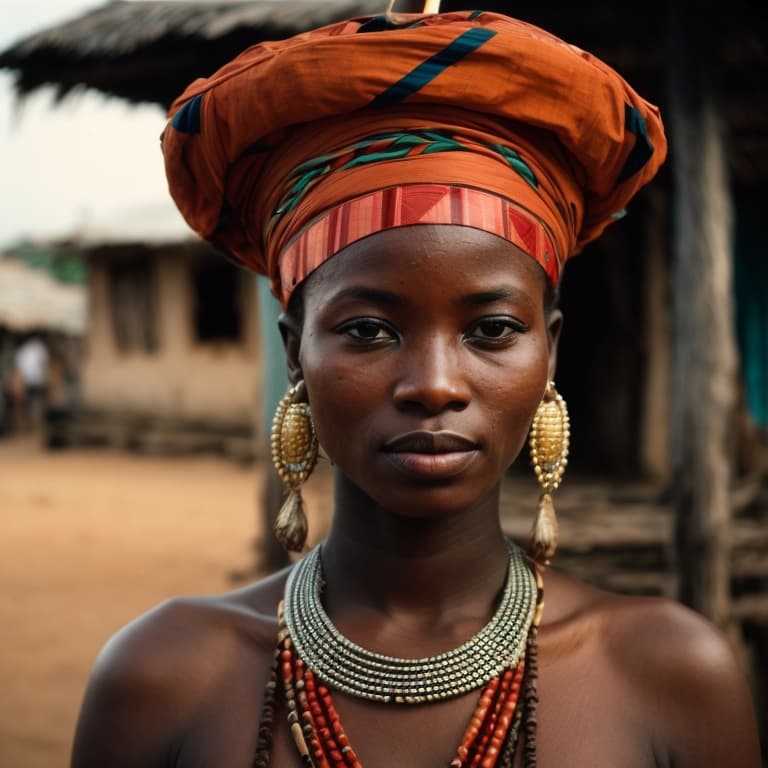
The Bassa are one of Liberia's larger Indigenous peoples, concentrated along the central coast and inland from the port city of Buchanan, with smaller populations spread across Grand Bassa, Rivercess, Margibi, and Montserrado counties. They speak Bassa, a Kru language, which places them in the same broad family as the Krahn, Grebo, and Klao but on its own branch — close enough to its neighbors for shared vocabulary, distinct enough that speakers don't simply switch between them. The language is one of the few in West Africa with its own Indigenous script: Vah, devised in the early twentieth century by Thomas Flo Lewis, a chemist who reconstructed an older syllabary said to have been suppressed during the slaving era. Vah is no longer in everyday use, but it survives in cultural circles and is increasingly invoked as a marker of Bassa identity distinct from Liberia's English-language officialdom.
Most Bassa today are Protestant Christians, the legacy of nineteenth-century missions and the Americo-Liberian settlement project, which arrived directly on Bassa territory when freed African Americans landed at the mouth of the Saint John River in the 1830s. That encounter shaped the political geography of the country: Bassa people were among the first to negotiate, accommodate, and resist the settler republic, and the long tension between Indigenous Liberians and the Americo-Liberian elite ran straight through Bassaland for over a century. Christianity sits comfortably alongside older practices — secret societies, ancestral observances, and the men's and women's initiation traditions common across the Kru-speaking belt — without much sense of contradiction in everyday life.
The Bassa economy has historically combined upland rice farming, cassava, and palm production with river and coastal fishing; Buchanan grew up around iron-ore export, and a great many Bassa families have at least one generation tied to that industry or to the rubber plantations inland. The two civil wars between 1989 and 2003 displaced large numbers of Bassa people and left a diaspora concentrated in the United States, particularly around Minneapolis, Philadelphia, and Staten Island, where Bassa-language churches and mutual-aid associations remain active. Storytelling, drumming, and a strong tradition of gbaa proverbs continue to mark Bassa cultural life — terse, layered sayings that older speakers still deploy in argument and counsel, and that younger Bassa abroad are quietly working to keep in circulation.
Typical Bassa Phenotypes
Reference for AI generation — hair, eyes, skin, facial structure, build
The Bassa are a Kru-speaking people of coastal Liberia, and their phenotype reflects the broader West African coastal forest belt — closer in features to neighbouring Kru, Krahn, and Grebo than to the Mande peoples of the interior savanna. Hair is almost universally Type 4 (4B–4C), tightly coiled to densely kinky, jet black, with the close-cropped natural texture being the dominant adult presentation outside of braided or chemically relaxed styles. Greying tends to come late and sparse.
Eye colour sits in the dark brown to near-black range, with deep brown sclera pigmentation common in older adults. Lid morphology is straightforward — no epicanthic fold, often a slight superior fullness that softens the eye shape rather than hooding it. Lashes are dense and tightly curled.
Skin tones cluster in Fitzpatrick V–VI, with the deep-brown-to-near-black range being most common; coastal Bassa working under heavy equatorial sun rarely show the lighter cocoa undertones you find further inland. Undertones run warm — red-brown rather than yellow-brown — and the skin holds a natural sheen that doesn't read as oily.
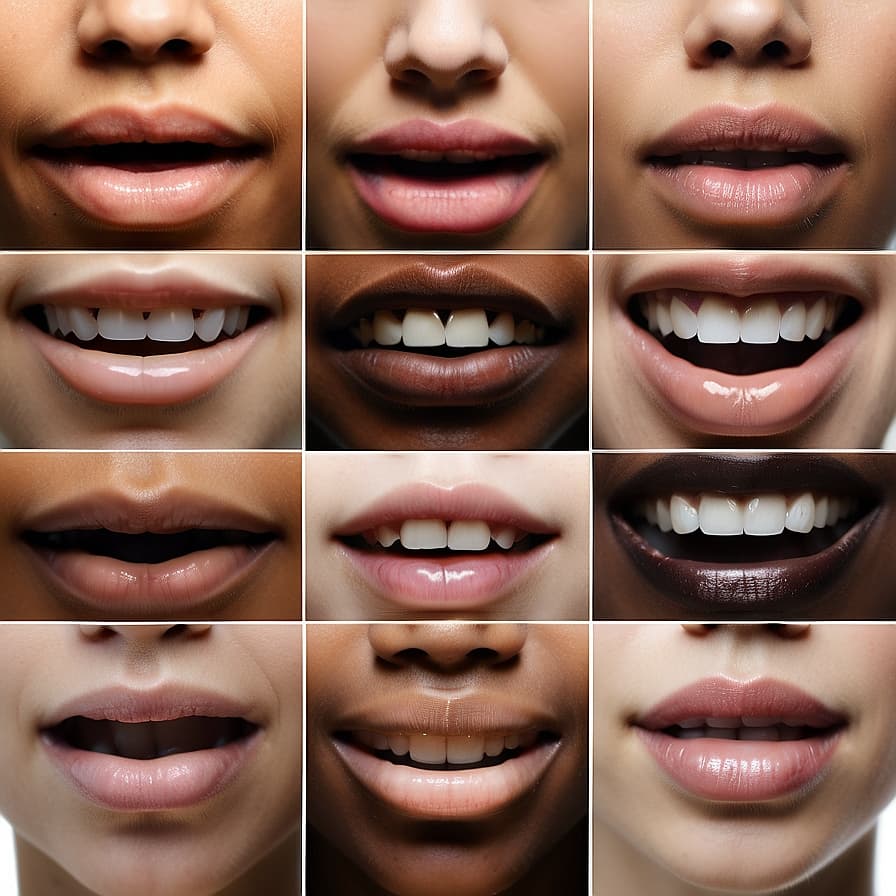
Facial structure is the recognisably West African coastal pattern: a broad, low nasal bridge with wide alar flare, full lips on both upper and lower with a distinct vermilion border, and prominent rounded cheekbones over a strong but not heavy jaw. Foreheads are typically broad and slightly rounded. Teeth are notably white against the dark skin and often well-spaced.
Build runs medium-tall by African averages — adult men commonly 5'8"–6'0", women 5'4"–5'8" — with athletic, mesomorphic proportions: broad shoulders, narrow hips on men, and a pronounced lumbar curve with full glutes and thighs on women that's anthropometrically characteristic of Kru-coast populations. Limbs tend to be long relative to torso, hands and feet proportionally large. Subcutaneous fat distribution favours hips and thighs over the abdomen, even in middle age.
Data depth
0/100Coverage of image-grounded phenotype observations · drives AI generation diversity
- Sample size
- 0/40· 0 images
- Image quality
- 0/30· 0% high
- Confidence
- 0/20
- Source diversity
- 0/10
- ·No image observations yet
Explore phenotype categories
Structured taxonomy with peer-reviewed scales · 22 anatomical categories
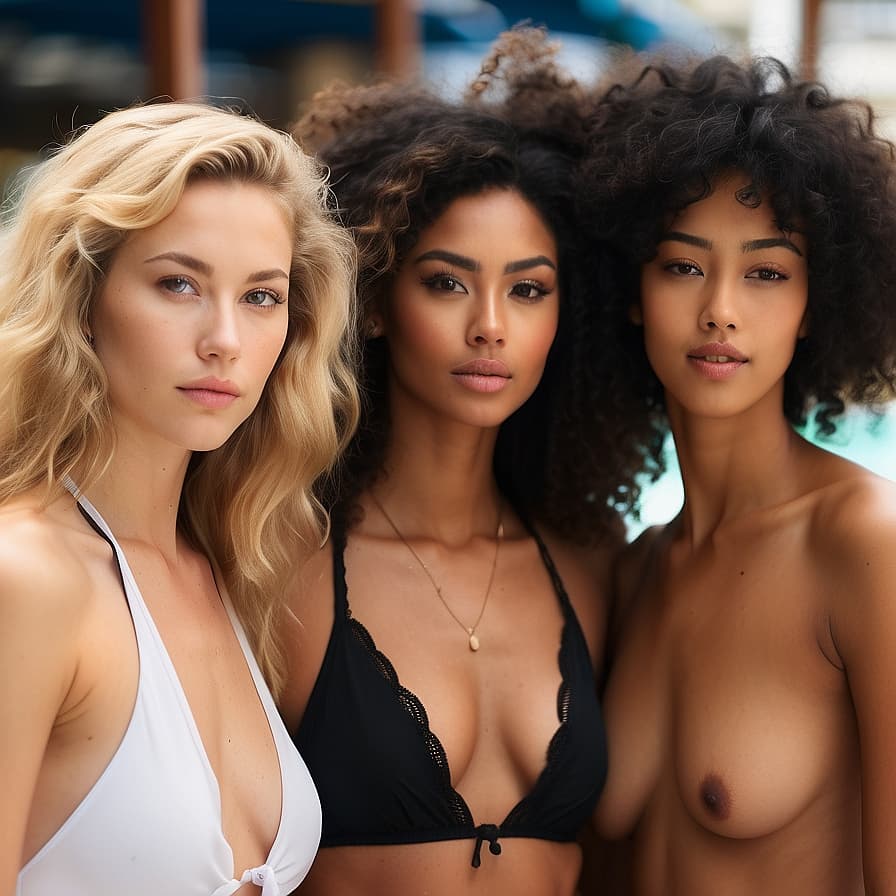




Generate Bassa AI Content
Use this ethnicity's phenotype data to create AI-generated content with accurate physical traits and cultural context.
Open Creator Studio