Balanta Erotic
Guinea-Bissau, Senegal, The Gambia
Niger–Congo / Atlantic / Senegambian / Balanta
Traditional African religions
Western Africa
About Balanta People
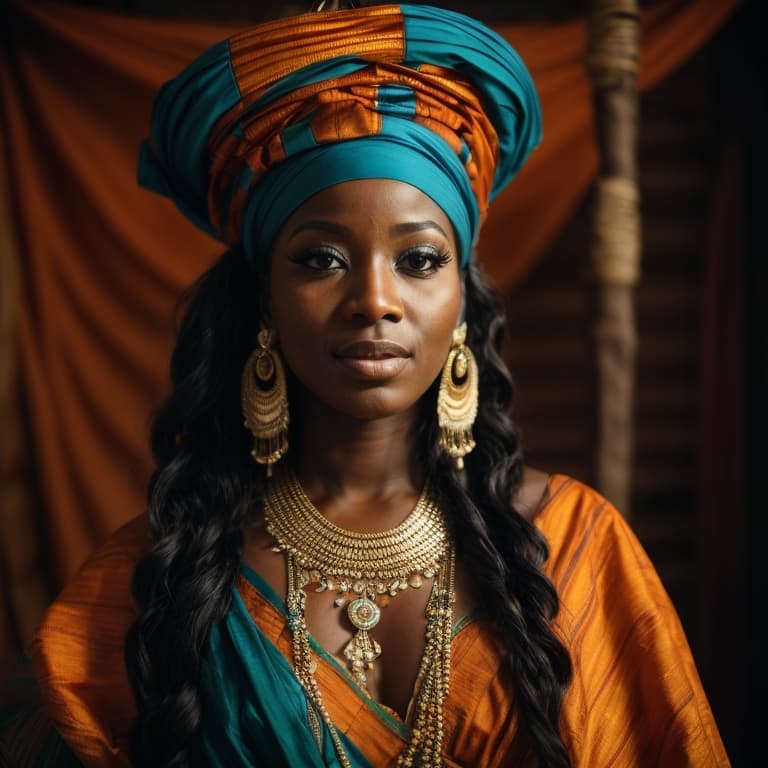
The Balanta are the largest ethnic group in Guinea-Bissau, where they make up roughly a quarter of the population, with smaller communities across the southern Casamance region of Senegal and into The Gambia. The name they were given by outsiders means, roughly, "those who resist" — a label earned during centuries of refusing to submit to the Mandinka empires that pressed down on them from the interior, and later to Portuguese colonial authority. They held to the lowlands, the mangrove margins and tidal flats nobody else especially wanted, and they made those margins productive. Balanta rice cultivation in the brackish coastal flats is some of the most demanding wet-rice agriculture in West Africa, dependent on dyked paddies the community builds and maintains collectively.
Their language sits in the Bak branch of the Atlantic family, distinct enough from the Mandé languages of their inland neighbors that the linguistic boundary tracks the older political one. There are several subgroups — the Balanta-Brassa of the central Guinea-Bissau interior, the Balanta-Kentohe of the coast, the Balanta-Ganja in Senegal — speaking varieties that range from mutually intelligible to noticeably divergent. Society has historically been organized without chiefs in the centralized sense; authority sat with age-grades and councils of elders, and decisions about land, marriage, and ritual obligation moved through them rather than through any single hereditary office. This horizontal structure is part of what made the Balanta so difficult for empires and colonial administrators to absorb — there was no court to capture, no king to co-opt.
The traditional religion centers on Nhaala, a creator figure, alongside a layered cosmology of ancestral spirits and place-spirits tied to specific groves, rivers, and rice fields. Funerary rites are elaborate and prolonged, sometimes stretching across years between burial and the closing ceremonies that finally release the deceased into the ancestral company. Initiation, called fanado, marks the passage into adulthood and the age-grade system, and remains widely practiced even among Balanta who have nominally converted to Islam or Christianity — the older framework usually persists underneath. The group played an outsized role in the PAIGC liberation war of the 1960s and 70s; Amílcar Cabral's guerrilla movement drew heavily on Balanta recruits, and the political consequences of that — both the prestige and the unfinished settlement of it — continue to shape Guinea-Bissau's politics today.
Typical Balanta Phenotypes
Reference for AI generation — hair, eyes, skin, facial structure, build
The Balanta phenotype sits within the deep-melanated West African range, but with structural details that distinguish them from neighboring Mandinka, Fula, and Wolof populations. Skin tone clusters in Fitzpatrick V to VI, weighted heavily toward VI — a dark, cool-to-neutral brown with red-mahogany undertones common in the Quinara and Tombali coastal lowlands where the bulk of the population lives. Generations of rice cultivation under direct equatorial sun have selected against lighter pigmentation; you rarely see the warmer caramel tones found further north among Sahelian groups.
Hair is overwhelmingly Type 4 — tightly coiled, fine to medium in strand thickness, with the dense Z-pattern coiling typical of the Atlantic coast. Color is uniformly black with cool undertones; sun-bleaching to reddish-brown tips is common among rural laborers and children. Eyes run dark brown to near-black, almond-shaped, set under a smooth supraorbital ridge with no epicanthic fold. Lighter eyes are essentially absent.
Facial structure is where the Balanta read distinctly. The nose tends toward a low-to-medium bridge with a moderately wide alar base — broader than Fula but narrower than the platyrrhine extreme seen among some forest populations to the south. Lips are full to very full, often with a pronounced philtrum and a defined vermilion border. Cheekbones sit high and broad; the jawline is squared in men, more tapered in women, with strong gonial angles overall.
Build is the most documented anthropometric distinctive: Balanta men are notably tall and lean for the region, frequently 175–185 cm with long limbs, narrow hips, and low body fat — a physique reflected in footballers like Moía and Sori Mané. Women trend toward a similar long-limbed frame with moderate hip width. Sub-group variation between the Balanta-Brassa of the south and the Balanta-Mané of the interior is minor — slightly stockier builds inland, slightly darker tones on the coast — but the overall phenotype reads consistently across the homeland.
Data depth
18/100Coverage of image-grounded phenotype observations · drives AI generation diversity
- Sample size
- 3/40· 1 image
- Image quality
- 0/30· 0% high
- Confidence
- 15/20· mean 0.82
- Source diversity
- 0/10· wikipedia
- ·No image observations yet
- ·Wikipedia-only source — not population-representative
Explore phenotype categories
Structured taxonomy with peer-reviewed scales · 22 anatomical categories
Notable Balanta People
4 reference figures — sourced from Wikipedia
- Kumba Ialá — President of Guinea-Bissau from 2000 to 2003
- Moía Mané — Bissau-Guinean footballer[citation needed]
- Sori Mané — Bissau-Guinean footballer[citation needed]
- Biague Na Ntan — Bissau-Guinean General[citation needed]

Generate Balanta AI Content
Use this ethnicity's phenotype data to create AI-generated content with accurate physical traits and cultural context.
Open Creator Studio