
Bariba Erotic
Borgu (Benin, Nigeria)
Niger–Congo / Gur / Bariba
Islam
Western Africa
About Bariba People
The Bariba are the people of Borgu, a stretch of savanna and wooded uplands straddling the Benin–Nigeria border that was, for centuries, its own world. Borgu was never folded into the great Sahelian empires the way its neighbors were; it stayed independent, organized around a constellation of kingdoms — Nikki, Kouandé, Kandi, Parakou — that traced their legitimacy back to a founding hero, Kisra, said to have ridden west out of the east. Whether Kisra is history or charter myth, the political imagination he supplied is real: the Bariba ruling class think of themselves as horsemen and conquerors, distinct from the farming and artisan strata they govern, and the social hierarchy that grew out of that self-understanding is unusually rigid for the region.
Their language, Baatonum, sits inside the Gur branch of Niger–Congo, related at a distance to Mooré and the Senufo languages but not mutually intelligible with the Yoruba, Dendi, or Fulfulde spoken at Borgu's edges. Most Bariba are Muslim, and have been for generations, but the Islam practiced in Nikki and the surrounding chieftaincies coexists comfortably with older institutions — chiefly investiture rites, masking traditions, the prestige of the wasangari warrior nobility, the diviners and praise-singers attached to royal courts. Friday observance and the annual Gaani festival, when horsemen in full regalia parade for the king of Nikki, are not in tension; they are two registers of the same public life.
Horses are the thread that runs through everything. Borgu lies just south of the tsetse line, which most of the West African forest belt does not, and that ecological accident gave the Bariba a cavalry tradition unusual among coastal peoples. The horse is still a marker of rank, still the centerpiece of the Gaani, still the animal that announces a chief. Alongside this aristocratic culture sits the everyday Bariba majority — yam and sorghum farmers, weavers, blacksmiths whose castes carry their own genealogies and prohibitions. Twins, traditionally, were a fraught arrival; the older Bariba response to twin births has softened considerably under Islamic and state pressure but is part of why the group is studied by anthropologists. What holds it all together is Borgu itself: a place that resisted being absorbed long enough to keep its own answers to who rules, who serves, and what the past is for.
Typical Bariba Phenotypes
Reference for AI generation — hair, eyes, skin, facial structure, build
The Bariba (Baatonu) are a Voltaic-speaking people of the Borgu plateau, and their phenotype reflects a sub-Saharan Sudanic core with quiet pulls from neighboring Hausa, Songhai, and Fulɓe populations who have moved through the region for centuries. The dominant impression is a tall, lean, dark-skinned build typical of the West African savanna belt rather than the forest-zone groups further south.
Hair is almost uniformly Type 4 — tightly coiled, dense, and worn either close-cropped or under embroidered caps and headwraps for both men and women. Color sits at near-black; the rust and copper undertones occasionally seen in coastal Yoruba or Igbo hair are uncommon here. Eyes are very dark brown, often appearing nearly black, with no epicanthic fold and a relatively wide palpebral fissure. Brows tend to be strong and well-defined.
Skin is overwhelmingly Fitzpatrick VI — deeply pigmented with warm red-brown or cool blue-black undertones rather than the yellow-bronze cast more common among Akan or Ewe populations. The savanna sun reinforces a uniform deep tone with little seasonal variation. Facial structure runs to a moderately broad nose with a low-to-medium bridge and rounded tip, full but architecturally defined lips, a relatively narrow lower face, and prominent zygomatic arches that give the face a sculpted, longitudinal quality rather than a rounded one.
Stature is notable. Bariba men frequently reach 180–190 cm, placing them among the taller West African populations, with long limbs, narrow hips, and low body fat — a build historically associated with the group's cavalry and hunting traditions in Borgu. Women tend toward slim-shouldered, long-legged proportions with moderate gluteofemoral fullness rather than the heavier hourglass build associated with some coastal groups.
Sub-group variation is modest. The Wasangari aristocratic lineages and the commoner Baatombu share the same baseline phenotype, though Fulɓe-adjacent communities along the northern fringe occasionally show lighter brown skin, narrower noses, and looser 4a-range curl patterns from generations of intermarriage.
Data depth
0/100Coverage of image-grounded phenotype observations · drives AI generation diversity
- Sample size
- 0/40· 0 images
- Image quality
- 0/30· 0% high
- Confidence
- 0/20
- Source diversity
- 0/10
- ·No image observations yet
Explore phenotype categories
Structured taxonomy with peer-reviewed scales · 22 anatomical categories

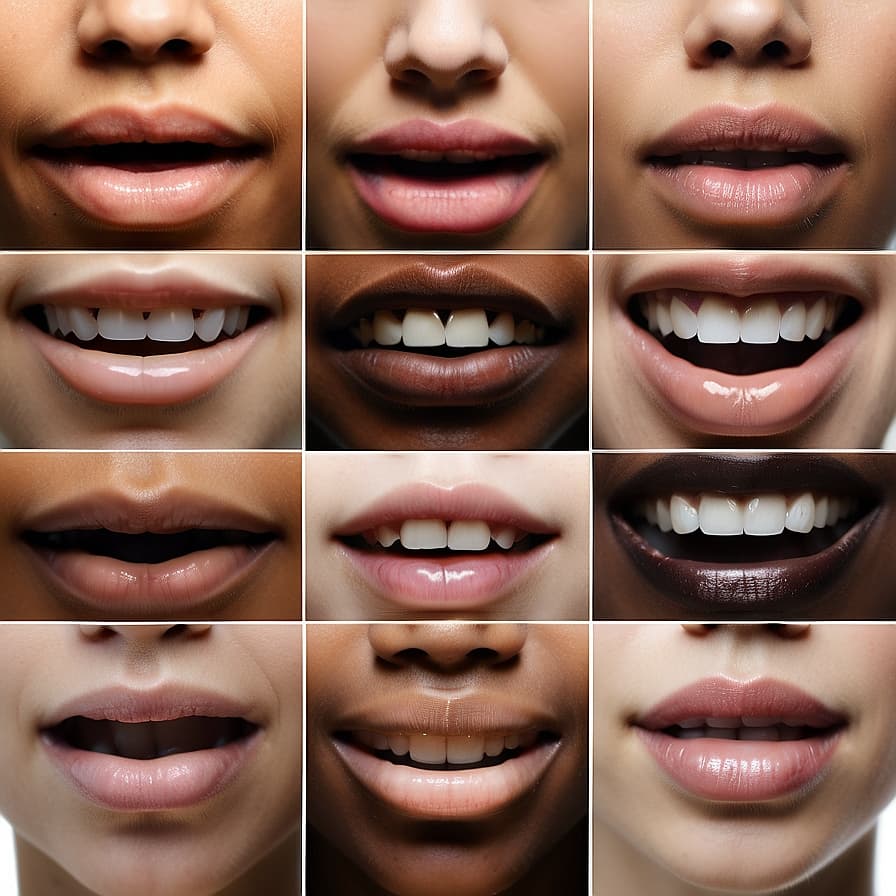
Generate Bariba AI Content
Use this ethnicity's phenotype data to create AI-generated content with accurate physical traits and cultural context.
Open Creator Studio