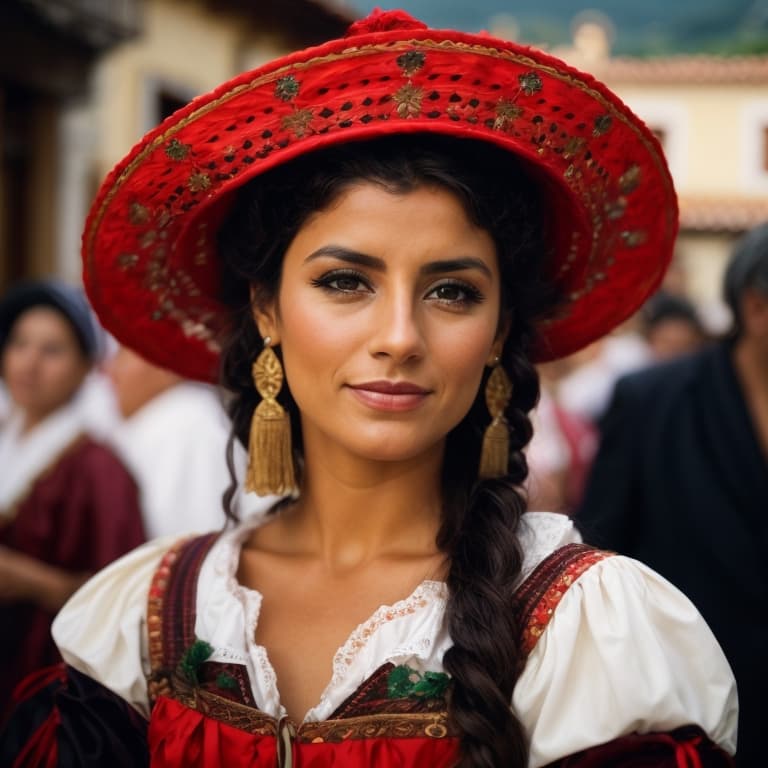
Basques Erotic
Basque Country (Spain, France)
Basque
Christianity / Catholicism
Significant populations in Argentina, Chile, Colombia, Mexico, Venezuela, and Uruguay
Southern Europe
About Basques People
The Basques are the puzzle Europe has not solved. Their language, Euskara, is unrelated to any other living tongue — not Indo-European, not Uralic, not anything traceable. Linguists have spent two centuries trying to connect it to Caucasian languages, to Iberian, to a hypothetical pre-Indo-European substrate, and the connections keep failing. What this means in practice is that the Basques were already in their corner of the western Pyrenees when the Celts, the Romans, the Visigoths, and the Moors all arrived, and they were still there when each of those waves receded. The homeland straddles the Bay of Biscay across what is now northern Spain and a smaller slice of southwestern France, mountainous on the inland side and maritime on the coast — a geography that helped a small population stay distinct for an unusually long time.
Catholicism took deep hold here, and the Basque Country produced some of the most consequential figures in the early modern Church, Ignatius of Loyola among them. But the religion sits on top of older domestic practices: the etxe, the family farmhouse, has historically been the unit that mattered, passed intact to a single heir regardless of gender, with its own name that the inhabitants often took as their own. Inheritance through the eldest child rather than the eldest son is one of the quieter ways Basque social structure has long differed from its neighbors. Sports do similar work — pelota, stone-lifting, log-chopping competitions — communal, physical, and tied to specific valleys.
The political history is sharper. The Basques resisted full integration into Castile and France for centuries, holding regional charters (the fueros) that granted considerable autonomy until the nineteenth century. The loss of those rights fed a nationalist movement that hardened during the Franco era, when the language was suppressed and Guernica was bombed in 1937 — an event that became shorthand for civilian air war and gave Picasso his subject. The armed separatist conflict that followed, and ended in the 2010s, is recent enough that older Basques lived through all of it. Diaspora communities formed early and stayed cohesive: Basque sheepherders shaped ranching country across Argentina, Uruguay, and the American West, and those communities still hold dance festivals and speak some Euskara generations on. The language itself, nearly extinguished under Franco, has been pulled back through schooling and broadcasting and is now spoken by roughly three-quarters of a million people.
Typical Basques Phenotypes
Reference for AI generation — hair, eyes, skin, facial structure, build
The Basques are one of Europe's most genetically distinctive populations — a pre-Indo-European isolate carrying the highest frequency of Rh-negative blood in the world (~35%) and elevated frequencies of certain Y-chromosome markers (R1b) that suggest deep continuity with Paleolithic Western European hunter-gatherers. The phenotype reads as recognizably Atlantic European, but with a particular stamp that's neither fully Iberian nor French.
Hair runs predominantly dark — chestnut to near-black — with a noticeable minority of mid-brown and ash tones, and a small but visible incidence of natural reddish or auburn hair, especially among the rural interior. Texture is most often straight to gently wavy; tight curl is uncommon. Eye color is where Basques diverge from southern Iberian neighbors: blue, green, and grey eyes appear at frequencies closer to northern France or Britain than to the Mediterranean, alongside the expected hazels and browns. Eyelids are typically European-set with no epicanthic fold, often deep-set under a moderately strong brow.
Skin tones cluster around Fitzpatrick II–III — fair to light olive, with cool or neutral undertones rather than the warmer tones common further south in Spain. Many tan readily without burning severely, but pale, freckle-prone complexions are also common, particularly along the wetter coastal Bizkaia and Gipuzkoa side.
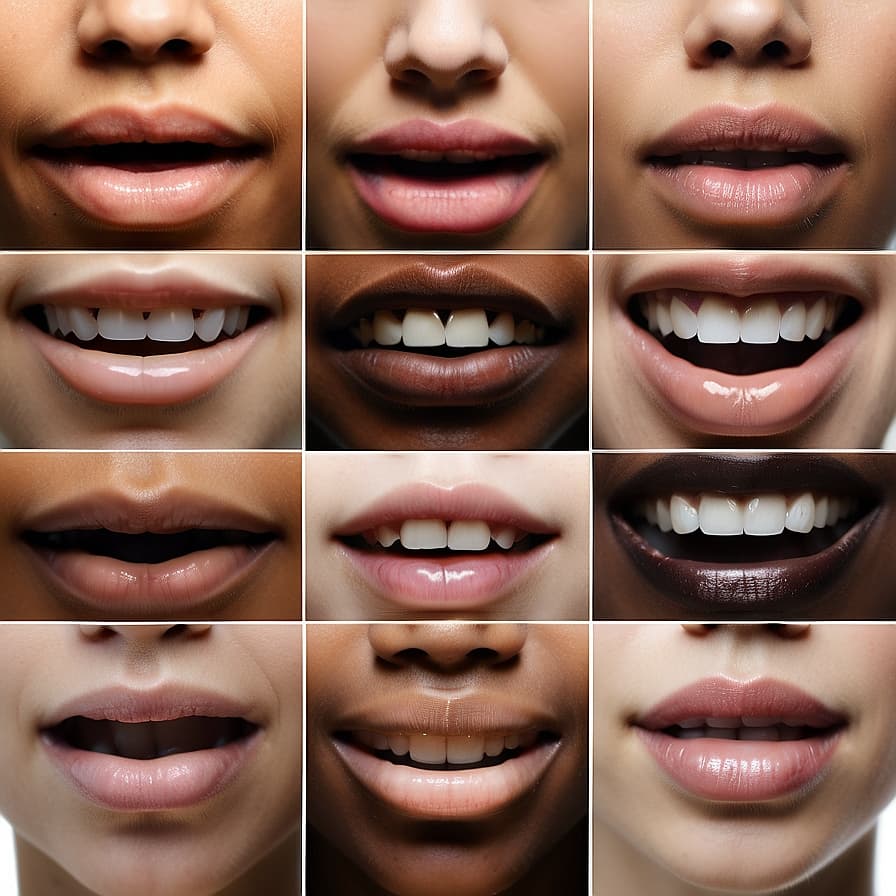
Facial structure tends toward long-headedness, with a straight or slightly aquiline nose of moderate bridge height and narrow alar base, a defined jaw, and prominent cheekbones. Lips are typically medium in fullness. The look is often described as "severe" or angular — see Najwa Nimri for a recognizable example of the darker-eyed, sharp-featured variant.
Build is medium-tall by southern European standards, with men commonly 173–178 cm, lean to athletically robust frames, and broad shoulders relative to hip width. Coastal Basques (Bizkaia, Gipuzkoa) skew slightly fairer and rangier; inland Navarrese and southern French Basques (Iparralde) tend marginally darker and more compact.
Data depth
75/100Coverage of image-grounded phenotype observations · drives AI generation diversity
- Sample size
- 40/40· 77 images
- Image quality
- 25/30· 51% high
- Confidence
- 10/20· mean 0.66
- Source diversity
- 0/10· wikipedia
- ·Wikipedia-only source — not population-representative
Observed Distribution — Image Sample
Empirical observations from analyzed photographs · supplementary signal, not population truth
Sample: 77 images analyzed (77 wikipedia). Quality: 39 high, 24 medium, 13 low, 1 very_low. Avg analyzer confidence: 0.66.
Skin tone (Fitzpatrick): II (62%), III (19%), IV (9%), unclear (9%)
Hair color: black (36%), gray/white (32%), dark brown (10%), light/medium brown (5%), blonde (5%), red/auburn (1%), unclear (9%)
Hair texture: straight (40%), wavy (36%), curly (4%), bald (1%), shaved (1%), covered (12%), unclear (5%)
Eye color: dark brown (32%), hazel (12%), brown (8%), blue (6%), green (1%), other (1%), unclear (39%)
Epicanthic fold: 1% present, 82% absent, 17% unclear
Caveats: Sample is 100% Wikipedia notable people — skews toward male, public-life, and modern figures, not population-representative.
Last aggregated: May 7, 2026
Explore phenotype categories
Structured taxonomy with peer-reviewed scales · 22 anatomical categories
Notable Basques People
100 reference figures — sourced from Wikipedia
- Basque Country — born or resident in the Basque Country, unless self-identifying as not Basque…
- Anabel Alonso — actress.
- Joe Ansolabehere — animation screenwriter.
- Montxo Armendáriz — filmmaker.
- Aurelio Arteta — writer and painter.
- Juanma Bajo Ulloa — filmmaker.
- Cristóbal Balenciaga — fashion designer.
- Ricardo Baroja — painter, writer and engraver.
- Nestor Basterretxea — painter, sculptor and filmmaker.
- Camren Bicondova — actress.
- Eduardo Chillida — sculptor.
- Juan de Echevarría — painter.
- Baltasar de Echave — painter.
- Victor Erice — film director.
- Marta Etura — actress.
- Jose Etxenagusia — painter.
- Menchu Gal — painter.
- Ibn Gharsiya — Basque Muslim poet.
- Adolfo Guiard — painter.
- Barbara Goenaga — actress.
- Alejandro González Iñárritu — filmmaker.
- Miren Ibarguren — actress.
- Agustín Ibarrola — painter.
- Álex de la Iglesia — filmmaker.
- Adam Irigoyen — actor and singer.
- Itziar Ituño — actress.
- Francisco Iturrino — painter.
- Carmen Larrabeiti — actress.
- Guillermo Larrazábal — stained glass artist.
- Jesús Mari Lazkano — painter.
- Rebeca Linares — pornographic actress.
- Paul Mayeda Berges — screenwriter.
- Julio Médem — film director.
- Antonio Mercero — film director.
- Rafael Moneo — architect.
- Najwa Nimri — actress.
- Jorge Oteiza — sculptor.
- Hayley Orrantia — actress.
- Paco Rabanne — fashion designer.
- Pierre Richard-Willm — sculptor.
- Dolores del Río — actress.
- Blanquita Suárez — actress and singer.
- Natalia Tena — actress.
- Eduardo Úrculo — sculptor.
- Jenaro de Urrutia Olaran — painter.
- Achille Zo — painter.
- Ignacio Zuloaga — painter.
- Iván Zulueta — film director
- Daphne Zuniga — actress.
- Léopold Eyharts — astronaut.
- Dominique Amestoy — banker, founder of Farmers and Merchants Bank.
- José María Arizmendiarrieta — founder of the Mondragón cooperatives.
- John Arrillaga — real estate businessman, Silicon Valley.
- Jacques Bergerac — actor, and business executive with Revlon.
- François Cabarrus — adventurer and Spanish financier.
- José Ignacio Goirigolzarri — president of Bankia.
- Roberto Goizueta — chief executive officer of Coca-Cola.
- Simón Iturri Patiño — business magnate.
- Casilda Iturrizar — businessperson and philanthropist.
- Jacques Laffitte — banker and politician.
- Elías Querejeta — screenwriter and film producer.
- Joseph A. Unanue — businessman, president of Goya Foods.
- Enrique Zobel y de Ayala — Filipino industrialist, patriarch of the Zobel de Ayala family.
- Daniela Albizu — 1936-2015), Basque-language teacher, writer, and councillor
- Elbira Zipitria — 1906–1982), innovative Spanish-Basque educator promoting use of the Basque la…
- Bahlul Ibn Marzuq — Basque Muslim rebel.
- Berengaria of Navarre — Queen of England.
- Count Cassius — founder of Banu Qasi dynasty.
- Vicente Emparán — 19th century Capitan General of Venezuela
- Martin Guerre — historical French victim of identity theft.
- Jon Manteca — activist.
- Musa ibn Musa al-Qasi — ruler of Banu Qasi dynasty.
- Eva Perón — First Lady of Argentina.
- Jean Vrolicq — Basque whaler.
- Juan Aguirre — musician
- Uxue Alberdi — bertsolari and writer
- Miren Amuriza — bertsolari and writer
- Juan de Anchieta — composer
- Tom Araya — musician
- Maite Arruabarrena — born 1964), operatic singer
- Javier Bello-Portu — composer
- Carmelo Bernaola — 20th century composer
- Manu Chao — musician
- Juan Crisóstomo Arriaga — composer
- Aita Donostia — composer
- Federico Elizalde — Filipino jazz bandleader
- Cesáreo Gabaráin — songwriter
- Jesús Guridi — composer
- Alberto Iglesias — composer, twice nominated for Oscar
- Rafael Anton Irisarri — composer
- José Iturbi — composer, pianist
- Pedro Iturralde — musician
- Mikel Laboa — singer-songwriter
- Benito Lertxundi — musician
- Leire Martínez — singer-songwriter
- Carlos Mena — opera singer
- Amaia Montero — singer-songwriter
- Fermin Muguruza — singer-songwriter
- Roland Orzabal — musician, singer-songwriter, Tears for Fears band
- Maurice Ravel — composer


Generate Basques AI Content
Use this ethnicity's phenotype data to create AI-generated content with accurate physical traits and cultural context.
Open Creator Studio