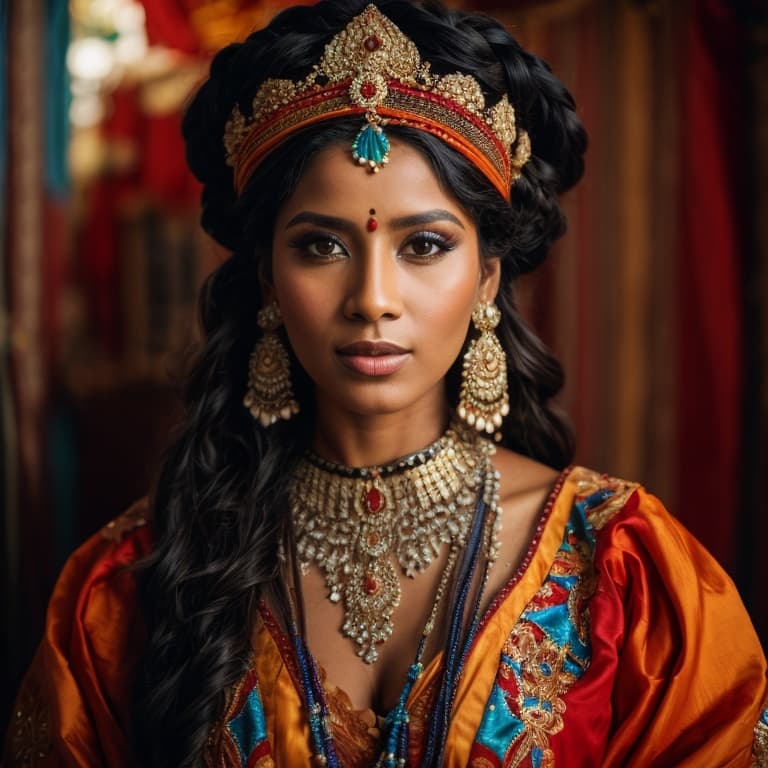
Aromanians Erotic
Balkans (Greece, Albania, North Macedonia, Serbia, Bulgaria, Romania)
Indo-European / Romance / Aromanian
Christianity / Eastern Orthodoxy
Significant populations in Greece, Albania, and North Macedonia
Southern Europe
About Aromanians People
The Aromanians are the Balkans' other Latin-speaking people — a population scattered across Greece, Albania, North Macedonia, Serbia, and Bulgaria whose mother tongue is a Romance language closely related to Romanian, separated from it by roughly a thousand years of independent development across mountain ranges and political borders. They call themselves Armãnji or Rrãmãnji, depending on the village, and the question of whether Aromanian is a distinct language or a southern dialect of Romanian is one Aromanians themselves answer differently depending on which capital is asking. The community is small, perhaps a few hundred thousand active speakers, and the language is classified as endangered nearly everywhere it is spoken.
For most of their recorded history the Aromanians were transhumant pastoralists and long-distance muleteers, moving sheep between summer pastures in the Pindus and Grammos highlands and winter lowlands, and moving goods along caravan routes that knit the southern Balkans together under Ottoman rule. That mobility produced an outsized merchant class. Aromanian families financed schools, churches, and civic buildings from Vienna to Budapest to Odessa in the eighteenth and nineteenth centuries, and a remarkable share of the figures who built the modern Greek state — bankers, revolutionaries, national benefactors — came from Aromanian-speaking households that had assimilated into Hellenic identity. Moscopole, in what is now southeastern Albania, was one of the largest cities in the Balkans before its destruction in the 1760s and 1780s; its dispersal seeded Aromanian communities across central Europe.
Religiously they are Eastern Orthodox, and their church life has historically been conducted in Greek rather than the vernacular, which is one reason the spoken language never developed a stable literary standard. The internal divisions track geography more than doctrine: Pindean Aromanians in northern Greece, Gramostean and Farsherot groups originating in the Albanian highlands, the Moscopolitan diaspora, and the Meglen Vlachs of the Macedonian–Greek border, who speak a related but distinct tongue. Identity politics around them have always been awkward — Greece treats them as Greeks who happen to speak a Latin idiom at home, Romania historically claimed them as kin, and North Macedonia is the only country to recognize them as a constitutional minority. Most Aromanians today live in cities, work in trades and the professions, and pass the language on unevenly; the festivals, the sheep-bell soundscape, and the August homecomings to ancestral mountain villages are doing much of the work that schools and liturgy never did.
Typical Aromanians Phenotypes
Reference for AI generation — hair, eyes, skin, facial structure, build
Aromanians are a Balkan Romance-speaking population dispersed across Greece, Albania, North Macedonia, and Romania, and their phenotype reads as classic southeastern European with a strong mountain-pastoralist signature from centuries spent in the Pindus, Gramos, and Macedonian highlands. Hair runs predominantly dark brown to near-black, often with cool ash or neutral undertones rather than the warm chestnut common further north; texture is typically straight to softly wavy, thick and coarse, with early greying frequent in older men. A meaningful minority in the Albanian and Macedonian branches carries lighter mid-brown hair, and outright blond or red is uncommon but not unheard of, usually traceable to highland enclaves around Kruševo and Moscopole.
Eyes are most often dark brown to hazel, with a notable green-hazel and grey-green minority — a recurring Balkan-mountain trait. The epicanthic fold is absent; eye shape is typically almond, deep-set under fairly heavy brow ridges, with strong dark eyelashes and brows that often meet or nearly meet. Skin sits in the Fitzpatrick II–IV range, leaning III: a light-to-medium olive base with neutral-to-warm undertone that tans readily and rarely burns severely. Highland Aromanians from Greece and Albania tend toward the darker olive end; the Romanian-resettled diaspora skews lighter, closer to wider Romanian norms.
Facial structure is the most recognizable signature. Noses are usually long and straight or with a slight high bridge, alar width moderate, occasionally aquiline in the older Pindus stock — see Toma Caragiu for a textbook example. Lips are medium in fullness, the lower fuller than the upper; cheekbones are moderately high and broad, jawlines firm and angular in men, more tapered and oval in women. Build is medium-tall by Balkan standards, historically lean and wiry from transhumant shepherding, with broad shoulders relative to hip width in men and a tendency toward sturdy, hourglass figures in women. Visible phenotype variation between the Greek, Albanian, and Macedonian branches is modest — diet and admixture shift the averages slightly, but the underlying type holds across the diaspora.
Data depth
48/100Coverage of image-grounded phenotype observations · drives AI generation diversity
- Sample size
- 32/40· 32 images
- Image quality
- 11/30· 22% high
- Confidence
- 5/20· mean 0.55
- Source diversity
- 0/10· wikipedia
- ·Low overall confidence
- ·Mostly low-quality source images
- ·Wikipedia-only source — not population-representative
Observed Distribution — Image Sample
Empirical observations from analyzed photographs · supplementary signal, not population truth
Sample: 32 images analyzed (32 wikipedia). Quality: 7 high, 12 medium, 11 low, 2 very_low. Avg analyzer confidence: 0.55.
Skin tone (Fitzpatrick): II (63%), III (16%), IV (6%), unclear (16%)
Hair color: gray/white (47%), black (44%), unclear (9%)
Hair texture: straight (69%), wavy (16%), curly (3%), bald (3%), unclear (9%)
Eye color: dark brown (22%), blue (16%), hazel (9%), unclear (53%)
Epicanthic fold: 0% present, 84% absent, 16% unclear
Caveats: Quality skews toward older or low-resolution photos; phenotype detail may be lossy. Low average analyzer confidence — many photos partially obscured or historical. Sample is 100% Wikipedia notable people — skews toward male, public-life, and modern figures, not population-representative.
Last aggregated: May 7, 2026
Explore phenotype categories
Structured taxonomy with peer-reviewed scales · 22 anatomical categories
Notable Aromanians People
100 reference figures — sourced from Wikipedia
- Eastern Orthodoxy — Aromanian Orthodox Church
- Romanians — Moldovans
- Zicu Araia — 1877–1948), Aromanian poet, schoolteacher and separatist, born in Samarina
- Constantin Belimace — 1848–1932), Romanian poet, born in Malovište
- Leon Boga — 1886–1974), Aromanian writer, schoolteacher and archivist in Romania, born in…
- Hristu Cândroveanu — 1928–2013), Romanian writer, Aromanian ancestry
- George Ceara — 1880/1881–1939), Aromanian poet and prose writer, born in Xirolivado
- Jovan Četirević Grabovan — 1720–1790), Serbian Orthodox icon painter
- Ion Foti — 1887–1946) Romanian writer, born in Kleisoura
- Jovan Jovanović Zmaj — 1833–1904), Serbian poet, distant paternal Aromanian ancestry.
- Prokop Mima — [sq] (1920–1986), Albanian actor
- Stere Gulea — 1943–), Romanian filmmaker, Greek-Aromanian parentage
- Yanaki and Milton Manaki — 1878–1954; 1882–1964), photography and cinema pioneers, born in Avdella
- Branislav Nušić — 1864–1938), Serbian novelist and playwright, Greek-Aromanian father
- Janaq Paço — 1914–1991), Albanian sculptor
- Jovan Sterija Popović — Serbian writer, father of Greek-Aromanian descent
- Constantin Noica — 1909–1987), Romanian philosopher, essayist and poet
- Dumitru Pasima — 1935–2022), Romanian sculptor
- Nuși Tulliu — 1872–1941), Romanian poet and novelist, born in Avdella
- Camil Ressu — 1880–1962), Romanian painter
- Florica Prevenda — Romanian painter
- Alexandru Arsinel — Romanian actor and comedian*
- Toma Caragiu — 1925–), Romanian actor, born in Argos Orestiko
- Dimitris Mitropanos — 1948–2012), Greek singer
- Takis Mousafiris — 1936–2021), Greek composer, lyricist and songwriter
- Albert Vërria — 1936–2015), Albanian actor
- Margarita Xhepa — 1932–), Albanian actress
- Ndriçim Xhepa — 1957–), Albanian actor
- Toma Enache — 1970–), Romanian film director
- Tașcu Gheorghiu — 1910–1981), Romanian writer and visual artist
- Taško Načić — 1934–1993), Serbian actor, paternal Aromanian descent
- Dan Pița — Romanian filmmaker[citation needed]
- Sandër Prosi — 1920–1985), Albanian actor[citation needed]
- Sergiu Nicolaescu — 1930–2013), Romanian filmmaker and politician, Aromanian family
- Parashqevi Simaku — 1966–), Albanian singer
- Apostolos Kaldaras — [el] (1922–1990), Greek composer
- Elena Gheorghe — Romanian singer, Aromanian father
- Kaliopi — 1966–), Macedonian singer of mixed Aromanian–Macedonian background
- Toše Proeski — Macedonian pop singer-songwriter, family from Kruševo
- Ștefan Octavian Iosif — Romanian author
- Eli Fara — 1967–), Albanian singer, Greek-Aromanian ancestry
- Dimitrie Osmanli — 1927–2006), Yugoslav and Macedonian film, television and theater director
- Nicolae Velo — 1882–1924), Aromanian poet and diplomat in Romania, born in Malovište
- Jakov Xoxa — 1923–1979), Albanian author and writer
- Nikolla Zoraqi — 1928–1991), Albanian composer
- Miladinov brothers — 1810/1830–1862), Bulgarian poets and folklorists of partial Aromanian ancestry
- Vassilis Tsitsanis — 1915–1984), Greek songwriter
- Kostas Virvos — [el] (1926–2015), Greek composer
- Rayko Zhinzifov — 1839–1877), Bulgarian poet of Aromanian ancestry
- Evangelos Zappas — 1800–1865), philanthropist and businessman
- Konstantinos Zappas — 1814–1892), entrepreneur and benefactor
- George Averoff — 1818–1899), Greek businessman and philanthropist, born in Metsovo.
- Sotirios Voulgaris — Aromanian mother) (1857–1932), businessman
- Paolo Bulgari — partially Aromanian) (1937–), businessman and jewelry designer
- Georgios Sinas — 1783–1856), Habsburg-Greek entrepreneur, banker and philanthropist, born in M…
- Michael Tositsas — 1787–1856), Aromanian benefactor
- Simon Sinas — 1810–1876), Austrian-Greek banker, aristocrat, benefactor and diplomat
- Emanoil Gojdu — 1802–1870), Austrian-Romanian lawyer and philanthropist. Moscopole family.
- Mocioni family — 19th c.), banking and philanthropist family in Austria-Hungary
- Petar Ičko — c. 1755–1808), Ottoman merchant, Serbian diplomat, born in Pyrgoi, possibly A…
- Sterjo Nakov — 1948–), North Macedonian businessman
- Lazaros Tsamis — 1878–1933), Aromanian merchant
- Dionysios Mantoukas — 1648–1751), bishop
- Archimandrite Averchie — 1806/1818–?), monk and schoolteacher
- Joachim III of Constantinople — 1834–1912), Patriarch (1878–1884, 1901–1912), family from Kruševo
- Meletie Covaci — 1707–1775), Catholic bishop
- Theodore Kavalliotis — 1718–1789), Greek Orthodox priest, teacher and Englightener.
- Andrei Șaguna — 1809–1873), Romanian Orthodox bishop and Romanian nationalist, family from Gr…
- Nektarios Terpos — end 17th–18th century), priest and author
- Ioakeim Martianos — 1875–1955), bishop and author
- Damian of Albania — Albanian Orthodox Archbishop from 1966-1967
- Haralambie Balamaci — [ro] (1850–1914), Aromanian priest
- Hierotheus I of Alexandria — ?–1845), Greek Orthodox Patriarch of Alexandria
- Cyril of Bulgaria — 1901–1971), first Patriarch of the restored Bulgarian Patriarchate
- Helena Angelina Komnene — fl. 1271–91), Byzantine princess, Aromanian mother
- Rigas Feraios — 1757–1798), writer, political thinker and revolutionary
- Evangelos Averoff — Greek minister and leader of the New Democracy party[citation needed]
- Alexandros Papagos — 1883–1955), Hellenic Army officer and Prime Minister, Aromanian mother
- Florica Bagdasar — first woman minister in Romania and neuropsychiatrist
- Nicolae Constantin Batzaria — 1874–1952), Aromanian cultural activist, Ottoman statesman and Romanian writer.
- Apostol Arsache — Greek-Romanian politician and philanthropist
- Costică Canacheu — Romanian politician, deputy in the Romanian Parliament, secretary of the Demo…
- Ion Caramitru — Romanian politician, former Minister of Culture[citation needed]
- Vladan Đorđević — 1844–1930), Serbian politician, diplomat, physician, prolific writer, and org…
- Dhimitër Tutulani — 1857–1937), Albanian lawyer and politician
- Margarita Tutulani — 1925–1943) anti-fascist
- Alcibiades Diamandi — Greek politician, separatist and fascist collaborator
- Vassilis Rapotikas — 1888–1943) - commander of the Roman Legion
- Andreas Tzimas — 1909–1972) - communist politician
- Spyridon Lambros — 1851–1919) - Greek politician and history professor, Aromanian father
- Llazar Fundo — 1899–1944) - Albanian communist, former member of the Balkan communist federa…
- Michael Dukakis — American Governor of Massachusetts and former presidential candidate. Greek-A…
- Liri Gero — 1926–1944) - Albanian World War II martyr and heroine.
- Taki Fiti — born 1950), Macedonian economist and former state financial minister
- Ioannis Kolettis — Greek Prime Minister, declared independence from the Ottoman Empire
- Teodor Heba — 1914–2001) - Albanian chairman of the Politburo from 1950 to 1951.
- Dimitrios Makris — 1910–1981), politician and minister
- Apostol Mărgărit — leader of the pro-Romanian faction of the Aromanians of Greece, inspector of …
- Nicolaos Matussis — politician and lawyer, leader of the collaborationist Roman Legion
- Filip Mișea — 1873–1944), Aromanian activist, physician and politician


Generate Aromanians AI Content
Use this ethnicity's phenotype data to create AI-generated content with accurate physical traits and cultural context.
Open Creator Studio