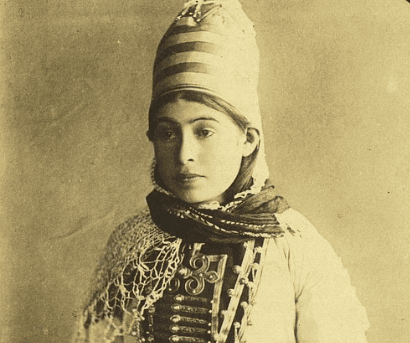
Abazins Erotic
Abazinia (Russia)
Northwest Caucasian / Abazgi / Abaza
Islam / Sunni
Significant populations in Turkey, Egypt and Ukraine
Eastern Europe
About Abazins People
The Abazins are one of the small Northwest Caucasian peoples whose history has been bent, more than once, by the larger powers around them. Their core homeland sits on the northern slopes of the Caucasus in what is now Karachay-Cherkessia in southern Russia — a cluster of mountain and foothill villages rather than a contiguous territory — but the larger share of Abazins today live outside it, in Turkey, with smaller communities scattered through Egypt, Jordan, Syria and Ukraine. That diaspora is not incidental. It is the long shadow of the nineteenth-century Russian conquest of the Caucasus, which pushed enormous numbers of Circassians, Abkhaz and Abazins into the Ottoman Empire in the 1860s. The map of the Abazin world is essentially a map of who stayed and who was forced out.
Abaza, the language, belongs to the Northwest Caucasian family — the same small, famously consonant-heavy family as Abkhaz, Adyghe and Kabardian, and entirely unrelated to Russian or Turkish despite all the centuries of contact. It is closest to Abkhaz; linguists often describe Abaza and Abkhaz as two ends of a single continuum rather than separate languages in the ordinary sense, and speakers of one can usually follow the other with effort. There are two main dialect groupings, Tapanta and Ashkharywa, which broadly correspond to older tribal divisions. The language is written today in a Cyrillic-based alphabet in Russia and is taught in local schools, though the everyday pressure of Russian — and, in the diaspora, of Turkish — keeps it under strain.
Religiously, the Abazins are Sunni Muslim, predominantly Hanafi, a heritage rooted in Ottoman and Crimean Tatar influence rather than any deep Arab connection. Islam sits alongside an older substrate of customary law, the unwritten code of honour, hospitality, blood-kin obligation and elder authority that runs across the whole Caucasus and which Abazins share with their Circassian and Abkhaz neighbours; in practice, social life is governed as much by that code as by religious prescription. Hospitality is not a cliché here but a structural duty, and the rules around guesthood, mourning and weddings remain unusually detailed. The community is small — somewhere in the tens of thousands inside Russia — and that smallness is itself one of the defining facts of being Abazin: a people who have spent the last two centuries working hard simply to remain a distinct people at all.
Typical Abazins Phenotypes
Reference for AI generation — hair, eyes, skin, facial structure, build
The Abazins are a small Northwest Caucasian people closely related to the Abkhaz and Circassians, and their phenotype sits squarely within the broader Pontid–Caucasid range seen across the western Caucasus foothills. The dominant impression is of medium-tall, narrow-built people with sharply cut features, thick dark hair, and the pale-but-warm skin common to mountain populations of the region.
Hair is most often dark brown to near-black, straight or with a loose wave; chestnut and dark-ash shades appear with some regularity, and outright blond or red hair is rare but documented, more so in children who darken with age. Beards in men come in dense and grow early. Eyes run brown across most of the population, but a meaningful minority — perhaps one in four to one in five — carry hazel, green, or grey-blue eyes, a trait shared with neighboring Circassians and Abkhaz. The eye opening is typically almond-shaped and set under a defined brow ridge; epicanthic folds are absent.
Skin is fair, generally Fitzpatrick II–III, with neutral-to-warm undertones that tan readily rather than burning; year-round paleness is common in women who avoid sun. The face is a recognizable Caucasus type: a long, straight or slightly convex nose with a high bridge and narrow alar base, prominent but not heavy cheekbones, a firm narrow jaw, and lips of moderate fullness — the upper lip often slightly thinner than the lower. Foreheads tend to be high and the overall facial outline is vertical rather than rounded.
Build is lean and long-limbed by regional standards, with men commonly in the 173–180 cm range and a tendency toward wiry musculature rather than bulk. The diaspora populations in Turkey and Egypt — descendants of 19th-century muhajir resettlement — show some admixture with local Anatolian and Levantine phenotypes, producing slightly darker average skin and hair, while the Ukrainian and homeland Abazins remain closer to the original Caucasus baseline.
Data depth
0/100Coverage of image-grounded phenotype observations · drives AI generation diversity
- Sample size
- 0/40· 0 images
- Image quality
- 0/30· 0% high
- Confidence
- 0/20
- Source diversity
- 0/10
- ·No image observations yet
Explore phenotype categories
Structured taxonomy with peer-reviewed scales · 22 anatomical categories





Generate Abazins AI Content
Use this ethnicity's phenotype data to create AI-generated content with accurate physical traits and cultural context.
Open Creator Studio