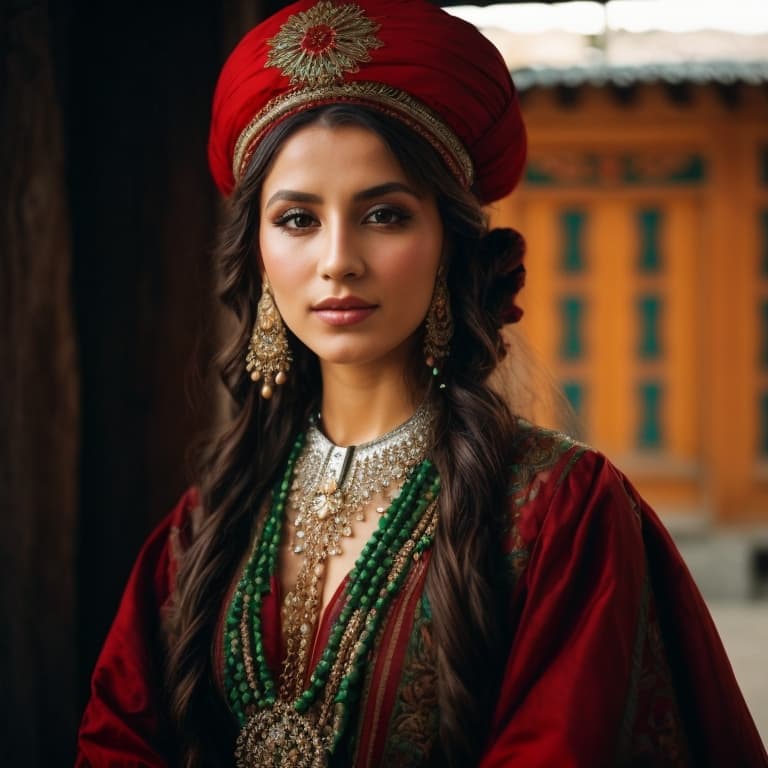
Circassians Erotic
Circassia (Russia)
Northwest Caucasian / Circassian
Islam / Sunni Islam
Adygeans, Kabardians, Cherkess, Shapsugs
Eastern Europe
About Circassians People
The Circassians call themselves Adyghe, and the name carries more weight than any of the labels Russia, Turkey, or Europe have pinned on them. They are the indigenous people of the northwestern Caucasus — the Black Sea slope and the foothills running east toward the Kabarda plateau — and their identity is bound up with a homeland most of them no longer live in. The 1864 expulsion at the close of the Russo-Circassian War scattered the survivors across the Ottoman Empire, and today the diaspora in Turkey, Jordan, Syria, and Israel is several times larger than the population still in the Caucasus. Any honest account of who the Circassians are has to start there: a nation whose center of gravity sits outside its own land.
The language gives the group its internal architecture. Circassian belongs to the Northwest Caucasian family — a small, isolated branch with no demonstrated relatives outside the region, famous among linguists for a consonant inventory so dense that vowels almost vanish. It splits into two literary standards. Adyghe is spoken by the Adygeans, Shapsugs, and the Cherkess of Karachay-Cherkessia; Kabardian, sometimes called East Circassian, is spoken by the Kabardians, who historically occupied the open steppe east of the mountains and developed a more stratified, cavalry-based aristocratic society. The branches understand each other with effort, and the distinction between western mountain Circassians and eastern plains Circassians runs through almost every cultural question.
Most Circassians today are Sunni Muslim, but Islam arrived late — broadly between the sixteenth and nineteenth centuries — and layered over an older customary code rather than replacing it. That code, Adyghe Khabze, governs hospitality, conduct between generations, the obligations of guest and host, and the elaborate etiquette of weddings and mourning. In practice it often outranks religious law in everyday matters, and many Circassians treat Khabze as the truer expression of who they are. The horseman tradition, the famous cherkeska coat with its row of cartridge pockets that became standard dress for Cossacks and Caucasian nobility alike, the polyphonic singing — these are surface markers of a culture organized around restraint, dignity, and a long memory. Among diaspora communities, the question of return to the Caucasus, and the campaign to have the 1864 deportation recognized as a genocide, remain live political concerns rather than historical footnotes.
Typical Circassians Phenotypes
Reference for AI generation — hair, eyes, skin, facial structure, build
Circassians are one of the most phenotypically distinctive populations of the North Caucasus, and historically were so consistently fair-featured that "Circassian beauty" became a Eurasian commonplace from Ottoman harems to nineteenth-century European ethnography. The hair runs the full European range with the bell shifted lighter than the regional average: medium to dark brown predominates, but ash-blond, honey-blond, and chestnut are common, and auburn appears at noticeably higher rates than in neighboring Caucasian groups. Texture is typically straight to loosely wavy, fine to medium in diameter. Eye color skews light — gray, blue-gray, green, and hazel are well-represented alongside brown, and pale eyes paired with dark hair is a recurring combination. Eyelids are flat and Western-shaped; no epicanthic fold. The eye opening tends to be almond, set under a moderately defined brow.
Skin is fair to light-medium, Fitzpatrick II–III, with cool to neutral undertones; tans warm rather than deepen heavily, and freckling is occasional. Facial structure is the most identifiable trait: a narrow, high-bridged straight nose with a fine tip and tight alar base, set over a long, oval face with a tapered chin and high but not broad cheekbones. Lips run medium — defined cupid's bow, more refined than full. The overall facial impression is sharp and vertical rather than rounded.
Build trends tall and lean — Kabardians in particular are documented as among the tallest groups of the Caucasus, with men commonly 178–185 cm and a long-limbed, narrow-hipped frame; women are correspondingly tall and slender with low body fat distribution. Among the branches, Kabardians (East Circassian) lean tallest and most often light-eyed; Adygeans and Shapsugs of the Black Sea coast trend slightly darker in hair and skin from Pontic admixture, while Cherkess populations sit between. Diaspora Circassians in Turkey, Jordan, and Egypt — the Abazas, Çerkes Ethem, Ahmed Shawqi's lineage — retain the phenotype clearly across generations.
Data depth
54/100Coverage of image-grounded phenotype observations · drives AI generation diversity
- Sample size
- 40/40· 60 images
- Image quality
- 9/30· 18% high
- Confidence
- 5/20· mean 0.52
- Source diversity
- 0/10· wikipedia
- ·Low overall confidence
- ·Mostly low-quality source images
- ·Wikipedia-only source — not population-representative
Observed Distribution — Image Sample
Empirical observations from analyzed photographs · supplementary signal, not population truth
Sample: 60 images analyzed (60 wikipedia). Quality: 11 high, 29 medium, 16 low, 4 very_low. Avg analyzer confidence: 0.52.
Skin tone (Fitzpatrick): II (17%), III (60%), IV (10%), unclear (13%)
Hair color: black (55%), gray/white (30%), dark brown (2%), unclear (13%)
Hair texture: straight (45%), wavy (12%), curly (3%), bald (2%), covered (30%), unclear (8%)
Eye color: dark brown (43%), brown (8%), hazel (5%), blue (3%), unclear (40%)
Epicanthic fold: 0% present, 80% absent, 20% unclear
Caveats: Quality skews toward older or low-resolution photos; phenotype detail may be lossy. Low average analyzer confidence — many photos partially obscured or historical. Sample is 100% Wikipedia notable people — skews toward male, public-life, and modern figures, not population-representative.
Last aggregated: May 7, 2026
Explore phenotype categories
Structured taxonomy with peer-reviewed scales · 22 anatomical categories
Notable Circassians People
100 reference figures — sourced from Wikipedia
- Bulgaria — historical)
- Kosovo — historical)
- Romania — historical)
- East Circassian — Kabardian)
- Maykop culture — Ancient Maykop culture Maeotians Zygii Medieval Mongol invasion of Circassia …
- Circassian Union and Charity Society — historical)
- Tevfik Esenç — Last known fully competent speaker of the Ubykh language.
- Hayriye-Melech Xhundj — One of the first woman Circassian writers
- Nâzım Hikmet — ** – Poet, playwright, novelist, screenwriter, director and memoirist.
- Amirkhan Kamizovich Shomakhov — lyrics, prose, and play writer, primarily known as one of the founders of the…
- Ahmed Shawqi — Egyptian poet-Laureate
- Fekry Pasha Abaza — Egyptian writer and political activist.
- Kuba Shaaban — writer, poet, musician and historian.
- Tharwat Abaza — Egyptian novelist and journalist.
- Hasan Cemal — ** – Turkish journalist, historian and writer
- Nadine Jolie Courtney — American journalist and author of Beauty Confidential and All-American Muslim…
- Mohydeen Izzat Quandour — Writer, intellectual, film producer and director, and musician
- Amjad Jaimoukha — One of the most influential Circassian writers and publicists
- Aziz Pasha Abaza — a significant figure in modern Arabic poetry.
- Kostë Çekrezi — * – also known as Constantin Anastas Chekrezi, was an Albanian patriot, histo…
- Orhan Pamuk — Nobel Laureate
- Shora Nogmov — Kabardian historian and public figure
- Ali Maher — Jordanian architect
- Hekataios of Sindike — king of the Sindians throughout the reign of both Satyros I and Leukon I, rul…
- Oktamasades of Sindike — king of the Sindians. He usurped the throne from his father some time in 383 …
- Inal the Great — Supreme Prince (King) of Circassia from 1427 to 1453 who unified all Circassi…
- Idar of Kabardia — Supreme Prince of Kabardia. He was the son of Prince Inarmaz, and the grandso…
- Temryuk of Kabardia — Supreme Prince of Kabardia. When Temryuk came to power, he put down the revol…
- Beslan the Fat — Supreme Prince of Kabardia
- Sholokh the Mighty — Supreme Prince of Kabardia
- Kurgoqo Atajuq — Supreme Prince of Kabardia who won the Battle of Kanzhal.
- Jankhot Qushuq — Last Supreme Prince of Kabardia.
- Yusuf Agha — Safavid gholam and courtier who wielded great influence and power during the …
- Qazaq Khan Cherkes — Safavid military commander who also served as the governor of Shirvan (1624–1…
- Farhad Beg Cherkes — Safavid military commander
- Behbud Khan Cherkes — Safavid military commander
- Fereydun Khan Cherkes — Safavid military commander who served as the governor of Astarabad
- Najafqoli Khan Cherkes — Safavid military commander who served as the governor of Shirvan and Erivan
- Qalebatuqo Hatuqay Shupako — politician and military commander who served as the 1st leader of the Circass…
- Ismail Berzeg — military commander and politician who served as the 2nd leader of the Circass…
- Seferbiy Zaneqo — military commander and diplomat who served as the 5th leader of the Circassia…
- Qerandiqo Berzeg — military commander who served as the 6th and last leader of the Circassian Co…
- Kizbech Tughuzhuqo — military commander who took part in the Russo-Circassian War. Personally witn…
- Jembulat Boletoqo — military commander, politician, nobleman and leader of the Chemguy region. He…
- Qerzech Shirikhuqo — military commander and the leader of the Natukhaj region.
- Pshiquy Akhezhaqo — politician, military commander and the leader prince of the Bzhedug region.
- Ale Khirtsizhiqo — military commander from the Abzakh region.
- Çerkes Ethem — guerilla leader, social bandit, efe and soldier. Nicknamed the "Rankless Gene…
- Yusuf Izzet Pasha — a general of the Ottoman Army and the Turkish Army.
- Suleyman Askeri Pasha — Ottoman soldier and co founder of the Teşkilât-ı Mahsusa (Special Organisation)
- Yakub Cemil — Ottoman revolutionary and soldier, who assassinated Nazım Pasha during the 19…
- Mufid Bey Libohova — Albanian economist, diplomat and politician and one of the delegates at the A…
- Zeki Pasha — WWI and Balkan Wars field marshal
- Arslan Toğuz — police commissioner of the Ottoman Empire
- Rüştü Sakarya — officer of Ottoman army
- Cemil Cahit Toydemir — Officer of the Ottoman Army and a general of the Turkish Army.
- Ismail Hakkı Berkok — General of Mountainous Republic, Turkish and Ottoman armies
- Salah Salem — Egyptian Military officer and member in the Egyptian Revolutionary Command Co…
- Gamal Salem — Egyptian Air Force officer and political figure
- Hussein el-Shafei — Egyptian Military officer and member in the Egyptian Revolutionary Command Co…
- Zakaria Mohieddin — Egyptian Military officer and member in the Egyptian Revolutionary Command Co…
- General officer — Aziz Almasri – Egyptian Military officer
- Umar Muhayshi — member of the Libyan Revolutionary Command Council that ruled Libya.
- Bassam Abdel Majeed — Syrian military officer, politician and diplomat.
- Anzor Astemirov — Kabardian Salafi jihadist militant, best known for his 2004 and 2005 raids on…
- Ratmir Shameyev — Kabardian Salafi jihadist militant
- Emre Belözoğlu — football player and manager
- Şamil Çinaz — footballer
- Can Bartu — Former professional basketball and football player and pundit
- Ayetullah Bey — footballer, founder and second president of the major Turkish multi–sport clu…
- Süleyman Seba — Ex–President of Beşiktaş J.K.
- Oğuz Çetin — football player and manager
- Mesut Bakkal — football player and manager
- Feras Esmaeel — footballer
- Yanal Abaza — footballer
- Tamer Haj Mohamad — footballer
- Bibras Natcho — footballer
- Izhak Nash — footballer
- Nili Natkho — basketball player
- Aslanbek Khushtov — wrestler, 2008 Summer Olympics winner.
- Murat Kardanov — is a wrestler of Circassian descent who won the gold medal in the 2000 summer…
- Yaşar Doğu — 1948 London Olympics middleweight wrestling champion
- Gazanfer Bilge — July 23, 1924 – April 20, 2008) was a wrestler of Circassian descent who won …
- Hamit Kaplan — 20 September 1934 – 5 January 1976) was a World and Olympic champion sports w…
- Bilyal Makhov — Mixed Martial Artist and 2012 Olympic Bronze medalist in freestyle wrestling
- Beslan Mudranov — Judo, 2016 Olympics gold medalist
- Adil Candemir — Wrestler, 1948 London Olympics silver medalist
- Anas Pshikhachev — served as Head of the Spiritual Administration of the Muslims of Kabardino-Ba…
- Caner Dagli — Islamic scholar and associate professor of Religious Studies at the College o…
- Jawdat Said — Islamic scholar and nonviolence advocate.
- Al-Kawthari — Islamic scholar and theologian of the Maturidi school and the adjunct to the …
- Carlo de' Medici — ** – Italian priest, senior clergyman and collector, a member of the powerful…
- Jabagh Qazanoqo — philosopher, poet, military strategist, and diplomat who gained fame for refo…
- Sa'id Mufti — Jordanian independent politician, serving in several governments as interior …
- Ismael Babouk — The first Mayor of Jordan's capital, Amman (1909–1911)
- Toujan al-Faisal — Human rights activist, member of Jordanian Parliament 1993–1997, first woman …
- Cem Özdemir — * – German politician, co-chairman of the German Green Party
- Ali Mamlouk — Director of general security of Syria
- Abdul Majid Kabar — Prime Minister of Libya (1957–1960)
- Tahir Yahya — prime minister of Iraq

Generate Circassians AI Content
Use this ethnicity's phenotype data to create AI-generated content with accurate physical traits and cultural context.
Open Creator Studio