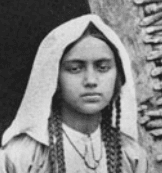
Abkhazians Erotic
Abkhazia
Northwest Caucasian / Abazgi / Abkhaz
Christianity / Eastern Orthodoxy, Islam / Sunni Islam
Eastern Europe
About Abkhazians People
The Abkhazians are a Black Sea people wedged between the western flank of the Caucasus and a narrow, subtropical coastline — citrus, tea, and tobacco country, with the high mountains rising sharply behind it. They call themselves Apsua and their land Apsny, "the country of the soul," a self-designation that gets repeated often enough to feel like a thesis statement about how the group sees itself: small, distinct, and not interchangeable with the larger neighbors who have repeatedly tried to fold them in.
Their language is the most immediately striking thing about them. Abkhaz belongs to the Northwest Caucasian family — a group with no demonstrated relatives outside the region — and it carries one of the most extreme consonant inventories on earth, somewhere around sixty distinct consonants set against a vowel system that, depending on how you count, has only two. It is famously hard to learn as an adult, and that difficulty has shaped Abkhazian identity in a quiet way: the language is a boundary that doesn't move much. Closely related Abaza is spoken across the mountains to the north; the now-extinct Ubykh, with its eighty-some consonants, was a cousin lost largely to the same nineteenth-century catastrophe that hollowed out Abkhazia itself.
That catastrophe — the muhajirstvo, the mass expulsion and flight of Muslim Abkhazians to the Ottoman Empire after Russia's conquest of the Caucasus in the 1860s — is the inflection point you cannot skip. Most Abkhazians in the world today actually live in Turkey and the wider Middle Eastern diaspora, descendants of those exiles, while the homeland was repopulated by Georgians, Russians, Armenians, and others. The demographic argument that followed has shadowed every political dispute since, including the war with Georgia in 1992–93 and the contested independence Abkhazia has claimed since.
Religion sits lightly on top of older material. Abkhazians are roughly split between Eastern Orthodox Christianity and Sunni Islam, but both are widely understood to be layered over a pre-Christian substrate of sacred groves, clan shrines, and oath-sites still observed at places like Dydrypsh-nykha. The traditional code of conduct, apsuara — hospitality, restraint, deference to elders, blood honor — is invoked more often in daily life than scripture. The Abkhazians are also one of the populations behind the Caucasus longevity legends of the Soviet era; the centenarian counts were inflated, but the underlying culture of village elders holding social weight into very old age was real, and in many places still is.
Typical Abkhazians Phenotypes
Reference for AI generation — hair, eyes, skin, facial structure, build
Abkhazians sit at the Caucasian end of the European phenotypic range, sharing core features with neighboring Circassian and Georgian populations but with their own distinctive cluster: dark hair, a strong-bridged nose, and a build shaped by centuries of mountain pastoralism along the Black Sea coast.
Hair runs predominantly dark — chestnut to near-black, with some medium brown — and is typically straight to gently wavy. Tight curl is uncommon. Naturally light hair is rare in adulthood, though sandy and ash tones surface in children and in individuals from the northwestern coastal districts. Beards grow full and dark in men, with notable graying that often arrives late, a trait the region's longevity studies have remarked on.
Eyes range across brown, hazel, and gray, with green and blue appearing at meaningful minority frequencies — higher than in most Caucasus populations south of the range. The lid is a standard European fold; no epicanthus. Eye shape tends almond, set under a defined but not heavy brow.
Skin typically falls in Fitzpatrick II–III, occasionally IV in the diaspora communities of Turkey and the Levant. Undertones are warm-neutral — pale olive rather than pink. The face tans readily and holds color through the long Black Sea summer, while torso skin remains noticeably lighter.
The facial signature is the nose: long, narrow at the bridge, often with a high straight or faintly aquiline profile and tight alar wings. Lips are moderate, neither thin nor full. Cheekbones sit high and forward, the jawline clean and rectangular in men, more tapered in women. The face overall reads angular and architectural rather than soft.
Build is lean and tall by regional standards — men commonly 175–183 cm — with long limbs, narrow hips, and the wiry musculature associated with mountain populations. The diaspora Abaza branches in Turkey and Egypt show some admixture-driven variation: slightly darker skin and broader features in the Egyptian-resident families, while highland Abkhazians proper retain the sharper, paler Caucasian profile most strongly.
Data depth
55/100Coverage of image-grounded phenotype observations · drives AI generation diversity
- Sample size
- 28/40· 23 images
- Image quality
- 17/30· 35% high
- Confidence
- 10/20· mean 0.56
- Source diversity
- 0/10· wikipedia
- ·Modest sample (n<25)
- ·Wikipedia-only source — not population-representative
Observed Distribution — Image Sample
Empirical observations from analyzed photographs · supplementary signal, not population truth
Sample: 23 images analyzed (23 wikipedia). Quality: 8 high, 11 medium, 4 low, 0 very_low. Avg analyzer confidence: 0.56.
Skin tone (Fitzpatrick): II (4%), III (61%), unclear (35%)
Hair color: gray/white (48%), black (13%), blonde (4%), other (4%), unclear (30%)
Hair texture: straight (48%), wavy (4%), shaved (4%), covered (39%), unclear (4%)
Eye color: dark brown (43%), blue (4%), hazel (4%), brown (4%), unclear (43%)
Epicanthic fold: 0% present, 83% absent, 17% unclear
Caveats: Sample size 23 is modest — secondary patterns may not be reliable. Sample is 100% Wikipedia notable people — skews toward male, public-life, and modern figures, not population-representative.
Last aggregated: May 7, 2026
Explore phenotype categories
Structured taxonomy with peer-reviewed scales · 22 anatomical categories
Notable Abkhazians People
27 reference figures — sourced from Wikipedia
- Alexey Gogua — 1932-2025), writer
- Dmitry Gulia — 1874–1960), Abkhazian Soviet writer and poet
- Fazil Iskander — 1929–2016), writer
- Bagrat Shinkuba — 1917–2004), writer, poet
- Aziz Pasha Abaza — 1898 – 1973) poet
- Fekry Pasha Abaza — 1895 – 1979) a journalist, writer and democratic political activist
- Tharwat Abaza — 1927 – 2002) novelist and journalist
- Aslan Bzhania — born 1963), Abkhaz politician
- Alexander Ankvab — born 1952), Abkhaz politician
- Anzor Kudba — [ka] (born 1939), member of Supreme Council of the Republic of Georgia from 1…
- Aslan Smirba — [ru] (born 1959), mayor of Batumi from 1997 to 1999 and member of the Parliam…
- Gennadi Gagulia — 1948–2018), Abkhazian politician
- Hayreddin Pasha — 1820–1890), Ottoman politician
- Mirab Kishmaria — born 1961), Abkhaz politician and army general
- Nestor Lakoba — 1893–1936), Abkhaz communist leader
- Rauf Orbay — 1881–1964), Turkish politician
- Raul Khajimba — born 1958), Abkhazian politician
- Shaaban Abash — 1890–1943), rider in the Circassian cavalry regiment of the Caucasian native …
- Sergei Bagapsh — 1949–2011), President of Abkhazia
- Vladimir Arshba — 1959–2018), Abkhaz soldier and politician
- Vladislav Ardzinba — 1945–2010), first de facto president of Abkhazia
- Abaza family — a diaspora family that produced a large number of politicians
- Mikhail, Prince of Abkhazia — 1806–1866)
- Hala Gorani — American journalist
- Rushdy Abaza — Arabic-language actor
- Munich — Chirikba, Viacheslav (2003). Abkhaz. Languages of the World/Materials. Vol. 1…
- ISBN — Roger Rosen, Georgia: Sovereign Country of the Caucasus, Odyssey, 2004, ISBN …

Generate Abkhazians AI Content
Use this ethnicity's phenotype data to create AI-generated content with accurate physical traits and cultural context.
Open Creator Studio