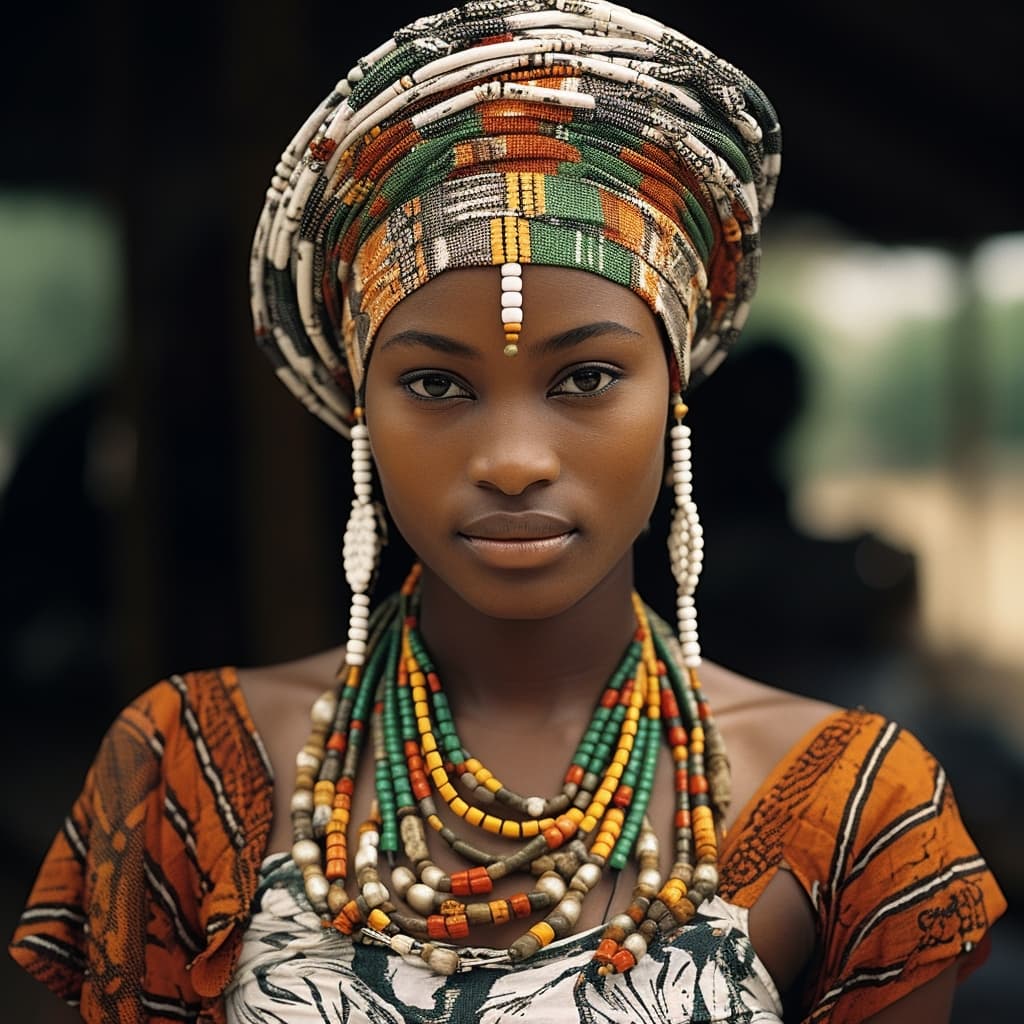
Urhobos Erotic
Delta State (Nigeria)
Niger–Congo / Edoid / Urhobo
Christianity
Western Africa
About Urhobos People
The Urhobo are the largest ethnic group in Nigeria's Delta State, settled across the freshwater swamps, creeks, and dryland forests west of the Niger Delta proper. Their twenty-two traditional polities — the most prominent being Agbarho, Okpe, Uvwie, Ughelli, Olomu, Agbon, Udu, Ughievwen, and others — were never welded into a single kingdom, and that political plurality still shapes how Urhobo people talk about themselves: a federation of related communities rather than a unitary nation. Each polity has its own Ovie (king) and its own founding traditions, and the council of these traditional rulers, the Urhobo Progress Union, is the closest thing the group has to a single political voice.
Their language, Urhobo, sits in the Edoid branch of Niger–Congo, kin to Edo (Bini), Isoko, and Esan, and intelligible at the edges with Isoko in particular — the two are sometimes treated by outsiders as a single bloc, though Urhobos and Isokos are firm about the distinction. The terrain has shaped the economy as much as the language has shaped identity: fishing, palm oil and palm wine production, and farming on the higher ground have been the working life of most Urhobo communities for generations, and the modern oil industry has been layered on top of that older economy with the friction one might expect, since most of Nigeria's onshore crude is pumped out from under Urhobo and neighboring Delta soil.
Christianity arrived in earnest in the late nineteenth and early twentieth centuries and is now the dominant affiliation, with a strong Catholic and Anglican presence and a growing Pentecostal scene, but the older religious vocabulary has not been displaced so much as folded in. The high god Oghene is invoked in Christian prayer with no sense of contradiction, and ancestor veneration, libations at family gatherings, and the rites surrounding death and the second burial remain socially compulsory in a way that Sunday service is not. Masquerade traditions and the Ohworhu water-spirit cults persist, particularly in riverine communities. The funeral, more than the wedding or the naming, is the event around which extended Urhobo family life still organizes itself — an occasion for the dispersed to come home, settle accounts, and confirm where they belong.
Typical Urhobos Phenotypes
Reference for AI generation — hair, eyes, skin, facial structure, build
The Urhobo are a Niger Delta population of southern Nigeria, and their phenotype sits squarely in the West African range with subtle distinctions that separate them from their Yoruba neighbors to the west and the Igbo to the east. Hair is overwhelmingly Type 4 — tightly coiled, with the dense Type 4B–4C texture typical of Niger-Congo populations of the lower Niger Delta. Natural color is uniformly black-black, occasionally reading near-black brown in strong sunlight. Greying tends to come late and concentrate at the temples first.
Eyes are dark brown to near-black, with no epicanthic fold and a relatively wide palpebral fissure. The almond-to-round eye shape often sits beneath a moderately heavy upper lid, giving a deep-set rather than prominent appearance — visible in figures like Richard Mofe-Damijo and Ufuoma McDermott. Skin tone runs Fitzpatrick V to VI, dominated by deep brown to dark cocoa with warm red-brown undertones; the cooler near-black tones common further east in Cross River are less typical here. The Niger Delta's high humidity and year-round sun produce relatively even pigmentation across exposed and unexposed skin.
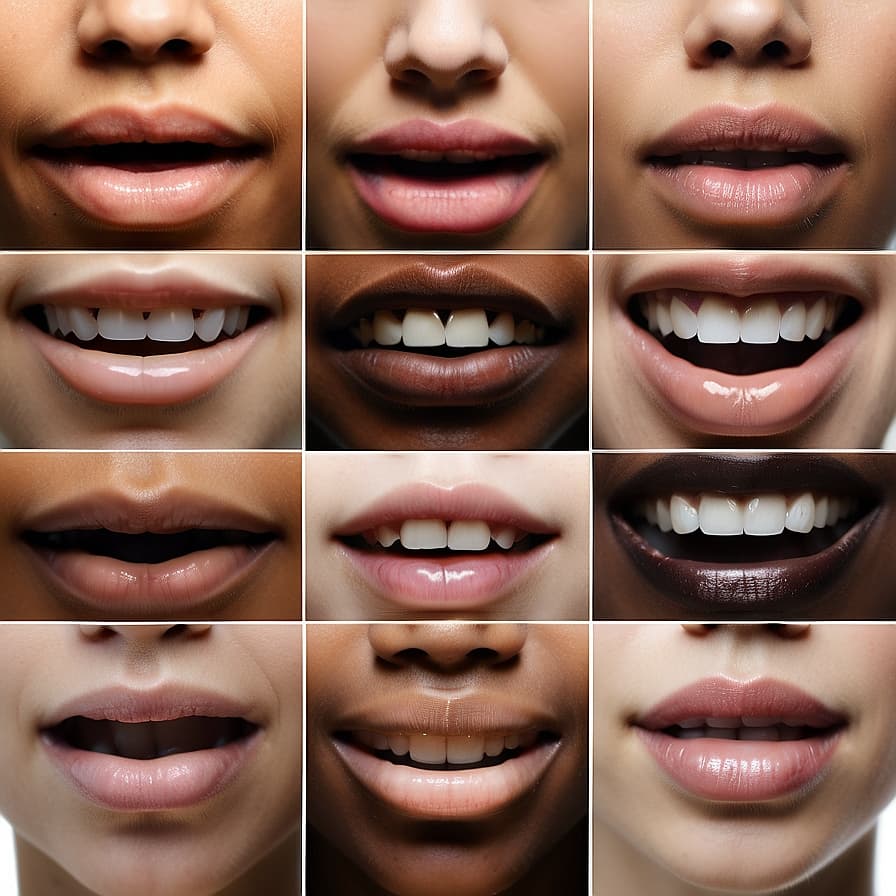
Facial structure is the most distinguishing register. Noses are broad at the alar base with a low-to-medium bridge — wider, on average, than the Yoruba nose, narrower than the typical Ijaw. Lips are full, with a pronounced vermilion border on both upper and lower lip; the philtrum is usually well-defined. Cheekbones are moderately high and the jaw squared rather than tapering, producing the broad, balanced facial outline seen in Mukoro Mowoe-era portraiture and contemporary politicians like Sheriff Oborevwori.
Build is athletic and on the taller side of West African averages — Delta populations tend to run lean-muscular with long limbs and relatively narrow hips, a body composition reflected in athletes like Blessing Okagbare. Women carry a fuller bust-and-hip line on the same long-limbed frame. Sub-group variation across Agbarho, Ughelli, Okpe, and Uvwie clans is dialectal more than physical; phenotype reads consistent across the Urhobo heartland.
Data depth
0/100Coverage of image-grounded phenotype observations · drives AI generation diversity
- Sample size
- 0/40· 0 images
- Image quality
- 0/30· 0% high
- Confidence
- 0/20
- Source diversity
- 0/10
- ·No image observations yet
Explore phenotype categories
Structured taxonomy with peer-reviewed scales · 22 anatomical categories
Notable Urhobos People
35 reference figures — sourced from Wikipedia
- Sagbama — in Bayelsa State )
- Ikpoba Okha — in Edo State )
- Orhionmwon — in Edo state ))
- Samuel Jereton Mariere — First Governor of Mid-Western Region of Nigeria
- Chief James Efa Edjeren — Nigerian Educator, Administrator and Politician
- Chief Mukoro Mowoe — Prominent Nigerian merchant, nationalist, and the first President General of UPU
- Ufuoma McDermott — Nigerian actress and model
- Ufuoma Onobrakpeya — Nigerian artist
- Fred Aghogho Brume — senator and industrialist
- David Dafinone — Accountant, politician
- Richard Mofe Damijo — actor and politician
- Harris Eghagha — career soldier and diplomat
- M. G. Ejaife — Urhobo nationalist, first republic Senator and the first principal of Urhobo …
- David Ejoor — retired Nigerian army and governor of the now-defunct Mid-Western Region
- Mabel Evwierhoma — Professor of Theatre Arts, University of Abuja
- Felix Ibru — Nigerian architect, senator and governor
- Michael Ibru — Nigerian pioneer industrialist
- Akpomudiago Odje — Senior Advocate and Officer of Nigeria
- Tanure Ojaide — poet and writer
- Blessing Okagbare — IAAC silver medalist and Olympic bronze medalist
- Isidore Okpewho — scholar and novelist
- Ben Okri — poet and novelist
- Bruce Onobrakpeya — visual artist, sculptor and painter
- Gamaliel Onosode — administrator and politician
- Igho Sanomi — businessman
- Onigu Otite — Professor of Sociology (retired)
- James Ibori — Former Governor of Delta state (1999–2007)
- Adego Erhiawarie Eferakeya — Nigerian Politician
- Akpor Pius Ewherido — Nigerian Politician
- Ovie Omo-Agege — Deputy Senate President of the Federal republic of Nigeria
- Fejiro Okiomah — American football player
- Igosave — comedian
- Sheriff Oborevwori — Governor of Delta state
- Gideon Meriodere Urhobo — Founder of God's Kingdom Society,
- Emuoboh Ken Gbagi — Nigerian businessman, politician and community leader


Generate Urhobos AI Content
Use this ethnicity's phenotype data to create AI-generated content with accurate physical traits and cultural context.
Open Creator Studio