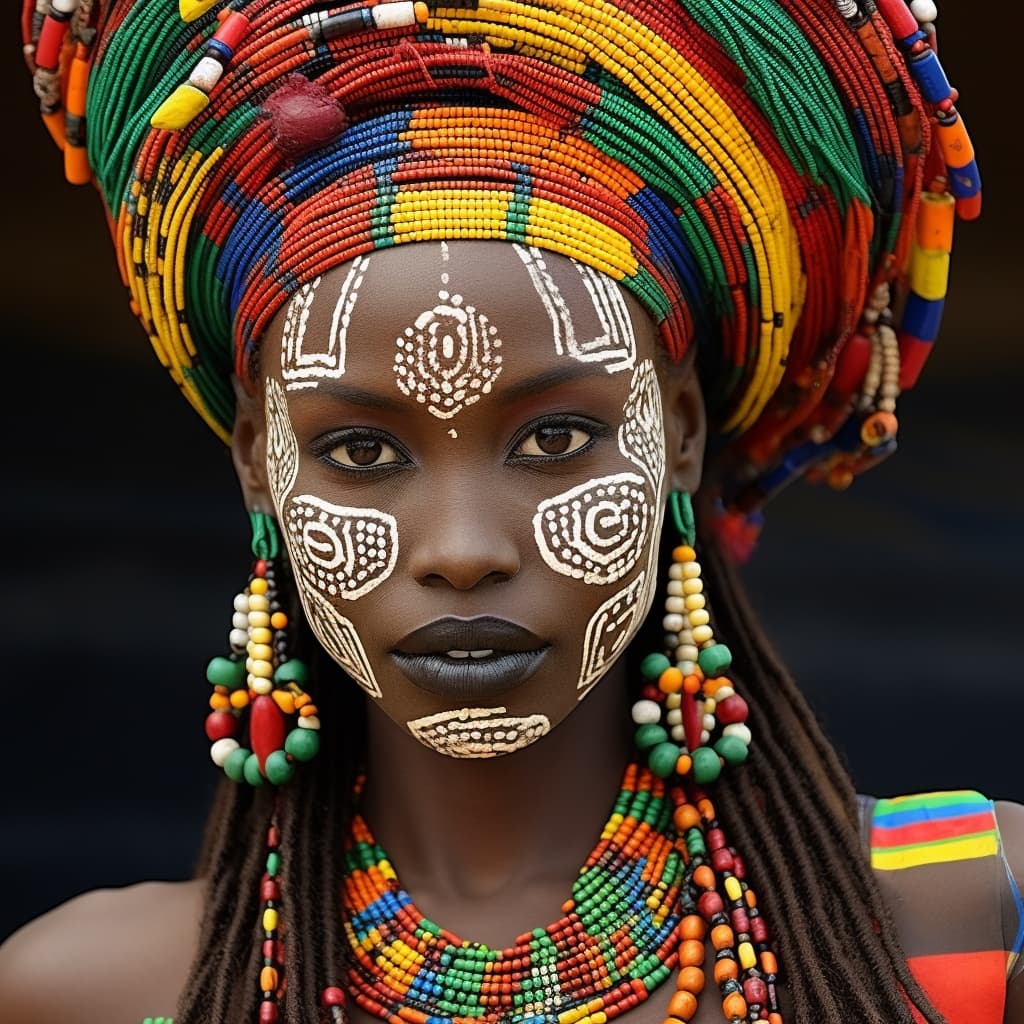
Toucouleur Erotic
Futa Tooro (Senegal)
Niger–Congo / Atlantic / Senegambian / Fula / Pulaar
Islam
Western Africa
About Toucouleur People
The Toucouleur are the people of Futa Tooro, the long ribbon of floodplain along the middle Senegal River where the desert begins to give way to the Sahel. The name comes from outsiders — a French rendering of Tekrur, the medieval kingdom that once held this stretch of the river — but the people call themselves Haalpulaar'en, "speakers of Pulaar." That self-description is the key to understanding them: linguistically they are Fulani, sharing the Pulaar tongue with the cattle-herding Fulbe scattered across West Africa, but socially and historically they are something distinct — a settled, riverbank people built around farming the seasonal flood, not following herds.
Islam is older here than almost anywhere else in West Africa south of the Sahara. Tekrur converted in the eleventh century, and by the time the religion reached the Mande heartlands the Toucouleur had already been Muslim for generations. This depth shows in how thoroughly Islam saturates daily life — not as something layered on top of older custom, but as the working grammar of marriage, inheritance, time, and authority. The Tijaniyya Sufi order is especially strong; the nineteenth-century jihadist and empire-builder El Hadj Umar Tall, who carved a short-lived state across the upper Niger, was Toucouleur and Tijani, and his memory still anchors the religious self-image of the group.
Toucouleur society is famously stratified, organized into hereditary categories — nobles and clerics at the top, then artisan castes (weavers, smiths, leatherworkers, the griot bards who carry oral history), and historically a class descended from former slaves at the bottom. These distinctions have softened legally but persist socially, especially in matters of marriage. The clerical lineages, the tooroɓɓe, gave the group much of its political weight: it was tooroɓɓe scholars who led the 1776 Islamic revolution that overthrew the older Deniyanke dynasty and made Futa Tooro a theocratic republic, one of the earlier such experiments in the region.
Today the homeland straddles the Senegal–Mauritania border, and Toucouleur communities have spread well beyond it — into Dakar, into the labor diasporas of France and Italy, into the trading networks that link the Sahel to Europe. The river still defines the home culture, though: the rhythm of the flood, the millet and sorghum fields it leaves behind, and the quiet, scholarly Islam that has been the group's signature for nearly a thousand years.
Typical Toucouleur Phenotypes
Reference for AI generation — hair, eyes, skin, facial structure, build
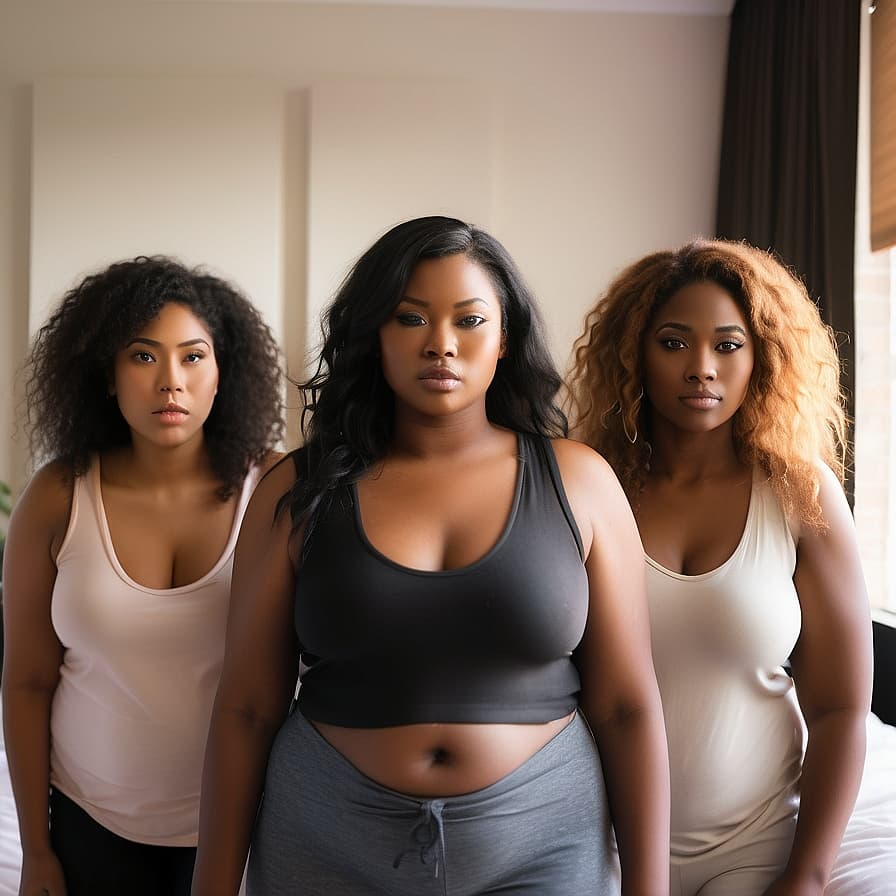
The Toucouleur (Haalpulaar'en, "speakers of Pulaar") of the middle Senegal River valley present a phenotype that sits at the visible intersection of two ancestries: the slender, narrow-featured Fulani lineage they share linguistically, and the broader Senegambian substrate of the Wolof and Soninke they have lived alongside for a millennium. The result is more compact and more uniformly dark than the pastoral Fulbe of the Sahel, but retains traces of the elongated facial geometry that distinguishes Pulaar speakers from their neighbors.
Hair is almost universally Type 4 — tightly coiled, dense, jet black, worn close-cropped on men and traditionally braided in patterned cornrows on women, often with henna-tinted ends. Premature graying is uncommon before middle age. Eyes are dark brown to near-black, set under a pronounced supraorbital ridge; the eye opening is typically almond-shaped and slightly upward-canted, with no epicanthic fold. Lashes are notably long.
Skin sits firmly at Fitzpatrick VI — deep brown with a cool, blue-black or umber undertone rather than the reddish copper found further south among Akan or Yoruba populations. The Futa Tooro sun and the riverine humidity tend to keep complexion even and matte.
The face is the giveaway of Fulani admixture: a high, narrow nasal bridge with a relatively delicate alar width — narrower than the West African average — high cheekbones, and a tapered, somewhat pointed chin. Lips are full but usually less everted than in coastal Wolof or Serer profiles. The forehead is high and clear.
Build is lean and long-limbed. Men commonly stand 175–183 cm with narrow shoulders, low body fat, and a slight, wiry musculature suited to the agricultural and herding economy of the river valley. Women are typically tall for the region, slim through the waist with proportionally long legs, and tend toward a pear-shaped distribution rather than the fuller hourglass associated with Wolof phenotype. The defining Toucouleur look is dark Senegambian skin on a narrow Fulani-derived face.
Data depth
0/100Coverage of image-grounded phenotype observations · drives AI generation diversity
- Sample size
- 0/40· 0 images
- Image quality
- 0/30· 0% high
- Confidence
- 0/20
- Source diversity
- 0/10
- ·No image observations yet
Explore phenotype categories
Structured taxonomy with peer-reviewed scales · 22 anatomical categories

Generate Toucouleur AI Content
Use this ethnicity's phenotype data to create AI-generated content with accurate physical traits and cultural context.
Open Creator Studio