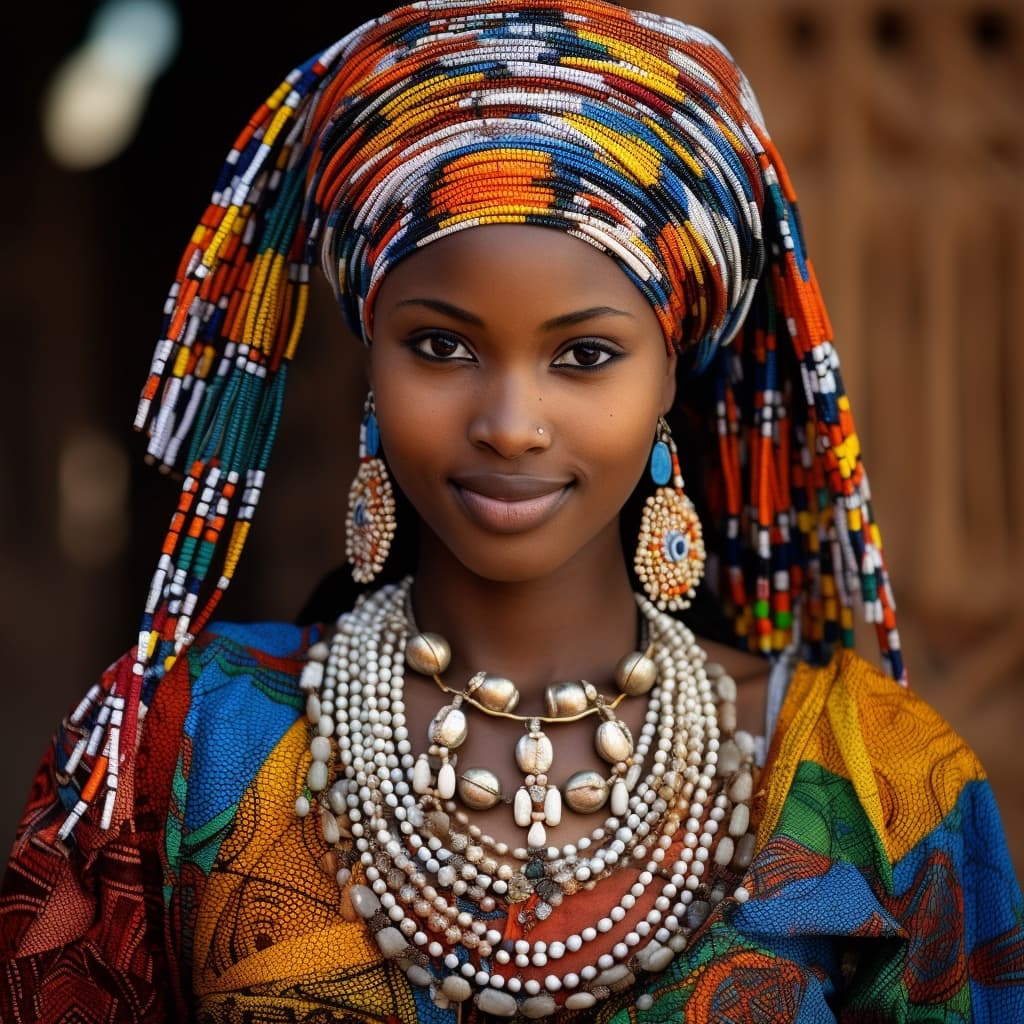
Songhai Erotic
Mali, Niger
Nilo-Saharan / Songhai
Islam
Zarma
Western Africa
About Songhai People
The Songhai are a river people. Their world has always organized itself along the middle Niger — the great bend where the river curls north into the Sahel before turning back south — and that geography explains much of who they are. Fishermen, farmers of millet and rice on the floodplains, and traders moving goods between the desert edge and the savanna, the Songhai built one of the largest empires Africa has ever seen on the strength of that river corridor. At its fifteenth- and sixteenth-century peak under Sonni Ali and the Askia dynasty, the Songhai Empire ran from the Atlantic approaches of Senegal to the Hausa lands of present-day Nigeria, with Timbuktu and Gao as its intellectual and commercial anchors. The Moroccan invasion of 1591 ended the imperial chapter but not the people; the Songhai remained, and remain, the demographic spine of the Niger River from Timbuktu down through Niamey.
Their language is a puzzle linguists still argue about. Songhai is usually filed under Nilo-Saharan, but it sits oddly in that family — surrounded by Mande and Berber and Hausa neighbors, it has absorbed influence from all of them while staying recognizably itself. The Zarma, the largest Songhai branch, are concentrated in southwestern Niger and speak a closely related variety; a Songhai speaker from Gao and a Zarma speaker from Niamey understand each other with effort. Other branches — the Dendi further south along the river into Benin, the Kaado, the Wogo — fan out from that same Niger axis.
Islam arrived early, carried by Saharan trade, and by the time of the Askias it was the religion of the state and the scholarly class. It remains overwhelmingly the religion of the Songhai today, but it sits in real conversation with older spirit traditions — most visibly the holey possession cults, in which spirits associated with particular places, ancestors, or natural forces are called down through music and dance. Practitioners see no contradiction; the spirits and the prayers occupy different registers of the same life. The griot tradition is strong here too, with hereditary praise-singers and historians whose oral chronicles preserve genealogies and the deeds of the Askia kings in remarkable detail. Songhai social structure has historically been stratified — nobles, free commoners, occupational castes, and the descendants of slave lineages — and while the legal categories are gone, the social memory of them is not.
Typical Songhai Phenotypes
Reference for AI generation — hair, eyes, skin, facial structure, build
The Songhai phenotype sits at the Sahel's interior crossing — predominantly West African substrate with a measurable overlay from centuries of Saharan trade contact, particularly along the Niger River bend. The result is a population that reads clearly Black African but with a longer, more linear facial architecture than coastal West African groups like Yoruba or Akan, and a slimmer overall build calibrated to a hot, dry climate rather than a humid tropical one.
Hair is dark brown to black, tightly coiled — typically Type 4a–4c — with the dense, springy texture standard across West Africa. There's no significant straight-hair contribution from Berber admixture in most carriers; texture stays coily even where features lengthen. Eyes are dark brown to near-black, almond-shaped, set under moderately heavy brows. No epicanthic fold. Eye-whites in older Sahelian populations often carry a slight yellowish cast from sun and dust exposure rather than melanin.
Skin runs Fitzpatrick V–VI, weighted toward the deeper end — warm brown through dark brown with red or olive undertones, rarely the blue-black tones found further south among Nilotic or coastal Guinean populations. Sahel sun produces uniform deep pigmentation across exposed and unexposed skin alike.
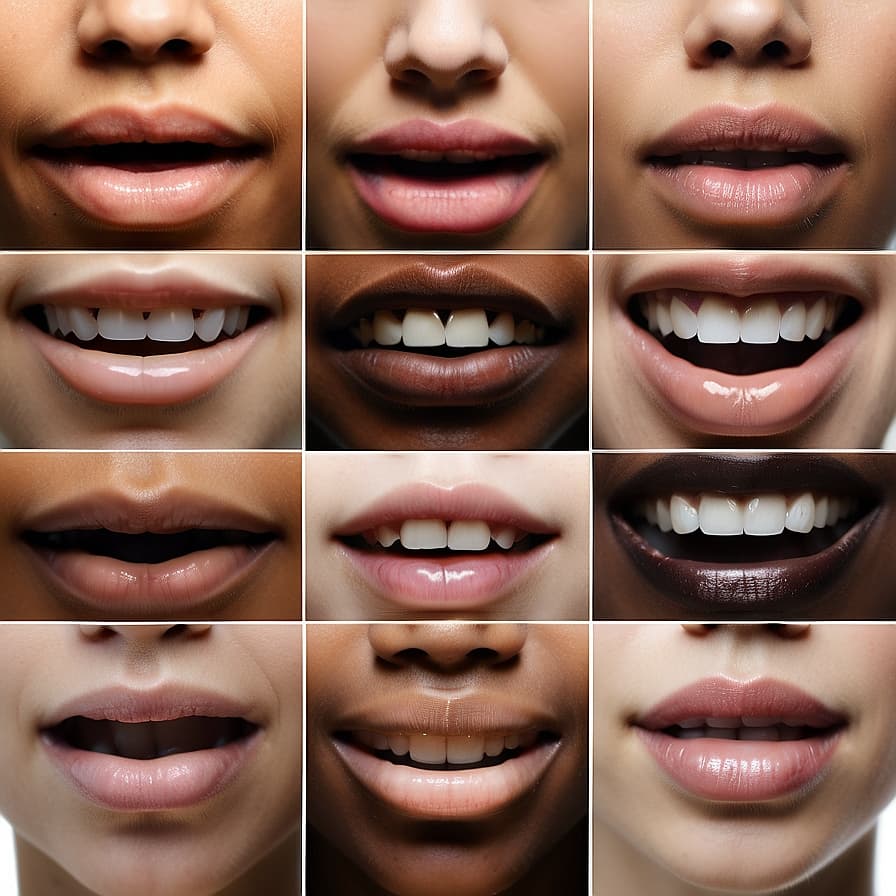
Facial structure is the most distinctive feature. Songhai faces tend to be longer and narrower than the broader West African average, with higher, more prominent cheekbones, a straighter and somewhat narrower nasal bridge, and moderately full — not maximally full — lips. The jaw is often defined rather than rounded. Ali Farka Touré's face is a useful anchor: long, angular, with the elongated proportions typical of the Niger Bend.
Build trends tall and lean. Men commonly reach 175–183 cm; women similarly tall-framed with narrow shoulders and long limbs. Body fat sits low; muscle is wiry rather than bulky. The Zarma branch in southwestern Niger is phenotypically near-identical to mainstream Songhai — same coloring, same elongated build — with no consistently distinguishing visible markers despite the linguistic split.
Data depth
60/100Coverage of image-grounded phenotype observations · drives AI generation diversity
- Sample size
- 22/40· 13 images
- Image quality
- 23/30· 46% high
- Confidence
- 15/20· mean 0.74
- Source diversity
- 0/10· wikipedia
- ·Modest sample (n<25)
- ·Wikipedia-only source — not population-representative
Observed Distribution — Image Sample
Empirical observations from analyzed photographs · supplementary signal, not population truth
Sample: 13 images analyzed (13 wikipedia). Quality: 6 high, 5 medium, 2 low, 0 very_low. Avg analyzer confidence: 0.74.
Skin tone (Fitzpatrick): IV (15%), VI (77%), unclear (8%)
Hair color: black (46%), gray/white (31%), unclear (23%)
Hair texture: wavy (8%), curly (8%), coily (54%), covered (23%), unclear (8%)
Eye color: dark brown (85%), unclear (15%)
Epicanthic fold: 0% present, 85% absent, 15% unclear
Caveats: Sample size 13 is modest — secondary patterns may not be reliable. Sample is 100% Wikipedia notable people — skews toward male, public-life, and modern figures, not population-representative.
Last aggregated: May 7, 2026
Explore phenotype categories
Structured taxonomy with peer-reviewed scales · 22 anatomical categories
Notable Songhai People
74 reference figures — sourced from Wikipedia
- Za el-Ayamen — Founder of Gao Empire
- Sonni Ali Ber — 1464–1492): Military leader, conqueror, founder, and 1st Emperor of Songhai E…
- Sonni Baru — 1492–1493): emperor of Songhai Empire
- Askia Muhammad — 1493–1529): founder of Askia dynasty, Emperor of Songhai Empire, Caliph and A…
- Askiya Musa — 1529–1531): emperor of Songhai Empire.
- Askia Muhammad Bonkano — 1531–1537): emperor of Songhai Empire.
- Askiya Isma'il — 1537–1539): emperor of Songhai Empire.
- Askiya ishaq I — 1539–1549): emperor of Songhai Empire.
- Askiya Dawud — 1549–1582 or –1583): emperor of Songhai Empire.
- Songhai Empire — Askiya Mohammad El haj (1582–1586): emperor of Songhai Empire.
- Askiya Ishaq II — 1588–1592): emperor of Songhai Empire.
- Zarmakoy Sambo — Zarma King
- Babatu — Military leader and 3rd Emir of Zabarma Empire
- Djibo Bakary — president of the government council of Niger and leader of Sawaba party.
- Hamani Diori — 1st president of Niger Republic (1960–1974)
- Seyni Kountche — Military President of the Republic of Niger (1974–1987) and Head of the CMS, …
- Ali Saibou — Chief of the High Supreme Military Council and 3rd President of Niger (1987–1…
- Ibrahim Hassane Mayaki — Prime Minister of Niger from 27 November 1997 to 3 January 2000, head of NEPA…
- Amadou Toumani Touré — Army general and 4th President of Mali from 8 June 2002 to 22 March 2012.
- Salou Djibo — Army corps general, Chairman of the Supreme Council for the Restoration of De…
- Madaki Hawa Askya — 15th–16th centuries): Daughter of Emperor Askia Muhammad I, wife of Sultan Mu…
- Gao — Doctor Aben Ali (14th–15th centuries), Doctor at the Imperial Court of Gao, D…
- Mahmud Kati — 1468–1552) Scholars of Timbuktu, Askia Muhammad I secretary, author of Tarikh…
- Mohammed Bagayogo — 1523–1593): Sheikh, teacher of Sankore Madrasah, Philosopher, Arabic grammari…
- Abdrahamane Sa'adi — 1594–1655), son of Mahmud Kati and grandson of Askia Muhammad I,scholar, cadi…
- Ahmad Baba al-Timbukti — 1556–1627), (culturally and linguistically Songhai, descended from Berber and…
- Makhluf al-Balbali — unknown–1533), Islamic scholars of North Africa and West Africa, jurist and t…
- Abdoulaye Idrissa Maïga — born 1958), prime minister of Mali in 2017
- Mohamadou Djibrilla Maïga — Nigerien politician
- Djingarey Maïga — Nigerien film director and actor
- ambassador of Mali to the United States — Abdoulaye Maïga, ambassador of Mali to the United States in 1960 and Czechosl…
- Abdoulaye Maïga (officer) — born 1981), appointed interim prime minister of Mali in August 2022
- Boureima Maïga — Burkinabé footballer
- Abdoulaye Maïga (footballer) — born 1988), Malian professional footballer
- Aïssa Maïga — born 1975), Senegalese/French actress
- Aminata Maïga Ka — 1940–2005), Senegalese writer
- Choguel Kokalla Maïga — born 1958), prime minister of Mali 2021–2022
- Aminatou Maïga Touré — Nigerien diplomat. She was Niger's Ambassador to the United States from 2006 …
- Habib Maïga — born 1996), Ivorian footballer
- Mamadou Maiga — born 1995), Malian/Russian footballer
- Modibo Maïga — born 1987), Malian footballer
- Ousmane Issoufi Maïga — born 1946), prime minister of Mali 2004–2007
- Soumeylou Boubèye Maïga — 1954–2022), prime minister of Mali 2017–2019
- Zhosselina Maiga — born 1996), Russian basketball player
- Abou Maïga — Beninese footballer
- Ali Sirfi Maïga — Nigerien Minister of Justice (2000–2001)
- Abdul Salam Mumuni — Ghanaian filmmaker
- Ali Farka Toure — Malian singer and musician (1939–2006)
- Rahmatou Keita — Nigerien filmmaker
- Magaajyia Silberfeld — Nigerien-French actress
- Vieux Farka Touré — Malian singer and guitarist
- Khaira Arby — Malian singer (1959–2018)
- Mali Yaro — Nigerien Singer
- Nasir Idris — Nigerian unionist, educationist, politician and the current governor of Kebbi…
- Tukur Yusuf — Nigerian entrepreneur and CEO of Rufaida Drinks LTD
- Baba Salah — Malian Singer
- Thialé Arby — Malian Singer
- Moussa Poussy — Nigerien Singer
- Zalika Souley — Nigerien actress
- Abdoul Razak Issoufou — Nigerien athlete
- Soumaïla Cissé — Malian politician who served in the Government of Mali as Minister of Finance…
- Moumouni Adamou Djermakoye — Nigerien politician
- Moussa Moumouni Djermakoye — Nigerien politician
- Ide Oumarou — Nigerien diplomat, government minister, and journalist. Ambassador to the Uni…
- Issoufou Saidou-Djermakoye — Nigerien Politician who was elected to the French Senate in 1958. He was late…
- Djermkoy Maidanda Seydu — former Sultan of Dosso & first pharmacist in Niger
- Abdou Moumouni Dioffo — Nigerien physicist
- Barcourgné Courmo — Nigerien politician
- Foumakoye Gado — Nigerien politician
- Boubacar Haïnikoye — Nigerien footballer
- Salifou Modi — Nigerien army general
- Ali Maiga Halidu — Ghanaian politician
- Alhaji Salamu Amadu — Ghanaian businessman and philanthropist
- Alhaji Adam Iddrisu — Ghanaian businessman and founder of Global Haulage Company and The Royal Bank…


Generate Songhai AI Content
Use this ethnicity's phenotype data to create AI-generated content with accurate physical traits and cultural context.
Open Creator Studio