Soga Erotic
Busoga (Uganda)
Niger–Congo / Bantu / Soga
Christianity, Traditional African religions
Eastern Africa
About Soga People
The Soga are the people of Busoga, the territory pressed between the Nile's exit from Lake Victoria and the western edge of Mount Elgon's foothills. The land is green, broken by papyrus swamps and small rivers, and it has shaped a settlement pattern of dense rural homesteads rather than dramatic urban centers — Jinja, on the Nile, is the regional anchor but most Soga life happens in the villages stitched between it and the Mbale road. Lusoga, their language, is Bantu and sits close enough to Luganda that speakers of either can usually muddle through a conversation, though Soga insist — correctly — that the two are distinct, with their own idioms, proverbs, and a literary tradition that has been quietly built up since missionary printing presses arrived in the early twentieth century.
Politically, Busoga has never been a single kingdom in the way Buganda has. It was historically a confederation of chiefdoms — the figure of eleven hereditary rulers, the balangira, is the one usually cited — and the modern Kyabazinga, the paramount chief, is elected from among the royal lines rather than inheriting the position outright. This has given Soga politics a more deliberative texture than the more centralized monarchies to the west, and disputed Kyabazinga successions have been a recurring feature of public life. Clans (enda) remain the load-bearing social unit; descent, marriage rules, and inheritance are still organized through them even where Christianity has otherwise reordered the calendar of birth, marriage, and burial.
Most Soga are Christian today, split between Anglican and Catholic communities that trace back to the nineteenth-century mission rivalry, with a smaller Muslim presence and a substratum of older practice that has not so much disappeared as been folded in — ancestor remembrance, twin rites, and consultation of diviners persist alongside Sunday attendance, and few people see a contradiction. Economically, the region runs on smallholder agriculture: matooke, millet, maize, sweet potato, and a long history of cotton and now sugarcane, the last of which has reshaped the landscape and labor patterns around Kakira. The Soga have also borne, more than most Ugandan peoples, the public-health weight of the Nile shoreline — sleeping sickness in the colonial period, and more recently the nodding syndrome outbreaks that drew international attention to the region in the 2010s and remain incompletely understood.
Typical Soga Phenotypes
Reference for AI generation — hair, eyes, skin, facial structure, build
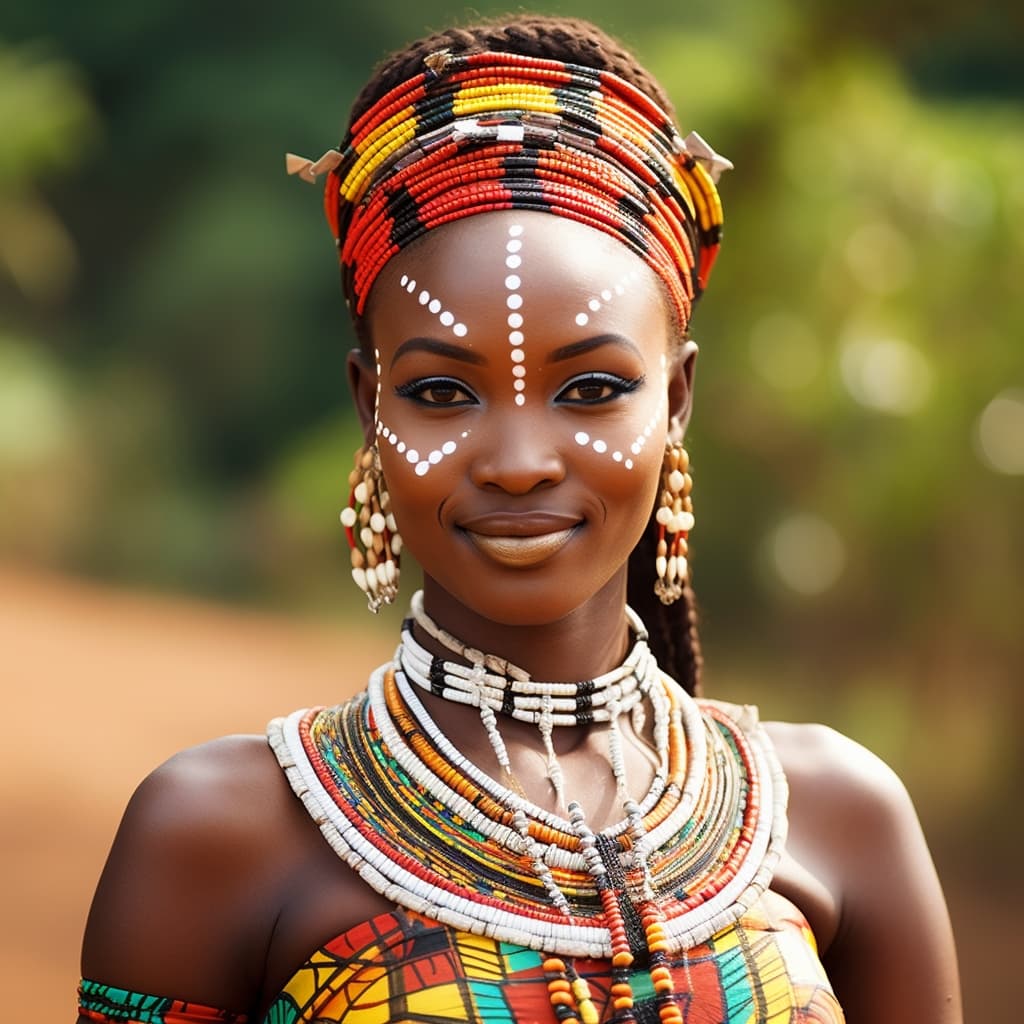
The Soga (Basoga) of southeastern Uganda share the broad phenotype of the Great Lakes Bantu cluster, sitting on a continuum between the more gracile features of neighboring Baganda to the west and the taller, longer-faced Nilotic groups (Iteso, Acholi) just to the north. Hair is uniformly Type 4, tightly coiled to kinky, worn cropped close on most men and frequently braided, twisted, or kept short on women; natural color is true black with a brown cast in sun, and graying tends to come late. Texture is dense and wiry rather than fine.
Eyes are dark brown to near-black, with full upper lids and no epicanthic fold; lashes are heavy and the lower orbital rim sits relatively high, giving a calm, level gaze rather than a wide-open one. Skin tone runs deep — Fitzpatrick V to VI predominate, with warm reddish-brown and cool blue-black undertones both common; truly light-brown complexions are unusual and usually point to mixed ancestry. The skin holds a fine, even grain and tends toward an oil-rich finish in the equatorial humidity of the lakeshore.
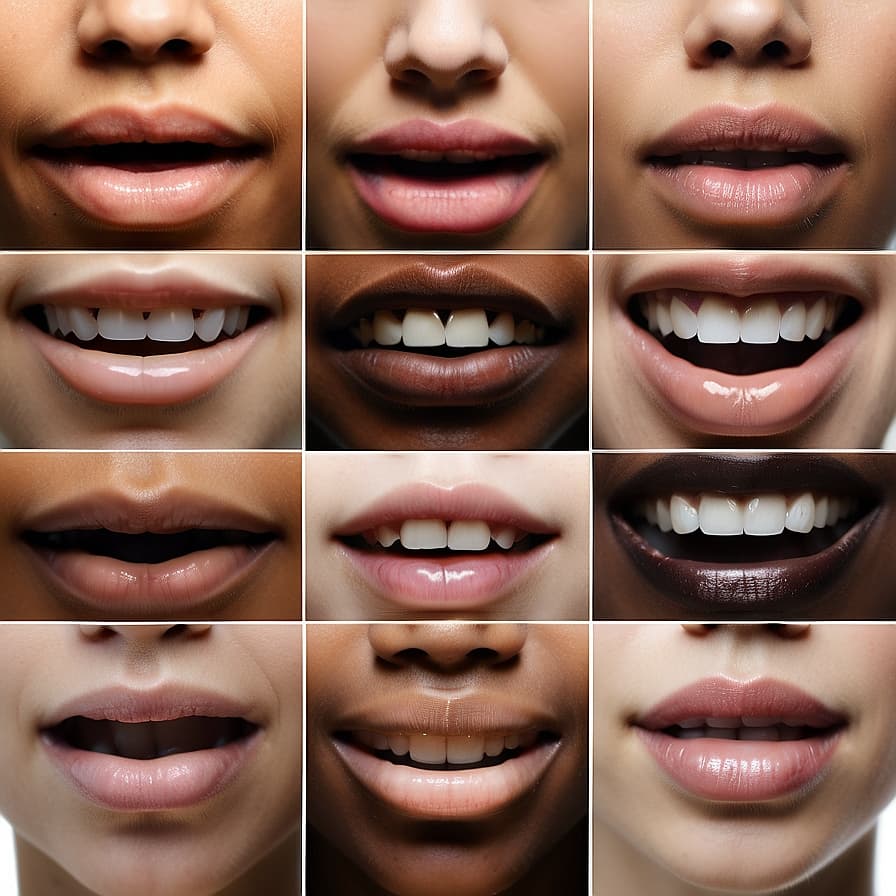
Facial structure is rounded and softly modeled rather than sharply angular. Noses are moderately broad at the alae with a low-to-medium bridge — broader than typical Tutsi or Hima profiles but narrower than West African averages. Lips are full and well-defined on both edges, with a pronounced cupid's bow. Jawlines are square but padded; cheekbones are present but not high-set, and foreheads are wide and gently rounded.
Build is medium — adult men commonly 5'7"–5'10", women 5'3"–5'6" — with a sturdy, agriculturally-shaped frame: broad shoulders, strong forearms, and proportionally short lower legs compared with the long-limbed pastoralist phenotype of the cattle-keeping peoples further west. Women carry weight readily in hips and thighs with a defined waist, a build locally regarded as the cultural ideal. The defining Soga look is depth of skin tone paired with soft, rounded features rather than the elongated bone structure of their northern neighbors.
Data depth
0/100Coverage of image-grounded phenotype observations · drives AI generation diversity
- Sample size
- 0/40· 0 images
- Image quality
- 0/30· 0% high
- Confidence
- 0/20
- Source diversity
- 0/10
- ·No image observations yet
Explore phenotype categories
Structured taxonomy with peer-reviewed scales · 22 anatomical categories


Generate Soga AI Content
Use this ethnicity's phenotype data to create AI-generated content with accurate physical traits and cultural context.
Open Creator Studio