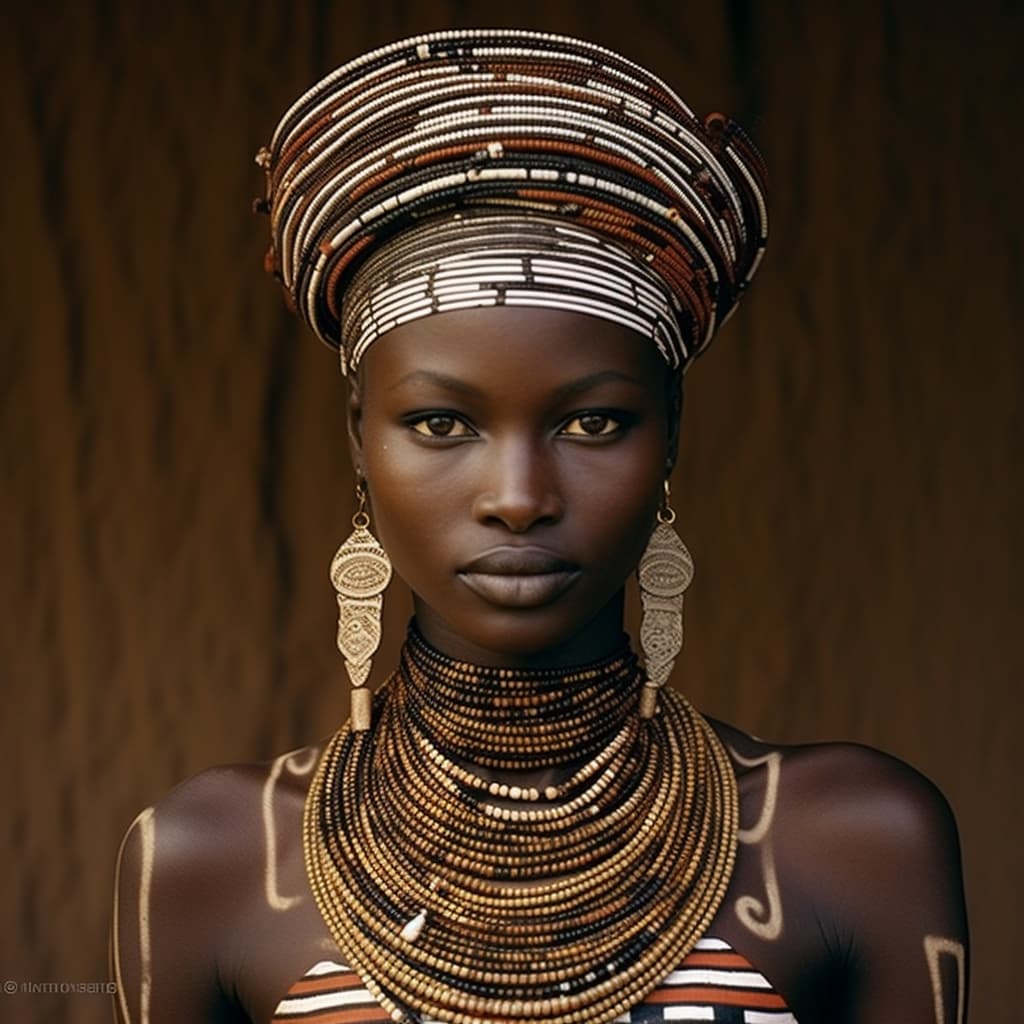
Senufo Erotic
Mali, Ivory Coast, Burkina Faso
Niger–Congo / Senufo
Traditional African religions
Nafana, Minyanka
Western Africa
About Senufo People
The Senufo are a cluster of related farming peoples spread across the savanna where Mali, Ivory Coast, and Burkina Faso meet — a borderland of cotton fields, sacred groves, and small towns built around weekly markets. They are not a single tribe so much as a federation of communities who recognize each other through language, initiation, and a shared way of organizing village life. The Nafana sit at the eastern edge, the Minyanka in the north toward Mali, with Senari and Supyire speakers between them. The languages belong to the Senufo branch of Niger–Congo and form a chain of dialects intelligible to neighbors but not to distant cousins, which is part of why outsiders often mistake the Senufo for several unrelated peoples.
Daily life is organized around the poro, a long initiation society that takes boys through roughly twenty-one years of staged training before they are recognized as full adults. Parallel women's institutions, including the sandogo diviners, hold authority over fertility, marriage arbitration, and the spiritual side of the household. These societies are not folklore performed for visitors; they remain functional civic institutions that produce the carvers, musicians, smiths, and elders a Senufo village needs. Islam and Christianity have made real inroads, especially in towns and along trade routes, but they tend to coexist with the older system rather than replace it. Many families practice both, and the line between religious affiliations is often less rigid than census categories suggest.
The Senufo are widely known for their sculpture — the seated female figures, the rhythm pounders, the helmet masks of the kpelie and the great kponyungo firespitter — most of which originated as ritual objects for poro use rather than as art for export, even if Western museums later treated them that way. Equally distinctive is the balafon music of the Sikasso region, played on tuned wooden bars with gourd resonators, which has its own apprenticeship lineage and remains the soundtrack of Senufo weddings and funerals. Politically the Senufo have rarely formed a centralized state, which left them vulnerable to the Samori Ture campaigns of the late nineteenth century and to French colonial reorganization that cut their homeland into three administrative pieces — borders that still shape who counts as Senufo on which census today.
Typical Senufo Phenotypes
Reference for AI generation — hair, eyes, skin, facial structure, build
The Senufo phenotype belongs to the West African savanna belt where Mali, Ivory Coast, and Burkina Faso meet — a Voltaic-cluster population structurally distinct from coastal groups like Akan or Yoruba. Skin tone runs deep: predominantly Fitzpatrick VI, with warm red-brown to near-black undertones that often deepen further on farming populations exposed to the dry-season sun. Lighter cool-brown tones (Fitzpatrick V) appear, but they are the minority. The skin tends to read matte rather than oily, a function of the drier Sahelian climate rather than coastal humidity.
Hair is uniformly Type 4 — tightly coiled, with a fine to medium strand diameter and dense pack. Black is universal in youth; greying patterns are typical for the region. Traditional styling — shaved scalps, narrow plaits, or close-cropped natural hair — is more common than chemically relaxed hair, particularly in rural Korhogo and Sikasso areas. Eyes are dark brown to near-black with no epicanthic fold; eye shape tends toward a moderate almond rather than the rounder set seen further south.
Facial structure is where Senufo distinctiveness is most visible. The nose is broad-based with a low-to-medium bridge and wide alar flare — bridges are noticeably less projected than among Fulani or Tuareg neighbors. Lips are full on both upper and lower, with a defined vermillion border. Cheekbones sit high and wide, the jaw is square rather than tapered, and the overall face reads strong and architectural — features Senufo woodcarvers historically stylized into their famous masks and rhythm-pounder figures.
Build is medium-tall and lean, shaped by subsistence farming: average male stature roughly 170–175 cm, women around 160–165 cm, with low body-fat percentages and visible musculature in working-age adults. The Nafana of the Ivory Coast–Ghana border tend slightly shorter and more compact, while Minyanka populations in southern Mali sit closer to the broader Senufo average, with marginally lighter skin in the northern reaches near Bambara contact zones.
Data depth
0/100Coverage of image-grounded phenotype observations · drives AI generation diversity
- Sample size
- 0/40· 0 images
- Image quality
- 0/30· 0% high
- Confidence
- 0/20
- Source diversity
- 0/10
- ·No image observations yet
Explore phenotype categories
Structured taxonomy with peer-reviewed scales · 22 anatomical categories






Generate Senufo AI Content
Use this ethnicity's phenotype data to create AI-generated content with accurate physical traits and cultural context.
Open Creator Studio