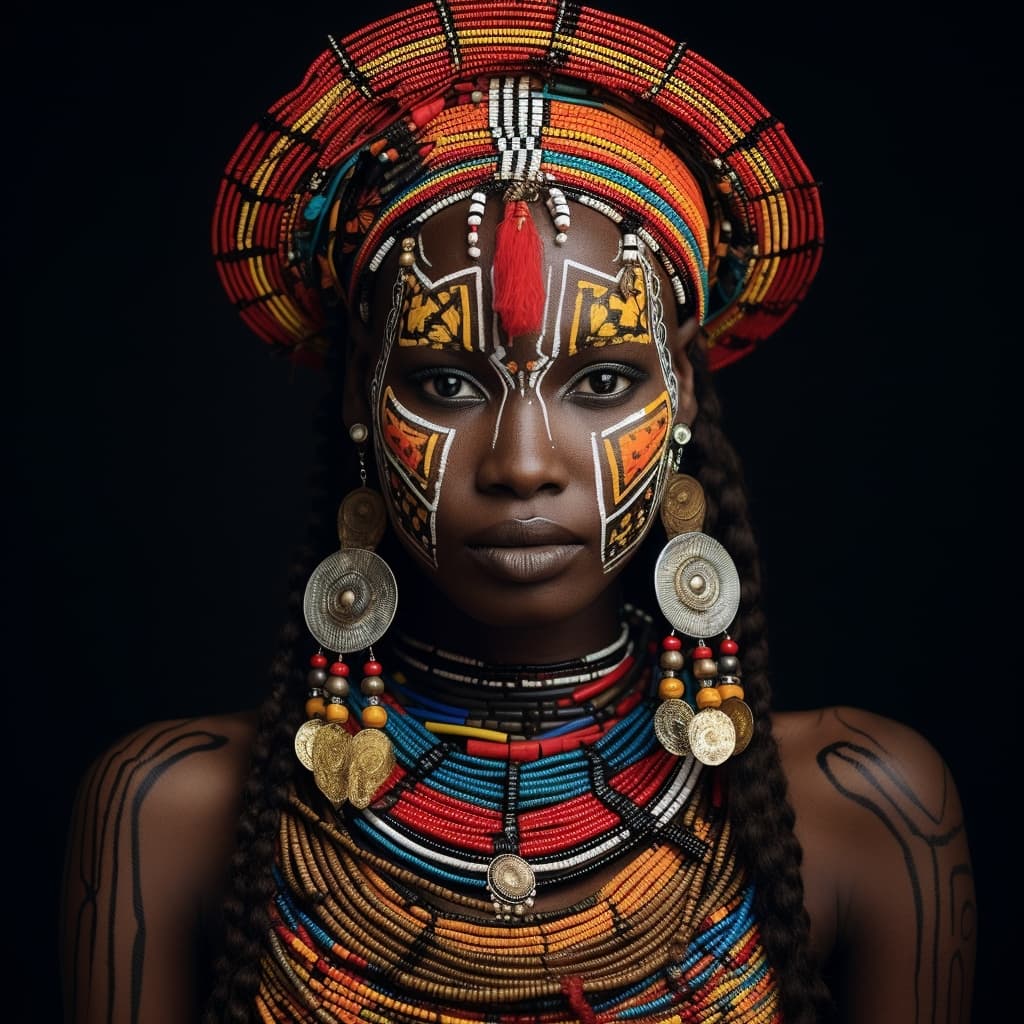
Madi Erotic
Democratic Republic of the Congo, South Sudan, Uganda
Nilo-Saharan / Central Sudanic / Ma'di
Christianity
Eastern Africa
About Madi People
The Ma'di live along the Nile in the borderlands where South Sudan meets northwestern Uganda, with a smaller community across the line in the northeastern Democratic Republic of the Congo. Their territory straddles the river around Nimule and Adjumani — savanna country broken by hills, with the White Nile cutting through the middle of it. They are not a large group by African standards, perhaps a few hundred thousand altogether, and the colonial border that split them between Sudan and Uganda in the early twentieth century still shapes how the community talks about itself: Ugandan Ma'di and Sudanese Ma'di share a language and a sense of common origin, but their twentieth-century histories diverged sharply.
The Ma'di language belongs to the Central Sudanic branch of Nilo-Saharan, which puts it in a small linguistic neighborhood with Lugbara, Lendu, and a handful of other languages of the upper Nile-Congo watershed. It sits awkwardly in the region: surrounded by Bantu speakers to the south and east, Nilotic speakers to the north, the Ma'di and their Central Sudanic relatives are something of an older substrate. Most Ma'di today are also fluent in a regional lingua franca — Juba Arabic in the South Sudanese areas, English and sometimes Acholi or Swahili in Uganda.
Christianity, mostly Catholic and Anglican, arrived through mission stations in the late nineteenth and early twentieth centuries and is now the dominant religious affiliation. It coexists with older practices that have not really gone away: ancestor veneration, the authority of clan elders in disputes, and ritual specialists called odzo who handle illness and misfortune that a hospital or a priest is not expected to fix. Funerals are the cultural high-water mark — extended, expensive, and obligatory, drawing relatives back from wherever work or war has scattered them.
That scattering is the other defining fact of the modern Ma'di experience. The Sudanese civil wars and the Lord's Resistance Army insurgency in northern Uganda displaced large numbers of Ma'di for years at a time; refugee settlements at Adjumani became, for a generation, more populous than the home villages. Return and rebuilding have been ongoing since the mid-2000s, and questions about land — who farmed which plot before the displacement, who has the right to it now — remain live and unresolved in many areas.
Typical Madi Phenotypes
Reference for AI generation — hair, eyes, skin, facial structure, build
The Ma'di are a Central Sudanic-speaking population straddling the South Sudan–Uganda–DRC borderlands, and their phenotype reflects the broader Nilotic-adjacent stratum of the East African interior rather than the taller, more gracile Dinka or Nuer to their north. Skin tone sits firmly in Fitzpatrick VI — deep brown to near-black with cool, slightly blue-undertoned dark complexions common among older Sudanic populations of the Equatoria belt. Sun exposure does little to shift the baseline; the pigmentation is uniform across the body rather than gradient.
Hair is almost universally Type 4 — tightly coiled, with the dense 4B–4C pattern that holds shape close to the scalp. Natural color is black with occasional very dark brown highlights in strong light. Eyes run dark brown to near-black; epicanthic folds are absent, lids are typically a clean almond shape with a defined upper crease, and sclera contrast is striking against the deep skin.
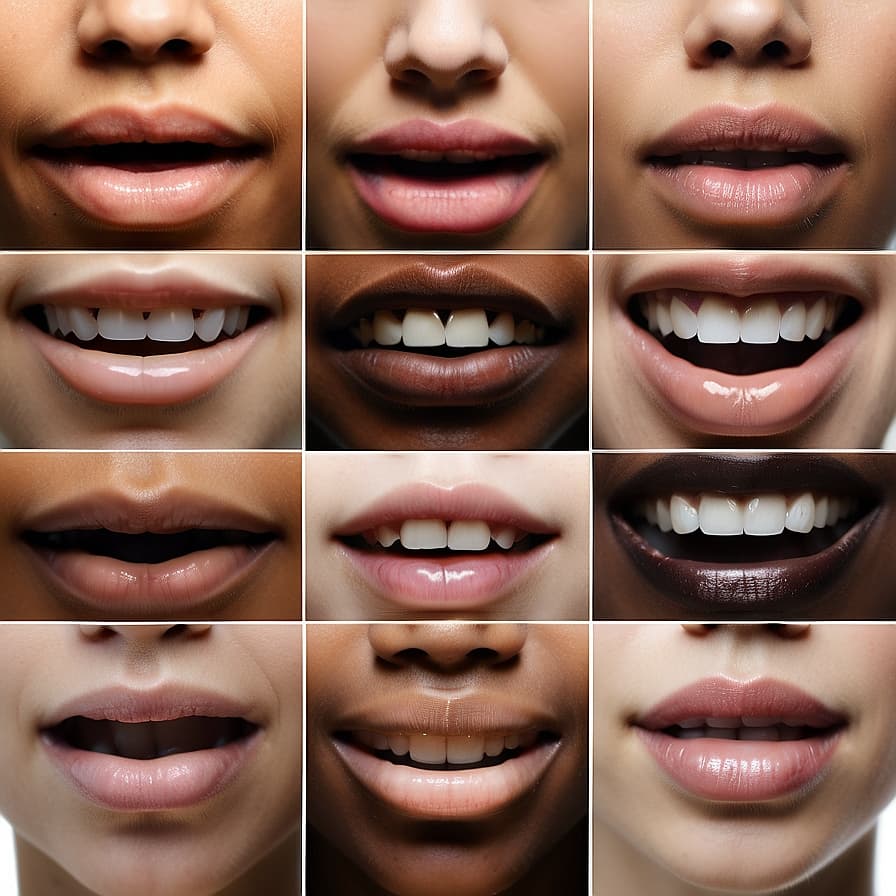
Facial structure is the most distinctive register. Noses tend toward a moderate-to-broad alar base with a low-to-medium bridge — broader than the narrow Nilotic profile of cattle-keeping groups further north, but not as wide as Central African forest populations. Lips are full, with a well-defined vermilion border and pronounced philtrum. Cheekbones sit high and broad, jawlines are squared in men and softer-angled in women, and foreheads are often notably tall. Joseph Lagu's public photographs show this combination clearly: broad mid-face, full lips, strong brow.
Build trends tall and lean, though shorter and more compact than the Dinka stereotype — adult men commonly 175–185 cm, women 165–172 cm, with long limbs relative to torso, narrow hips, and low body-fat tendencies into middle age. Musculature is wiry rather than bulky. Phenotypically, the Ma'di read as a transitional Sudanic population — Nilotic facial proportions softened by Central African breadth. Sub-group differences between the Ma'di of Uganda's Adjumani–Moyo districts and the South Sudanese Ma'di of Nimule are minor and not visually reliable.
Data depth
13/100Coverage of image-grounded phenotype observations · drives AI generation diversity
- Sample size
- 3/40· 1 image
- Image quality
- 0/30· 0% high
- Confidence
- 10/20· mean 0.55
- Source diversity
- 0/10· wikipedia
- ·No image observations yet
- ·Wikipedia-only source — not population-representative
Explore phenotype categories
Structured taxonomy with peer-reviewed scales · 22 anatomical categories
Notable Madi People
2 reference figures — sourced from Wikipedia
- Joseph Lagu — Vice President (Sudan), leader of Anyanya
- Yagga — Online streamer and content creator, (South Sudan)


Generate Madi AI Content
Use this ethnicity's phenotype data to create AI-generated content with accurate physical traits and cultural context.
Open Creator Studio