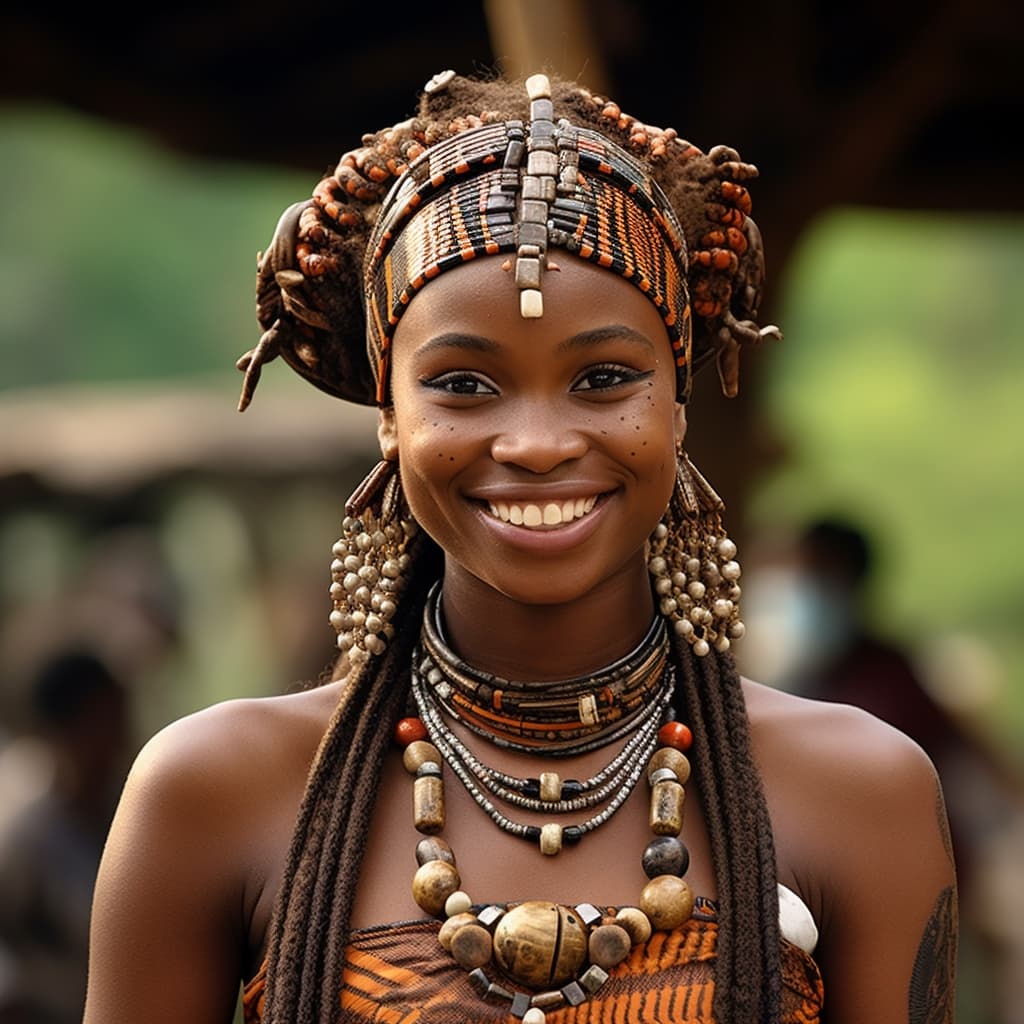
Limba Erotic
Sierra Leone (Bombali and Koinadugu Districts)
Niger–Congo / Limba
Christianity
Western Africa
About Limba People
The Limba consider themselves the oldest inhabitants of Sierra Leone, and the claim is more than folklore — their language has resisted classification for so long that linguists still argue about where, if anywhere, it fits inside Niger–Congo. It shares a country with Mende and Temne, both well-mapped relatives of the larger Mande and Atlantic families, but Limba sits apart, structurally idiosyncratic, sometimes treated as its own isolated branch. That linguistic stubbornness mirrors something in the people: a reputation, well-earned, for staying put while empires and trade routes rearranged everyone around them.
Their homeland is the savanna and forested hills of the north — Bombali, Koinadugu, and parts of Kambia — country that rises toward the Guinea border and gives the Limba both farmland and the palm trees on which a great deal of social life turns. Limba palm-wine tapping is genuinely distinctive: not just an industry but a craft with its own apprenticeship, etiquette, and oral tradition, and the tappers are figures of some local weight. Palm wine is the medium in which agreements are sealed, disputes cooled, and elders consulted; foreign visitors tend to mistake the drinking for the point and miss the institution underneath.
The Limba split into several named groups — Sela, Tonko, Wara Wara, Biriwa, and others — distinguished by dialect and by the chiefdoms they settled. Most are Christian today, the result of nineteenth- and twentieth-century missionary work in the north, though Islam has spread through certain chiefdoms via Mandingo and Fula trading networks, and older practices persist quietly underneath both. Initiation societies remain socially important, particularly the male Gbangbani, which still organizes much of the passage from boyhood to adult standing in the village.
Two figures shaped the modern Limba profile in ways still felt: Siaka Stevens, the country's first executive president, was Limba, and his rise — followed by the long, contested aftermath of his rule — pulled the group into national politics in a way they hadn't been before. The civil war of the 1990s hit Limba districts hard, particularly Koinadugu, and the post-war recovery is still uneven. The Limba today are a largely rural, agricultural people whose cultural prestige, especially in oratory and storytelling, runs ahead of their economic weight.
Typical Limba Phenotypes
Reference for AI generation — hair, eyes, skin, facial structure, build
The Limba are one of Sierra Leone's older indigenous populations, concentrated in the savanna-and-forest transition zones of Bombali and Koinadugu. Phenotypically they sit firmly within the West African Mande-Atlantic spectrum, but with a build and facial geometry that locals distinguish from neighboring Temne and Mandingo at a glance.
Hair is uniformly Type 4 — tightly coiled, dense, with the high shrinkage ratio characteristic of equatorial West Africa. Natural color is true black; sun-bleached coppery tips show up on children and on adults who work outdoors. Greying tends to come late and concentrate at the temples. Eyes are dark brown to near-black, almond-shaped with a clean upper-lid crease and no epicanthic fold. Sclera is often slightly warm rather than cool-white, a feature shared across the region.
Skin runs Fitzpatrick V to VI, with the deepest tones — a true blue-black with cool undertones — appearing in the Koinadugu hill communities, while Bombali Limba trend a shade warmer, more red-brown in undertone. Sunburn is rare; ashiness in dry-season harmattan is the more typical concern.
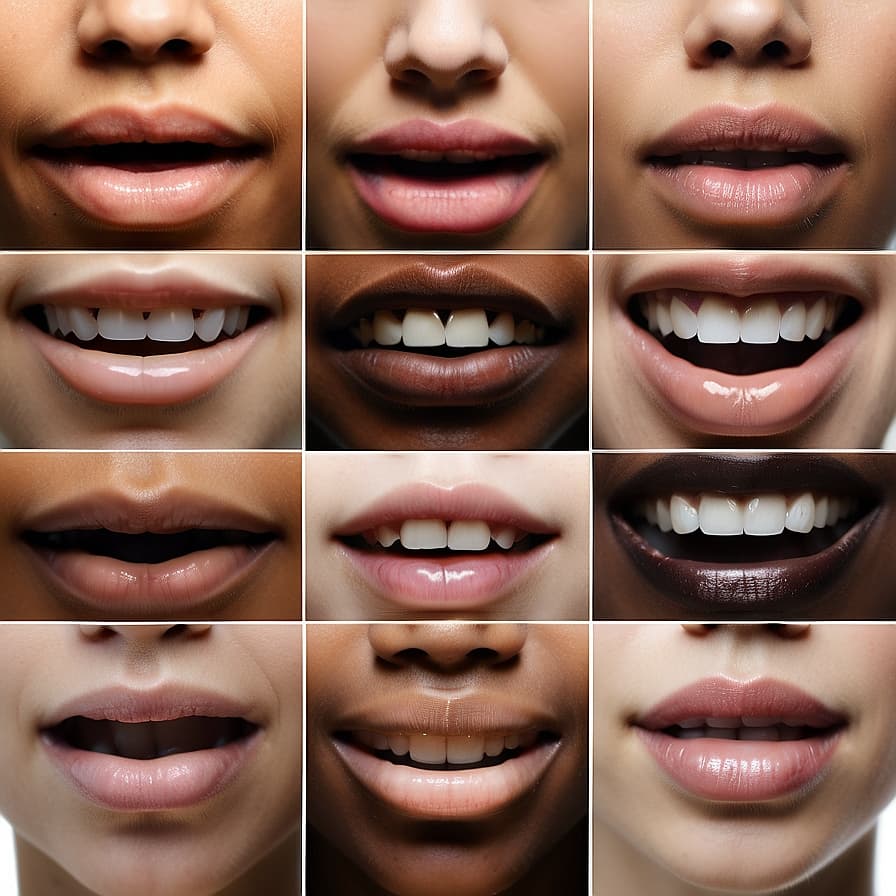
The Limba face tends toward a broad, low nasal bridge with wide alae, full everted lips with a pronounced vermilion border, and a strong but rounded jaw rather than the narrower mandible seen further north among Fulani-influenced groups. Cheekbones are moderately high and set wide. Foreheads read as broad and slightly rounded.
Build is medium-tall and lean-muscular — adult men commonly 170–178 cm, women 158–165 cm — with the long-limbed, narrow-hipped torso ratio typical of forest-edge West African populations. Body fat distribution in women favors hips and thighs over the midsection. Sub-group variation is modest: the Sela and Wara-Wara branches of the Koinadugu highlands run slightly taller and darker on average than the Safroko and Tonko Limba of the Bombali lowlands, but the difference is a tendency, not a line.
Data depth
0/100Coverage of image-grounded phenotype observations · drives AI generation diversity
- Sample size
- 0/40· 0 images
- Image quality
- 0/30· 0% high
- Confidence
- 0/20
- Source diversity
- 0/10
- ·No image observations yet
Explore phenotype categories
Structured taxonomy with peer-reviewed scales · 22 anatomical categories





Generate Limba AI Content
Use this ethnicity's phenotype data to create AI-generated content with accurate physical traits and cultural context.
Open Creator Studio