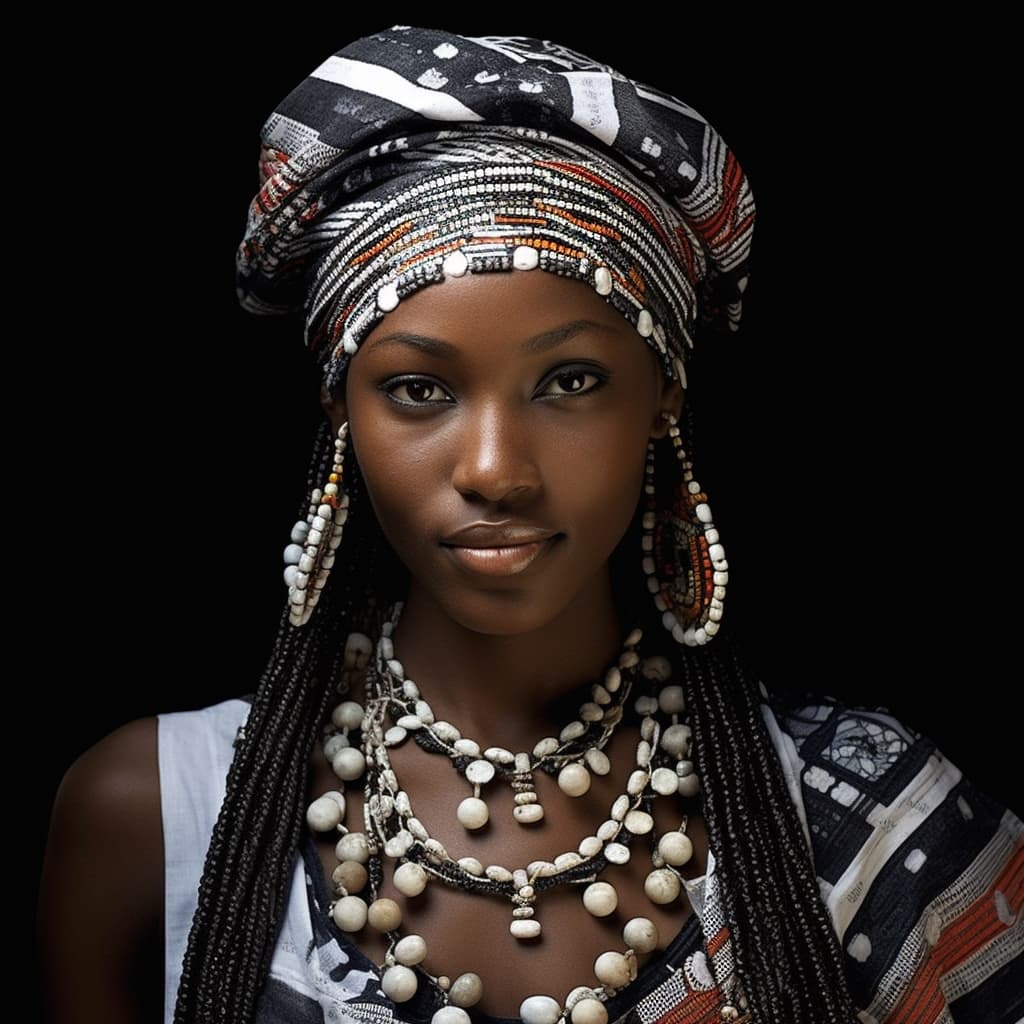
Kofyar Erotic
Plateau State (Nigeria)
Afroasiatic / Chadic / Kofyar
Traditional African religions
Western Africa
About Kofyar People
The Kofyar live on the southern edge of the Jos Plateau in central Nigeria, where the highlands break down into the Benue lowlands. The terrain made them — for centuries they farmed the steep escarpment slopes by hand, terracing hillsides and cycling crops through a system intensive enough that anthropologists have studied it as a small classic of indigenous agronomy. Sorghum, millet, and acha go into the ground; goats and chickens move through the compounds; beer brewed from guinea corn moves through nearly every social occasion that matters. The household compound itself is the unit that organizes most of life, with round mud-walled rooms grouped around a central yard, granaries raised on stone, and the whole arrangement tuned to the rhythm of the farming year.
Linguistically the Kofyar belong to the Chadic branch of Afroasiatic — the same deep family as Hausa, though the relationship is distant enough that the two languages are mutually unintelligible and the cultural worlds sit at arm's length. Kofyar itself is sometimes treated as a cluster rather than a single tongue, with Doemak, Mer, Jipal, and Kwalla recognized as branches whose speakers understand one another with varying ease. The umbrella name "Kofyar" is partly a colonial-era convenience that hardened into a working ethnonym during the twentieth century; older identities track to the specific chiefdom or hill community.
Religion on the Plateau has layered rather than simply replaced. Traditional practice centers on ancestors and on the spirits associated with particular places — outcrops, springs, groves — mediated through household elders and a class of ritual specialists who handle planting rites, funerals, and the cycle of harvest festivals. Mos, the millet beer, is itself ritual material, poured to ancestors before it is drunk by the living. Christianity arrived through mission stations in the early twentieth century and is now the majority affiliation in many villages, but the older observances have not vanished so much as moved to the edges of the calendar, surfacing at funerals and at the moments when the agricultural year demands them.
The signature historical episode of the modern Kofyar is the migration off the hills. From roughly the 1950s onward, families moved down into the Benue plains to take up cash-crop farming on a scale the escarpment couldn't sustain, carrying the labor logic of the hill terraces with them and reproducing it on flatter ground. It is one of the better-documented voluntary frontier movements in twentieth-century West Africa, and it reshaped what being Kofyar means today.
Typical Kofyar Phenotypes
Reference for AI generation — hair, eyes, skin, facial structure, build
The Kofyar are a small Chadic-speaking population of the Jos Plateau escarpment, and their phenotype reflects the long settlement of West-Central African farming peoples on Nigeria's middle-belt highlands rather than the lowland Sahel or coastal forest zones. Skin tone sits in the deep brown to very dark brown range — Fitzpatrick VI for most adults, with reddish-mahogany undertones more common than the blue-black undertones associated with Sahelian groups further north. Sustained high-altitude sun on terraced farmland keeps tone uniform across exposed and unexposed areas in working adults.
Hair is tightly coiled — Type 4B to 4C — dense, with a fine to medium strand diameter. Color is uniformly black-brown; natural lightening is rare and usually sun-bleached rather than genetic. Eyes are dark brown to near-black, set under a moderate brow ridge; the epicanthic fold is absent, and the palpebral fissure tends to be slightly almond rather than wide-round. Lashes are dense and short.
Facial structure is the clearest marker separating Kofyar from their Hausa-Fulani neighbors on the surrounding plains. Noses are broad at the alae with a low-to-medium bridge — wider and flatter than the narrower Fulani profile, but not as platyrrhine as some forest-zone groups further south. Lips are full, with the lower lip typically more pronounced than the upper. Cheekbones are moderately high and forward-set; the jaw is square in men and softer-angled in women, giving a face that reads as rounded rather than long.
Build is compact and wiry — adult men commonly fall in the 165–175 cm range, women 155–165 cm, both shorter on average than neighboring Tiv or Hausa populations. Centuries of intensive terraced agriculture on the Plateau have produced a dense, muscular build with low body fat and well-developed shoulders, hips, and calves; the soft-bodied gracility seen in some neighboring groups is uncommon. The Kofyar phenotype reads as compact, dark, and farm-built — recognizably Plateau, distinct from both Sahelian and coastal Nigerian neighbors.
Data depth
0/100Coverage of image-grounded phenotype observations · drives AI generation diversity
- Sample size
- 0/40· 0 images
- Image quality
- 0/30· 0% high
- Confidence
- 0/20
- Source diversity
- 0/10
- ·No image observations yet
Explore phenotype categories
Structured taxonomy with peer-reviewed scales · 22 anatomical categories





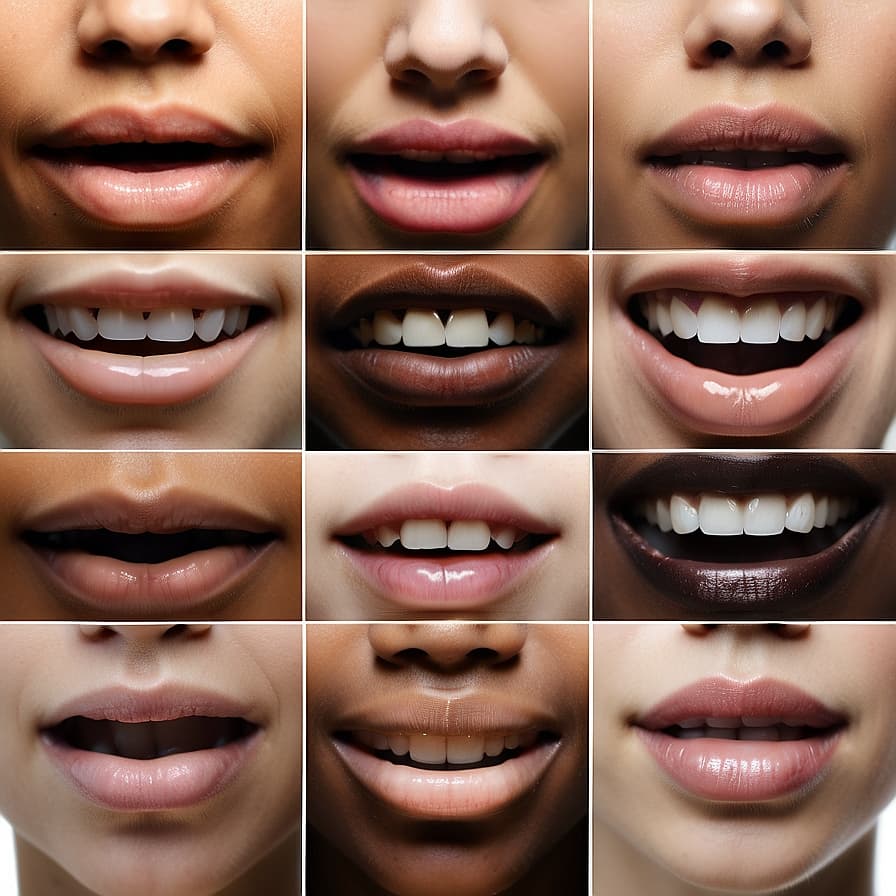
Generate Kofyar AI Content
Use this ethnicity's phenotype data to create AI-generated content with accurate physical traits and cultural context.
Open Creator Studio