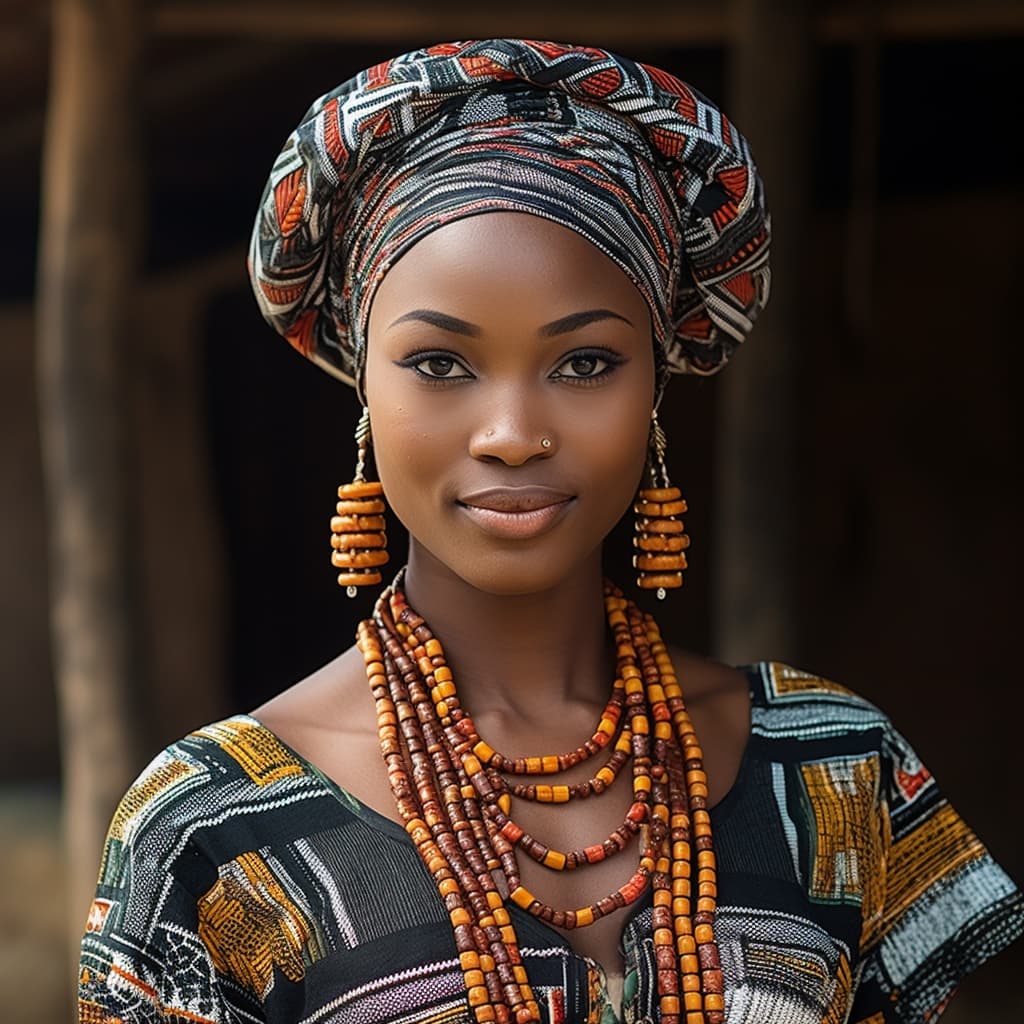
Kilba Erotic
Hong (Nigeria)
Afroasiatic / Chadic / Huba
Christianity
Western Africa
About Kilba People
The Kilba — they call themselves Huba, and increasingly that is the name you will see in print — live in and around Hong, in the hills and broken country at the northern edge of Adamawa State in Nigeria. The landscape matters here: their homeland sits on the southern flank of the Mandara range, a belt of inselbergs and rocky outcrops that has historically given the smaller peoples of the region somewhere to retreat when the cavalry of the Sokoto and Adamawa emirates came looking for slaves and tribute. Like the Margi, the Higi, and the Bura with whom they share that hill country, the Huba spent the nineteenth century absorbing pressure from the Fulani jihad to their north without being absorbed by it.
Their language, also called Huba, belongs to the Chadic branch of Afroasiatic — the same deep family as Hausa, but a long way from it, sitting in the Biu-Mandara cluster alongside the speech of their immediate neighbors rather than the Hausa-speaking world to the north. For most Huba today, daily life is trilingual in practice: Huba at home, Hausa in the market, English in the classroom and in church. The shift to Christianity, largely Protestant and arriving through Lutheran and Brethren mission stations in the early twentieth century, took hold thoroughly enough that Hong is now read as a Christian town inside a Muslim-majority state, and that fact shapes a great deal — schooling patterns, marriage customs, what gets cooked at festivals, and, more uncomfortably, the community's exposure during the Boko Haram years, when Adamawa villages a short drive from Huba country were burned and emptied.
Internally the Huba are organized into a set of clans associated with particular hills and founding ancestors, with the paramount traditional ruler styled the Tlimuna of Hong — an office that survived colonial reorganization and still mediates land disputes and customary marriage. The older religious life, before the missions, centered on a sky-and-rain divinity and on rites tied to the agricultural year of guinea corn, millet, and groundnut farming on the slopes; fragments of that ritual calendar persist inside Christian observance, particularly around harvest. Funerals remain the social event that pulls scattered Huba — including the substantial diaspora in Yola, Jos, and Abuja — back to the home compound, and they are treated with a seriousness and expense that outsiders sometimes find disproportionate until they understand that this is where lineage, land, and standing are publicly settled.
Typical Kilba Phenotypes
Reference for AI generation — hair, eyes, skin, facial structure, build
The Kilba (also called Huba or Hoba) are a Chadic-speaking population concentrated around Hong in Adamawa State, northeastern Nigeria, sitting on the cultural seam where Sahelian West Africa meets the Mandara highlands. Their phenotype reflects that border position: predominantly Sub-Saharan in structure, but with a leaner, more angular cast than the lowland Yoruboid or Igboid populations to the south.
Hair is almost uniformly Type 4 — tightly coiled, with the dense Z-pattern common across the Chadic belt. Natural color sits in true black; sun-bleached coppery tips appear on children and outdoor workers, and graying tends to come late and patchy rather than uniform. Eyes are dark brown to near-black, with no epicanthic fold and a moderately deep-set orbital line; brows are heavy and well-defined, often joining lightly at the glabella in men.
Skin tone ranges across Fitzpatrick V to VI, clustering in the deep brown to dark brown band — generally a touch lighter than the Mandara montagnard groups immediately east, and noticeably darker than the Fulani who share the same region. Undertones run warm-neutral with reddish-bronze cast under direct sun rather than the olive-yellow seen in Sahelian populations further north.
Facial structure is the Kilba's most identifiable feature. Noses tend toward a narrower bridge and moderate alar width — less broad than typical Niger-Congo populations, reflecting the Chadic linguistic affiliation that links them eastward toward Lake Chad. Lips are full but proportionate, not maximally everted. Cheekbones sit high and the jaw is firm, often producing a long, somewhat sculptural face rather than a rounded one. Foreheads are tall and clean.
Build is lean and tall — men commonly reach 178–183 cm, women around 165–170 cm — with long limbs, narrow hips, and minimal subcutaneous fat layering, the classic highland-margin body composition. Older men, like the late MP Albatan Yerima Balla, retain the upright bearing and angular features into age rather than thickening.
Data depth
0/100Coverage of image-grounded phenotype observations · drives AI generation diversity
- Sample size
- 0/40· 0 images
- Image quality
- 0/30· 0% high
- Confidence
- 0/20
- Source diversity
- 0/10
- ·No image observations yet
Explore phenotype categories
Structured taxonomy with peer-reviewed scales · 22 anatomical categories
Notable Kilba People
1 reference figure — sourced from Wikipedia
- Albatan Yerima Balla — First Republic Member of Parliament and World War 2 veteran






Generate Kilba AI Content
Use this ethnicity's phenotype data to create AI-generated content with accurate physical traits and cultural context.
Open Creator Studio