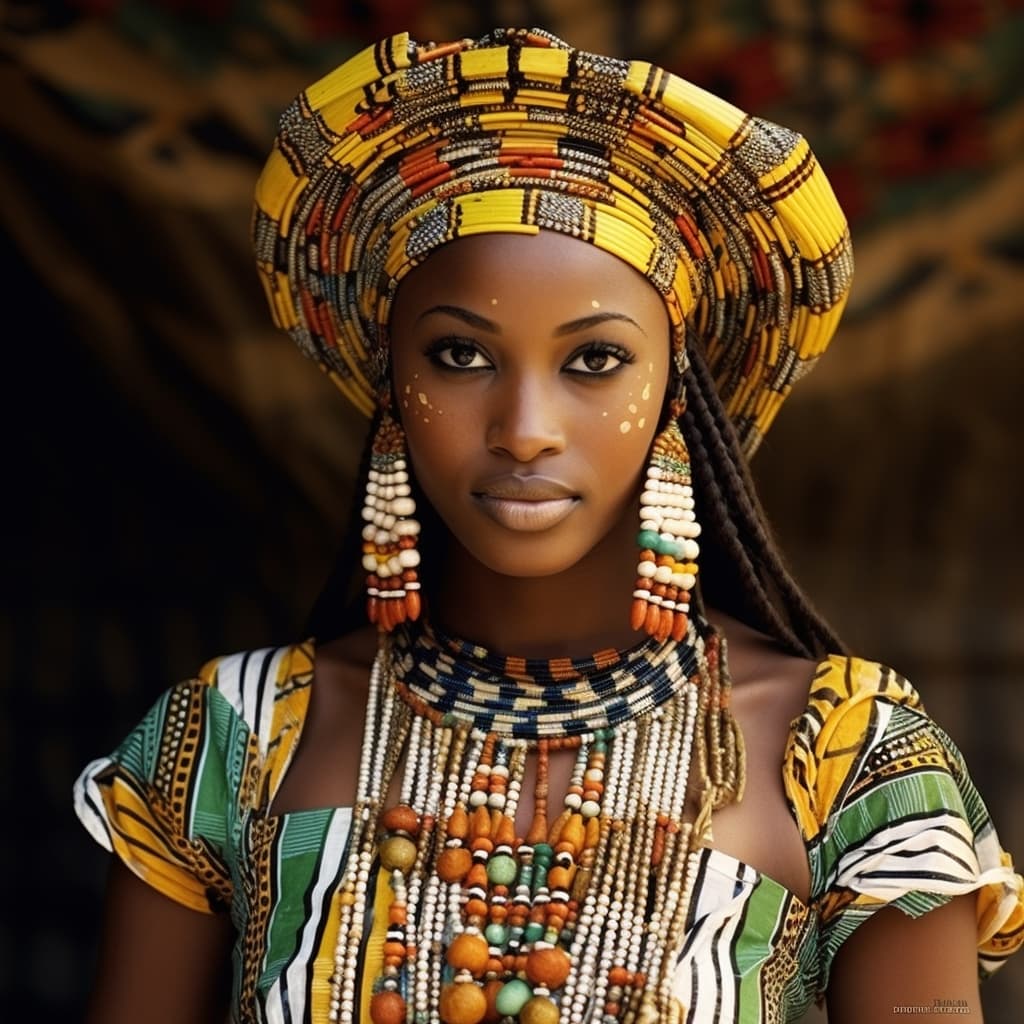
Fula Erotic
West Africa (Guinea, Senegal, Mali, Mauritania, Nigeria, Cameroon, Niger, Burkina Faso, Benin, Chad)
Niger–Congo / Atlantic / Senegambian / Fula
Islam
Wodaabe, Haratin, Fula Jalon, Fulakunda, Maasina Fulfulde
Western Africa
About Fula People
The Fula are one of Africa's largest stateless peoples, scattered in a great east–west belt across the Sahel from the Atlantic coast to Lake Chad and beyond. Estimates put them somewhere around forty million, but counting is a fool's errand: the Fula have always been a people of movement, and a Fula family in Guinea may have cousins they've never met herding cattle in Niger or trading in northern Cameroon. What holds them together is not a country but a language — Pulaar or Fulfulde, depending on where you stand — a cattle-keeping inheritance, and a code of conduct called pulaaku, which prizes reserve, patience, modesty, and a kind of stoic dignity in the face of hardship. To behave with pulaaku is, in a sense, to be Fula.
Their language sits in the Atlantic branch of Niger–Congo, related distantly to Wolof and Serer, with an unusual grammatical structure built around an elaborate noun-class system that marks, among other things, whether a thing is human, an animal, a liquid, or something abstract. Internal divisions are largely a matter of geography and livelihood. The Fouta Djallon Fula of the Guinean highlands are settled, scholarly, and were the architects of an Islamic theocratic state in the eighteenth century. The Maasina Fulfulde speakers of the Niger River bend in Mali built another, the Caliphate of Hamdullahi. Further east, the Sokoto jihad of Usman dan Fodio in the early nineteenth century reshaped what is now northern Nigeria into the largest empire in West Africa at the time, and its administrative bones still show through. The Wodaabe, sometimes called Bororo, are the Fula who never settled — nomads of the southern Sahara who keep zebu cattle and hold the Geerewol, a courtship gathering in which young men paint their faces, line up, and dance to be judged by the women on charm, white teeth, and the whites of their eyes.
Islam came early — by the eleventh century in some areas — and the Fula became its most determined carriers across the Sahel, founding emirates, scholarly lineages, and Sufi orders that still anchor religious life from Senegal to Sudan. Yet the cattle came first and remain central. A Fula herder reading the rains, the grass, and the political weather of three or four nation-states at once is doing something his ancestors did a thousand years ago, and he is not nostalgic about it. It is simply the work.
Typical Fula Phenotypes
Reference for AI generation — hair, eyes, skin, facial structure, build
The Fula are one of the most phenotypically distinctive populations in West Africa, set apart from their Mande, Hausa, and Wolof neighbors by a recognizable lean, narrow-featured build and a skin-tone range that runs noticeably lighter on average than surrounding groups. The classic Fula face is long and slender with a high, often narrow nose bridge, defined cheekbones, a relatively pointed chin, and lips that read fuller than European norms but distinctly less full than typical Niger–Congo averages — a combination Western anthropologists have flagged for over a century and which still holds up in family-line photographs across the Sahel.
Skin tone spans roughly Fitzpatrick IV through deep VI, with reddish-brown and coppery undertones common, particularly among pastoralist Wodaabe and Mbororo lineages, while sedentary Sokoto and Adamawa Fula trend toward darker mahogany and near-black browns indistinguishable from their Hausa neighbors. Hair is overwhelmingly Type 4 coily, dark brown to black, though slightly looser Type 3c–4a textures appear more often in lighter-skinned cattle-keeping subgroups. Eyes are usually dark brown to black; a small but persistent minority show hazel, amber, or grey-brown irises — visibly more frequent than in surrounding populations. No epicanthic fold; the eye shape is typically almond-set and deep, with the upper lid often appearing hooded.
Build is the giveaway: tall, narrow-shouldered, long-limbed, with low body-fat tendencies even outside pastoralist lifestyles. Average male stature runs in the 173–180 cm range, women correspondingly tall and slender-hipped, with elongated necks and slim wrists and ankles. The Wodaabe, who self-select for these traits in the Geerewol beauty competitions, represent the phenotype at its most concentrated — extreme height, near-aquiline noses, fine bone structure. Fula Jalon highlanders of Guinea trend slightly stockier and darker; Maasina Fulfulde along the Niger bend show more admixture with Songhai and Bambara features; Haratin populations carry visible North African Berber influence, including straighter hair textures and lighter olive-brown skin. Statesmen like Ahmadu Bello and Muhammadu Buhari illustrate the tall, narrow-faced sedentary type well.
Data depth
73/100Coverage of image-grounded phenotype observations · drives AI generation diversity
- Sample size
- 35/40· 39 images
- Image quality
- 23/30· 46% high
- Confidence
- 15/20· mean 0.76
- Source diversity
- 0/10· wikipedia
- ·Wikipedia-only source — not population-representative
Observed Distribution — Image Sample
Empirical observations from analyzed photographs · supplementary signal, not population truth
Sample: 39 images analyzed (39 wikipedia). Quality: 18 high, 13 medium, 8 low, 0 very_low. Avg analyzer confidence: 0.76.
Skin tone (Fitzpatrick): V (31%), VI (67%), unclear (3%)
Hair color: gray/white (38%), black (33%), dark brown (3%), unclear (26%)
Hair texture: coily (46%), bald (3%), covered (49%), unclear (3%)
Eye color: dark brown (97%), unclear (3%)
Epicanthic fold: 0% present, 97% absent, 3% unclear
Caveats: Sample is 100% Wikipedia notable people — skews toward male, public-life, and modern figures, not population-representative.
Last aggregated: May 7, 2026
Explore phenotype categories
Structured taxonomy with peer-reviewed scales · 22 anatomical categories
Notable Fula People
100 reference figures — sourced from Wikipedia
- Muhammad Ibn Muhammad Al-Fulani Al-Kishwani — prominent mathematician in the early 1700s from Katsina
- Usman dan Fodio — 1754–1817) – Islamic scholar, revolutionary from Sokoto, founder and spiritua…
- Abdullahi dan Fodio — 1766–1829) – scholar, jurist, pioneer, Grand Vizier of Sokoto and first Emir …
- Nana Asma'u — Princess, poet, Islamic scholar and daughter of Usman dan Fodio.
- Muhammed Bello — 1781–1837) – the first Sultan of Sokoto.
- Abd al-Qadir dan Tafa — 1804–1864) – described as the "most learned scholar of his time" in the Sokot…
- Abu Bakr Atiku — 1782–1842) – second sultan of the Sokoto Caliphate, reigning from October 183…
- Muhammadu Junaidu — former Grand Vizier of Sokoto, Historian, Writer
- Hayatu ibn Sa'id — great-grandson of Usman dan Fodio, Mahdist leader who attempted to conquer Bo…
- Muhammad Bukhari bin Uthman — military commander, scholar and poet. Son Of Usman dan Fodio.
- Modibbo Adama — 1786–1847) – first Laamiɗo and founder of Fombina (Adamawa emirate) which cov…
- Modibbo Raji — influential 19th century Islamic scholar who is generally regarded as the fou…
- Muhammad Auwal Albani Zaria — prominent Islamic scholar and reformer.
- Isa Ali Pantami — Islamic scholar, former Minister of Communications and Digital economy.
- Ibrahim Ahmad Maqary — Professor of Arabic and linguistics, Current Co-imam of the Abuja National Mo…
- Iya Abubakar — Professor of Mathematics at Ahmadu Bello University at the age of 28, first N…
- R. A. B. Dikko — first Medical Doctor from Northern Nigeria.
- Mahmud Modibbo Tukur — 1944–1988) -Nigerian historian, scholar and the 4th National President of the…
- Muhammad Ali Pate — CEO GAVI; Global Director for Health, Nutrition and Population at the World B…
- Mustafa Shehu — first person from Sub-Sahara Africa to be elected president of the World Fede…
- Umar Garba — professor of electrical and telecommunications engineering, former executive …
- Abdul Ganiyu Ambali — veterinary Doctor, former Vice- Chancellor of University of Ilorin.
- Ibrahim Abubakar — Professor of Infectious Disease Epidemiology at University College London, Vi…
- Fatima Batul Mukhtar — Professor of Botany, Vice- Chancellor Azman University.
- Bello Shehu — neurosurgeon, former Chief Medical Director of the Usman Danfodiyo University…
- Usman Yusuf — professor of hematology-oncology and bone marrow transplantation, former chie…
- Aisha Maikudi — professor of International Law, Vice Chancellor University Of Abuja, Youngest…
- Hadiza Galadanci — Professor of obstetrics and gynecology at Bayero University, Kano, Director o…
- Abubakar Sani Sambo — former Director-General of Energy Commission of Nigeria (ECN), former Vice Ch…
- Mahmud Tukur — first Vice Chancellor Of Bayero University Kano, former Minister Of Commerce …
- Aisha Mahmoud Hamman — Professor in the Department of Accounting and Finance at Ahmadu Bello Univers…
- Abba Gumel — professor & The Michael and Eugenia Brin Endowed E-Nnovate Chair in Mathemati…
- Fatimah Tuggar — professor of AI in Arts, University of Florida.
- Jubril Aminu — former Senator of Adamawa; Pioneer Cardiac Surgeon; former Minister of Educat…
- Yusufu Bala Usman — historian, writer, and Marxist.
- Sir Abubakar Tafawa Balewa — Gere/Fulani) – Nigerian politician and the first Prime Minister of an Indepen…
- Ahmadu Bello — Sardauna of Sokoto and first Premier of Northern Region of Nigeria.
- Shehu Shagari — former President of Nigeria.
- Mohammadu Buhari — Major-General Mohammadu Buhari – former president and former Head of State of…
- Umaru Musa Yar'Adua — former President of Nigeria.
- Namadi Sambo — former Vice President of Nigeria
- Aminu Kano — politician and teacher.
- Atiku Abubakar — former Vice President of Nigeria.
- Muhammadu Abubakar Rimi — former Governor of Kano State, Politician.
- Rabiu Kwankwaso — former Governor of Kano State, Nigeria, former Minister of Defence.
- Abdullahi Umar Ganduje — former Governor of Kano State, Nigeria.
- Nasir Ahmad el-Rufai — former Governor of Kaduna State, former Minister of Federal Capital.
- Isa Yuguda — economist, former Minister of Aviation, former Governor of Bauchi State.
- Abubakar Atiku Bagudu — former Governor of Kebbi State, Senate Second Republic, Nigeria.
- Sule Lamido — former Governor of Jigawa State, Nigeria, former Minister of Foreign Affairs.
- Aliyu Magatakarda Wamakko — former Governor of Sokoto State and current Senator of Sokoto North.
- Danbaba Suntai — former Governor Of Taraba State.
- Dikko Umar Radda — Governor of Katsina State.
- Gidado Idris — former Secretary to the Government of The Federation.
- Muhammadu Dikko Yusufu — former Inspector General of Police.
- Lamido Yuguda — Former director general of the Securities and Exchange Commission, Deputy Gov…
- Muhammad Sani Abdullahi — Former Kaduna State Commissioner for Budget and Planning, Deputy Governor(Eco…
- Abdulkadir Ahmed — economist, longest serving Governor of the Central Bank of Nigeria between 19…
- Abubakar Koko — administrator, First Executive Secretary of the Federal Capital Development A…
- Bello Maitama Yusuf — GCON, former Minister of Interior, Commerce, Social Welfare, Youth, Sports an…
- Abdullahi Yusuf Ribadu — Executive Sectretary National Universities Commission (NUC), former VC Modibb…
- Hamza Rafindadi Zayyad — former Managing Director New Nigeria Development Company, former Head Of Nige…
- Shamsudeen Usman — economist, former Deputy Governor (operations, Financial Stability) Central B…
- Nuhu Ribadu — current National Security Adviser and pioneer Executive Chairman of Nigeria's…
- Ibrahim Jalo — first indigenous full term to be Speaker of House of Representatives of Nigeria.
- Abubakar Alhaji — economist, former High Commissioner to the United Kingdom, former Minister OF…
- Abdullahi Dikko — economist, former Comptroller-General Of Nigeria Customs Service.
- Idi Mukhtar Maiha — former Managing Director of Kaduna Refining and Petrochemical Company (KRPC),…
- Zainab Ahmed — Minister of Finance, Budget and National Planning, executive director of the …
- Adamu Bello — economist, former Minister Of Agriculture and Rural Development.
- Abdullahi Baffa Bichi — former Executive Secretary Tertiary Education Trust Fund, former Kano SSG.
- Suwaiba Ahmad — Minister of State for Education.
- Muhammadu Gambo Jimeta — former Inspector General of Police.
- Aisha Shehu Adamu — Medical Consultant, current Chief Medical Director of Federal Medical Centre,…
- Bashir Dalhatu — former Minister of Power and Steel, Interior. Wazirin Dutse.
- Bukhari Bello — former Executive Secretary of Nigeria's National Human Rights Commission (NHRC).
- Babangida Nguroje — former Deputy Speaker Of the House Of Representatives.
- Aliyu Modibbo Umar — former Minister of State, Power and Steel (2002–2003), former Minister of Com…
- Rilwanu Lukman — former Minister of Petroleum Resources and Mines, Power, Steel; and former Se…
- Maikanti Baru — engineer, former GMD Of NNPC Limited.
- Mohammed Bello-Koko — former Managing Director of the Nigerian Ports Authority
- Muhammed Babandede — former Comptroller General (CG) of the Nigeria Immigration Service NIS.
- M.T. Usman — former permanent secretary ministry of Works.
- Hamman Bello — former Comptroller- General Of Nigeria Customs Service.
- Musa Yar'Adua — Minister of Lagos Affairs 1960 -1966, Matawalle of the Katsina Emirate.
- Muhammadu Ribadu — first Minister of Defence after independence, Founder of the Nigerian Defence…
- Mansur Muhtar — economist, former Nigerian Federal Minister of Finance (2008 -2010), former d…
- Tajudeen Abbas — Speaker of the House of Representatives of Nigeria.
- Abubakar Olusola Saraki — Fulani/Yoruba); former President of the Senate.
- Gbemisola Ruqayyah Saraki — Fulani/Yoruba); former Senator Kwara Central, current Minister of State. Tran…
- Aisha Dikko — former Attorney general, commissioner of Justice Kaduna.
- Bukola Saraki — Fulani/Yoruba); former President of the Nigerian Senate; former Governor of K…
- Muhammad Bala Shagari — Captain Muhammad Bala Shagari – politician, former Nigerian Army officer. Cur…
- Mohammed Bello (jurist) — jurist and statesman who was the Chief Justice of Nigeria from 1987 to 1995.
- Mohammed Uwais — jurist and former Chief Justice of Nigeria from 1995 to 2006.
- Salihu Modibbo Alfa Belgore — jurist and former Chief justice of Nigeria from 2006 to 2007.
- Mahmud Mohammed — jurist and former Chief Justice of Nigeria from 2014 to 2016
- Tanko Muhammad — jurist and former Chief Justice of Nigeria from 2019 to 2022.
- Zainab Adamu Bulkachuwa — first female president of the Nigerian Courts of Appeal.
- Mamman Nasir — former Justice of the Supreme Court, former President Of the Courts Of Appeal.





Generate Fula AI Content
Use this ethnicity's phenotype data to create AI-generated content with accurate physical traits and cultural context.
Open Creator Studio