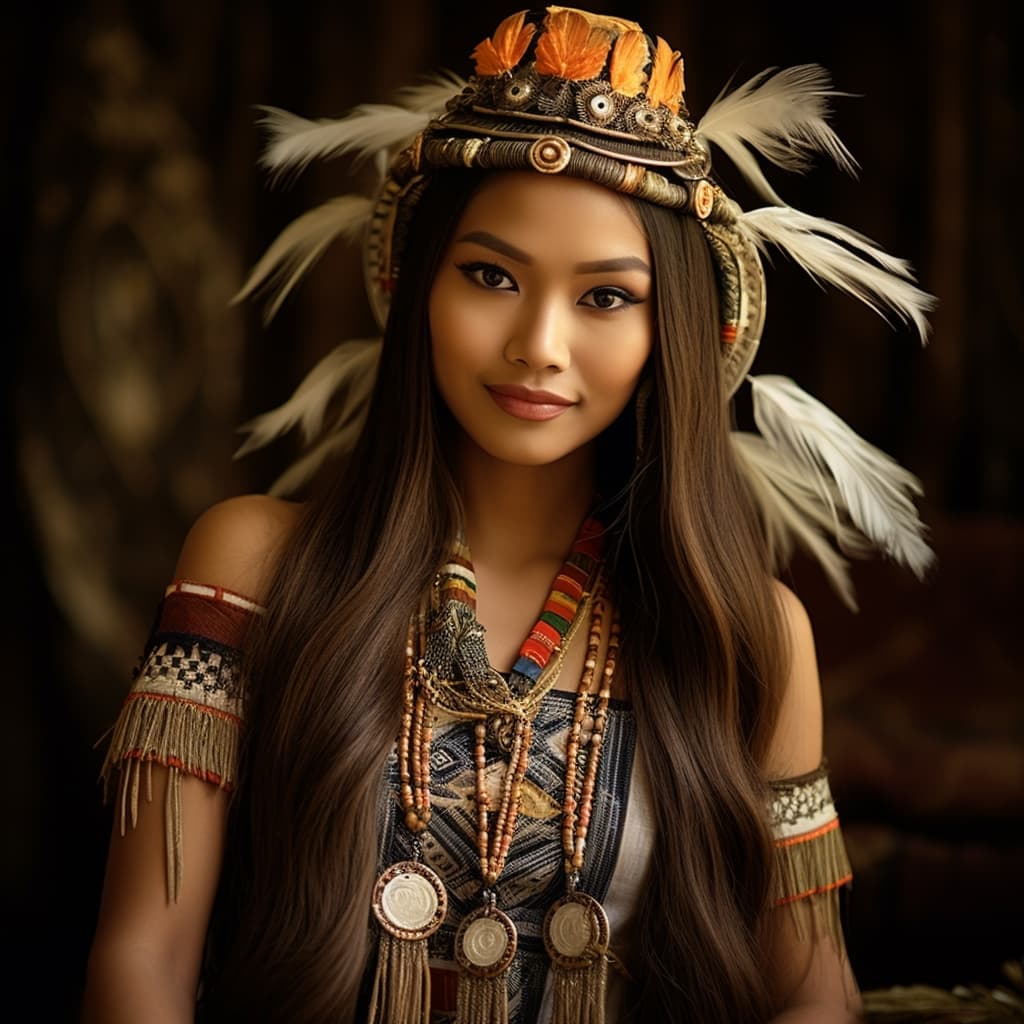
Visayans Erotic
Visayas (Philippines)
Austronesian / Philippine / Visayan
Christianity / Catholicism
Aklanon, Butuanon, Cebuano (including Boholano and Eskaya), Caluyanon, Capiznon, Cuyunon, Hiligaynon, Karay-a, Masbateños, Negrense, Porohanon, Romblomanon (including Bantoanons), Waray
Southeast Asia
About Visayans People
The Visayans are the largest of the three major Filipino groupings, defined less by a single ethnonym than by the central archipelago they inhabit — a constellation of islands wedged between Luzon to the north and Mindanao to the south. What holds them together is the Visayan branch of the Austronesian language family: a cluster of related but mutually distinct tongues including Cebuano, Hiligaynon (Ilonggo), Waray, Aklanon, Karay-a, and a half-dozen more. Cebuano alone has more speakers than any single language in the country, including Tagalog, though Tagalog-derived Filipino carries the official weight. The boundaries between sub-groups follow island geography more than tribal lines — Cebuanos in Cebu and eastern Negros, Hiligaynons in Iloilo and Negros Occidental, Warays in Samar and Leyte, Aklanons and Karay-a in Panay's western lobe — and a Visayan from one island will often understand parts of a neighbor's speech without quite speaking it.
Visayan history bends around the year 1521, when Magellan's expedition made landfall on Homonhon and was killed weeks later at Mactan by Lapulapu, a chieftain whose name still functions as shorthand for resistance. The centuries that followed embedded Spanish Catholicism more deeply here than almost anywhere else in Asia; the great fiestas — Cebu's Sinulog for the Santo Niño, Kalibo's Ati-Atihan, Iloilo's Dinagyang — fuse Catholic devotion with older indigenous performance, the dancers blackened with soot in remembrance of the Ati, the archipelago's earlier Negrito inhabitants. Folk Catholicism here is unembarrassed about its pre-Hispanic underlayer: belief in engkanto, aswang, and the spirit-world of the babaylan healers persists alongside the Mass, especially in rural Samar and the Negros interior.
Daily life has a maritime cast that the Tagalog north lacks — the Visayans are an island people in the literal sense, their towns oriented to the shoreline, their economies historically built on fishing, sugar (the haciendas of Negros remain a defining and contentious feature), and now overseas labor and remittances. The Eskaya of Bohol, with their own script and a constructed-seeming language of disputed origin, sit at one unusual edge of the Cebuano world; the Boholanos themselves speak a softer, distinct variant. The Visayan temperament, in the way Filipinos themselves describe it, runs warmer and more openly humorous than the more formal north — a generalization, like all such things, but one Visayans tend not to argue with.
Typical Visayans Phenotypes
Reference for AI generation — hair, eyes, skin, facial structure, build
Visayans present the classic Southern Filipino Austronesian phenotype, shaped by a deep Malayo-Polynesian base with measurable layers of South Chinese, Spanish, and — especially in the southern islands — Negrito and proto-Austronesian admixture. The result is more variable than the standard "Filipino" shorthand suggests, and the variation tracks fairly cleanly with which island someone's family is from.
Hair is almost universally black or near-black, straight to gently wavy, with a fine to medium shaft. True curls are uncommon outside individuals with Ati or other Negrito ancestry, where tighter coil patterns and slightly browner tones appear. Eyes run dark brown to near-black; a soft epicanthic fold is typical but rarely as pronounced as in Northeast Asian groups, and the palpebral fissure tends to sit straighter, giving an almond rather than slanted appearance. Lashes are dense and dark.
Skin spans Fitzpatrick III through V, with warm golden and olive undertones dominant. Cebuanos, Boholanos, and Hiligaynons of the central plains often sit lighter — III to IV — while Waray, Negrense, and rural Karay-a populations trend deeper, IV to V, with sun exposure pushing many further. Ati-descended Visayans, concentrated in Panay and Negros, can be notably darker with cooler red-brown undertones.
Facial structure is moderate: nasal bridges are typically low to medium with a rounded tip and moderate alar width — broader than East Asian norms, narrower than Melanesian. Lips are medium-full, often with a defined cupid's bow. Cheekbones are present but soft rather than sharp; jawlines tend toward oval or heart-shaped faces, with rounder faces common among Boholanos and Cebuanos.
Build is compact. Average male stature lands around 163 cm and female around 151 cm, among the shorter ranges in Southeast Asia. Body composition leans slim-to-mesomorphic in youth, with a tendency toward central weight gain later. Limb proportions are short relative to torso length, a consistent Austronesian island marker that distinguishes the Visayan silhouette from mainland Southeast Asian neighbors.
Data depth
0/100Coverage of image-grounded phenotype observations · drives AI generation diversity
- Sample size
- 0/40· 0 images
- Image quality
- 0/30· 0% high
- Confidence
- 0/20
- Source diversity
- 0/10
- ·No image observations yet
Explore phenotype categories
Structured taxonomy with peer-reviewed scales · 22 anatomical categories






Generate Visayans AI Content
Use this ethnicity's phenotype data to create AI-generated content with accurate physical traits and cultural context.
Open Creator Studio