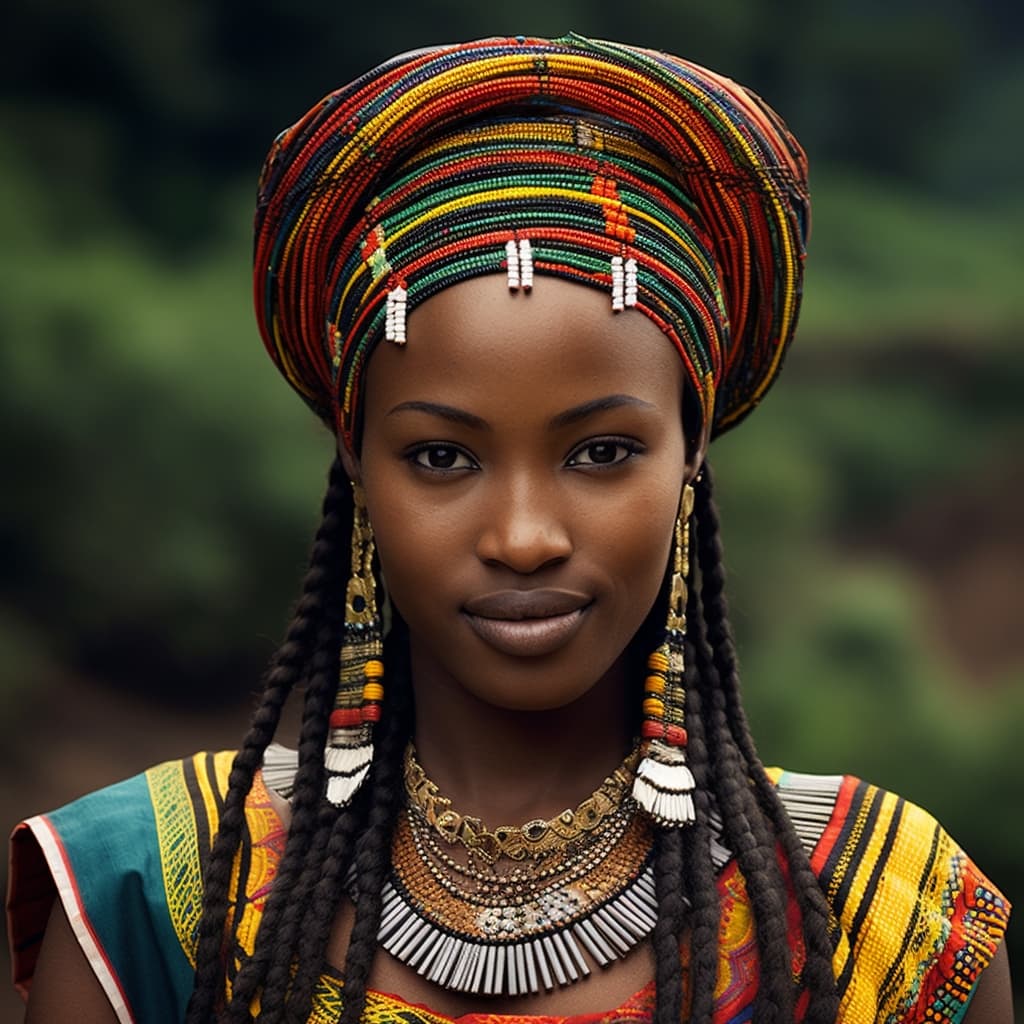
Tutsi Erotic
Rwanda, Burundi, Kivu (Democratic Republic of the Congo)
Niger–Congo / Bantu / Great Lakes / Rwanda-Rundi
Christianity, Islam
Banyamulenge
Central Africa
About Tutsi People
The Tutsi are one of three populations — alongside the Hutu and the much smaller Twa — who share the Great Lakes highlands of Rwanda, Burundi, and the eastern Congo, and who also share, unusually for the region, a single language. Kinyarwanda in Rwanda and Kirundi in Burundi are close enough to be mutually intelligible dialects of the same Bantu tongue; whatever divides Tutsi from their neighbors, language does not. That fact has shaped the group's history more than almost anything else, because where language and territory align so cleanly, identity has to be drawn along other lines — cattle, lineage, height, occupation, and eventually the colonial paperwork that hardened all of those into something fixed.
Historically, Tutsi identity attached to pastoralism and to the precolonial monarchies of Rwanda and Burundi, where royal and aristocratic lineages were predominantly Tutsi and the long-horned Ankole-Watusi cattle were both wealth and emblem. The line between Tutsi and Hutu was real but porous before European administration arrived; Belgian rule, building on German foundations, codified the categories on identity cards and parceled out access to schooling and office accordingly. The consequences ran through the second half of the twentieth century: cycles of violence in Burundi from the 1960s onward, mass exile from Rwanda, and the 1994 genocide in Rwanda, in which roughly 800,000 people, overwhelmingly Tutsi, were killed in about a hundred days. The Banyamulenge — Tutsi cattle-herding communities who settled the high plateaus of South Kivu generations ago — were drawn into the wars that followed across the Congolese border and remain a distinct, often precarious branch of the wider group.
Today most Tutsi are Christian, divided between Catholic and various Protestant churches, with a smaller Muslim minority concentrated in urban communities; traditional religious practice survives mainly in vocabulary, proverbs, and the residual prestige of cattle in marriage and gift exchange. Post-1994 Rwanda has officially abolished ethnic categories in public life — identity cards no longer carry them, and the state discourages their use in conversation — while Burundi has taken the opposite tack, building ethnic quotas directly into its constitution. The two approaches sit awkwardly side by side across a single linguistic community. Cultural markers that have outlasted all of this include imigongo geometric cow-dung painting, the praise poetry and dance traditions once tied to the royal courts, and umuganda, the monthly community-labor day that remains compulsory across Rwanda.
Typical Tutsi Phenotypes
Reference for AI generation — hair, eyes, skin, facial structure, build
The Tutsi phenotype is shaped by a Nilotic-influenced body plan layered onto a Bantu-speaking Great Lakes population, and the most structurally distinctive trait is stature. Adult men commonly fall in the 178–188 cm range with documented historical averages among the tallest recorded in sub-Saharan Africa, and the build runs lean and long-limbed — narrow shoulders relative to height, slim hips, low body-fat distribution, and notably long tibias and forearms. Women carry the same elongated proportions at a smaller scale, often slender through the torso with comparatively narrow pelvic width for the region.
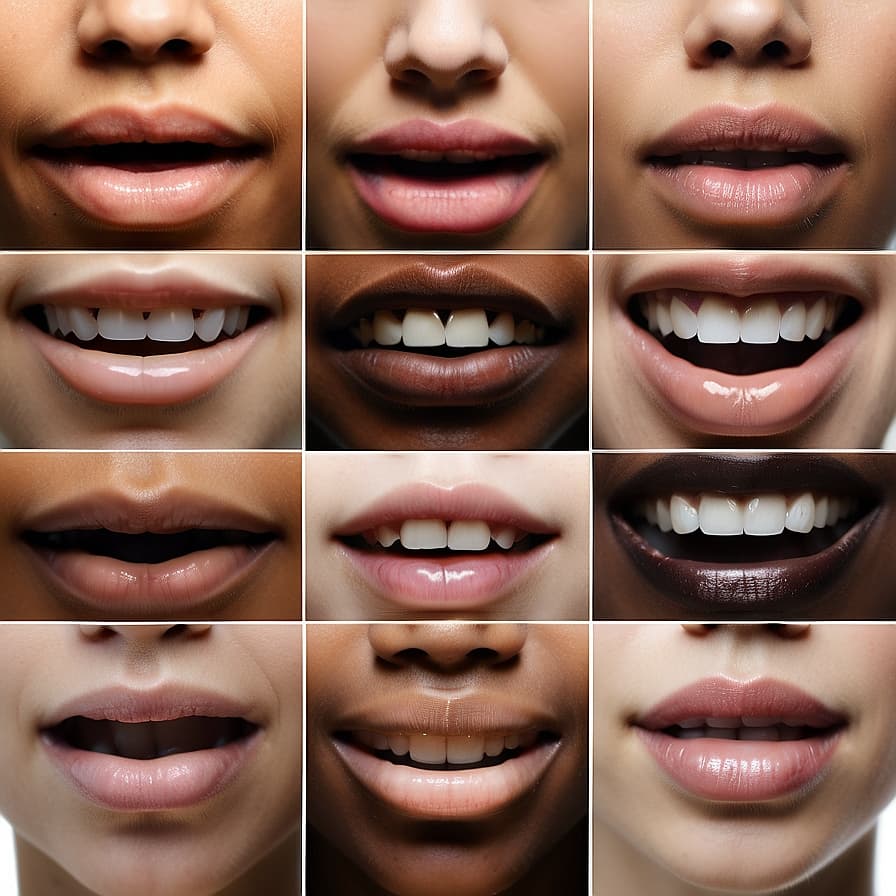
Facial structure follows the same elongated logic. Faces tend to be long and narrow rather than broad, with high-set cheekbones, a relatively narrow bizygomatic width, and a tall mandible. The nose is the clearest divergence from neighbouring Hutu and Twa morphology: bridges are typically higher and straighter, alar width narrower, with a more refined, sometimes aquiline tip. Lips are full but proportionally less everted than in many West African groups — fullness sits more in the lower lip, with a defined cupid's bow.
Skin runs from medium-dark brown to deep brown — Fitzpatrick V to VI — with warm red-brown undertones rather than the cooler blue-black tones common further west. Hair is Type 4, tightly coiled, almost always black or very dark brown; greying patterns are unremarkable. Eyes are dark brown to near-black, almond-shaped and often deep-set under a relatively flat brow ridge, with no epicanthic fold and lashes that are dense and curled rather than long.
The Banyamulenge of the South Kivu highlands are physically continuous with Rwandan and Burundian Tutsi — same elongation, same facial signature — though generations in colder, higher-altitude pasture country have produced a slightly stockier average build and somewhat darker average skin tone from sustained equatorial-altitude sun exposure. Substantial intermarriage with Hutu populations means a meaningful share of self-identified Tutsi present with intermediate features, particularly broader noses and shorter stature.
Data depth
0/100Coverage of image-grounded phenotype observations · drives AI generation diversity
- Sample size
- 0/40· 0 images
- Image quality
- 0/30· 0% high
- Confidence
- 0/20
- Source diversity
- 0/10
- ·No image observations yet
Explore phenotype categories
Structured taxonomy with peer-reviewed scales · 22 anatomical categories


Generate Tutsi AI Content
Use this ethnicity's phenotype data to create AI-generated content with accurate physical traits and cultural context.
Open Creator Studio