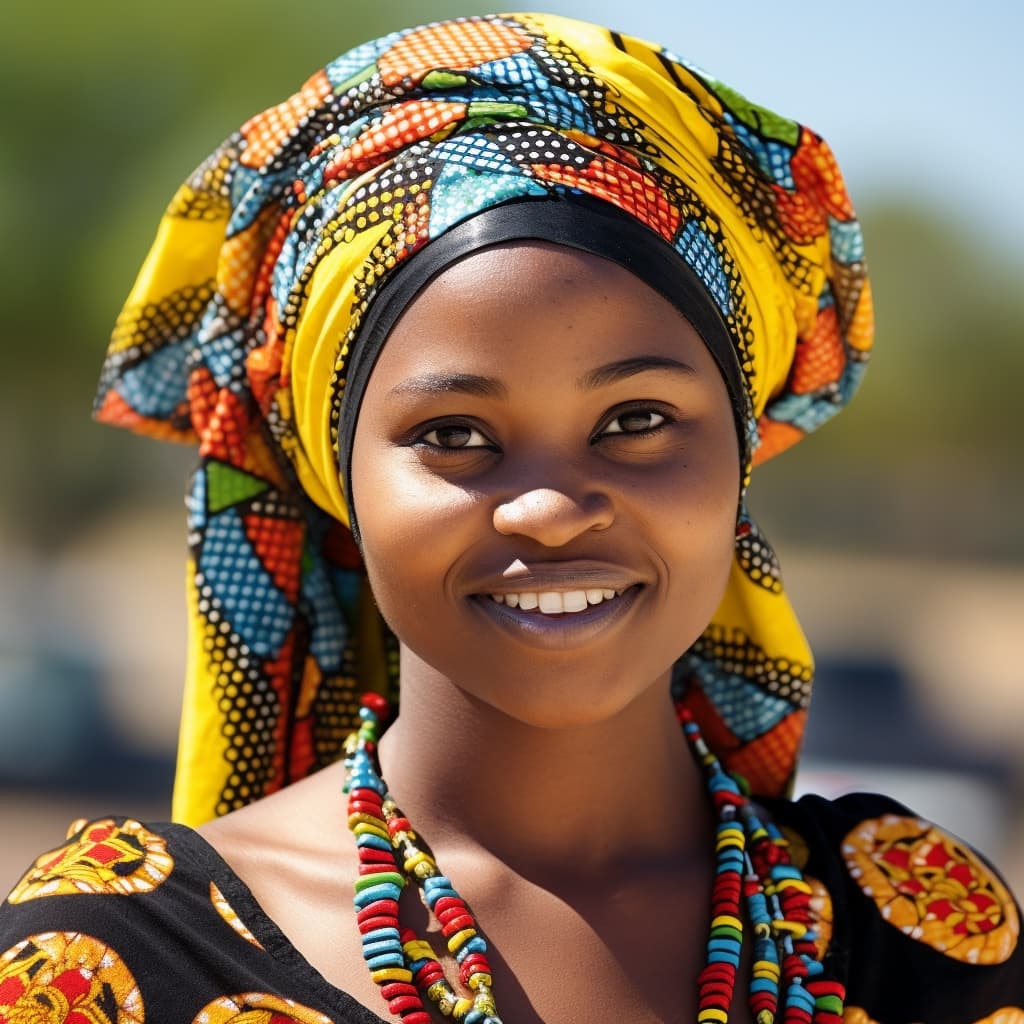
Tsonga Erotic
Mozambique (Maputo City and Maputo Province, Gaza Province), South Africa (Limpopo, Mpumalanga)
Niger–Congo / Bantu / Tsonga
Christianity / Catholicism
Southern Africa
About Tsonga People
The Tsonga are a Bantu-speaking people of the lowveld — the hot, low-lying country between the Drakensberg escarpment and the Indian Ocean. Their heartland straddles a modern border that means little to the kinship maps underneath it: southern Mozambique (Maputo and Gaza provinces) and the northeastern corner of South Africa (Limpopo and Mpumalanga). Xitsonga, their language, belongs to the Tswa–Ronga cluster within Southeastern Bantu, distinct from the Nguni languages of the Zulu and Swazi to the south and from the Sotho–Tswana languages of the highveld to the west. A speaker of Xitsonga can usually follow Xitswa and Xironga without much effort; Zulu, despite the geographic proximity, requires real adjustment.
What is now called "Tsonga" is really a confederation of older clan groupings — Hlanganu, N'walungu, Bila, Hlengwe, Dzonga, Luleke, Ronga — that were pulled into a shared identity partly by their own intermarriage and trade networks and partly by the violent reshuffling of the early nineteenth century. The Mfecane sent the Nguni warlord Soshangane northward into Tsonga country, where he established the Gaza Empire and imposed a Nguni military overlay on the region. The descendants of communities absorbed under Gaza rule are sometimes called Shangaan, and in South Africa especially the labels Tsonga and Shangaan are used almost interchangeably, though older Tsonga speakers will tell you the distinction still matters. Portuguese colonial administration in Mozambique and the demands of the South African mining economy then split the population across a hard border and pulled generations of men into migrant labor on the Witwatersrand — a fact that shaped Tsonga family structure, music, and remittance economies well into the present.
Religious life is overwhelmingly Christian, with a strong Catholic presence in Mozambique and a heavy footprint of African-initiated and Pentecostal churches on the South African side. Underneath the church calendar, ancestral practice persists without much sense of contradiction: the swikwembu — the spirits of the lineage dead — are consulted, propitiated, and accommodated through the traditional healer, the n'anga. Tsonga musical culture is unusually distinctive in the region: the xitende and mbila (a regional cousin of the Chopi marimba), the staccato vocal style of Shangaan electro, and the energetic dance form xibelani, with its layered grass-fiber skirt, are all readily identifiable as Tsonga rather than as generic Southern African export.
Typical Tsonga Phenotypes
Reference for AI generation — hair, eyes, skin, facial structure, build
Tsonga phenotype sits firmly within the southeastern Bantu cluster, sharing structural traits with neighboring Tswa, Ronga, and Shangaan populations across the Mozambique–South Africa border, with subtle Nguni and Sotho influence at the western edge of the range. The dominant impression is medium-to-dark brown skin in the Fitzpatrick V–VI band, with warm red-brown undertones rather than the cooler blue-black register seen further north in the Great Lakes region. Sun exposure deepens the tone considerably across the lowveld, and many older men photograph noticeably darker than their younger relatives.
Hair is almost universally Type 4 — tight coils ranging from 4A spirals to denser 4B and 4C kinks. Natural color sits between deep brown-black and true black; reddish sun-bleaching at the tips is common in rural sun-exposed populations. Eyes are dark brown to near-black, almond to slightly rounded, with no epicanthic fold and a clean, unhooded upper lid. Brow ridges are moderate rather than heavy.
Facial structure tends toward broad, well-defined cheekbones and a relatively short midface. Noses are typically broad-based with a low-to-medium bridge and full alar wings — wider on average than Nguni neighbors to the south. Lips are full, often with a pronounced cupid's bow on the upper lip and substantial lower-lip volume. Jaws are squared in men, softer and more oval in women, with strong chin projection.
Build leans athletic and lean-muscular. Stature averages around 168–175 cm for men and 158–163 cm for women, with long limbs relative to torso — a gracile southeastern Bantu pattern visible in athletes like sprinter Shaun Maswanganyi and middle-distance runner Maria Mutola. Shoulders are moderate, hips narrow in men and notably wider in women, with prominent gluteal development that's a well-documented regional trait.
Sub-group variation is modest. Mozambican Tsonga (Ronga, Tswa) tend slightly darker and more gracile; South African Shangaan-Tsonga in Limpopo show occasional Venda and Pedi admixture producing somewhat lighter skin and broader faces.
Data depth
0/100Coverage of image-grounded phenotype observations · drives AI generation diversity
- Sample size
- 0/40· 0 images
- Image quality
- 0/30· 0% high
- Confidence
- 0/20
- Source diversity
- 0/10
- ·No image observations yet
Explore phenotype categories
Structured taxonomy with peer-reviewed scales · 22 anatomical categories
Notable Tsonga People
70 reference figures — sourced from Wikipedia
- Armando Guebuza — Former President of Mozambique)
- Lawrence Mushwana — Former Public Protector of South Africa)
- Sello Chicco Twala — South African Musician)
- Umanji — South African Musician)
- DJ Maphorisa — South African Musician)
- Musa Keys — South African Musician)
- Patrick Maswanganyi — South African Footballer)
- Tshegofatso Mabasa — South African Footballer)
- Lesego Makhubela — South African Politician)
- Irvin Khoza — South African Football Administrator)
- Tiisetso Makhubela — South African Footballer)
- Hanyani Shimange — South African Rugby Union Player)
- Shaun Maswanganyi — South African Sprinter)
- Malangatana Valente Ngwenya — Mozambican painter and poet)
- Tyler ICU — South African Musician)
- Maria Mutola — Mozambican athlete)
- Eusebio — Mozambican born Portugal Football Player)
- Brian Baloyi — South African footballer)
- Benny Mayengani — South African musician)
- Gito Baloi — Mozambican musician)
- Cassius Baloyi — South African boxer)
- Lucky Baloyi — South African footballer)
- Richard Baloyi — South African politician)
- Onalenna Baloyi — Botswana middle-distance runner)
- DJ Brian — Radio personality, Club DJ and entrepreneur)
- Bruce Bvuma — South African footballer)
- Collins Chabane — South African politician)
- Thomas Chauke — Musician)
- Jackson Chauke — South African boxer)
- Kegs Chauke — English footballer)
- Joaquim Chissano — Former President of Mozambique)
- Lizha James — Mozambican musician and celebrity)
- Gonçalo Mabunda — Mozambican artist)
- Tiyani Mabunda — South African footballer)
- Graça Machel — Former first lady of Mozambique; former first lady of South Africa)
- Samora Moisés Machel — Former President of Mozambique)
- Sho Madjozi — South African musician)
- Jabulani Maluleke — South African footballer)
- Tebogo Jacko Magubane — South African Radio Personality)
- Jeff Maluleke — South African musician)
- David Mathebula — South African footballer
- Herman Mashaba — Founder of "Black Like Me" and Executive Mayor of the City of Johannesburg)
- Oscarine Masuluke — South African footballer)
- Tito Mboweni — Minister of Finance of South Africa former South African Reserve Bank Governor)
- Edward Mhinga — Second Chief Minister of the bantustan of Gazankulu)
- Tsakani "TK" Mhinga — South African musician)
- Eduardo Mondlane — Founding President of FRELIMO)
- Hudson William Edison Ntsanwisi — Former Chief Minister of Gazankulu)
- Trevor Nyakane — South African rugby union player)
- Sam Nzima — Photographer of famous photo depicting the death of Hector Pieterson during t…
- Penny Penny — South African musician)
- Mbhazima Shilowa — former Premier of Gauteng)
- Fumani Shilubana — South African Actor, Director, Producer and Businessman)
- Floyd Shivambu — South African politician, former Deputy President of the Economic Freedom Fig…
- Eric Bhamuza Sono — South African footballer)
- Jomo Sono — South African football legend and owner of Jomo Cosmos)
- Akani Simbine — South African sprinter)
- Pearl Modiadie — South African television presenter, radio DJ, actress and producer)
- Ronald Lamola — South African Politician and Minister of International Relations and Cooperat…
- Paul Mashatile — South African Minister and Deputy President of South Africa)
- Daniel Cornel Marivate — South African writer and composer)
- Charles Daniel Marivate — South African medical doctor)
- Vonani Bila — South African author and poet)
- Tsakane Valentine Maswanganyi — South African classical soprano)
- Luís Miquissone — Mozambican Footballer)
- Oupa Manyisa — South African Footballer)
- Reinildo Mandava — Mozambican Footballer)
- Geny Catamo — Mozambican Footballer)
- Shaquille Momad Nangy — Mozambican Footballer)
- Nelson Makamo — South African visual artist)






Generate Tsonga AI Content
Use this ethnicity's phenotype data to create AI-generated content with accurate physical traits and cultural context.
Open Creator Studio