Afrikaners Erotic
South Africa (Northern and Western Cape), Namibia, Botswana
Indo-European / Germanic / Dutch / Afrikaans
Christianity / Protestantism
Boers
Southern Africa
About Afrikaners People
Afrikaners are a southern African people defined by a language that was, for most of its existence, spoken before it was written. Afrikaans grew out of seventeenth-century Dutch on the Cape, reshaped over generations by contact with Khoekhoe speakers, Malay slaves brought from the East Indies, and the creole speech of the Cape's mixed-heritage population. By the time it was codified in the late nineteenth century, it had drifted far enough from Netherlandic Dutch to function as its own language — simpler grammatically, blunter in cadence, and unmistakable to any Dutch speaker who hears it for the first time. It remains one of the few European-derived languages to have taken root and recreolised on non-European soil.
The community traces itself to Dutch, German, and French Huguenot settlers who arrived at the Cape from 1652 onward, but the identity that congealed by the nineteenth century was something distinct from any of those origins. The Boers — frontier farmers who pushed inland during the Great Trek of the 1830s to escape British rule — founded the inland republics of the Transvaal and the Orange Free State and fought two wars against the British Empire to keep them. The second of those wars, ending in 1902, broke the republics militarily but hardened a sense of peoplehood that survived defeat. That sense, and the political machinery built on top of it, produced apartheid in 1948 and then dismantled it forty-six years later under negotiated transition.
Religiously, Afrikaners are overwhelmingly Reformed Protestant, historically organised around the three sister Dutch Reformed churches. The theological tradition is Calvinist, with a strong covenantal streak — the idea of a chosen people in a chosen land was load-bearing in Afrikaner nationalism for much of the twentieth century, and its retreat since 1994 has been one of the quieter cultural shifts inside the community. Family farms, the braai, rugby, and a literature that punches well above the speaker count of its language all remain central. Writers like Antjie Krog, Marlene van Niekerk, and Etienne van Heerden work in a language with maybe seven million native speakers and yet sustain a serious literary culture.
Today most Afrikaners live in South Africa, with significant communities in Namibia and smaller diasporas in Australia, the United Kingdom, and the Netherlands. The post-apartheid generation has grown up navigating a country where their language is one of eleven official ones and their political dominance is gone — a renegotiation of identity that is still in progress.
Typical Afrikaners Phenotypes
Reference for AI generation — hair, eyes, skin, facial structure, build
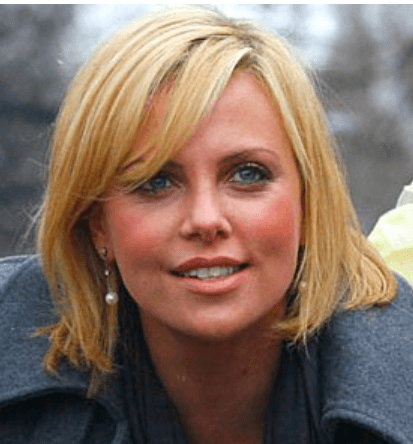
Afrikaners are a Northwestern European-descended population in Southern Africa whose phenotype reflects roughly 350 years of endogamy among Dutch, German, and French Huguenot founder stock, with smaller documented contributions from Khoisan and other groups. The result is a population that reads as Northern European but with measurable shifts — slightly darker average pigmentation than the source populations and a distinctive frame shaped by frontier selection.
Hair runs the full Northwest European range: dark blonde and light brown dominate, with true platinum and ash blonde common in childhood and darkening with age. Black hair appears but is the minority. Texture is overwhelmingly straight to loosely wavy; tight curls are rare. Eyes split roughly between blue, blue-green, hazel, and brown, with grey-blue a recognized regional shade. The epicanthic fold is absent. Eye shape tends toward the deep-set Germanic pattern with a defined brow ridge.
Skin sits in Fitzpatrick II–III — fair enough to burn under high-veld UV but with neutral-to-warm undertones that tan to a durable tawny rather than staying pink. Persistent sun exposure across generations of farming has produced a characteristic weathering pattern on the face and forearms while leaving torso skin notably pale. Freckling is common on the lighter end of the range.
Facial structure tends to a long-to-rectangular face, a narrow-to-medium nasal bridge with a straight or slightly convex profile and modest alar width, thin to medium lips, and a strong jaw. Cheekbones are usually moderate rather than high.
Build is the most anthropometrically distinctive feature: Afrikaner men average around 1.83 m, placing them among the tallest populations on the continent and in the world, with broad shoulders and a heavy bone frame. Women trend tall and long-limbed by global averages. Elon Musk's frame is a recognizable example of the type. The Boer subgroup designation is cultural and historical rather than phenotypic — there is no visible distinction between Boers and other Afrikaners.
Data depth
58/100Coverage of image-grounded phenotype observations · drives AI generation diversity
- Sample size
- 40/40· 86 images
- Image quality
- 8/30· 16% high
- Confidence
- 10/20· mean 0.57
- Source diversity
- 0/10· wikipedia
- ·Mostly low-quality source images
- ·Wikipedia-only source — not population-representative
Observed Distribution — Image Sample
Empirical observations from analyzed photographs · supplementary signal, not population truth
Sample: 86 images analyzed (86 wikipedia). Quality: 14 high, 41 medium, 25 low, 6 very_low. Avg analyzer confidence: 0.57.
Skin tone (Fitzpatrick): II (78%), III (8%), IV (3%), unclear (10%)
Hair color: gray/white (42%), black (27%), light/medium brown (15%), dark brown (7%), blonde (7%), unclear (2%)
Hair texture: straight (49%), wavy (41%), bald (2%), shaved (2%), covered (5%), unclear (1%)
Eye color: blue (22%), dark brown (14%), hazel (9%), brown (6%), light brown / amber (1%), unclear (48%)
Epicanthic fold: 0% present, 80% absent, 20% unclear
Caveats: Quality skews toward older or low-resolution photos; phenotype detail may be lossy. Sample is 100% Wikipedia notable people — skews toward male, public-life, and modern figures, not population-representative.
Last aggregated: May 7, 2026
Explore phenotype categories
Structured taxonomy with peer-reviewed scales · 22 anatomical categories
Notable Afrikaners People
100 reference figures — sourced from Wikipedia
- Jacobus Nicolaas Boshoff — State President of the Orange Free State
- Louis Botha — former Prime Minister of South Africa
- P. W. Botha — Executive State President of South Africa
- Sir Johannes Brand — State President of the Orange Free State
- Thomas François Burgers — State President of the South African Republic
- J. B. M. Hertzog — Prime Minister of South Africa
- F. W. de Klerk — Executive State President of South Africa
- Josias Philip Hoffman — State President of the Orange Free State
- Willem Cornelis Janse van Rensburg — State President of the South African Republic
- Paul Kruger — State President of the South African Republic
- D. F. Malan — Prime Minister of South Africa
- Lucas Johannes Meyer — State President of the Nieuwe Republiek
- Andries Pretorius — President of the Natalia Republic
- Marthinus Wessel Pretorius — State President of the South African Republic
- Marthinus Prinsloo — Commander-in-Chief of the Orange Free State
- Francis William Reitz — State President of the Orange Free State
- Jan Smuts — Prime Minister of South Africa
- Hermanus Steyn — President of the Republic of Swellendam
- Martinus Theunis Steyn — State President of the Orange Free State
- J. G. Strijdom — Prime Minister of South Africa
- John Vorster — Prime Minister of South Africa
- Christiaan Frederik Beyers — Second Boer War General
- Chris Botha — Second Boer War General
- Ben Bouwer — Second Boer War & World War I General
- Philip Botha — Second Boer War General
- Schalk Willem Burger — Second Boer War General
- Jan Celliers — Second Boer War General
- Andries Petrus Cronjé — Second Boer War General
- Andries Petrus Johannes Cronjé — Second Boer War General
- Piet Cronjé — Second Boer War General
- Jonathan Crowther — Second Boer War General
- Koos de la Rey — Second Boer War General
- Christiaan de Wet — Second Boer War General
- Piet de Wet — Second Boer War General
- Sarel du Toit — Second Boer War General
- Daniel Jacobus Elardus Erasmus — Second Boer War General
- Joachim Ferreira — First Boer War Commandant
- Naas Ferreira — Second Boer War General
- Christiaan Ernst Fourie — Second Boer War General
- Joachim Christoffel Fourie — Second Boer War General
- Piet Fourie — Second Boer War General
- Francois Gerhardus Joubert — First Boer War General
- Piet Joubert — First Boer War General
- Jan Kemp — Boer General
- Johannes Hermanus Michiel Kock — Second Boer War General
- Pieter Hendrik Kritzinger — Second Boer War General
- Petrus Johannes Liebenberg — Second Boer War General
- Manie Maritz — Second Boer War General
- Chris Muller — Second Boer War General
- Jan Hendrik Olivier — Boer General
- Marthinus Jacobus Oosthuizen — Voortrekker leader
- Sarel Oosthuizen — Second Boer War General
- Ferdinandus Jacobus Potgieter — Second Boer War General
- Hendrik Potgieter — Voortrekker leader
- Paul Hendrik Roux — Boer General
- Nicolaas Smit — First Boer War General
- Tobias Smuts — Second Boer War General
- Jacobus Philippus Snyman — Second Boer War General
- Ben Viljoen — Second Boer War General, participant in the Mexican Revolution
- George de Villebois-Mareuil — Second Boer War General
- Wessel Jacobus Wessels — Boer General
- Constand Viljoen — SADF Border war General
- Melinda Bam — Miss South Africa 2011
- J. M. Coetzee — 2003 Nobel Prize in Literature
- Rolene Strauss — Miss World 2014
- Gary Botha — Rugby Player
- Francois Brummer — Rugby Player
- Schalk Burger — Rugby Player
- Lood de Jager — Rugby Player
- Faf de Klerk — Rugby Player
- AB de Villiers — former Captain of South Africa national cricket team
- Giniel de Villiers — 2009 Dakar Rally Champion
- Dricus du Plessis — UFC Middleweight Mixed Martial Artist
- Faf du Plessis — former Captain of the South Africa national cricket team
- Johan du Toit — Rugby Player
- Pieter-Steph du Toit — Rugby Player
- André Esterhuizen — Rugby Player
- Eben Etzebeth — Rugby Player
- Retief Goosen — U.S. Open (golf) Champion (2001, 2004)
- Faffa Knoetze — Rugby Player
- Francois Pienaar — Rugby Player
- Handré Pollard — Springboks Captain
- Corrie Sanders — WBO World Heavyweight Champion
- Gurthrö Steenkamp — Rugby Player
- Roelof van der Merwe — Cricketer
- Duane Vermeulen — Springboks Captain
- Hansie Cronje — Cricketer
- Jan de Wet — Member of Parliament
- Leon Jooste — Minister of Public Enterprise
- Kosie Pretorius — Member of Parliament
- Piet van der Walt — Deputy Minister of National Planning
- Rudie van Vuuren — Physician
- Chanique Rabe — Miss Supranational 2021
- Renaldo Bothma — Rugby Player
- Eneill Buitendag — Rugby Player
- Aranos Coetzee — Rugby Player
- Tinus du Plessis — Rugby Player
- Theuns Kotzé — Rugby Player
- Raoul Larson — Rugby Player
- Conrad Marais — Rugby Player
Generate Afrikaners AI Content
Use this ethnicity's phenotype data to create AI-generated content with accurate physical traits and cultural context.
Open Creator Studio