
Chokwe Erotic
Angola, Democratic Republic of the Congo, Zambia
Niger–Congo / Bantu / Chokwe
Christianity
Southern Africa
About Chokwe People
The Chokwe are a Bantu-speaking people centered in the upper Kasai watershed, where eastern Angola, the southern DRC, and northwestern Zambia meet. The heartland is high savanna cut by clear rivers — country that shaped them as hunters and long-distance traders before it shaped them as farmers. Their language, Chokwe (Cokwe), sits inside the broader Chokwe–Lunda cluster of southwestern Bantu tongues, close enough to Lunda and Luvale that traders and migrants moved between them for centuries without much friction.
They emerged as a distinct people in the seventeenth century inside the Lunda Empire, originally a frontier population on its western edge. For two hundred years they were minor actors. Then, in the late nineteenth century, the Chokwe took the Lunda capital itself — a reversal driven by their command of the ivory and rubber trades, an unusual reputation as gunsmiths who repaired and copied European firearms, and a willingness to absorb captives and clients into their own lineages rather than hold them at a distance. The result was rapid expansion across what is now eastern Angola and into Congo, and a cultural footprint much larger than their numbers would suggest.
Chokwe society is matrilineal: descent, inheritance, and political legitimacy run through the mother's line, even though chiefs (mwanangana) are men. Initiation into adulthood is taken seriously — boys go through mukanda, a months-long bush school marked by circumcision, instruction, and the appearance of makishi, masked spirit figures who police the camp and dance at the closing ceremony. The masks themselves are part of why the Chokwe are known well beyond their own region: the hardwood female face called mwana pwo and the chief's mask chihongo are among the most recognizable carvings in Central African art, and Chokwe carvers working in stools, staffs, and combs are still studied as a distinct school.
Most Chokwe today identify as Christian, with Catholic and various Protestant churches dominant in Angola and the DRC. The older cosmology — a high creator, ancestor spirits called mahamba, and divination practices that diagnose misfortune as a relational problem rather than a moral one — has not disappeared so much as folded into the religious life people actually live. The long Angolan civil war scattered Chokwe communities into refugee populations across Zambia and Namibia; many have returned, but the diaspora is now part of who they are.
Typical Chokwe Phenotypes
Reference for AI generation — hair, eyes, skin, facial structure, build
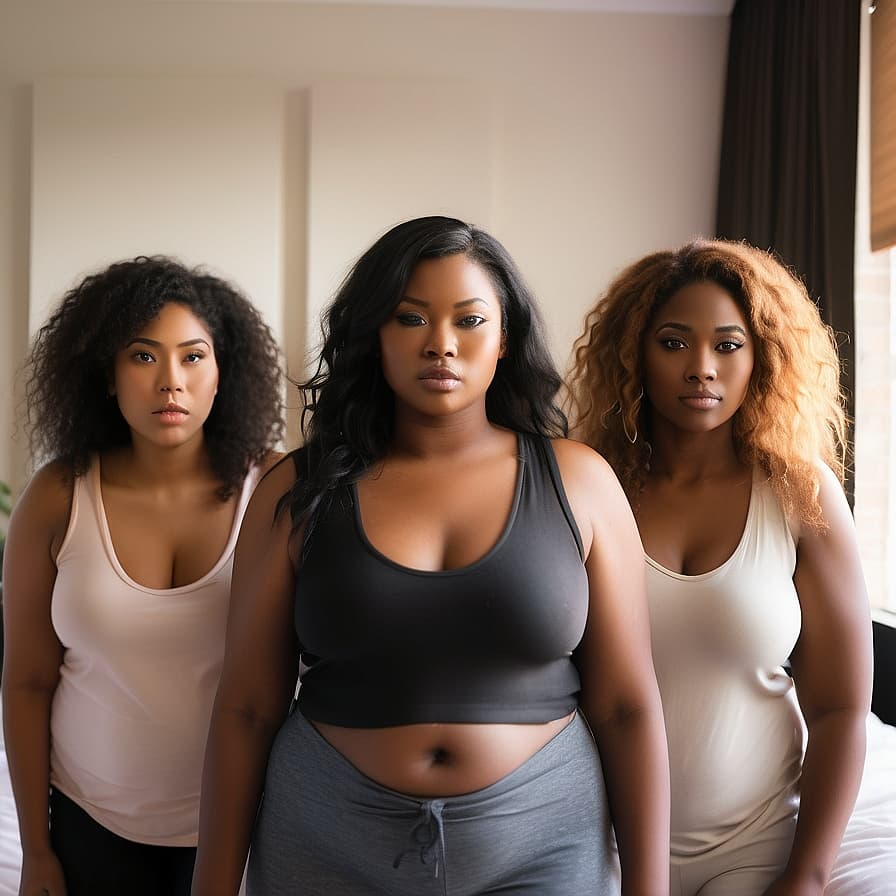
The Chokwe phenotype reads as classic Central Bantu, shaped by a long history in the savanna-woodland zone where Angola, the DRC, and Zambia meet. Skin tone sits squarely in Fitzpatrick VI — deep brown to near-black, with warm red-brown undertones rather than the cooler blue-black register more common further east in the Bantu belt. Hair is uniformly Type 4 (coily to tightly kinked), almost always black; the soft brown sun-bleached tips sometimes seen in children fade to black by adulthood. Traditional styling — high crowned coifs, intricate braids, and the cylindrical cipenya-mutwe headdresses worn historically — was built around how densely the hair packs and holds shape.
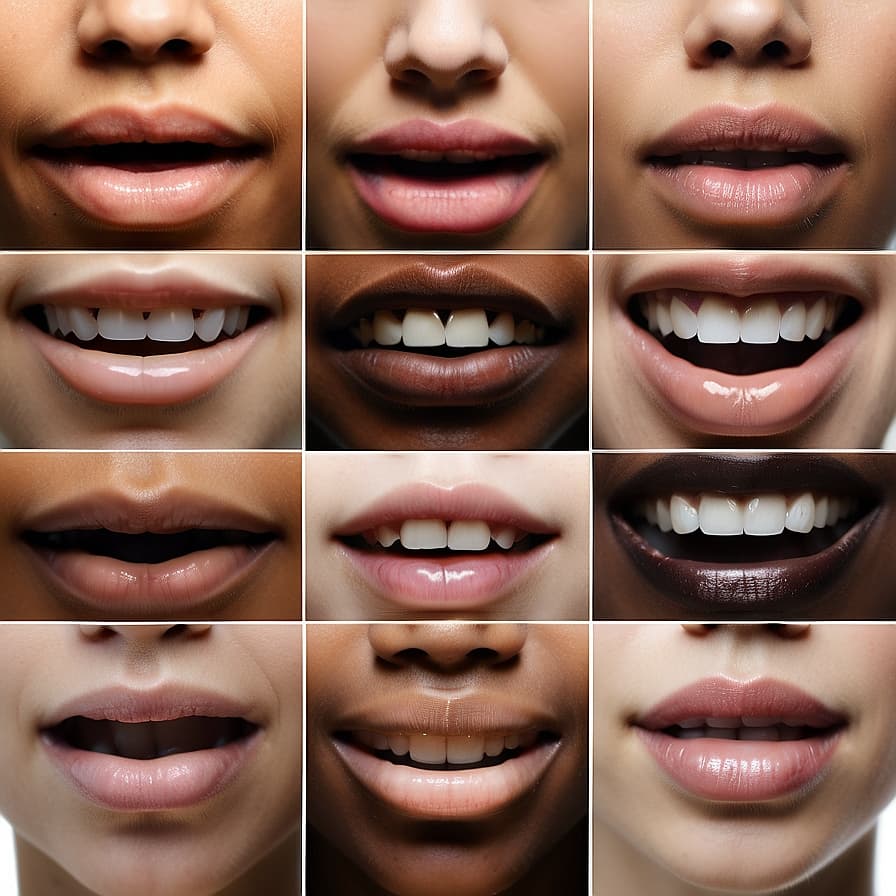
Eyes are dark brown to black, with no epicanthic fold and a relatively wide intercanthal distance. The set tends to be slightly deep rather than prominent, under brow ridges that read soft on women and more defined on men. Noses run broad at the alae with a low, rounded bridge — the platyrrhine pattern typical of equatorial Central Africa — and the nasal tip is usually rounded rather than pointed. Lips are full on both vermilion borders, with a clearly everted lower lip; the mouth sits wide on the face. Cheekbones are moderately high but not sharply angular, and the jaw tapers cleanly to a rounded chin. The Chokwe face overall reads oval-to-heart-shaped rather than square, a structural signature visible in their famous mwana pwo female mask carvings, which are essentially stylized portraits.
Build is tall to medium-tall — adult men typically 173–180 cm, women 160–168 cm — with long limbs, narrow shoulders relative to height, and lean musculature. Hips and glutes are pronounced on women, with a steep lumbar curve. Variation across the three-country range is modest: Angolan Chokwe show occasional admixture with neighboring Ovimbundu (slightly lighter skin, broader faces), while Zambian and Lunda-adjacent populations trend taller and leaner.
Data depth
0/100Coverage of image-grounded phenotype observations · drives AI generation diversity
- Sample size
- 0/40· 0 images
- Image quality
- 0/30· 0% high
- Confidence
- 0/20
- Source diversity
- 0/10
- ·No image observations yet
Explore phenotype categories
Structured taxonomy with peer-reviewed scales · 22 anatomical categories
Generate Chokwe AI Content
Use this ethnicity's phenotype data to create AI-generated content with accurate physical traits and cultural context.
Open Creator Studio