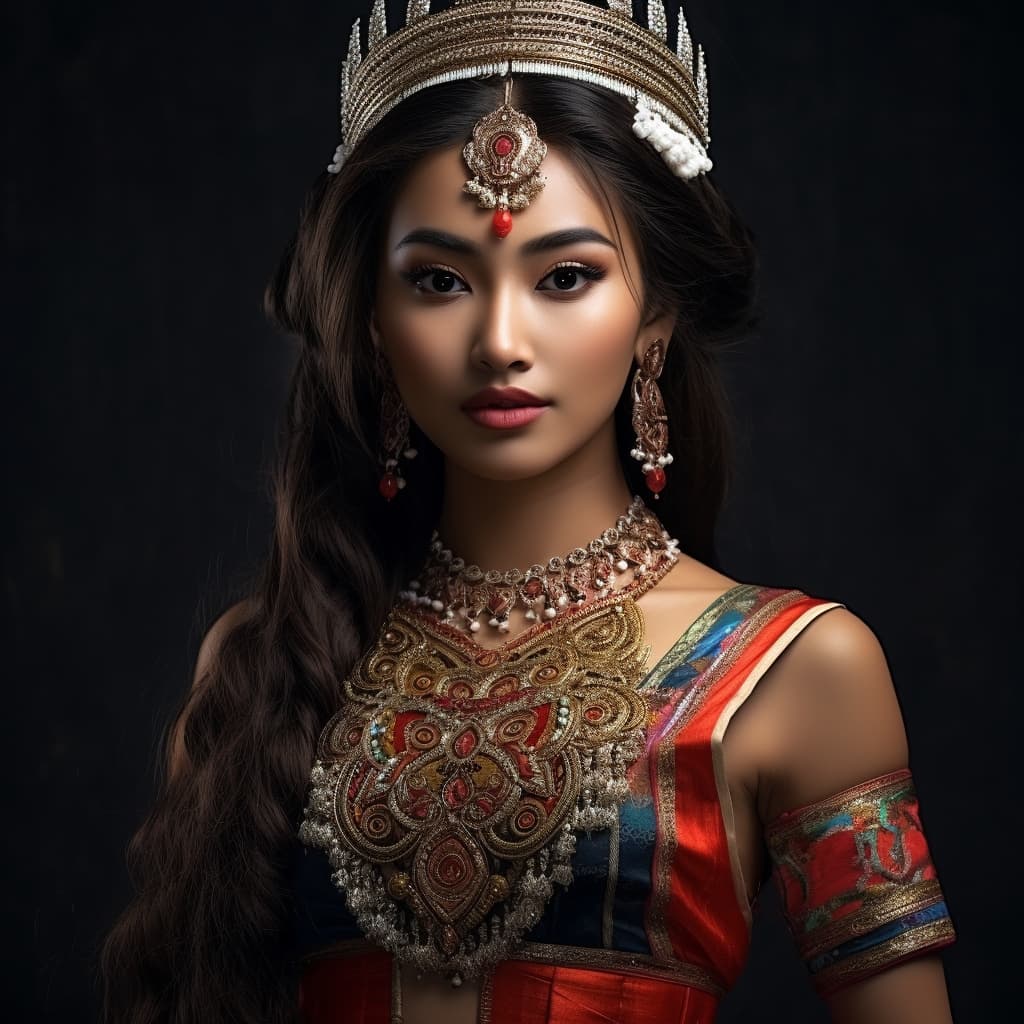
Thais Erotic
Thailand
Kra–Dai / Tai / Thai
Buddhism / Theravada Buddhism
Southern Thai, Khorat, Lanna, Tai Lü, Thai Americans
Southeast Asia
About Thais People
The Thais are the dominant ethnic group of Thailand, a population of roughly sixty million whose identity has been shaped less by isolation than by absorption — of Mon and Khmer civilization to the west and east, of Chinese commerce flowing south, of Indic religion arriving by sea and by trade route. They speak Thai, a tonal language in the Kra–Dai family that has nothing to do with the Mon-Khmer or Sinitic languages spoken by their nearest neighbors; the family's deeper roots sit in what is now southern China, and the southward migration of Tai-speaking peoples into the Chao Phraya basin over the late first and early second millennia is the long backstory to modern Thai identity. The script, by contrast, is Indic — adapted from Khmer models in the thirteenth century — which is why written Thai looks like a cousin of Lao and Khmer even though spoken Thai is structurally unrelated to either.
Regional branches still matter. The Lanna of the north, centered on Chiang Mai, kept their own kingdom until 1892 and retain a distinct dialect, cuisine, and a softer, more melodic register; the Khorat people of the northeastern plateau sit culturally between central Thais and the much larger Lao-speaking Isan population; Southern Thais, on the peninsula, speak a clipped fast dialect and live alongside a substantial Malay Muslim population; the Tai Lü, mostly in the far north and across the borders into Laos and Yunnan, are a closely related Tai-speaking group with their own script and Theravada traditions. Thai Americans, concentrated in Los Angeles and a few other metros, are a postwar diaspora built largely on the back of the Vietnam War-era U.S. military presence and the family-reunification immigration that followed.
Theravada Buddhism is not a private affiliation here so much as a civic infrastructure. Most Thai men ordain as monks at some point — often briefly, sometimes only for a week — and the temple remains the organizing point of village and neighborhood life, alongside an unembarrassed parallel practice of spirit houses, amulets, and astrological consultation that orthodox Buddhism technically frowns on and Thais cheerfully ignore. The monarchy, until very recently beyond public criticism, has historically tied itself to this religious framework; the resulting blend of Buddhism, Brahmanical court ritual, and folk animism is one of the more distinctive features of Thai public life.
Typical Thais Phenotypes
Reference for AI generation — hair, eyes, skin, facial structure, build
Thais sit at a Southeast Asian phenotypic crossroads — predominantly Tai-Kadai stock layered with Mon-Khmer, Malay, and substantial Southern Chinese (Teochew, Hakka) admixture in the Central Plains and Bangkok. The result is a population that reads recognizably Southeast Asian but with more variation in skin tone and facial structure than neighboring Vietnamese or Khmer populations.
Hair is near-universally dark — black to very dark brown — and predominantly straight to gently wavy, with a soft texture rather than the coarse strand thickness common in Northeast Asia. Premature graying is uncommon before middle age. Eye color sits in the dark brown to black range; singled-lidded monolids and partial epicanthic folds are the majority pattern, though the fold is typically softer and less pronounced than in Han Chinese or Korean populations, and double eyelids occur naturally in a meaningful minority. Eye shape tends toward almond with a slight upward outer canthal tilt.
Skin tone spans Fitzpatrick III through V and tracks strongly with region and class. Lanna (northern) Thais and those with heavier Sino-Thai admixture tend lighter — warm ivory to light olive with yellow undertones. Central and Isan (Khorat) Thais run medium olive to light brown, while Southern Thais, with stronger Malay input, frequently sit at deeper tan-to-brown tones with warmer red-bronze undertones. Sun-exposed rural populations darken noticeably.
Facial structure favors a softer, rounder midface than East Asian norms — moderate cheekbones rather than the pronounced malar projection of Mongolic-influenced groups, a shorter nose with a low-to-medium bridge and wider alar base, and fuller lips than Chinese or Japanese averages. Jaws are typically narrow and tapered; chins are small and often slightly receding. Build is small-framed and gracile — average male stature around 168–170 cm, female around 157–159 cm, with low body fat distribution and slender limbs. Southern Thais tend toward stockier, more muscular builds; Lanna northerners often appear more delicate-featured, a phenotype Thais themselves associate with traditional ideals of beauty.
Data depth
0/100Coverage of image-grounded phenotype observations · drives AI generation diversity
- Sample size
- 0/40· 0 images
- Image quality
- 0/30· 0% high
- Confidence
- 0/20
- Source diversity
- 0/10
- ·No image observations yet
Explore phenotype categories
Structured taxonomy with peer-reviewed scales · 22 anatomical categories
Notable Thais People
100 reference figures — sourced from Wikipedia
- Angsana Techatassanasoontorn — Academic
- Banchong Mahaisavariya — born 1955), President of Mahidol University
- Bongkosh Rittichainuwat — Researcher
- Boonlua Debyasuvarn — 1911–1982), Educator
- Bundhit Eua-arporn — born 1965), President of Chulalongkorn University
- Chalermek Intanagonwiwat — Computer scientist
- Charnvit Kasetsiri — born 1941), Rector of Thammasat University
- Chetana Nagavajara — born 1937), Academic
- Gasinee Witoonchart — born 1947), Rector of Thammasat University
- Kanchana Kanchanasut — Computer scientist
- Natcha Thawesaengskulthai — Academic
- Niyada Lausunthorn — born 1948), Scholar
- Phraya Anuman Rajadhon — 1888–1969), President of the Royal Society
- Pirom Kamolratanakul — born 1949), President of Chulalongkorn University
- Poonsapaya Navawongs na Ayudhya — 1910–2015), Educator
- Pornanong Aramwit — born 1970), Pharmaceutical scientist
- Pornchai Mongkhonvanit — born 1958), President of Siam University
- Pramuan Tangboriboonrat — born 1962), Academic and governmental researcher
- Puangthong Pawakapan — Academic
- Saksri Yamnadda — 1930–2002), Scholar
- Samruam Singh — 1949–1996), Scholar
- Somkit Lertpaithoon — born 1959), Rector of Thammasat University
- Somsak Panyakeow — born 1947), Researcher
- Stang Mongkolsuk — 1919–1971), President of Prince of Songkla University
- Suchada Kiranandana — born 1946), President of Chulalongkorn University
- Sujate Jantarang — President of Mahanakorn University of Technology
- Supasawad Chardchawarn — born 1975), Rector of Thammasat University
- Suraphol Nitikraipot — born 1960), Rector of Thammasat University
- Surapol Issaragrisil — born 1950), President of the Royal Society
- Thatchai Sumitra — born 1942), President of Chulalongkorn University
- Theraphan Luangthongkum — Linguist
- Thitinan Pongsudhirak — Political scientist
- Viphandh Roengpithya — born 1938), President of the Asian University
- Wibool Piyawattanametha — Researcher
- Wilert Puriwat — President of Chulalongkorn University
- Worsak Kanok-Nukulchai — born 1948), President of Asian Institute of Technology
- Yuen Poovarawan — born 1950), Computer scientist
- Arnon Nampa — born 1984), Human rights activist
- Benja Apan — born 1999), Monarchy reforms activist
- Chanchanit Martorell — Human rights activist
- Chanoknan Ruamsap — born 1993), Monarchy reforms activist
- Jaran Ditapichai — born 1947), Human rights activist
- Jintana Kaewkao — born 1962), Environmental activist
- Narisa Chakrabongse — born 1956), Environmental activist
- Netiporn Sanesangkhom — 1995–2024), Monarchy reforms activist
- Netiwit Chotiphatphaisal — born 1996), Human rights activist
- Nuamthong Praiwan — 1946–2006), Democracy activist
- Panupong Jadnok — born 1996), Monarchy reforms activist
- Panusaya Sithijirawattanakul — born 1998), Monarchy reforms activist
- Parit Chiwarak — born 1998), Monarchy reforms activist
- Pavin Chachavalpongpun — born 1971), Monarchy reforms activist
- Rodjaraeg Wattanapanit — Free speech activist
- Sebastian Demanop — 1928–2022), Blind rights activist
- Snea Thinsan — born 1965), Human rights activist
- Somsak Jeamteerasakul — born 1958), Monarchy reforms activist
- Somyot Prueksakasemsuk — born 1961), Free speech activist
- Tiwagorn Withiton — born 1975), Human rights activist
- Wanchalearm Satsaksit — 1982–2020), Human rights activist
- Wisut Tangwittayaporn — 1968–2012), Free speech activist
- Akara Amarttayakul — born 1974), Actor
- Alexander Rendell — born 1990), Actor
- Amara Asavananda — born 1937), Actress
- Ananda Everingham — born 1982), Actor
- Ann Thongprasom — born 1976), Actress
- Apasiri Nitibhon — born 1971), Actress
- Aranya Namwong — born 1947), Actress
- Araya A. Hargate — born 1981), Actress
- Areeya Chumsai — born 1971), Actress
- Attachai Anantameak — born 1965), Actor
- Bongkoj Khongmalai — born 1985), Actress
- Carissa Springett — born 1998), Actress
- Chalida Vijitvongthong — born 1993), Actress
- Chalita Suansane — born 1994), Actress
- Chanon Santinatornkul — born 1996), Actor
- Charlie Trairat — born 1993), Actor
- Charm Osathanond — born 1987), Actress
- Chatchai Plengpanich — born 1960), Actor
- Chattapong Pantana-Angkul — born 1971), Actor
- Chermarn Boonyasak — born 1982), Actress
- Cherprang Areekul — born 1996), Actress
- Chintara Sukapatana — born 1965), Actress
- Chonlathorn Kongyingyong — born 1998), Actor
- Cindy Bishop — born 1978), Actress
- Cris Horwang — born 1980), Actress
- Davika Hoorne — born 1992), Actress
- Daweerit Chullasapya — born 1983), Actor
- Engfa Waraha — born 1995), Actress
- Farida Waller — born 1993), Actress
- Florence Faivre — born 1983), Actress
- Intira Charoenpura — born 1980), Actress
- Janaprakal Chandruang — born 1954), Actress
- James Ma — born 1993), Actor
- Janie Tienphosuwan — born 1981), Actress
- Jarunee Suksawat — born 1962), Actress
- Jason Young — born 1980), Actor
- Jesdaporn Pholdee — born 1977), Actor
- Jessica Pasaphan — born 1988), Actress
- Jirayu Tangsrisuk — born 1993), Actor
- Johnny Anfone — born 1969), Actor
- Kanyawee Songmuang — born 1996), Actress
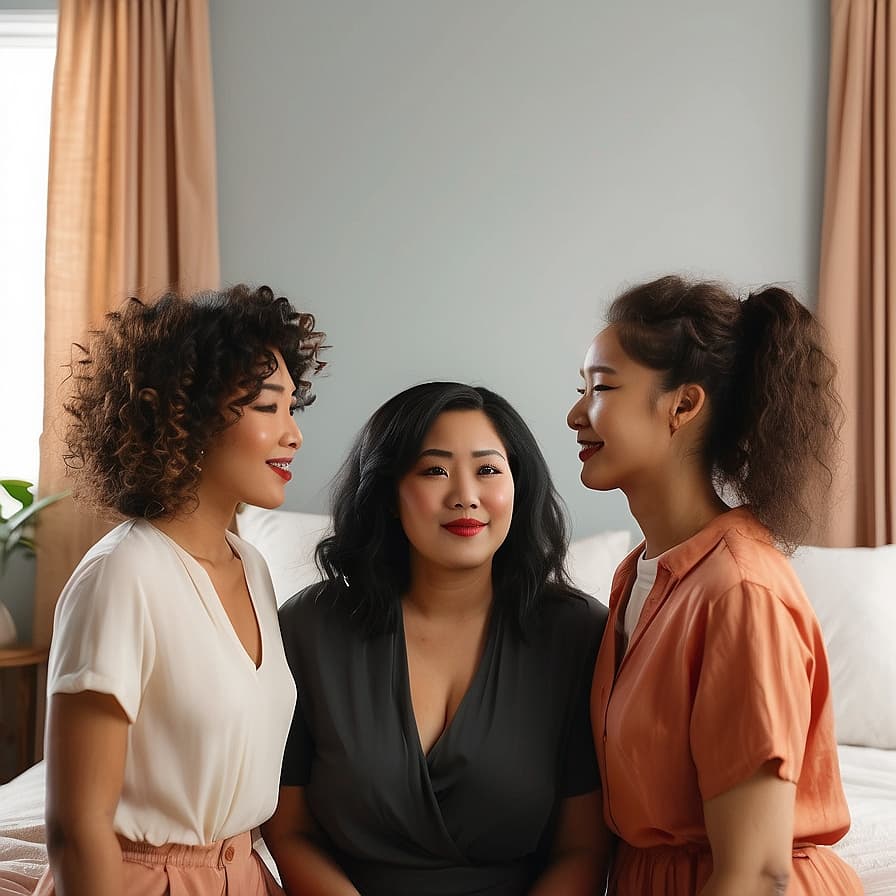
Generate Thais AI Content
Use this ethnicity's phenotype data to create AI-generated content with accurate physical traits and cultural context.
Open Creator Studio