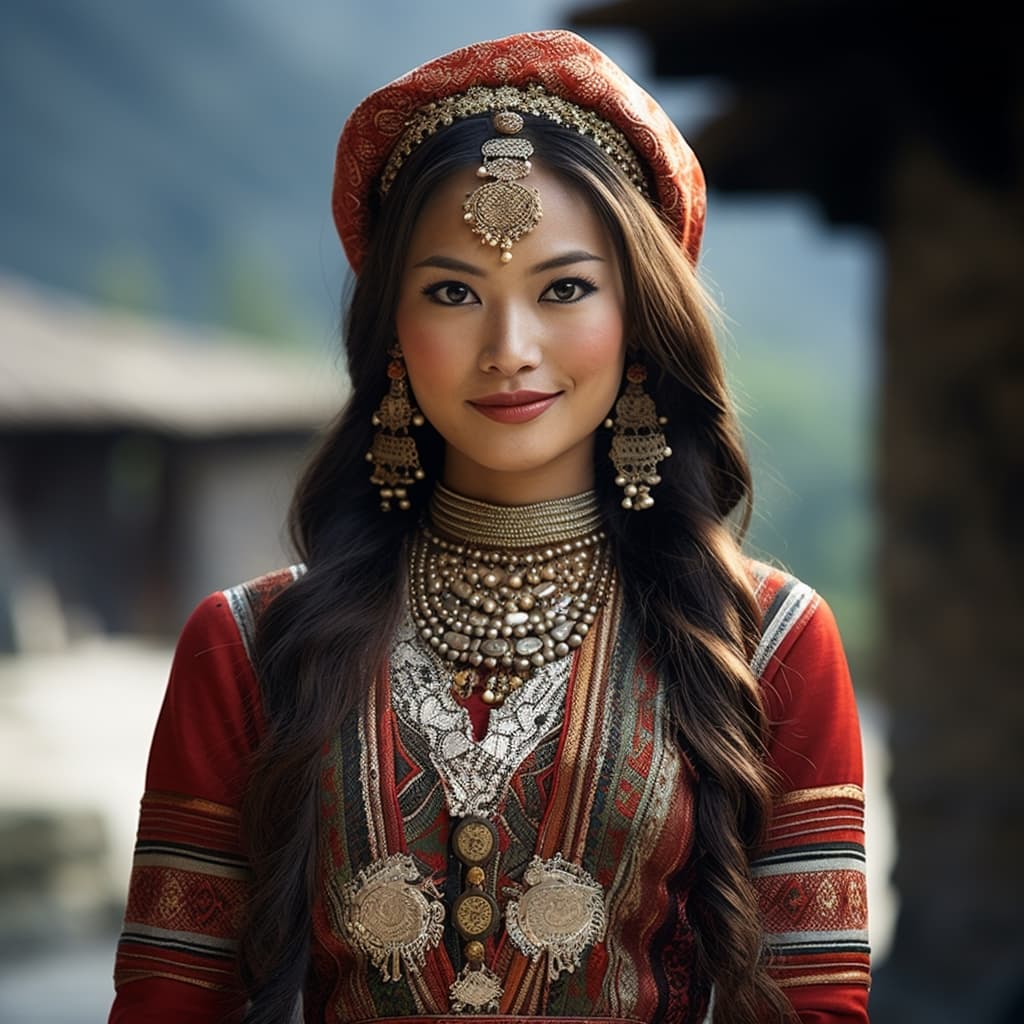
Tamangs Erotic
Nepal, Sikkim
Sino-Tibetan / Tamang
Hinduism, Buddhism
Waiba, Lopchan, Thokar, Lama
Southern Asia
About Tamangs People
The Tamang are one of the larger Tibeto-Burman peoples of Nepal, concentrated in the hills that ring the Kathmandu Valley — a placement that has shaped almost everything about how they live and how outsiders have read them. The name itself is widely glossed as horse trader, pointing back to old highland trade between Tibet and the southern lowlands, though the etymology is contested. What is harder to contest is the geography: Tamang villages sit on the slopes north and around the capital, close enough to be drawn into its labor economy, far enough to keep their own register of speech, ritual, and clan reckoning intact.
Their language, Tamang, belongs to the Bodish branch of Sino-Tibetan and is more closely related to Tibetan than to the Indo-Aryan Nepali that dominates the country administratively. It carries tone, which sets it apart from many of its hill neighbors, and exists as a spread of dialects rather than a single standardized form — eastern and western varieties are not always mutually intelligible. Tamang is written, when written, in Devanagari, though a script called Tamyig has its proponents among cultural revivalists.
Religiously, the Tamang are predominantly Buddhist of the Nyingma and, to a lesser extent, Kagyu schools — the older, more ritually elaborate strands of Tibetan Buddhism, which arrived through the high passes rather than from the Indian plains. Village religious life is run by the lama, a hereditary lineage of married priests who handle funerals, exorcisms, and the calendar of household rites; alongside them work bombo shamans, whose practice predates Buddhism and was never fully absorbed by it. Hindu observance also has a quiet presence, particularly where Tamang communities sit close to caste-Hindu neighbors, and intermarriage and festival overlap blur the line in practice. Internal divisions like Waiba, Lopchan, Thokar, and the Lama clan grouping function as exogamous units that govern marriage more than they signal cultural difference.
Historically, the Tamang were marginalized after the Gorkha conquest of the eighteenth century — classed as matwali, alcohol-drinking, in the old caste codification, and barred for generations from the higher reaches of state employment. The legacy is visible: heavy representation in portering, trekking, carpet-weaving, and overseas labor migration, alongside a self-conscious cultural assertion since the 1990s that has pushed Tamang language, dress, and the damphu frame drum back into public life.
Typical Tamangs Phenotypes
Reference for AI generation — hair, eyes, skin, facial structure, build
Tamangs read as Himalayan Tibeto-Burman before anything else — the phenotype sits closer to highland Tibetan and Sherpa populations than to the Indo-Aryan majority of lowland Nepal, and that distinction is the single most useful anchor for visualizing the group. The face is built around moderate-to-strong epicanthic folds, wide malar bones, a relatively flat midface, and a nose with a low-to-medium bridge and modest alar width. Jawlines tend to be soft and rounded rather than angular; chins are often short. Lips are medium in fullness, neither thin nor pronounced, with a defined but unsharp vermilion border.
Hair is almost uniformly straight, coarse, and jet black, with the heavy density typical of East Asian and Tibetan populations; natural waves and brown tones are rare and graying tends to come late. Eye color sits in the dark brown to near-black range, with palpebral fissures that read as narrow and slightly upslanting, though the fold morphology varies enough that some individuals — particularly in the Lama and Lopchan branches with more recent Tibetan admixture — show a sharper "highland" eye shape, while Waiba and Thokar lineages from lower mid-hill elevations sometimes show softer folds and rounder eyes from historic contact with Magar and Gurung neighbors.
Skin spans Fitzpatrick III to IV, sitting in the warm-to-neutral olive range with yellow undertones; high-altitude pastoralists carry more wind-burnished ruddiness across the cheeks and nose bridge, while Kathmandu-valley and Darjeeling-Sikkim Tamangs trend toward an evener mid-tone. Build is compact and broad-framed — short to medium stature (men typically 158–168 cm, women 148–157 cm), with proportionally short limbs, a deep chest, sturdy thighs, and the high muscular endurance documented in Himalayan porter populations. Body fat distributes centrally rather than peripherally, and the silhouette stays stocky into middle age. Performers like Aruna Lama and Prashant Tamang sit comfortably in this median appearance; the footballer cohort skews toward leaner, more athletic variants of the same underlying frame.
Data depth
67/100Coverage of image-grounded phenotype observations · drives AI generation diversity
- Sample size
- 22/40· 14 images
- Image quality
- 30/30· 64% high
- Confidence
- 15/20· mean 0.84
- Source diversity
- 0/10· wikipedia
- ·Modest sample (n<25)
- ·Wikipedia-only source — not population-representative
Observed Distribution — Image Sample
Empirical observations from analyzed photographs · supplementary signal, not population truth
Sample: 14 images analyzed (14 wikipedia). Quality: 9 high, 5 medium, 0 low, 0 very_low. Avg analyzer confidence: 0.84.
Skin tone (Fitzpatrick): III (14%), IV (71%), V (14%)
Hair color: black (64%), gray/white (21%), blonde (7%), brown (7%)
Hair texture: straight (71%), wavy (21%), covered (7%)
Eye color: dark brown (100%)
Epicanthic fold: 93% present, 7% absent, 0% unclear
Caveats: Sample size 14 is modest — secondary patterns may not be reliable. Sample is 100% Wikipedia notable people — skews toward male, public-life, and modern figures, not population-representative.
Last aggregated: May 7, 2026
Explore phenotype categories
Structured taxonomy with peer-reviewed scales · 22 anatomical categories
Notable Tamangs People
38 reference figures — sourced from Wikipedia
- Aruna Lama — singer, called the "Nightingale of the Hills"
- Buddha Lama — first Nepal Idol winner, singer, musician, composer
- Raju Lama — singer, lead vocalist of Mongolian Heart band
- Nima Rumba — singer, musician, composer, and actor
- Phiroj Shyangden — singer and composer of 1974 Band
- Prashant Tamang — third Indian Idol winner, singer, actor
- Robin Tamang — rock musician and actor
- VTEN — Samir Ghising) – rapper
- Parijat (Bishnu Kumari Waiba) — Indian-born Nepali writer
- Hira Devi Waiba — Indian singer in Nepali-language Tamang Selo
- Gopal Yonjan — musician, music producer, and composer
- Karma Yonzon — singer, musician, music producer, and composer
- Bhim Bahadur Tamang — politician
- Madan Tamang — Indian politician and the president of Akhil Bharatiya Gorkha League (ABGL)
- Subhash Ghisingh — founding leader of Gorkha National Liberation Front (GNLF)
- Prem Singh Tamang — 6th and current Chief Minister of the Indian state of Sikkim
- Kul Man Ghising — engineer, managing director of Nepal Electricity Authority
- Mahendra P. Lama — Indian political analyst and development economist
- Jyoti Prakash Tamang — Indian microbiologist, known for his work on fermented foods of Himalayan region
- Nim Dorjee Tamang — footballer
- Nagen Tamang — footballer from Kurseong
- Anju Tamang — footballer
- Kabiraj Negi Lama — team coach for Nepal at the 2020 Summer Paralympics and 2024 Summer Paralympics
- Sunil Bal — professional footballer
- Ayush Ghalan — professional footballer
- Shrijana Ghising — Para Taekwondo practitioner
- Aashish Lama — professional footballer
- Anu Lama — professional footballer
- Bidhan Lama — won bronze medals at the 1986 Asian Games, 1987 World Taekwondo Championships…
- Bikram Lama — professional footballer
- Suman Lama — professional footballer
- Ananta Tamang — professional footballer
- Devendra Tamang — professional footballer
- Raju Tamang — professional footballer
- Ratnajit Tamang — professional badminton player
- Santosh Tamang — professional footballer
- Surya Tamang — professional cricketer
- Tej Tamang — professional footballer
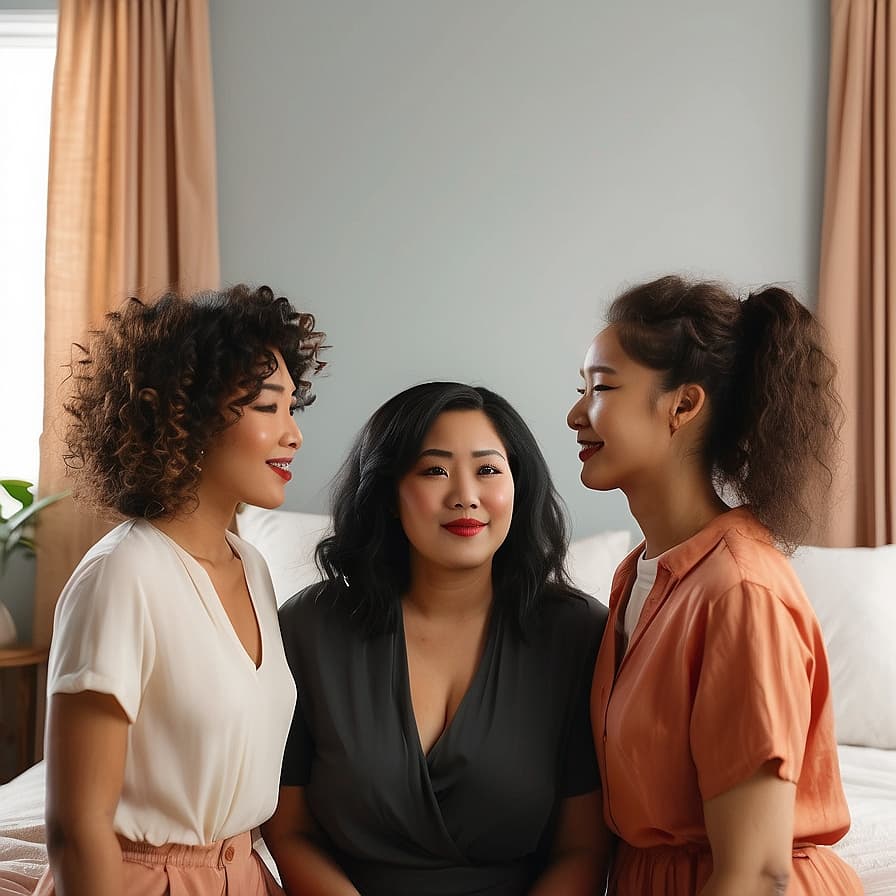

Generate Tamangs AI Content
Use this ethnicity's phenotype data to create AI-generated content with accurate physical traits and cultural context.
Open Creator Studio