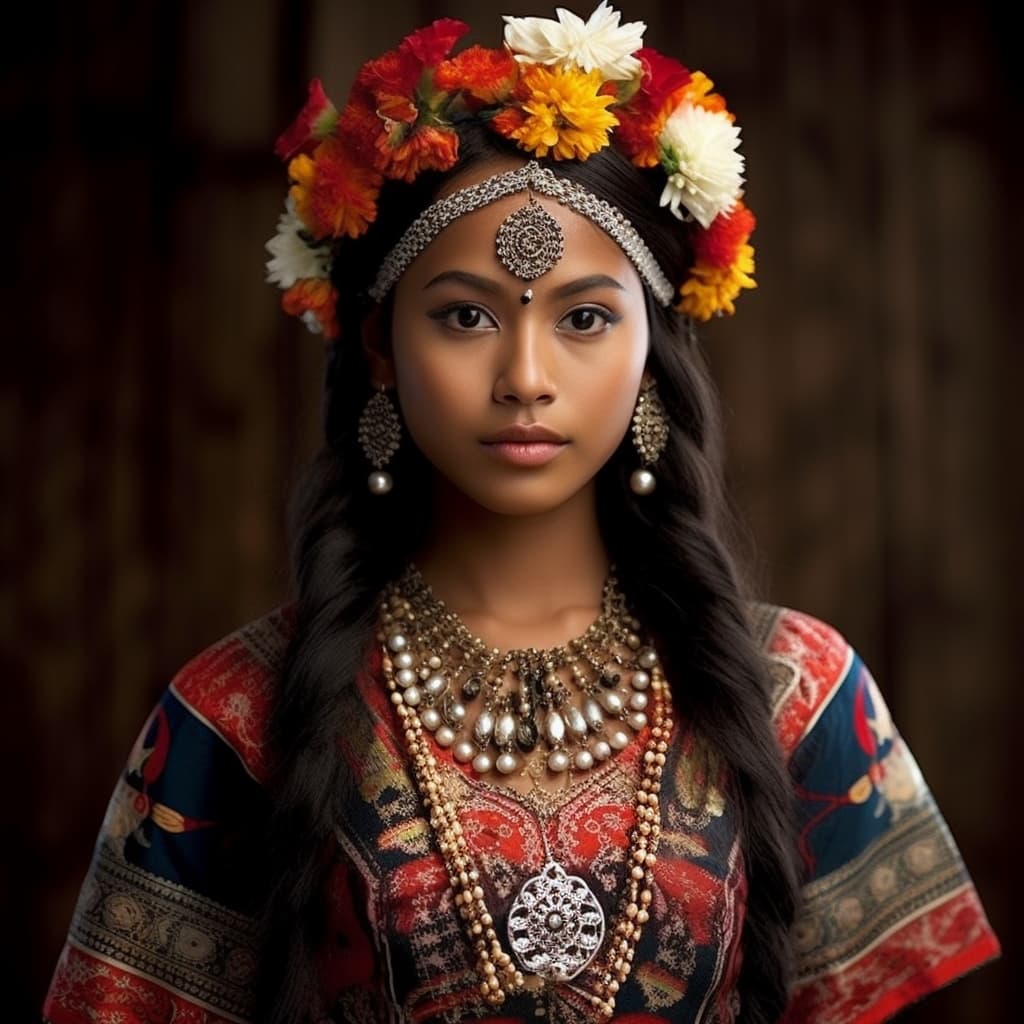
Sumbawa Erotic
Sumbawa (Indonesia)
Austronesian / Sumbawa
Islam
Southeast Asia
About Sumbawa People
The Sumbawa — or Tau Samawa, as they call themselves — occupy the western half of Sumbawa island, the long, dry stepping-stone between Lombok and Flores in Indonesia's Lesser Sunda chain. The island is split culturally down the middle: the Sumbawa proper hold the west, while the Bima people, with a different language and a different orientation, hold the east. That east-west divide is the first thing to understand about them. They are not "the people of Sumbawa island" in any unified sense; they are the western half of a divided geography, looking culturally toward Lombok and the Sasak rather than toward their eastern neighbors.
Their language, Basa Samawa, is Austronesian and sits within the Malayo-Polynesian branch alongside Sasak and Balinese, though it is not mutually intelligible with either. It carries dialect variation across the old sultanate districts — Sumbawa Besar, Taliwang, Jereweh — and the differences still mark where someone is from. Islam arrived in the seventeenth century, brought through the Sultanate of Sumbawa, which was a tributary of Goa in South Sulawesi before later passing under Dutch oversight. The faith is Sunni and, by Indonesian standards, fairly orthodox in observance, though older animist practices persist around birth, harvest, and the consecration of houses.
The land shaped them. Western Sumbawa is drier than Java or Bali, with a long monsoon shadow, savanna grass, and rocky coastline; rice grows where it can, but the older economy ran on horses, water buffalo, and hardy upland crops. Sumbawa horses are still a point of regional pride, and the tradition of main jaran — child jockeys riding bareback in village races — remains a fixture of the social calendar despite recurring outside criticism. Barapan kebo, the muddy buffalo races run through flooded paddies before planting, serves a similar role: part sport, part agricultural rite, part assertion that this is not Bali and was never going to be.
The Tambora eruption of 1815, on the eastern peninsula of the island, killed most of the population in its immediate reach and erased the small Tambora language entirely; the Sumbawa to the west survived but felt the famine years that followed across the whole archipelago. That event sits in the background of any honest account of the island. The community today is small by Indonesian standards — under a million speakers — concentrated in West Sumbawa and Sumbawa regencies, with a steady outflow to Lombok, Bali, and the labor markets of Malaysia and the Gulf.
Typical Sumbawa Phenotypes
Reference for AI generation — hair, eyes, skin, facial structure, build
The Sumbawan phenotype sits at a transition zone in eastern Indonesia, where Austronesian features dominate but show consistent traces of older Australo-Papuan substrate that thin out as you move west toward Bali and intensify going east toward Flores. The result is a population that reads broadly Southeast Asian but with sharper, more angular structure than Javanese or Sundanese neighbors and fractionally darker average skin.
Hair is near-universally black or very dark brown, predominantly straight to gently wavy, with a noticeable minority — particularly in the eastern Bima-speaking districts and inland highland communities — carrying loose curls or full ringlets that reflect Melanesian admixture. Hair density is high; coarse texture is the norm.
Eyes range from dark brown to near-black. The epicanthic fold is present in most individuals but is typically less pronounced than in mainland Southeast Asian or East Asian populations — often a partial or medial fold rather than a full Mongoloid eyelid. Eye shape tends toward almond, set fairly wide, with relatively flat brow ridges.
Skin tone covers Fitzpatrick IV through V, with a warm olive-to-bronze undertone; coastal fishing populations and inland farmers in the dry savanna belt of central Sumbawa skew toward the darker end through sun exposure layered on already-tanned baseline pigmentation. Genuine pale skin is rare — this is one of the visibly darker islands in the archipelago west of the Wallace Line.
Facial structure leans toward broad cheekbones with a moderately wide alar base, medium nasal bridge height, and lips that run fuller than the Javanese average without reaching Melanesian fullness. Jaws are squared more often than tapered, and faces read sturdier than the rounder Balinese profile.
Build is compact and lean. Average male stature falls roughly 162–168 cm, female 150–156 cm — short by global standards, typical for the region. Musculature is wiry rather than bulky, shaped by horse culture, fishing, and rice-terrace labor. The two main subgroups — Samawa in the west and Mbojo (Bima) in the east — are visibly distinguishable, with Bima populations averaging darker skin, curlier hair, and a stronger Papuan structural echo.
Data depth
0/100Coverage of image-grounded phenotype observations · drives AI generation diversity
- Sample size
- 0/40· 0 images
- Image quality
- 0/30· 0% high
- Confidence
- 0/20
- Source diversity
- 0/10
- ·No image observations yet
Explore phenotype categories
Structured taxonomy with peer-reviewed scales · 22 anatomical categories






Generate Sumbawa AI Content
Use this ethnicity's phenotype data to create AI-generated content with accurate physical traits and cultural context.
Open Creator Studio