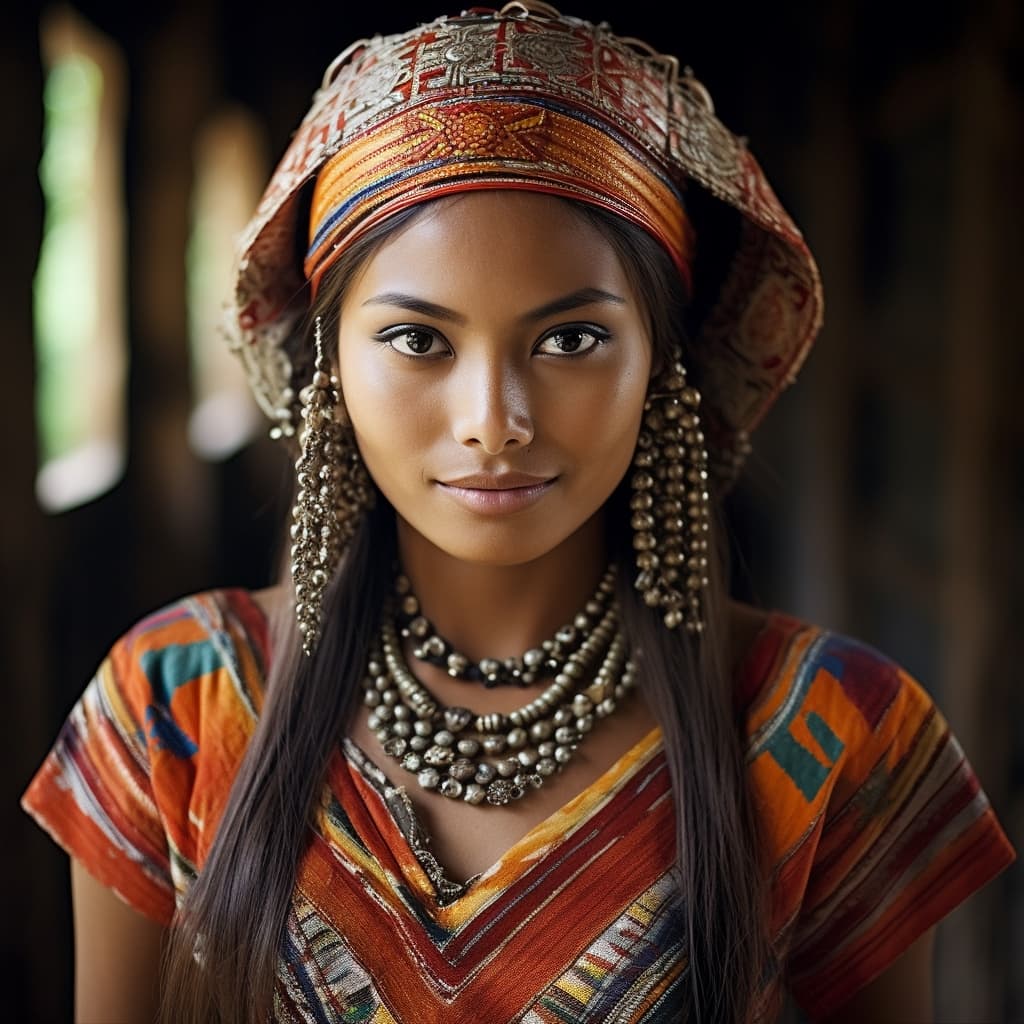
Sumba Erotic
Sumba (Indonesia)
Austronesian / Sumba–Flores / Sumba
Christianity / Protestantism
Anakalangu, East Sumbanese, Kodi, Lamboya, West Sumbanese, Mamboru, Wanukaka
Southeast Asia
About Sumba People
Sumba sits south of Flores in the Lesser Sunda chain, drier and lower than its volcanic neighbors — a long island of grass savannas, limestone ridges, and sandalwood forests that were stripped centuries ago by traders from Java and beyond. The Sumbanese are not one population but a federation of related peoples — Kambera-speakers in the east, the Kodi, Lamboya, Wanukaka, Anakalangu, and Mamboru clusters in the west — each holding its own dialect, its own ancestral village, and its own ranked clan order. The languages all belong to the Sumba branch of Austronesian, close enough to neighboring Flores tongues to show shared descent, distant enough that an east Sumbanese and a Kodi speaker will switch to Indonesian to do business.
Most Sumbanese today are registered as Protestant Christians — the legacy of Dutch and later Indonesian missions — but Christianity on the island runs in parallel with Marapu, the indigenous ancestor religion that organizes burial, marriage, harvest, and the architecture of the village itself. A traditional Sumbanese hamlet is laid out around a stone-paved plaza ringed by towering thatched-peak houses, with megalithic tombs of cut limestone set among them; the dead are not removed from the community but kept at its center. A funeral can take years to complete and bankrupts lineages on purpose, because status here is measured in what you give away — buffalo, horses, pigs, and the great ikat textiles that Sumbanese women dye and weave on backstrap looms, threads tied off pattern by pattern before the indigo or morinda bath. The cloths carry clan motifs and were once reserved for nobility and the wrapping of corpses.
The island's best-known public ritual is the Pasola, a mounted spear-fight staged each year between teams from rival western districts after the sea worms swarm on the reef. It is a real fight — riders are wounded, sometimes killed — and the spilled blood is understood to feed the soil for the rice crop. Sumba's ranked society, with its old distinctions between noble, commoner, and formerly enslaved lines, has softened under the Indonesian state but has not dissolved; clan, marriage alliance, and bridewealth in horses still shape who marries whom, who speaks at the funeral, and who is buried under which stone.
Typical Sumba Phenotypes
Reference for AI generation — hair, eyes, skin, facial structure, build
Sumbanese phenotype sits at a genuine crossroads: the population carries substantial Papuan/Melanesian ancestry layered under an Austronesian arrival, and you can read both signals on most faces. Compared with Javanese or Balinese neighbors to the west, Sumbanese tend to be darker-skinned, curlier-haired, and more robustly featured — closer to eastern Indonesians of Flores, Timor, and Alor than to the Sundaic mainstream.
Hair is overwhelmingly black or near-black, but texture varies more than almost anywhere else in Indonesia. Straight to loosely wavy hair shows up in inland Anakalangu, Mamboru, and Wanukaka populations with stronger Austronesian input, while tight waves and outright coils — Type 3 into early Type 4 — are common in West Sumbanese, Kodi, and Lamboya communities along the wetter western coast. Premature graying is unremarkable; salt-and-pepper hair on men in their thirties is a recurring observation.
Eyes are dark brown to near-black. The epicanthic fold is inconsistent — present and pronounced in some individuals, partial or absent in many others — which is one of the clearest tells distinguishing Sumbanese from western Indonesians, where the fold is near-universal. Eye shape skews almond to slightly rounded, set under straight, fairly heavy brows.
Skin runs Fitzpatrick IV through VI: warm brown with red-bronze undertones inland, deeper umber to near-black along the dry savanna south coast, where year-round sun exposure on a pastoralist population pushes tones noticeably darker. Noses are broader and lower-bridged than the Malay average, with wider alar bases; lips are full, often with a defined cupid's bow. Cheekbones are high and the jaw is squared, especially in men — a heavier facial architecture than the more delicate Javanese norm.
Build is short to medium — men commonly 160–170 cm, women 150–158 cm — but compact and muscular rather than slight, shaped by horse-culture life on the eastern grasslands. The defining impression is a Melanesian-inflected Southeast Asian face: dark, structurally strong, and visibly distinct from the Indonesia most outsiders picture.
Data depth
0/100Coverage of image-grounded phenotype observations · drives AI generation diversity
- Sample size
- 0/40· 0 images
- Image quality
- 0/30· 0% high
- Confidence
- 0/20
- Source diversity
- 0/10
- ·No image observations yet
Explore phenotype categories
Structured taxonomy with peer-reviewed scales · 22 anatomical categories






Generate Sumba AI Content
Use this ethnicity's phenotype data to create AI-generated content with accurate physical traits and cultural context.
Open Creator Studio