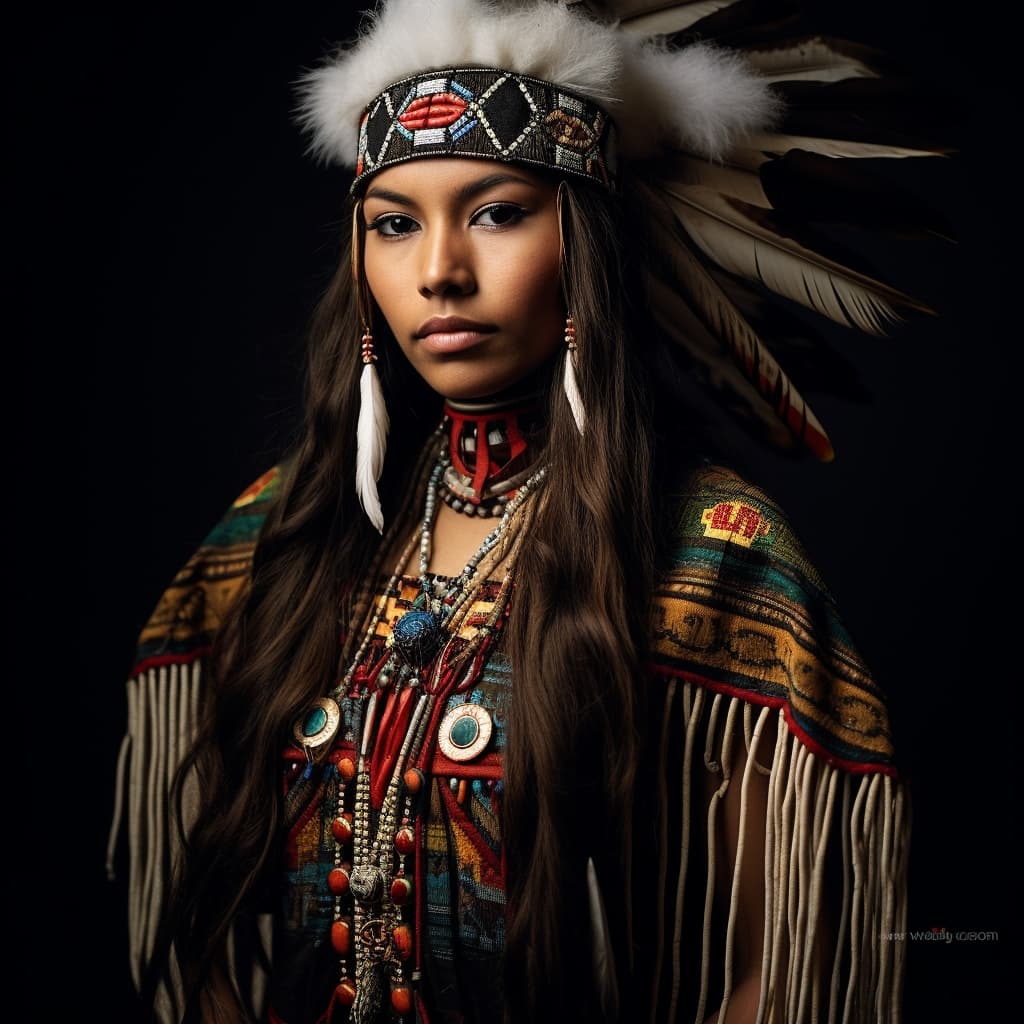
Sioux Erotic
Lakotah (United States)
Siouan / Sioux
Native American religion
Lakota, Dakota, Nakota
North America
About Sioux People
The Sioux are not one nation but a confederation — three branches whose names trace the same word through dialect drift: Lakota in the west, Dakota in the east, Nakota in the middle. The label "Sioux" itself is a French shortening of an Ojibwe term and was never how these people described themselves; Očhéthi Šakówiŋ, the Seven Council Fires, is the older self-name. The seven council fires correspond to the historical political subdivisions, and they still organize how communities understand kinship and seniority today.
Their homeland — what the Lakota call Lakȟóta Makȟóčhe — runs across the northern Plains, anchored by the Black Hills of present-day South Dakota, with extensions into North Dakota, Minnesota, Nebraska, Montana, and the Canadian prairies. The Dakota branches were originally woodland people of the upper Mississippi; the westward Lakota shift onto the open grasslands in the 17th and 18th centuries, and their adoption of the horse, produced the mounted bison-hunting culture that outsiders later mistook for the entire Sioux story. It was a recent adaptation, not an ancient one, and the speed at which they remade themselves around the horse is one of the more striking reinventions in North American history.
The language belongs to the Siouan family, which stretches well beyond this group to include Crow, Hidatsa, Mandan, and others scattered across the continent. Within Sioux itself, Lakota and the Dakota dialects are mutually intelligible with effort — close enough that elders code-switch, distinct enough that speakers know exactly which branch a person comes from after a few sentences. Revitalization programs on the reservations have made Lakota one of the more actively taught Indigenous languages in the United States, though fluent first-language speakers are now mostly older.
Religious life centers on a relational cosmos rather than a doctrinal one. The phrase Mitákuye Oyásʼiŋ — "all my relations" — is shorthand for an ethic in which kinship extends to animals, weather, landforms, and ancestors. The Sun Dance, the sweat lodge, the pipe ceremony, and the vision quest remain the load-bearing rituals; the Black Hills are not a sacred site in the way a cathedral is, but the literal axis of the ceremonial year, which is why their seizure by the United States in 1877 — and the Supreme Court's 1980 ruling that the taking was illegal but unrescindable — remains an unresolved wound rather than a closed historical chapter.
Typical Sioux Phenotypes
Reference for AI generation — hair, eyes, skin, facial structure, build
The Sioux phenotype is rooted in the Plains Indigenous template: tall, long-limbed, lean-muscled bodies built across generations of mounted bison-hunting life, paired with the strong continental Native facial architecture that distinguishes Northern Plains peoples from Southwestern, Mesoamerican, or Arctic Indigenous groups. Hair is uniformly black to very dark brown, thick, coarse-textured, and almost universally straight — wave or curl is genuinely rare and usually indicates mixed ancestry. Length traditions ran long for both sexes, and the hair holds heavy braids well because of its density and round shaft. Graying tends to come late.
Eyes are dark brown to near-black, with the lighter hazel and gray tones seen in some populations almost absent in unmixed lines. The epicanthic fold is present but typically partial — a soft inner-corner shielding rather than the full hooded fold of East Asian phenotypes. Eye shape reads as almond, set slightly deeper than in East Asians, under straight, low-arching brows.
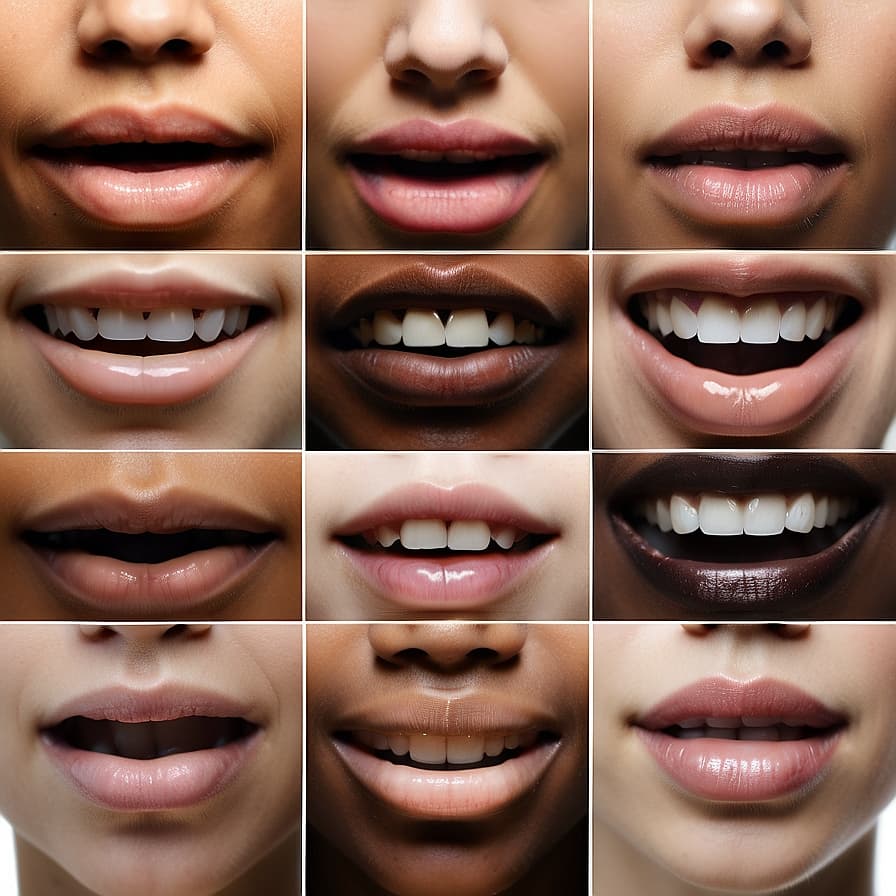
Skin sits in the Fitzpatrick III–IV range, with warm copper, bronze, and reddish-tan undertones — the "red" in the historical misnomer reflects a real warm-orange cast under sun exposure rather than a cool olive. Cheekbones are the signature feature: high, broad, and laterally projected, giving the face its characteristic width across the upper third. Noses are prominent with a high, often aquiline bridge and moderate alar width — Sitting Bull and Red Cloud both show the classic strong-bridged Lakota profile. Lips are medium in fullness, jaws square and well-defined, with the chin firm rather than receding.
Build is the most anthropometrically distinctive trait: Lakota and Dakota men historically rank among the tallest documented Indigenous populations of the Americas, with lean, broad-shouldered, long-femured frames. Sub-group variation is modest — Eastern Dakota (Santee, Sisseton) tend slightly more compact and woodland-adapted in build, while Western Lakota (Teton) carry the tallest, most rangy Plains physique; Nakota fall between. Facial features remain consistent across all three branches.
Data depth
42/100Coverage of image-grounded phenotype observations · drives AI generation diversity
- Sample size
- 27/40· 21 images
- Image quality
- 5/30· 10% high
- Confidence
- 10/20· mean 0.60
- Source diversity
- 0/10· wikipedia
- ·Modest sample (n<25)
- ·Mostly low-quality source images
- ·Wikipedia-only source — not population-representative
Observed Distribution — Image Sample
Empirical observations from analyzed photographs · supplementary signal, not population truth
Sample: 21 images analyzed (21 wikipedia). Quality: 2 high, 14 medium, 5 low, 0 very_low. Avg analyzer confidence: 0.60.
Skin tone (Fitzpatrick): II (5%), III (5%), IV (71%), V (14%), unclear (5%)
Hair color: black (71%), gray/white (10%), brown (5%), dark brown (5%), unclear (10%)
Hair texture: straight (86%), wavy (5%), covered (5%), unclear (5%)
Eye color: dark brown (71%), other (5%), blue (5%), unclear (19%)
Epicanthic fold: 48% present, 19% absent, 33% unclear
Caveats: Sample size 21 is modest — secondary patterns may not be reliable. Quality skews toward older or low-resolution photos; phenotype detail may be lossy. Sample is 100% Wikipedia notable people — skews toward male, public-life, and modern figures, not population-representative.
Last aggregated: May 7, 2026
Explore phenotype categories
Structured taxonomy with peer-reviewed scales · 22 anatomical categories
Notable Sioux People
52 reference figures — sourced from Wikipedia
- fraternities — Societies were similar to fraternities; men joined to raise their position in…
- Crazy Horse — The Wičháša Itȟáŋčhaŋ elected two to four shirt-wearers, who were the voice o…
- Standing Rock Sioux Reservation — with its agency at Fort Yates;
- Cheyenne River Reservation — with its agency on the Missouri River near the Cheyenne River confluence (lat…
- Lower Brule Indian Reservation — with its agency near Fort Thompson;
- Rosebud Indian Reservation — with its agency near Mission, South Dakota; and
- Pine Ridge Reservation — Oglala Lakota), with its agency at Pine Ridge, South Dakota near the Nebraska…
- Eastern Dakota — also known as Santee-Sisseton or Dakhóta) Santee (Isáŋyáthi: Bdewákhathuŋwaŋ,…
- Western Dakota — or Yankton-Yanktonai or Dakȟóta) Yankton (Iháŋktȟuŋwaŋ) Yanktonai (Iháŋktȟuŋw…
- Lakota — or Lakȟóta, Teton, Teton Sioux)
- Mdewakantonwan — Santee division (Eastern Dakota) (Isáŋyathi) Mdewakantonwan (Bdewékhaŋthuŋwaŋ…
- Wanata — Yankton-Yanktonai division (Western Dakota) (Wičhíyena) Yankton (Iháŋkthuŋwaŋ…
- Old Chief Smoke — Šóta (Old Chief Smoke) — an original Oglala Lakota head chief
- Spotted Tail — Siŋté Glešká (Spotted Tail) — Sicangu (Brulé) chief who resisted joining Red …
- Little Crow — Thaóyate Dúta (Little Crow/His Red Nation) — Mdewakanton Dakota chief and war…
- Sitting Bull — Tȟatȟáŋka Íyotake (Sitting Bull) — Famous Hunkpapa Lakota chief and holy man
- Touch the Clouds — Maȟpíya Ičáȟtagye (Touch the Clouds) – Minneconjou Lakota chief and warrior
- Red Cloud — Maȟpíya Lúta (Red Cloud) — Famous Oglala Lakota chief and spokesperson
- Black Elk — Heȟáka Sápa (Black Elk) — Famous Oglala Lakota medicine and holy man
- Rain-in-the-Face — Ité Omáǧažu (Rain-in-the-Face) — Hunkpapa Lakota war chief
- Lame Deer — Tȟáȟča Hušté (Lame Deer) — Mineconju Lakota holy man and spiritual preserver
- Black Moon — Wí Sápa (Black Moon) — Miniconjou Lakota chief
- Hollow Horn Bear — Matȟó Héȟloǧeča (Hollow Horn Bear) — Sicangu Lakota leader
- Gall — Phizí (Gall) — Hunkpapa Lakota war chief
- Red Shirt — Ógle Lúta (Red Shirt) — Oglala Lakota warrior and chief
- Scarlet Point — Inkpáduta (Scarlet Point/Red End) — Wahpekute Dakota war chief
- Big Eagle — Waŋbdí Tháŋka (Big Eagle) — Mdewakanton Dakota chief
- One Eye/Standing Moose — Tamaha (One Eye/Standing Moose) — Mdewekanton Dakota scout for the U.S. durin…
- Luther Standing Bear — Óta Kté (Luther Standing Bear/Plenty Kill) — Oglala Lakota writer and actor
- Two Strike — Núŋp Kaȟpá (Two Strike) — Sicangu Lakota chief
- Black Hawk — Čhetáŋ Sápa (Black Hawk) — Itázipčho Lakota ledger artist
- Running Antelope — Tȟatȟóka Íŋyaŋke (Running Antelope) — Hunkpapa Lakota chief
- John Grass — Matȟó Watȟákpe (John Grass/Charging Bear) — Sihasapa Lakota chief
- White Bull — Tȟatȟáŋka Ská (White Bull) — Miniconjou Lakota warrior and nephew of Sitting …
- Kill Eagle — Waŋblí Kté (Kill Eagle) — Sihasapa Lakota warrior and leader
- Conquering Bear — Matȟó Wayúhi (Conquering Bear) — Sičháŋǧu Lakota chief
- Flying Hawk — Čhetáŋ Kiŋyáŋ (Flying Hawk) — Oglala Lakota chief, philosopher, and historian
- Kicking Bear — Matȟó Wanáȟtake (Kicking Bear) — Oglala born Miniconjou Lakota warrior and chief
- Spotted Elk — Uŋpȟáŋ Glešká (Spotted Elk/Big Foot) — Miniconjou Lakota chief
- Lone Horn — Hé Waŋžíča (Lone Horn) — Miniconjou Lakota chief
- Crow King — Kȟaŋǧí Yátapi (Crow King/Medicine Bag That Burns) — Hunkpapa Lakota war chief
- Little Big Man — Wičháša Tȟáŋkala (Little Big Man/Charging Bear) — Oglala Lakota warrior
- Low Dog — Šúŋka Khúčiyela (Low Dog) — Oglala Lakota chief and warrior
- American Horse — Wašíčuŋ Tȟašúŋke (American Horse) ("The Younger") — Oglala Lakota chief
- Young Man Afraid Of His Horses — Tȟašúŋke Kȟokípȟapi (Young Man Afraid Of His Horses) — Oglala Lakota chief
- Sleepy Eye — Ištáȟba (Sleepy Eye) — Sisseton Dakota chief
- Charles Eastman — Ohíyes’a (Charles Eastman) — Author, physician, and reformer
- Gregory "Pappy" Boyington — Colonel Gregory "Pappy" Boyington — World War II fighter ace and Medal of Hon…
- Blackfoot Sioux — Charging Thunder (1877–1929), Blackfoot Sioux chief who was part of Buffalo B…
- Gertrude Simmons Bonnin — Ziŋtkála-Šá (Gertrude Simmons Bonnin) — Author, educator, musician, and polit…
- Sisseton Wahpeton Oyate — of the Lake Traverse Indian Reservation
- ISBN — Chaky, Doreen (2014). Terrible justice: Sioux Chiefs and U.S. Soldiers on the…


Generate Sioux AI Content
Use this ethnicity's phenotype data to create AI-generated content with accurate physical traits and cultural context.
Open Creator Studio