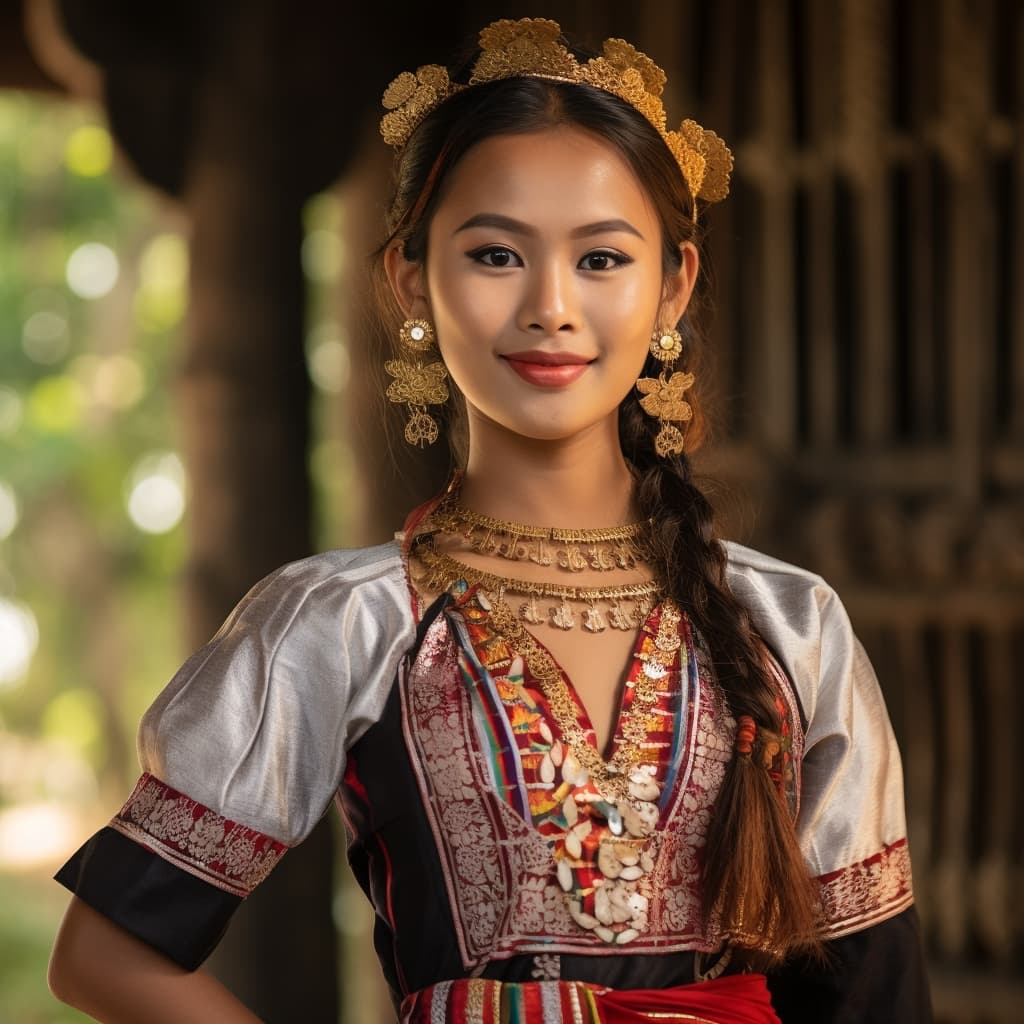
Rakhine Erotic
Rakhine State (Myanmar)
Sino-Tibetan / Burmese / Arakanese
Buddhism / Theravada Buddhism
Marma
Southern Asia
About Rakhine People
The Rakhine are a Theravada Buddhist people of the eastern Bay of Bengal coast, concentrated in what is now Rakhine State on Myanmar's western flank. The mountainous Arakan Yoma range walls them off from the Burmese heartland on one side; the sea opens them outward on the other. That geography is the single most useful fact about them. For most of their recorded history they faced west and south — toward Bengal, toward Chittagong, toward the maritime trade routes of the Bay — far more than they faced inland Burma. Their kings minted coins with Persian inscriptions. Their court borrowed Mughal etiquette. Arakanese fleets raided as far as the Sundarbans. The Rakhine sense of themselves as a coastal, cosmopolitan, slightly separate people predates modern Myanmar by several centuries and has not really gone away.
The language reflects all of this. Arakanese is close enough to standard Burmese that the two are sometimes treated as dialects of one another, but the divergence is real — Arakanese preserves an older r sound that Burmese has softened into y, so a speaker from Yangon and a speaker from Sittwe will hear each other across a noticeable gap. Older loanwords from Bengali and Persian sit in the vocabulary. The Marma, a related branch, live across the border in the Chittagong Hill Tracts of Bangladesh, descendants of populations who moved or were pushed out during successive wars; they speak a variety so close to Arakanese that the two communities still understand each other.
Theravada Buddhism is the through-line of Rakhine identity, and the Mahamuni image — long held to be a likeness of the Buddha cast in his own lifetime — was the spiritual center of the kingdom until the Burmese carried it off to Mandalay in 1784. The conquest that year ended the independent Arakanese state and is the inflection point Rakhine still measure their history against. British colonial rule, Japanese occupation, and incorporation into independent Burma followed in quick succession, none of them resolving the underlying question of how a coastal, formerly sovereign people fit inside a Bamar-majority nation-state. The recent decades of conflict in Rakhine State — between the military, Rakhine nationalist movements, and the Rohingya Muslim population that also calls the region home — sit on top of that older unanswered question, not separately from it.
Typical Rakhine Phenotypes
Reference for AI generation — hair, eyes, skin, facial structure, build
The Rakhine sit at the western edge of the Tibeto-Burman world, just across the Naf from Bengal, and the phenotype reflects that hinge position — recognizably Burmese in core features but pulled visibly toward South Asia in ways the Bamar of the central Irrawaddy valley are not. Hair is uniformly straight to gently wavy and black, occasionally cooling toward dark brown in sunlight; texture is fine-to-medium, dense, and resists curl. Premature graying is unremarkable.
Eyes run dark brown to near-black. The epicanthic fold is present in most but not universal — noticeably less consistent than among Bamar, Shan, or Kachin populations, with a meaningful minority showing a partial or absent fold and a more open, almond-shaped palpebral aperture. Lashes tend long and straight. Brows are dark and fairly defined, not sparse.
Skin tone clusters in the warm-olive to medium-brown band — Fitzpatrick III through V, with a yellow-to-bronze undertone rather than the cooler ivory cast common further north and east. Coastal and rural fishing populations weather darker; urban Sittwe and diaspora skin sits lighter. Outright fair complexions are uncommon.
Facially, the Rakhine read less flat-planed than the Bamar average. Cheekbones are present but the malar projection is softer, the midface slightly longer, and the nose noticeably more prominent — straight to mildly convex bridges with moderate alar width are common, where Bamar noses tend shorter and broader at the base. Lips run medium-full, well-defined, and often with a pronounced cupid's bow; you can see this clearly in performers like Zun Than Sin and Yadanar Phyu Phyu Aung. Jawlines are oval to gently squared, rarely heavy.
Build is slim-to-lean and wiry, with narrow shoulders and modest musculature; men average roughly 165 cm, women 152 cm. The Marma — ethnic Rakhine settled in the Chittagong Hill Tracts of Bangladesh — show a slight pull toward Bengali phenotype at the margins, a touch darker on average and with somewhat reduced fold frequency, but remain visibly continuous with the Rakhine mainland.
Data depth
50/100Coverage of image-grounded phenotype observations · drives AI generation diversity
- Sample size
- 23/40· 15 images
- Image quality
- 17/30· 33% high
- Confidence
- 10/20· mean 0.64
- Source diversity
- 0/10· wikipedia
- ·Modest sample (n<25)
- ·Wikipedia-only source — not population-representative
Observed Distribution — Image Sample
Empirical observations from analyzed photographs · supplementary signal, not population truth
Sample: 15 images analyzed (15 wikipedia). Quality: 5 high, 8 medium, 2 low, 0 very_low. Avg analyzer confidence: 0.64.
Skin tone (Fitzpatrick): II (7%), III (13%), IV (47%), V (13%), unclear (20%)
Hair color: black (60%), gray/white (20%), unclear (20%)
Hair texture: straight (73%), shaved (7%), covered (20%)
Eye color: dark brown (80%), other (13%), unclear (7%)
Epicanthic fold: 80% present, 7% absent, 13% unclear
Caveats: Sample size 15 is modest — secondary patterns may not be reliable. Sample is 100% Wikipedia notable people — skews toward male, public-life, and modern figures, not population-representative.
Last aggregated: May 7, 2026
Explore phenotype categories
Structured taxonomy with peer-reviewed scales · 22 anatomical categories
Notable Rakhine People
34 reference figures — sourced from Wikipedia
- Min Saw Mon — founder of Mrauk-U Dynasty
- Min Hti — king of Launggyet Arakan and the longest reigning monarch in history
- Min Bin — king of Mrauk-U Dynasty and presided over rise of Arakan.
- Min Razagyi — King of Arakan
- Maha Thammada — last monarch of Arakan
- Aung Zan Wai — politician
- Pe Myint — government minister
- U Ottama — colonial activist and monk
- Twan Mrat Naing — Arakanese revolutionary and commander in chief of the Arakan Army
- Nyo Twan Awng — Vice commander in chief of the Arakan Army
- Aung Lwin — Arakanese actor and director
- Kyaw Zaw Oo — Arakanese politician
- Daw Kyan — historian and writer
- Kaiser — musician
- Zun Than Sin — model, musician, and beauty pageant titleholder
- Yadanar Phyu Phyu Aung — actress and singer
- Shine — musician
- Min Thway — actor & singer
- Aye Tha Aung — politician
- Letya Min Nan — founder of the Parein Dynasty of Arakan.
- Aye Maung — politician and chairperson of the Arakan National Party
- Kyaw Kyaw — politician
- Kyaw Soe Oo — Myanmar Reuters journalist
- Wai Sein Aung — politician
- Maung Maung Win — footballer
- Thiha Htet Aung — footballer
- Aye Nu Sein — lawyer and politician
- Saw Sit II — first queen consort of Mrauk-U
- Saw Thanda — queen consort to four consecutive of kings of Arakan.
- Saw Yin Mi — queen of Sandoway and queen consort of Middle Palace of Mrauk-U
- Honey Nway Oo — former actress and current officer in the Student Armed Force (SAF).
- Aung Rakhine — Bangladeshi Rakhine Film Director
- Rani Yan Yan — Current queen of Chakma circle
- Kyaw Kyaw Win — politician and lawyer
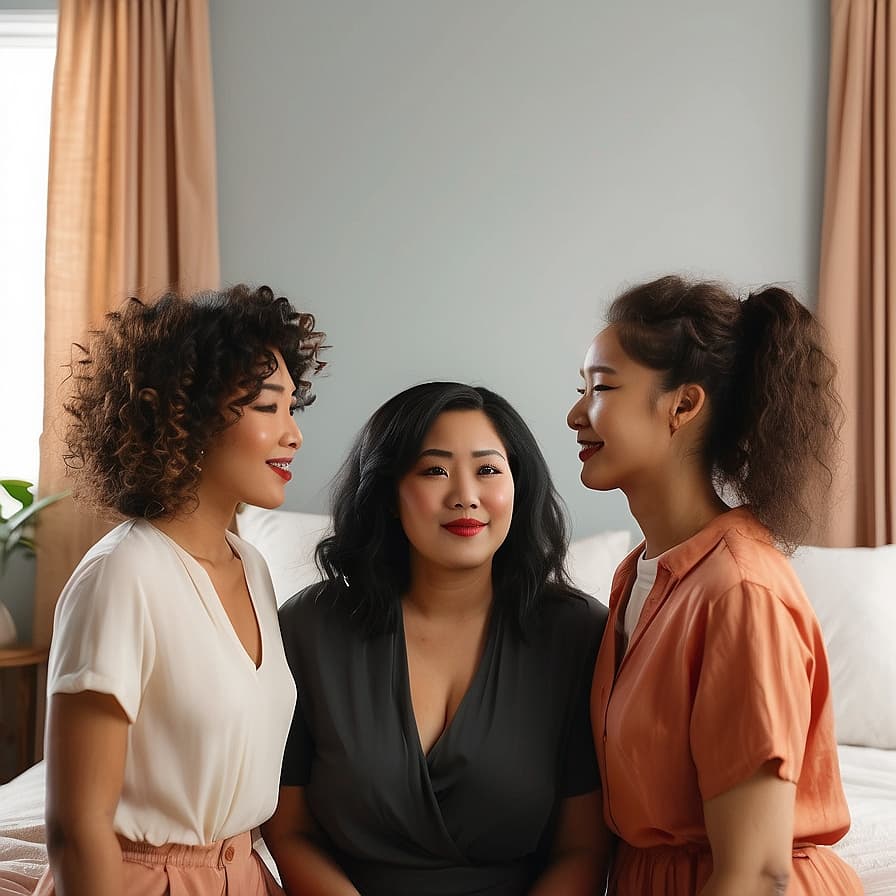
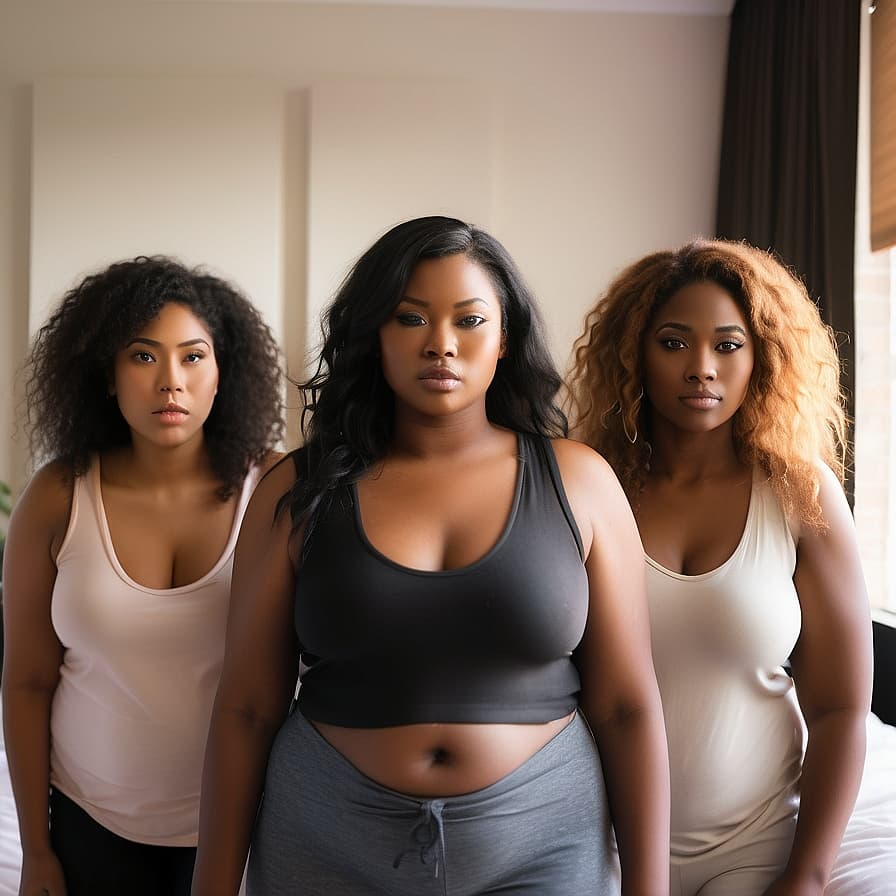
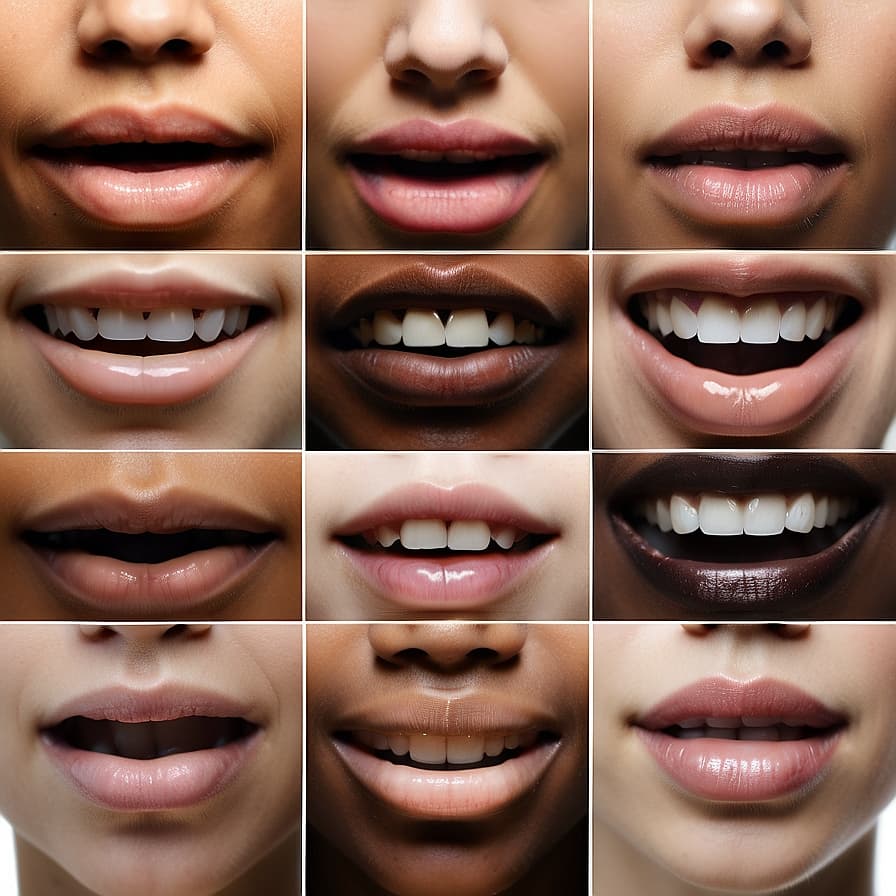
Generate Rakhine AI Content
Use this ethnicity's phenotype data to create AI-generated content with accurate physical traits and cultural context.
Open Creator Studio