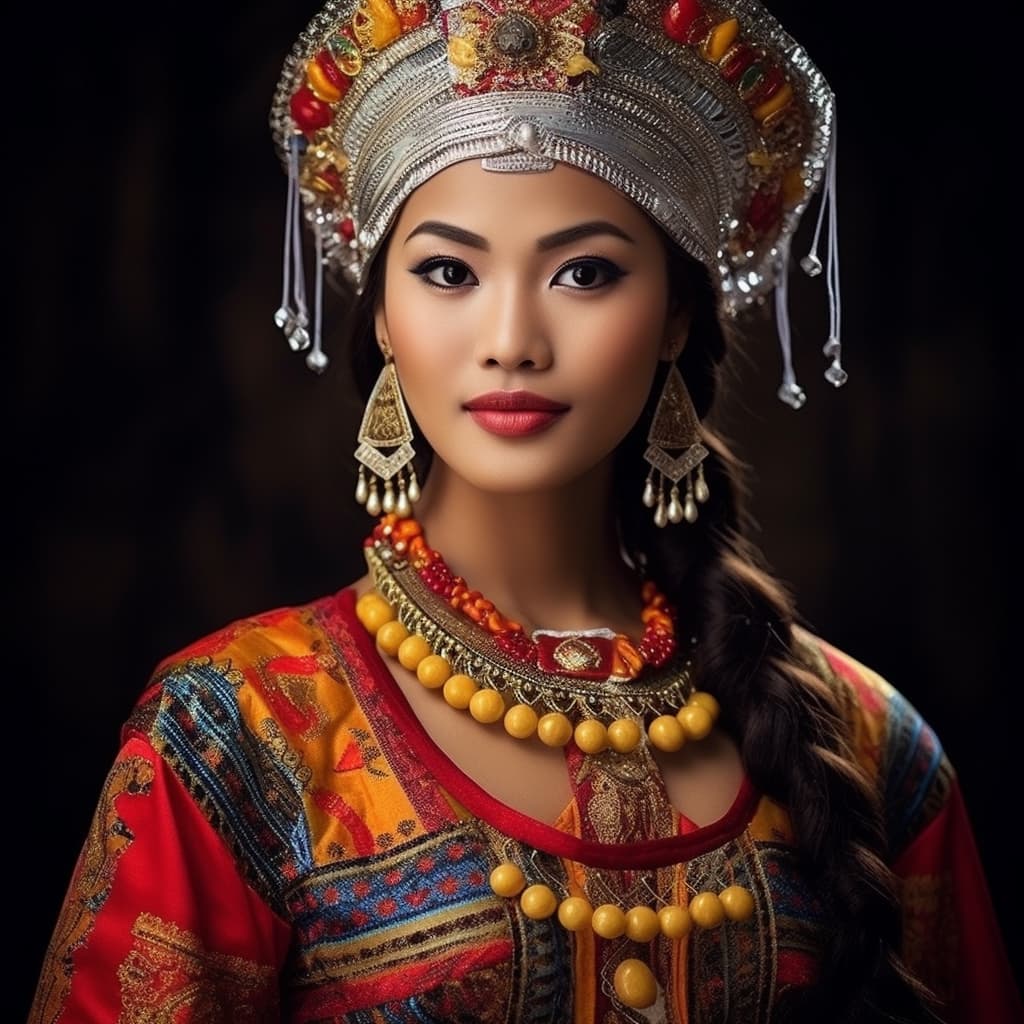
Pangasinese Erotic
Pangasinan (Philippines)
Austronesian / Philippine / Pangasinan
Christianity / Catholicism
Southeast Asia
About Pangasinese People
The Pangasinense are the people of the salt — the name of their homeland and their language both come from asin, the word for salt, a reference to the coastal flats along the Lingayen Gulf where salt-making has been a livelihood for centuries. They occupy the western half of the central Luzon plain in the Philippines, a stretch of fishponds, rice paddies, and river deltas hemmed in by the Cordillera to the east and the South China Sea to the west. They are one of the larger lowland Christian groups of the Philippines, but they are not a particularly loud one in the national imagination — overshadowed in tourism by the Ilocanos to the north and the Tagalogs to the south, and accustomed to that position.
The Pangasinan language is Austronesian and belongs to the small Northern Luzon branch, which makes it a distant cousin of Ilocano and Kapampangan rather than a dialect of either. It is its own thing: a language with a literary tradition that predates Spanish contact, and one of only a handful of Philippine languages with an unbroken record of native poetry — the tagaumen and other oral forms still surface at weddings and town fiestas. The language has lost ground in the twentieth century to Tagalog and English in school and to Ilocano in the northern uplands, and a sizable minority of ethnic Pangasinense now speak Ilocano at home. This linguistic squeeze is one of the quiet anxieties of the region's cultural institutions.
Catholicism arrived with the Spanish in the late sixteenth century and is the dominant religion, though the older Aglipayan church has a real foothold here, a holdover from the revolutionary nationalism of the late 1800s. The town fiesta — patron saint, procession, brass band, gambling tents at the edge of the plaza — remains the organizing event of the social year. Pangasinan was also the staging ground for the Palaris Revolt of 1762 against Spanish rule, a fact that locals tend to mention and outsiders tend not to know. The economy still leans on what the geography offers: bangus milkfish from the gulf's brackish ponds, rice from the central plain, and the salt that gave the place its name. Daet, Dagupan, and Lingayen are the towns that anchor it; the rest is farmland, jeepneys, and the long flat road north.
Typical Pangasinese Phenotypes
Reference for AI generation — hair, eyes, skin, facial structure, build
The Pangasinese are a lowland Austronesian people of west-central Luzon, and their phenotype sits squarely in the mainstream Filipino range with a few quiet regional tilts. Hair is overwhelmingly black to very dark brown, naturally straight to gently wavy, with the slight coarseness typical of Southeast Asian Austronesians; sun-bleached brown tones are common in coastal and farming communities along the Lingayen Gulf. Premature greying in the late twenties and thirties is noticeably frequent, more so than in many neighboring Luzon groups.
Eyes are dark brown to near-black, almond-shaped, with an epicanthic fold that is usually present but often softer and less pronounced than in mainland East Asian populations — a partial or "incomplete" fold is the most common pattern. Eyelashes tend to be straight rather than upswept. Skin spans Fitzpatrick III through V, with a warm golden-olive to light bronze undertone; northern Pangasinense closer to the Ilocos border tend to run a shade lighter, while those from the southern Tarlac-adjacent towns and coastal fishing communities sit darker, with a coppery cast from sun exposure rather than baseline pigmentation.
Facial structure is moderately broad with rounded malars and a relatively low, soft nasal bridge; alar width is medium to wide, and the tip is typically rounded rather than refined. Lips are medium-full and well-defined, jaws are gracile to moderate, and chins are often slightly receded — giving the characteristic soft, oval Filipino lowland face. Stature is on the shorter end of the Filipino average: men commonly 5'3"–5'6", women 4'10"–5'2", with compact, neotenous builds, narrow shoulders, and a tendency toward soft midsection weight gain in adulthood rather than muscular bulk.
Trace Chinese mestizo ancestry from centuries of Hokkien settlement around Lingayen and Dagupan surfaces in a visible minority — lighter skin, straighter hair, flatter mid-face, and a more pronounced eye fold — but it remains the exception rather than the baseline.
Data depth
0/100Coverage of image-grounded phenotype observations · drives AI generation diversity
- Sample size
- 0/40· 0 images
- Image quality
- 0/30· 0% high
- Confidence
- 0/20
- Source diversity
- 0/10
- ·No image observations yet
Explore phenotype categories
Structured taxonomy with peer-reviewed scales · 22 anatomical categories






Generate Pangasinese AI Content
Use this ethnicity's phenotype data to create AI-generated content with accurate physical traits and cultural context.
Open Creator Studio