
Nùng Erotic
Vietnam, Guangxi (China)
Kra–Dai / Tai / Zhuang / Nung
Animism
Southeast Asia
About Nùng People
The Nùng live in the limestone uplands where northern Vietnam folds into Guangxi, a country of karst spires, terraced valleys, and the slow rivers that link Cao Bằng and Lạng Sơn to the Zhuang heartland across the border. They are close kin to the Zhuang of China — close enough that the political line between the two peoples is more an artifact of twentieth-century borders than of culture or speech — and their language sits in the Tai branch of the Kra–Dai family, mutually intelligible in patches with Tày, Zhuang, and the Tai dialects spoken further south.
What identifies a Nùng village from the road is usually architectural: stilt houses of dark hardwood, with the living floor raised over a ground level that historically sheltered livestock and grain. Indigo is the other tell. Nùng women have long been associated with the cultivation and processing of indigo dye, and the deep, almost black-blue of their everyday dress — plain, high-collared, fastened along the side — is a regional signature rather than festival costume. Several sub-groups are recognized internally, often named for the river valley or the cut of their clothing: Nùng An, Nùng Phàn Slình, Nùng Inh, Nùng Cháo, and others, each with small distinctions in dialect and dress that matter locally even when outsiders read them as one people.
Religion is animist at the base, layered with ancestor veneration and a working relationship with Daoist ritual specialists called thầy tào or thầy mo, who handle weddings, funerals, house-blessings, and the long sung liturgies that mark important transitions. Spirits of the household, of the land, of rice and water are addressed directly; the ancestral altar in the main room is the moral center of the home. Wet-rice farming on terraced slopes structures the year, supplemented by maize, soybeans, and the famous sticky rice of the northern uplands.
The Nùng have been politically consequential out of proportion to their numbers. They produced Nùng Trí Cao, the eleventh-century chieftain whose revolt against both the Lý court of Đại Việt and the Song dynasty briefly carved out an independent polity along the frontier — a figure still claimed in local memory. In the twentieth century, the borderland uplands they inhabit became staging ground and refuge during the wars that reshaped the region, and Nùng communities were drawn into those conflicts on every side.
Typical Nùng Phenotypes
Reference for AI generation — hair, eyes, skin, facial structure, build
The Nùng are a Tai-speaking highland people of northeastern Vietnam and southern Guangxi, closely related to the Zhuang and Tày, and their phenotype sits squarely within the southern East Asian / northern Southeast Asian range — recognizably East Asian in eyelid and bone structure, but warmer-toned and lighter-built than Han populations to the north.
Hair is uniformly straight, coarse, and black or near-black, with a noticeable cool blue-black sheen in younger adults that warms to dark brown only with heavy sun exposure. Premature graying is uncommon. Eye color is overwhelmingly dark brown to near-black; a clear, well-formed epicanthic fold is near-universal, with a single eyelid (no visible upper crease) more common than in lowland Kinh Vietnamese. Eye openings tend to be narrower and more horizontally set than in Southern Han, with a slight upward outer canthal tilt.
Skin tone runs Fitzpatrick III–IV — a warm light-to-medium tone with distinct yellow-olive undertones, generally a half-shade darker than urban Kinh and noticeably warmer than Northern Chinese. Highland Nùng who farm terraced rice and maize tan to a deep golden-brown across the face, forearms and lower legs while staying lighter on the torso, and this working-population tan is part of the typical look rather than an outlier.
Facial structure is moderately flat in profile: a low-to-medium nasal bridge with a rounded tip and medium alar width, broad and slightly forward cheekbones, and a relatively short, rounded jaw. Lips are medium in fullness — neither thin nor markedly full — with a clearly defined cupid's bow. Foreheads are typically broad and not high.
Build is small-to-medium and wiry. Men average roughly 162–166 cm, women around 150–155 cm, with narrow shoulders, slim hips, low body-fat tendencies, and proportionally shorter legs to torso than Northeast Asian populations. The Nùng Phàn Slình and Nùng Inh subgroups skew slightly taller and lighter-skinned than the more southern Nùng An, who trend shorter, browner, and rounder-faced — a gradient visible across the homeland from Cao Bằng down toward the Sino-Vietnamese border.
Data depth
36/100Coverage of image-grounded phenotype observations · drives AI generation diversity
- Sample size
- 11/40· 4 images
- Image quality
- 25/30· 50% high
- Confidence
- 0/20· mean 0.01
- Source diversity
- 0/10· wikipedia
- ·Small sample (n<10)
- ·Low overall confidence
- ·Wikipedia-only source — not population-representative
Observed Distribution — Image Sample
Empirical observations from analyzed photographs · supplementary signal, not population truth
Sample: 4 images analyzed (4 wikipedia). Quality: 2 high, 1 medium, 1 low, 0 very_low. Avg analyzer confidence: 0.01.
Skin tone (Fitzpatrick): unclear (100%)
Hair color: unclear (100%)
Hair texture: covered (25%), unclear (75%)
Eye color: unclear (100%)
Epicanthic fold: 0% present, 0% absent, 100% unclear
Caveats: Sample size 4 is small — observed distribution should be treated as suggestive, not definitive. Low average analyzer confidence — many photos partially obscured or historical. Sample is 100% Wikipedia notable people — skews toward male, public-life, and modern figures, not population-representative.
Last aggregated: May 7, 2026
Explore phenotype categories
Structured taxonomy with peer-reviewed scales · 22 anatomical categories
Notable Nùng People
10 reference figures — sourced from Wikipedia
- Chu Văn Tấn — a general of North Vietnam
- Kim Đồng — fighter of the August Revolution in 1945.
- Nong Quanfu — a Nùng chieftain
- Nong Zhigao — a Nùng chieftain
- doi — Blust, Robert (1996). "Beyond the Austronesian Homeland: The Austric Hypothes…
- GSO — June 2010). "The 2009 Vietnam Population and Housing Census: Completed Result…
- hdl — Chaisingkananont, Somrak (2014). The Quest for Zhuang Identity: Cultural Poli…
- ISBN — —— (2013), Mapping the Old Zhuang Character Script: A Vernacular Writing Syst…
- JSTOR — Ng, Candice Sheung Pui (2011). "On "Constructed" Identities: A Dialogue on th…
- Taylor, K. W. — 2013). A History of the Vietnamese. Cambridge University Press. ISBN 978-0-52…
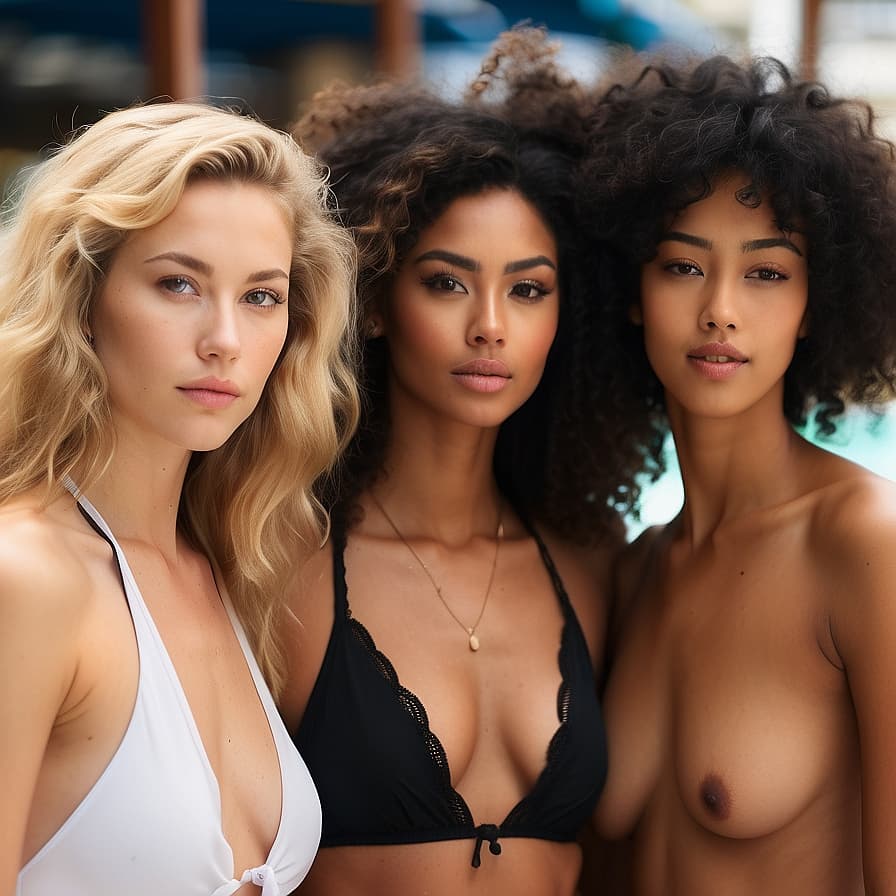
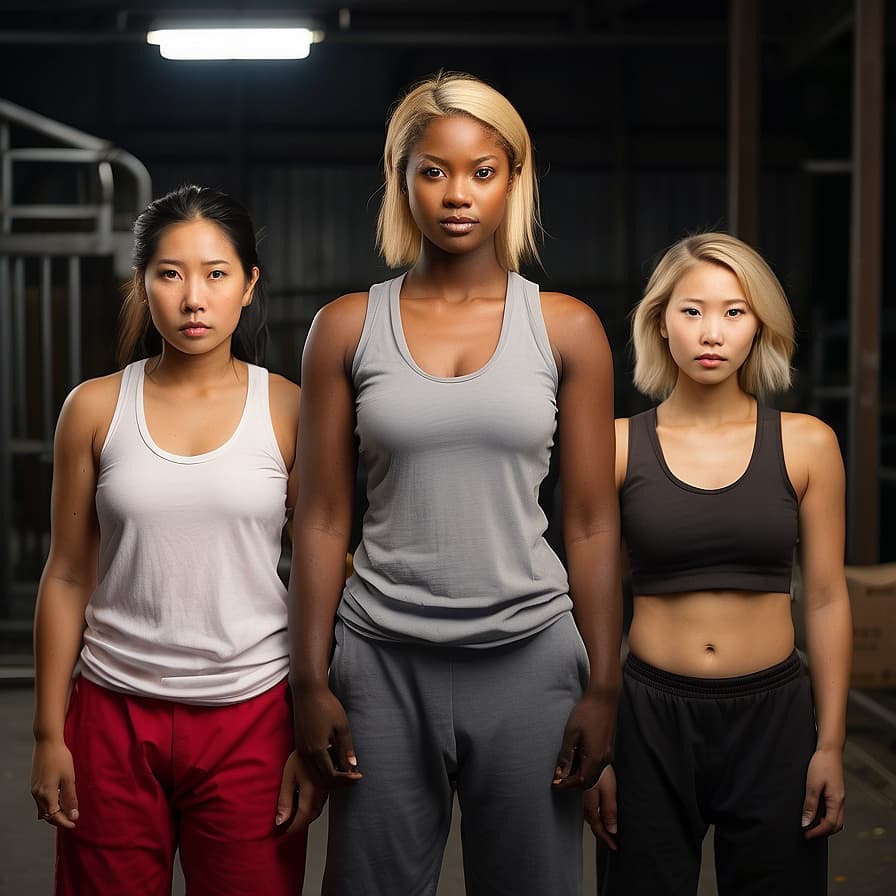
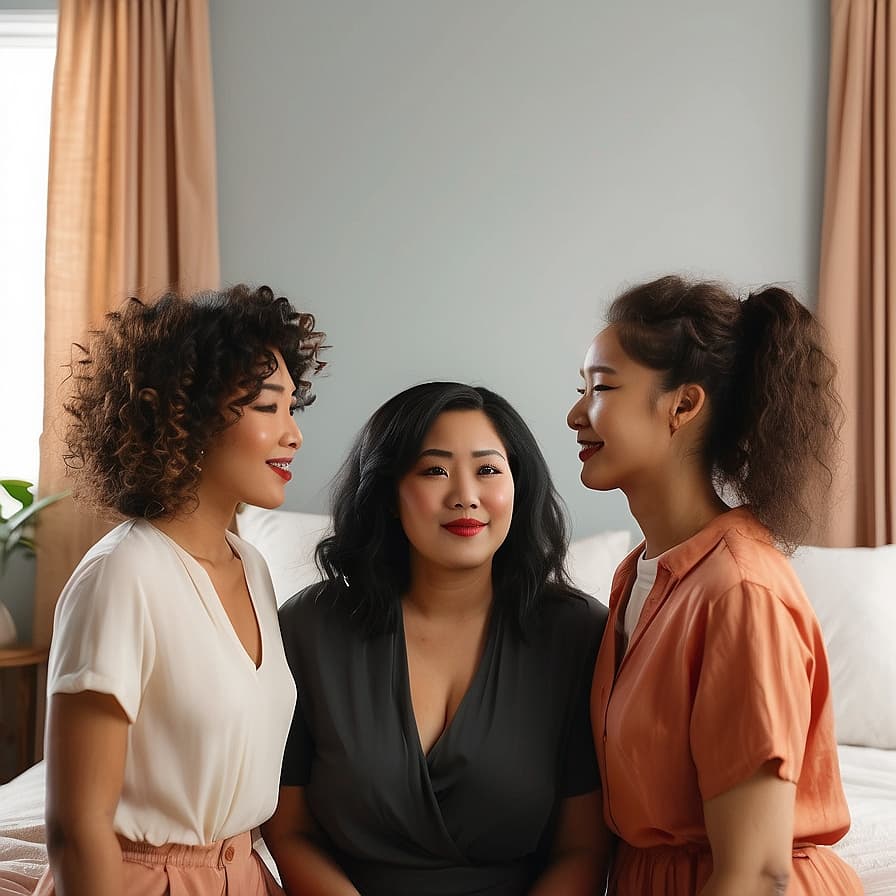

Generate Nùng AI Content
Use this ethnicity's phenotype data to create AI-generated content with accurate physical traits and cultural context.
Open Creator Studio