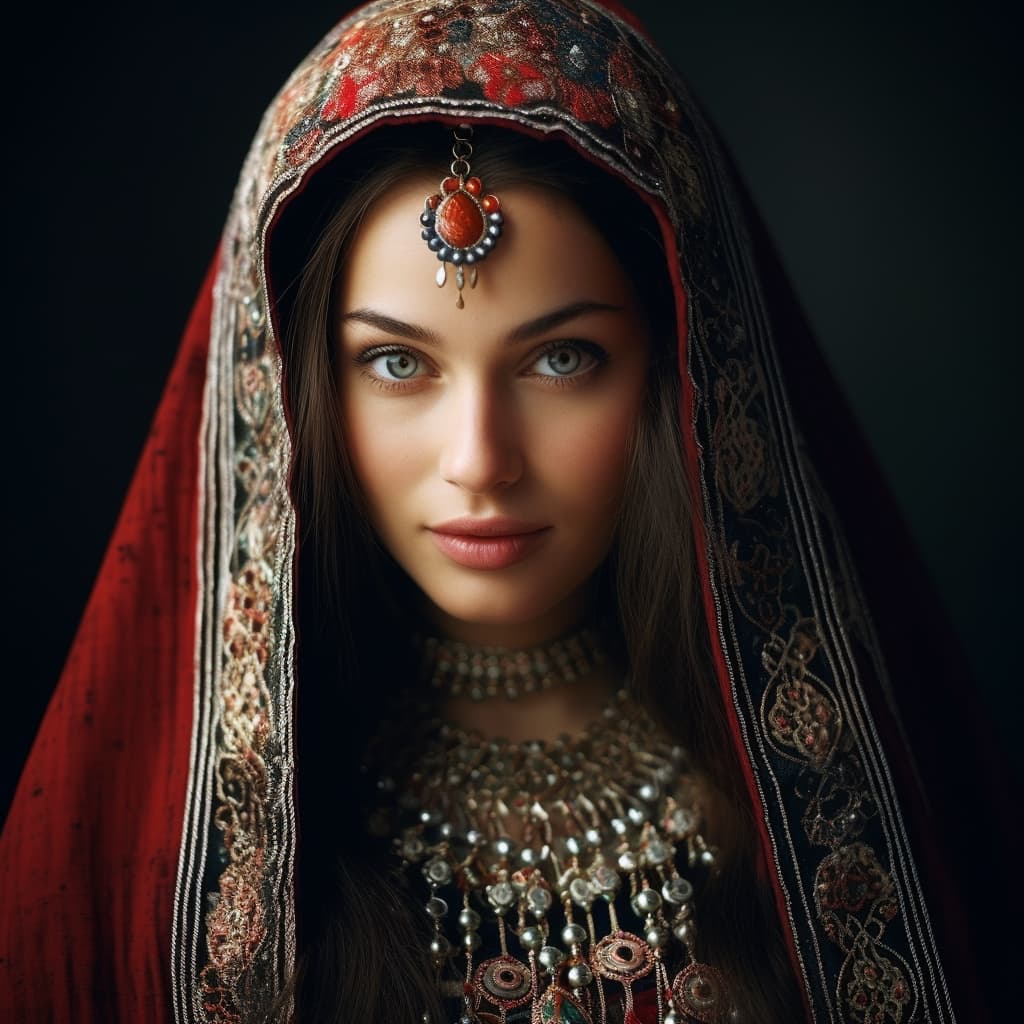
Nogais Erotic
Russia (Stavropol Krai, Dagestan)
Turkic / Kipchak / Nogai
Islam / Sunni Islam
Ak Nogai, Karagash
Southern Asia
About Nogais People
The Nogais are a Turkic-speaking people scattered across the steppe country north of the Caucasus — chiefly in Stavropol Krai and northern Dagestan, with smaller communities in Karachay-Cherkessia, Chechnya, Astrakhan, and across the border in Turkey. Their name carries the memory of the Nogai Horde, the post-Golden Horde polity that ranged the Pontic-Caspian steppe from the late fourteenth century until Russian expansion and Kalmyk pressure broke it apart in the seventeenth and eighteenth. What remains is a people who once moved with their herds across enormous distances and now mostly do not, but whose self-understanding is still organized around that older horizon.
Nogai belongs to the Kipchak branch of Turkic, sitting close to Kazakh and Karakalpak — close enough that a Nogai speaker and a Kazakh speaker can usually work out a conversation, though the literary languages have drifted. Within the Nogai themselves the main divisions are the Ak Nogai of the western steppe around the Kuban, the Kara Nogai concentrated in the Nogai Steppe of northern Dagestan, and the Karagash around Astrakhan, who were long administratively separated from the others and developed somewhat distinctly. Each group has its own dialect features and its own sense of where home is.
Islam arrived through the Golden Horde and is Sunni, predominantly Hanafi, but it sits on top of an older steppe substratum that never entirely went away — a body of epic poetry, genealogical reckoning by clan and lineage, and customary law concerning livestock, marriage, and hospitality that operates alongside the religious framework rather than being absorbed by it. The dastan tradition is particularly strong: long oral epics, performed by yırawshı, that recount the campaigns and quarrels of the Horde-era ancestors. Edige, the founding figure of the Nogai polity, is the central hero, and the cycles around him are still being recorded.
The twentieth century was hard. Collectivization wrecked the pastoral economy that had defined Nogai life for centuries, and Soviet administrative redistricting in 1957 split the historic Nogai Steppe between three different republics, a division Nogai activists have been trying to undo ever since. Today the population is somewhere around a hundred thousand in Russia, with cultural revival concentrated in publishing, music, and a renewed attention to the epics. The horse and the open country remain central to how Nogais picture themselves, even when the day-to-day work has moved indoors.
Typical Nogais Phenotypes
Reference for AI generation — hair, eyes, skin, facial structure, build
The Nogais are a Kipchak-Turkic steppe people whose phenotype sits squarely on the Eurasian cline — visibly more East Asian-shifted than their Caucasian neighbors in Dagestan, but considerably less so than Kazakhs or Mongols further east. The dominant impression is a moderately admixed Central Asian face: broad but not flat, with enough Mongoloid structure to read as distinct from Turkish or Azerbaijani populations, and enough West Eurasian input to soften the features compared to Inner Asian Turkic groups.
Hair is overwhelmingly black to very dark brown, straight to gently wavy, with the coarse strand thickness typical of Turkic populations. Premature graying is uncommon. Eye color runs dark brown to near-black in the strong majority, with a minority showing hazel or gray-green — usually among the Ak Nogai of the western Stavropol steppe, who carry slightly more European admixture. Epicanthic folds are present in perhaps a third to half of individuals, often as a partial inner fold rather than the full crease seen in East Asians; eye shape tends toward narrow and almond, set into a relatively flat orbital plane.
Skin tone is light to light-medium, Fitzpatrick II–IV, with warm yellow or olive undertones rather than the pink undertones common in Slavic neighbors. Sun-tanned working faces deepen markedly against unexposed skin. Cheekbones are high and laterally projecting — the single most consistent Nogai feature — while the nasal bridge is typically low to medium with a moderate alar width, neither the high arch of Caucasus peoples nor the very flat profile of Mongolic groups. Lips are medium in fullness, jaws broad and somewhat squared.
Build is compact and stocky on a medium frame; men average roughly 170–175 cm, women 158–163 cm, with the dense musculature and short-limbed proportions of historic horse-pastoralists — visible in athletes like Albert Batyrgaziev. The Karagash branch of Astrakhan tends slightly more East Asian-shifted than the Ak Nogai, though the difference is subtle and individual variation easily outruns it.
Data depth
60/100Coverage of image-grounded phenotype observations · drives AI generation diversity
- Sample size
- 10/40· 3 images
- Image quality
- 30/30· 67% high
- Confidence
- 20/20· mean 0.86
- Source diversity
- 0/10· wikipedia
- ·Small sample (n<10)
- ·Wikipedia-only source — not population-representative
Observed Distribution — Image Sample
Empirical observations from analyzed photographs · supplementary signal, not population truth
Sample: 3 images analyzed (3 wikipedia). Quality: 2 high, 1 medium, 0 low, 0 very_low. Avg analyzer confidence: 0.86.
Skin tone (Fitzpatrick): III (33%), IV (67%)
Hair color: black (67%), gray/white (33%)
Hair texture: straight (100%)
Eye color: dark brown (100%)
Epicanthic fold: 100% present, 0% absent, 0% unclear
Caveats: Sample size 3 is small — observed distribution should be treated as suggestive, not definitive. Sample is 100% Wikipedia notable people — skews toward male, public-life, and modern figures, not population-representative.
Last aggregated: May 7, 2026
Explore phenotype categories
Structured taxonomy with peer-reviewed scales · 22 anatomical categories
Notable Nogais People
5 reference figures — sourced from Wikipedia
- Albert Batyrgaziev — born 1998), boxer, Olympic gold medalist
- Arslanbek Sultanbekov — born 1965), musician
- Nurlan Nogaev — born 1967), politician
- Cüneyt Arkın — 1937–2022), film actor
- Byrganym Aitimova — born 1953), politician
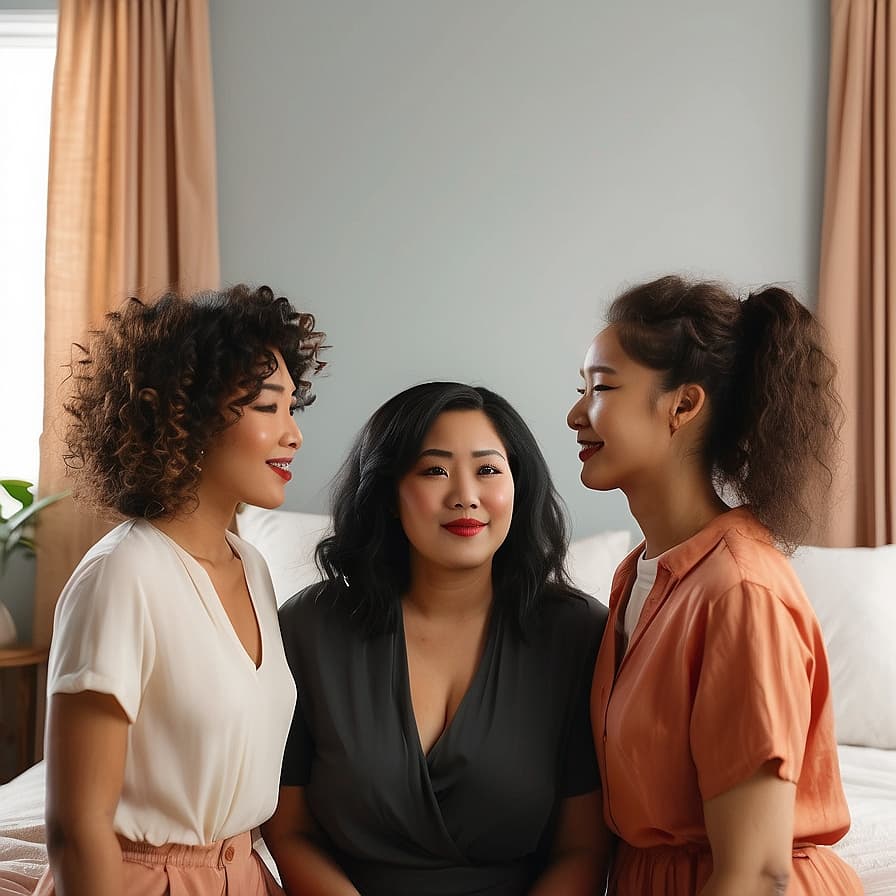

Generate Nogais AI Content
Use this ethnicity's phenotype data to create AI-generated content with accurate physical traits and cultural context.
Open Creator Studio