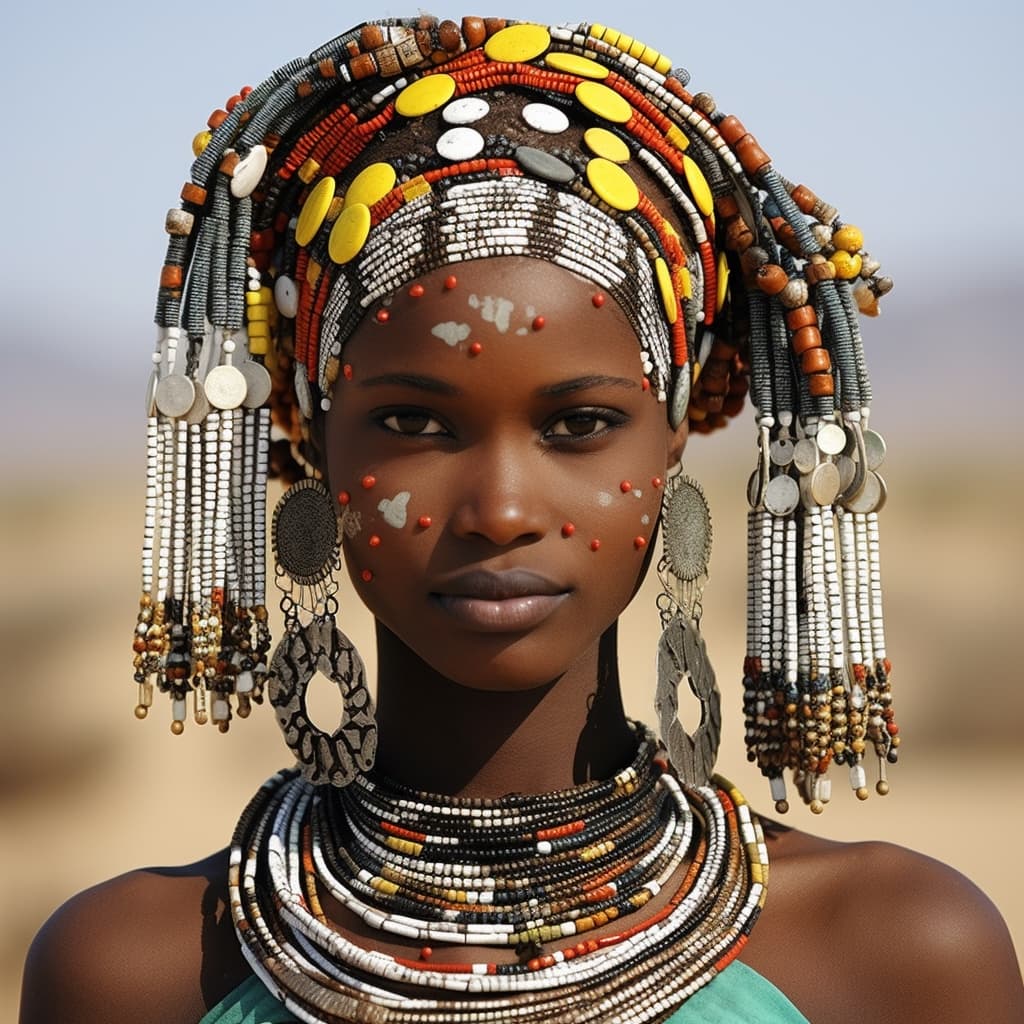
Musgum Erotic
Far North Region (Cameroon), Chad (Chari-Baguirmi, Mayo-Kebbi Est)
Afroasiatic / Chadic / Musgu
Islam
Central Africa
About Musgum People
The Musgum live along the floodplains of the Logone and Chari rivers, in the wetlands that straddle the Cameroon–Chad border south of Lake Chad. Their identity is bound up with this water: a country of seasonal inundation, fishing camps, millet patches on raised ground, and herds moved out as the floods come in. The name outsiders use, Musgum, is the one that stuck; among themselves the term varies by district — Mulwi, Muzuk, Mbara — reflecting a people organized historically as a federation of related clans rather than a single chiefdom.
Their language belongs to the Chadic branch of Afroasiatic, the same broad family that includes Hausa to the west and, far more distantly, Arabic and the Berber tongues of North Africa. Among its immediate neighbors — Masa, Tupuri, Kotoko — Musgum sits as one node in a dense Chadic cluster of the Lake Chad basin, where small languages run into each other across short distances and bilingualism is ordinary. Most Musgum today are Muslim, and Islam in this corner of the Sahel arrived gradually through trade and the long pressure of the Bornu and Wandala states to the north; it coexists with older ritual life around water spirits, ancestors, and the agricultural calendar in the way actually lived religion usually does, rather than the way doctrine prescribes.
What the Musgum are best known for, beyond the region itself, is an architecture: the tolek, conical earthen houses raised in mud without timber framing, their outer walls textured with raised geometric ridges that double as scaffolding for re-plastering and as runoff channels in the rains. These structures, parabolic and almost organic in profile, drew the attention of European observers in the colonial period and have since become a reference point for vernacular African building. Most Musgum no longer live in them day to day — rectangular plans and corrugated roofing have largely taken over — but the form persists in restored examples and in the memory of how it was done.
Historically the Musgum sat at the southern edge of the slave-raiding zone worked by the northern sultanates, and that exposure shaped both their settlement patterns and their long wariness of centralized authority. They remain primarily fishers, cultivators of sorghum and millet, and cattle keepers, with the rhythm of life still set by the rise and fall of the rivers.
Typical Musgum Phenotypes
Reference for AI generation — hair, eyes, skin, facial structure, build
The Musgum sit in the Lake Chad basin floodplain straddling northern Cameroon and southwestern Chad, and their phenotype reflects long settlement among Chadic-speaking, lake-edge peoples — closer in build and feature to neighboring Kotoko, Masa, and Mousgoum-Mulwi populations than to Sahelian Fulani or forest-zone groups further south. Skin tone runs deep, typically Fitzpatrick VI with warm red-brown to near-black undertones; sustained sun exposure on open floodplain and millet fields keeps the range narrow, with lighter skin uncommon outside infants and elders.
Hair is tightly coiled Type 4B–4C, dense, and worn close-cropped by men and frequently in scalp braids, threaded sections, or short natural styles by women. Color is uniform black-brown; greying tends to come late and stay localized at the temples. Eyes are deep brown, sometimes near-black, set under a smooth brow ridge with no epicanthic fold and a moderately defined upper lid crease. Eye shape is almond to wide-open round, with high contrast between sclera and iris.
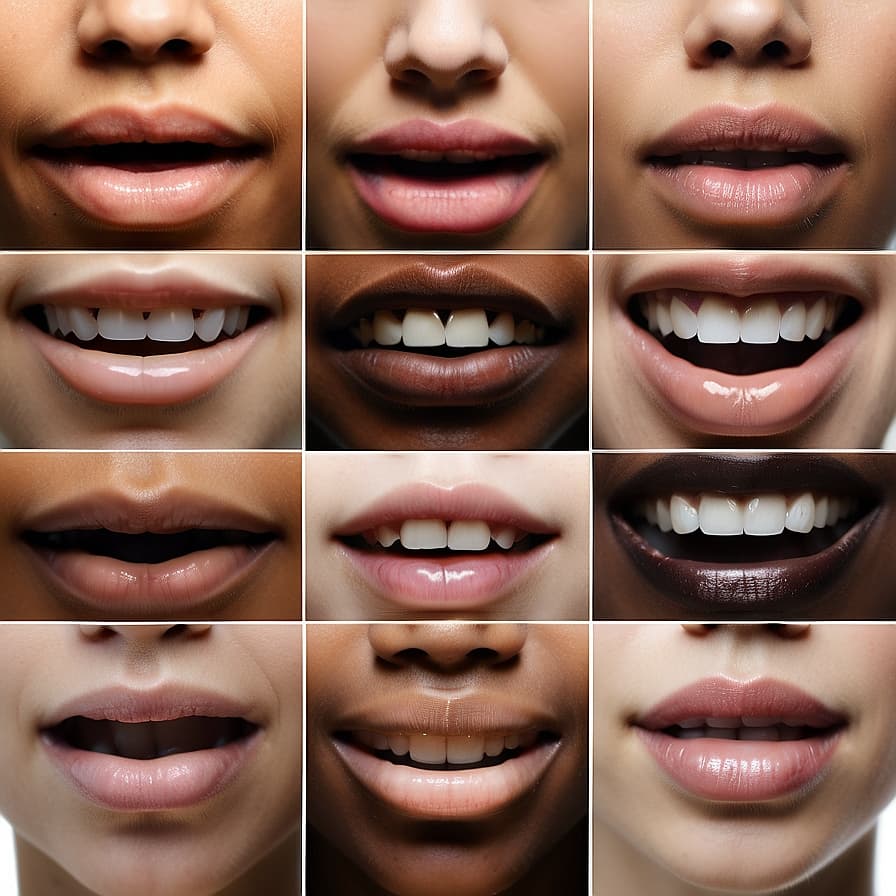
Facial structure is the group's most distinctive register. Cheekbones sit high and laterally broad, jaws are square and well-defined in men, and the chin is firm rather than tapered. Noses tend to be short with a low-to-medium bridge and notably wide alar base — broader than in Fulani neighbors and more rounded at the tip. Lips are full on both upper and lower, with strong vermilion borders. Historically, some older Musgum women bore lip-plate or labret modification, though the practice has largely lapsed in living generations.
Build is tall and lean. Men commonly reach 178–185 cm with long limbs, narrow hips, and wiry musculature suited to fishing and floodplain agriculture; women run slender through the torso with pronounced gluteofemoral fat distribution and a relatively short waist-to-hip ratio. Sub-group variation between the Cameroonian Musgum-Pouss and the Chadian Mulwi-Mbara branches is minor — slightly broader features and shorter stature reported among the eastern Chadian populations, but overlap is heavy.
Data depth
0/100Coverage of image-grounded phenotype observations · drives AI generation diversity
- Sample size
- 0/40· 0 images
- Image quality
- 0/30· 0% high
- Confidence
- 0/20
- Source diversity
- 0/10
- ·No image observations yet
Explore phenotype categories
Structured taxonomy with peer-reviewed scales · 22 anatomical categories





Generate Musgum AI Content
Use this ethnicity's phenotype data to create AI-generated content with accurate physical traits and cultural context.
Open Creator Studio