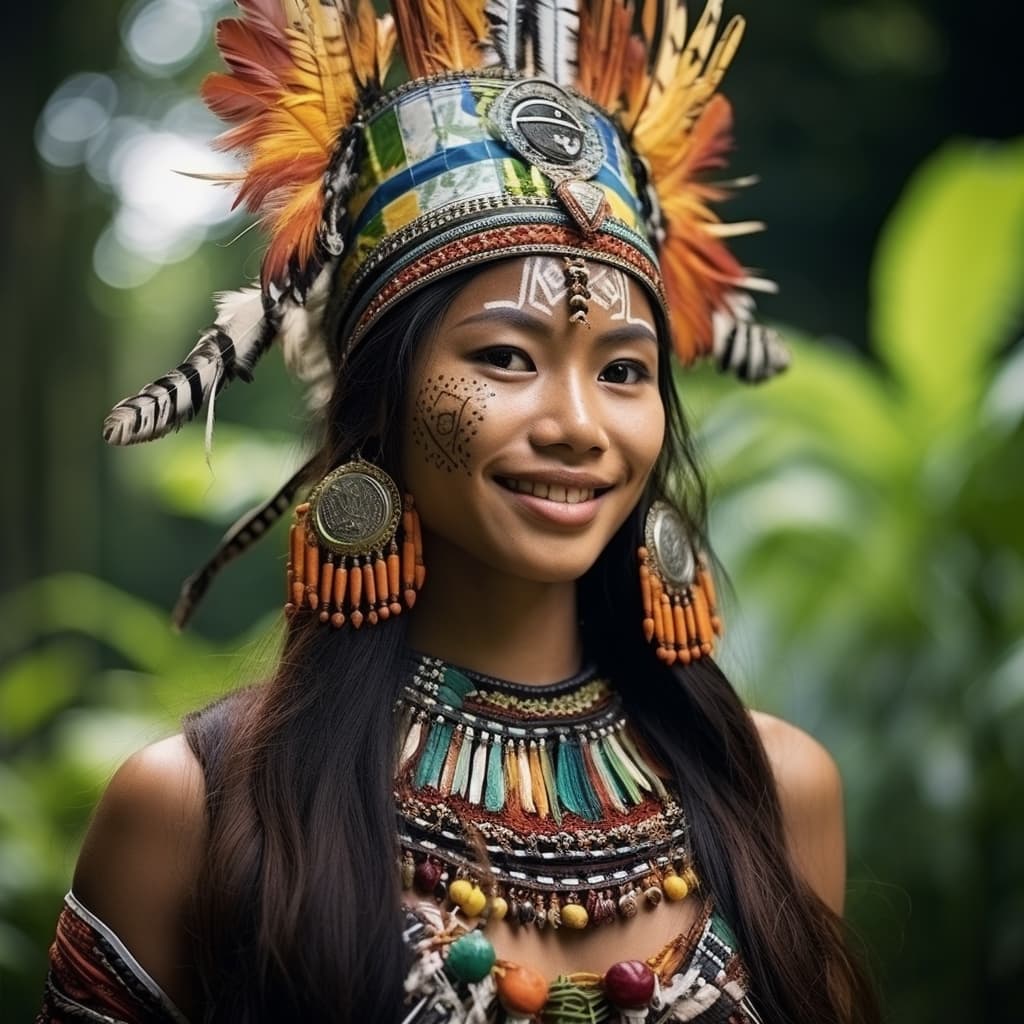
Murut Erotic
Murutia (Malaysia)
Austronesian / Malayo-Polynesian / Murutic
Christianity / Catholicism
Okolod, Keningau, Tagal, Paluan, Selungai, Timugon, Serudung, Sembakung, Tidong, Kalabakan, Bulungan, Bookan
Southeast Asia
About Murut People
The Murut are the highland and riverine people of interior Borneo's northern reaches — a cluster of communities whose name in their own usage simply means "hill people." Their territory straddles the southwest interior of Sabah, the northern tip of Sarawak, and across the modern border into North Kalimantan, a landscape of forested ridges drained by the Padas, Pensiangan, and Sembakung river systems. They were the last of Sabah's major indigenous peoples to renounce headhunting, a fact that shaped both their reputation among neighbors and the cautious pace at which colonial administration reached them. Today they number roughly the low hundreds of thousands, scattered across more than a dozen named sub-groups — Tagal and Timugon being the largest, with Okolod, Paluan, Keningau, Selungai, Serudung, Sembakung, Tidong, Kalabakan, Bulungan, and Bookan filling out a constellation of related but distinct identities.
Their languages form the Murutic branch of the Malayo-Polynesian family, closely tied to the Dusunic tongues of their Kadazan-Dusun neighbors but mutually unintelligible across the wider Murut spread; a Tagal speaker and a Timugon speaker often switch to Malay to be sure of each other. Christianity — predominantly Catholic in the Sabah heartland, with Protestant pockets — arrived through twentieth-century mission work and now coexists with a substratum of older beliefs about ancestor spirits and the omens carried by birds and dreams. Rice agriculture is the economic floor, traditionally hill rice on swiddens though increasingly wet-paddy where terrain allows, supplemented by hunting, river fishing, and the cultivation of tapioca.
Two customs travel further than the rest of Murut life. The first is the lansaran, a sprung bamboo-and-timber dance platform built into the floor of the longhouse — guests bounce in unison, sometimes high enough to pluck a prize suspended from the rafters, and the structure is engineered so the rebound carries them. The second is tapai, a rice wine fermented in tall jars and central to every life-cycle ceremony from welcoming a guest to sealing a marriage; the heirloom jars themselves are inherited property, valued separately from their contents. Marriage among traditional Murut once required substantial bride-wealth in jars, gongs, and buffalo, a system that has softened considerably but still leaves its imprint on how families negotiate alliances. The post-headhunting generations have moved heavily into the Malaysian armed forces and police, where Murut soldiers carry a particular reputation for jungle craft.
Typical Murut Phenotypes
Reference for AI generation — hair, eyes, skin, facial structure, build
The Murut are an indigenous Bornean people of interior Sabah and adjacent North Kalimantan, and their phenotype reflects a long, isolated upland history within the broader Austronesian-speaking population of island Southeast Asia. Hair is uniformly black or near-black, straight to gently wavy, fine to medium in diameter, and typically dense — graying tends to come late. Body and facial hair is sparse on men; full beards are uncommon, and what facial hair grows tends to be thin and patchy.
Eyes are dark brown to near-black, with the epicanthic fold near-universal but generally softer and shallower than in northern East Asian populations — the eye opening reads almond-shaped rather than narrowly slanted, and double eyelids occur in a meaningful minority. Skin sits in the Fitzpatrick III–IV range, leaning toward warm golden-brown and olive undertones; sustained outdoor work in equatorial sun pushes many older men, like the warrior Antanum, toward a deeper IV–V coppery brown, while women who work indoors stay notably lighter.
Facial structure is the most distinctive marker. The Murut face is broad and short relative to coastal Malay populations, with prominent malars, a comparatively flat midface, and a low-bridged nose that is moderately wide at the alae but rarely flared. Lips are medium in fullness — fuller than Han Chinese, less full than Melanesian neighbors farther east. The jaw is squared but not heavy, and the chin is often slightly recessed.
Build is compact and wiry. Murut men typically stand 158–168 cm and women 148–157 cm, with low body fat, narrow hips, and the dense forearm and calf development associated with traditional longhouse and forest life. Sub-group variation across the Tagal, Timugon, Paluan, and Tidong branches is real but subtle — Tidong groups along the coast show some Bugis and Suluk admixture (slightly taller, narrower noses), while inland Tagal and Okolod retain the most concentrated upland features.
Data depth
27/100Coverage of image-grounded phenotype observations · drives AI generation diversity
- Sample size
- 15/40· 7 images
- Image quality
- 7/30· 14% high
- Confidence
- 5/20· mean 0.52
- Source diversity
- 0/10· wikipedia
- ·Small sample (n<10)
- ·Low overall confidence
- ·Mostly low-quality source images
- ·Wikipedia-only source — not population-representative
Observed Distribution — Image Sample
Empirical observations from analyzed photographs · supplementary signal, not population truth
Sample: 7 images analyzed (7 wikipedia). Quality: 1 high, 4 medium, 2 low, 0 very_low. Avg analyzer confidence: 0.52.
Skin tone (Fitzpatrick): II (71%), IV (14%), unclear (14%)
Hair color: black (57%), gray/white (43%)
Hair texture: straight (86%), wavy (14%)
Eye color: green (14%), hazel (14%), blue (14%), unclear (57%)
Epicanthic fold: 0% present, 86% absent, 14% unclear
Caveats: Sample size 7 is small — observed distribution should be treated as suggestive, not definitive. Quality skews toward older or low-resolution photos; phenotype detail may be lossy. Low average analyzer confidence — many photos partially obscured or historical. Sample is 100% Wikipedia notable people — skews toward male, public-life, and modern figures, not population-representative.
Last aggregated: May 7, 2026
Explore phenotype categories
Structured taxonomy with peer-reviewed scales · 22 anatomical categories
Notable Murut People
24 reference figures — sourced from Wikipedia
- Murutic languages — cluster: Okolod (North Kalimantan, Indonesia) Keningau Murut (Keningau Distri…
- Bookan — Northern languages cluster: Bookan (Sabah, Malaysia)
- Tidong languages — cluster: Tidung people (Tarakan, North Kalimantan, Indonesia) Bulungan people…
- Antanum — alternatively spelled as Antanom) (1885–1915) – Murut warrior who fought agai…
- Tanjung Aru — Gounon Lulus (alternatively spelled as Gaunon Lulus) – Murut man who built a …
- Andre Anura — Sabah and Malaysian athlete from Tenom District.
- Lucas Umbul — former senator of Malaysian Senate and Parliament member.
- Ellron Alfred Angin — former state assemblyman for Sook from 2008 to 2025 and former Sabah State mi…
- Rubin Balang — Sabah State Minister for Rural Development.
- Riduan Rubin — Tenom MP and son of Rubin Balang.
- Noorita Sual — Senator of Malaysian Senate and Parliament member.
- Raime Unggi — former member of the Malaysian Parliament.
- Ahmad Koroh — The late Tun Ahmad Koroh (né Thomas Koroh) (1925–1978) – fifth head of state …
- Suffian Koroh — The late Tan Sri Suffian Koroh [ms] (1930–2018) – former Deputy Chief Ministe…
- John Daukom — The late John Daukom (1937–2010) – former Sabah athlete and Malaysian Olympic…
- Crawfurd, John — 1852). A Grammar and Dictionary of the Malay Language: With a Preliminary Dis…
- Bonwick, James — 1873). The Treasury of Languages: A Rudimentary Dictionary of Universal Philo…
- Rutter, Owen — 1 January 1922). British North Borneo : an account of its history, resources,…
- Ooi, K.G. — 2004). Southeast Asia: A Historical Encyclopedia from Angkor Wat to East Timo…
- Reid, Anthony — 2010). Imperial Alchemy: Nationalism and Political Identity in Southeast Asia…
- Woolley, George Cathcart — 2015). The Diaries of George C. Woolley. Department of Sabah Museum. ISBN 978…
- King, Victor T. — ; Druce, Stephen C. (29 October 2020). Origins, History and Social Structure …
- Gin, Ooi Keat — ; King, Victor T. (29 July 2022). Routledge Handbook of Contemporary Brunei. …
- Harrisson, Tom — 1967). "Ethnological Notes on the Muruts of the Sapulut River, Sabah". Journa…
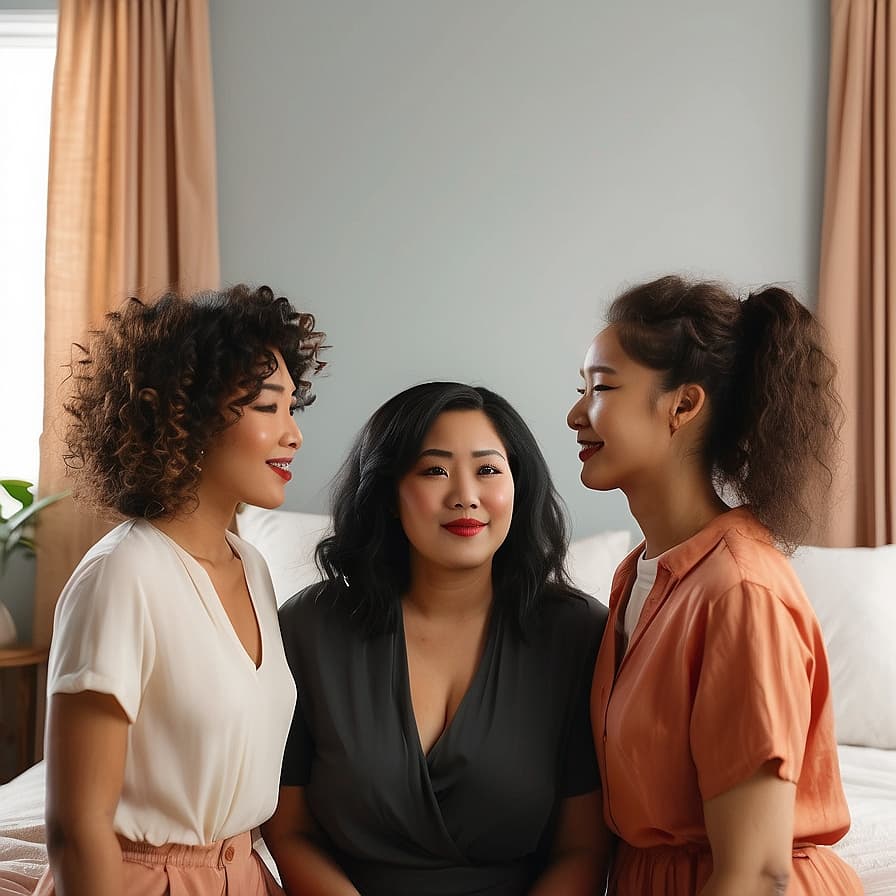

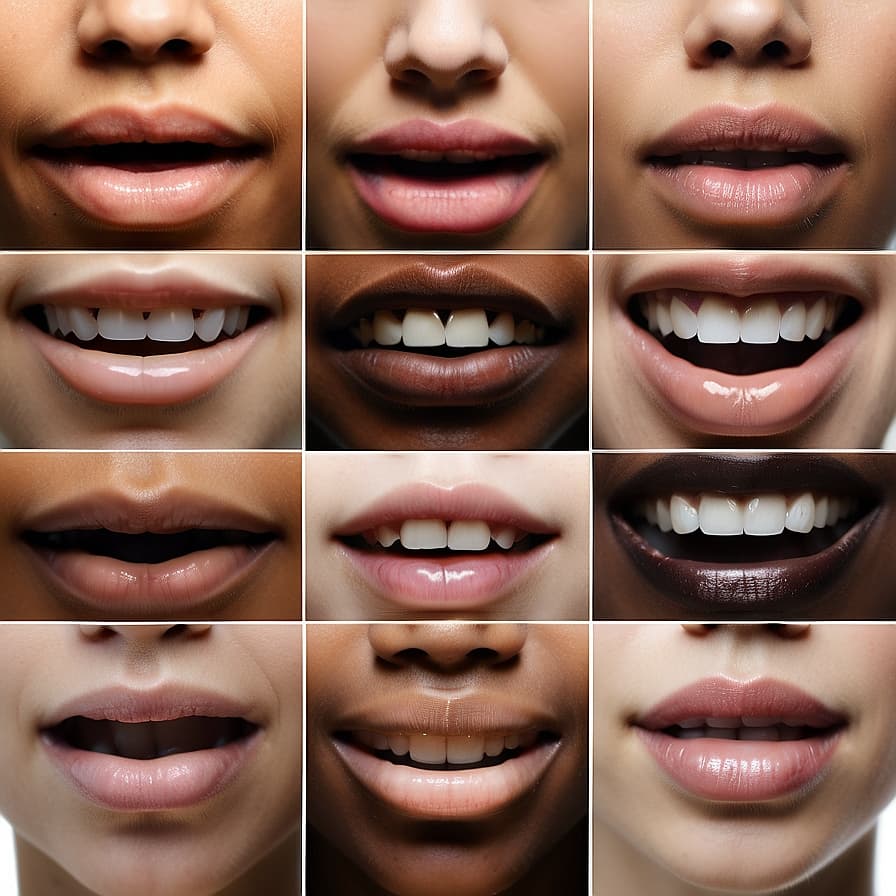
Generate Murut AI Content
Use this ethnicity's phenotype data to create AI-generated content with accurate physical traits and cultural context.
Open Creator Studio