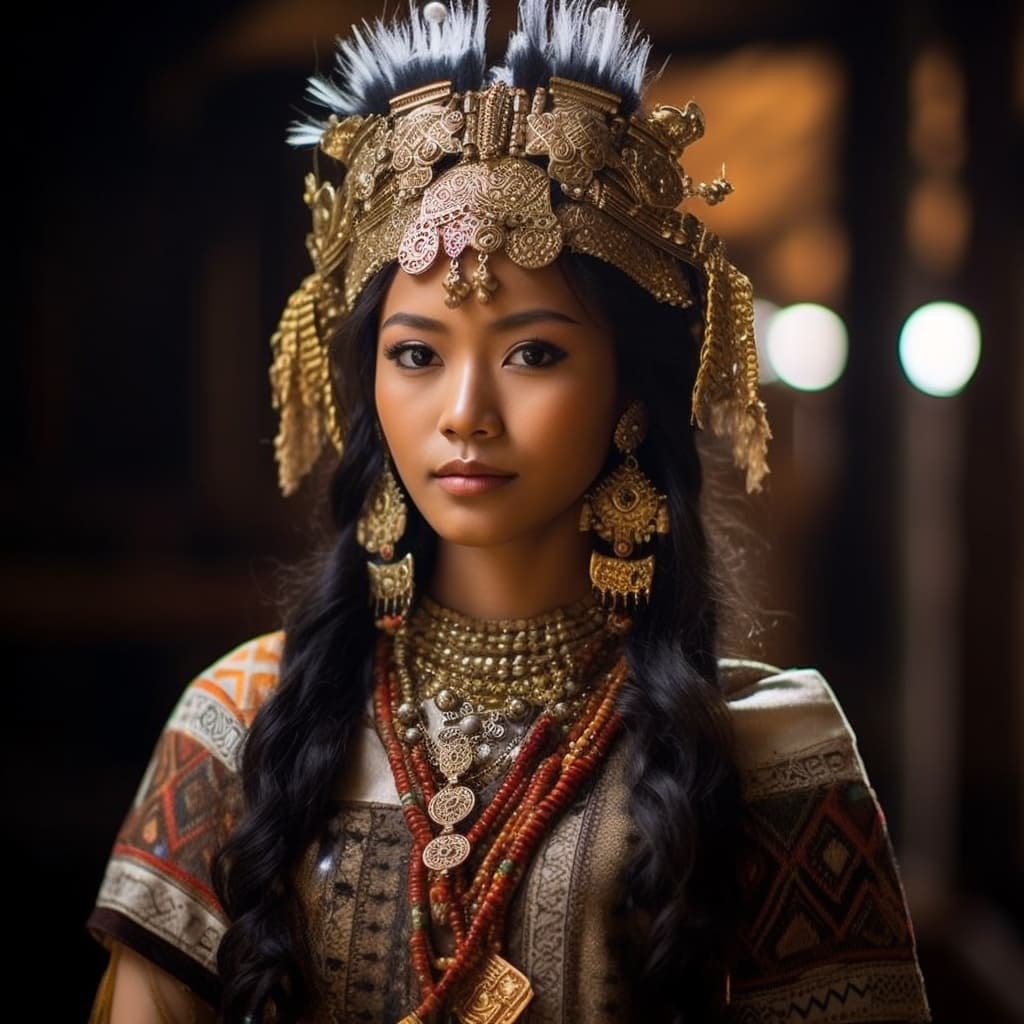
Munanese Erotic
Muna (Indonesia)
Austronesian / Celebic / Munanese
Islam
Southeast Asia
About Munanese People
The Munanese take their name from Muna, a low limestone island off the southeast coast of Sulawesi in Indonesia. The island is dry by Indonesian standards — rolling karst, thin soil, scrubby teak forest planted under Dutch concession — and that dryness has shaped the people on it. Where neighbors built their economies around wet rice and the sea, the Munanese have long worked cassava, maize, and dryland tubers, kept cattle and water buffalo on the open grasslands of the interior, and cut teak for the boatyards of Buton and Makassar. They are reckoned to number somewhere over half a million, most still on Muna and the smaller islands around it, with a steady diaspora through Kendari, Bau-Bau, and the cities of eastern Indonesia.
Their language, also called Munanese or Wuna, belongs to the Muna–Buton branch of the Celebic subgroup of Austronesian — a small, locally coherent family that pulls together the languages of southeast Sulawesi and its offshore islands. It is close enough to Cia-Cia and the Butonese tongues that speakers can often half-follow a neighbor, distant enough that it carries its own literature of riddles, genealogies, and the long sung narratives called kantola. Dialects shift noticeably between the north of the island and the south, and a standardized written form using Latin script is taught alongside Indonesian in local schools.
Islam arrived through the Sultanate of Buton, which absorbed Muna as a vassal polity in the sixteenth century and shaped much of its political memory. Munanese practice today is Sunni and Shafi'i, threaded through with older custom: the life-cycle rituals around birth, circumcision, and the female coming-of-age seclusion known as karia'a are observed as Islamic obligations and as ancestral inheritance at once, with neither side of that braid treated as the lesser. The traditional ruler, the Raja of Muna, lost political authority under the Indonesian republic but the title and its ceremonial functions persist, and the noble lineages still figure in marriage negotiations and adat councils. Horse-riding remains a point of identity — Muna is one of the few places in eastern Indonesia where small island ponies are still bred and raced — and the prehistoric cave paintings at Liang Kabori, ochre stick figures of hunters and horsemen on the limestone walls, are claimed locally as direct ancestors rather than as archaeology.
Typical Munanese Phenotypes
Reference for AI generation — hair, eyes, skin, facial structure, build
The Munanese are an Austronesian people of Muna Island off Southeast Sulawesi, and their phenotype sits in the broader Celebic cluster — recognizably Indonesian but slightly distinct from the Javanese or Balinese forms more familiar to outsiders. Hair is overwhelmingly black or very dark brown, with a faint reddish-brown cast appearing on sun-exposed lengths in fishing and farming families. Texture skews straight to gently wavy, coarser and thicker than East Asian hair but finer than the looser curls common further east in Maluku and Papua. Premature greying in the late thirties is unremarkable.
Eyes are dark brown, ranging from near-black to a warm coffee. The epicanthic fold is present in most but not universal — typically lighter and less pronounced than among Han Chinese, often forming a soft inner crease rather than a full hooded lid. Eye shape is moderately almond, set fairly level, with thick straight lashes.
Skin tone clusters in Fitzpatrick III–V — light olive to a deep warm brown — with golden and coppery undertones rather than the cooler beige of mainland Southeast Asian populations. Coastal Munanese, historically tied to seafaring and salt production, run noticeably darker than inland farmers from the limestone uplands. Sun does not freckle this skin; it deepens evenly.
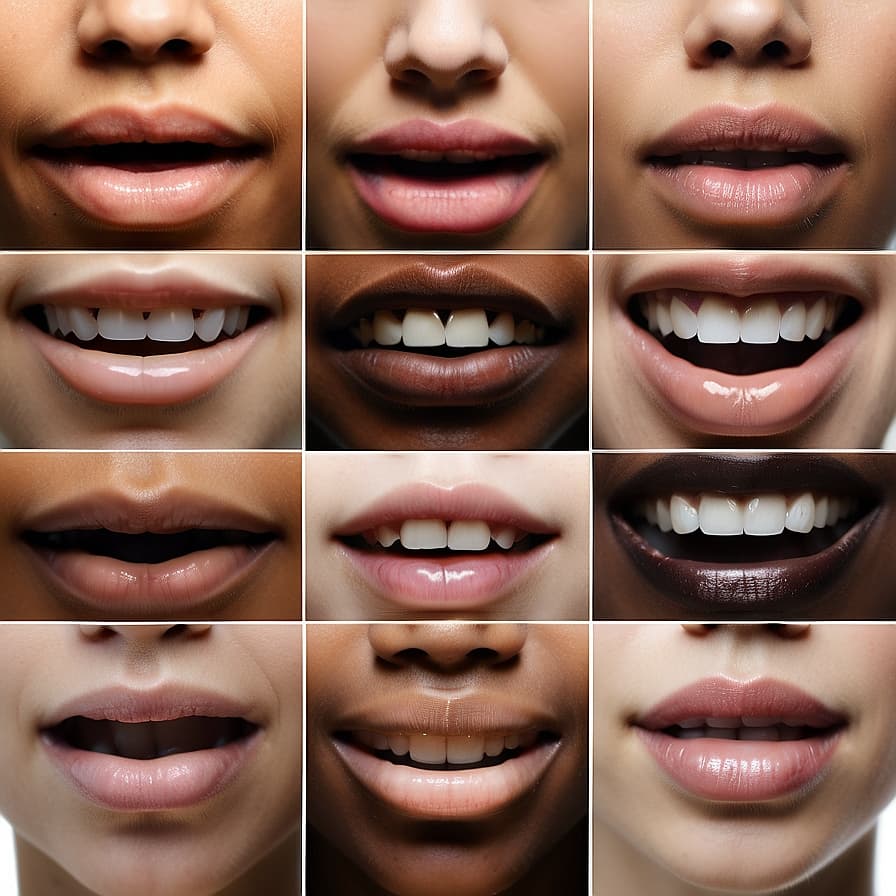
Facial structure tends toward a rounded oval with full medial cheeks and a softly defined jaw. Noses are short to medium with a low-to-moderate bridge and moderate alar width — broader than Javanese, narrower than Melanesian. Lips are medium-full and well-defined, the lower lip usually fuller than the upper. Brows are dark and naturally arched, not heavy.
Build is compact: average male stature roughly 162–168 cm, female around 150–156 cm, among the shorter ranges in Indonesia. Frames are small-boned and wiry in younger adults, with a tendency toward soft central adiposity in middle age. Distinct from larger Indonesian groups, the Munanese profile reads as smaller-framed, warmer-toned, and slightly more Oceanic-leaning in the eyes and lips than Java-centered phenotypes.
Data depth
0/100Coverage of image-grounded phenotype observations · drives AI generation diversity
- Sample size
- 0/40· 0 images
- Image quality
- 0/30· 0% high
- Confidence
- 0/20
- Source diversity
- 0/10
- ·No image observations yet
Explore phenotype categories
Structured taxonomy with peer-reviewed scales · 22 anatomical categories


Generate Munanese AI Content
Use this ethnicity's phenotype data to create AI-generated content with accurate physical traits and cultural context.
Open Creator Studio