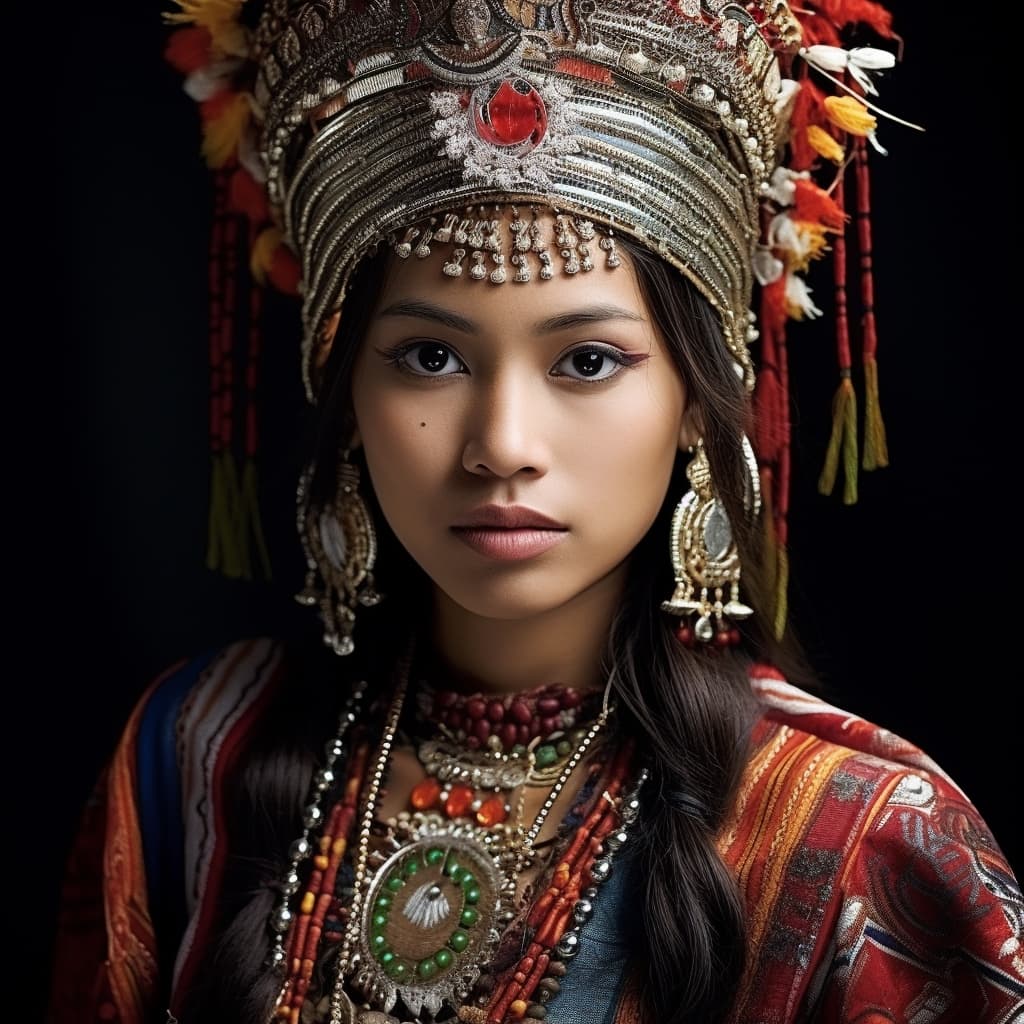
Mandarese Erotic
West Sulawesi (Indonesia)
Austronesian / South Sulawesi / Mandar
Islam
Southeast Asia
About Mandarese People
The Mandarese are the people of West Sulawesi's coastal strip, the long curve of shoreline running north from the Makassar Strait toward the mountainous interior of central Sulawesi. They are seafarers first and farmers second, and the distinction matters: Mandar identity is bound up with the boat-building yards of Pambusuang and the fishing fleets that work the deep water off the Majene coast. The sandeq — a slender outrigger sailing canoe with a narrow hull and an enormous triangular sail — is theirs, and Mandar crews still race them between Mamuju and Makassar in an annual regatta that doubles as a working trial of a craft they actually use. Tuna fishing on flying-fish-egg rafts, called roppo, is another Mandar specialty, and the techniques are old enough that you can read them in nineteenth-century colonial reports.
Their language sits inside the South Sulawesi branch of Austronesian, alongside Buginese, Makassarese, and Toraja, and a Buginese speaker and a Mandar speaker can usually feel that the languages are cousins without being able to follow each other in conversation. The historical political units were the small confederated kingdoms of the Pitu Ba'bana Binanga (the seven coastal realms) and the Pitu Ulunna Salu (the seven upriver realms), bound together by an old federative pact that gave the Mandar coast a distinct political identity well before the Dutch arrived. That history is why Mandar people will correct you, sometimes pointedly, if you fold them into the Bugis or treat West Sulawesi as a province of Makassar's hinterland — the province itself was only carved out of South Sulawesi in 2004, and the assertion of separateness has weight behind it.
Islam, brought by traders from the Makassarese and Bugis kingdoms in the seventeenth century, is the near-universal religion, and it sits comfortably alongside an older substrate of ancestor veneration and ritual specialists who handle everything from boat launchings to the inland rice cycle. Weddings still draw on the layered ceremonial of the coastal aristocracies, with the bride's family traditionally setting a bridewealth that is publicly negotiated rather than quietly arranged. Silk weaving — the sarung sutera Mandar, with its tight checked patterns in deep colors — is a household craft in some villages and a serious cottage industry in others. Most Mandar still live within sight of the water; the diaspora that exists is mostly in Makassar, Kalimantan, and the fishing ports of eastern Indonesia, and it tends to come home.
Typical Mandarese Phenotypes
Reference for AI generation — hair, eyes, skin, facial structure, build
The Mandarese are an Austronesian seafaring people of West Sulawesi, and their phenotype sits within the South Sulawesi cluster alongside Bugis, Makassarese, and Toraja — closer to coastal Malay populations than to the Melanesian-influenced groups of eastern Indonesia. Hair is almost uniformly black, straight to gently wavy, with a coarse-to-medium shaft; loose curl appears occasionally but tight coil is rare. Generations of life on fishing boats and salt air leave many Mandarese with sun-lightened reddish-brown ends against darker roots, particularly visible in fishermen and women who work the drying racks.
Eyes are dark brown to near-black. The epicanthic fold is present in most but is typically softer and less pronounced than in mainland East Asian populations — often a partial inner fold rather than a full sweep, with the outer corner sitting level or only slightly elevated. Eye shape tends toward almond with moderate width. Skin spans Fitzpatrick III to V, with a warm olive-to-bronze undertone; coastal Mandarese, especially the boatbuilding and seafaring families of Majene and Polewali, often run a full shade or two darker than inland farmers around Mamasa, who skew lighter and slightly cooler.
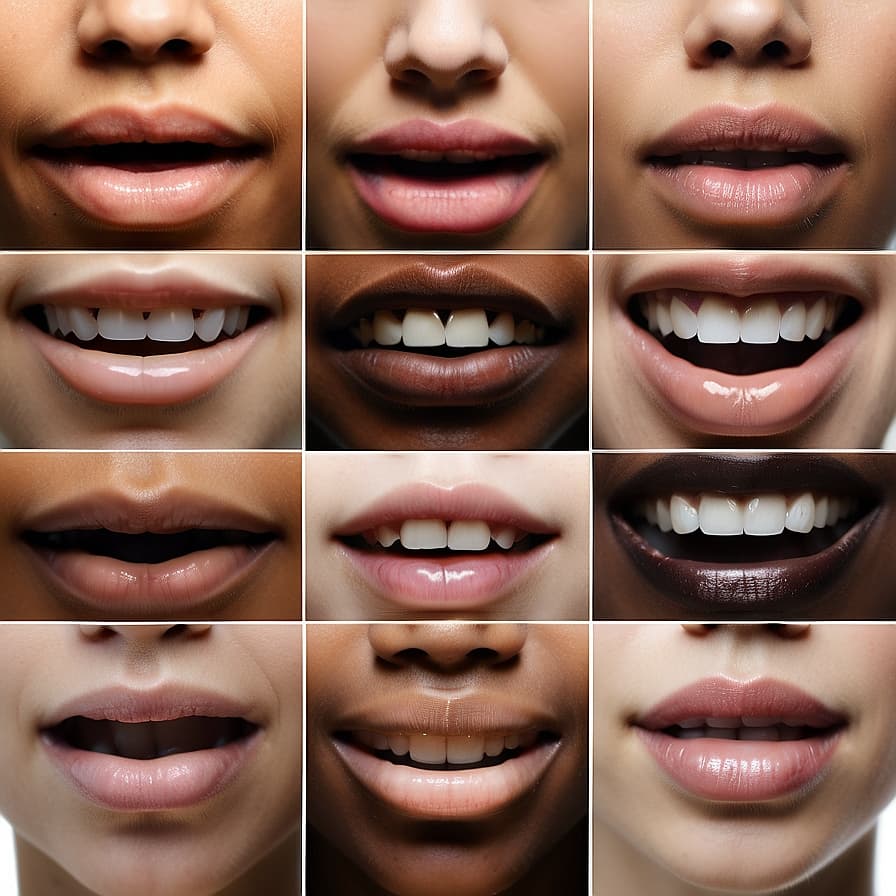
Facial structure is moderately broad through the cheekbones with a softer jaw than is typical of Toraja highlanders. Noses are medium in length with a low-to-moderate bridge and modestly wide alae — rarely sharp, rarely flat. Lips are medium-full and well-defined, the lower lip usually fuller than the upper. The most consistent marker is a compact, durable build: stature is short by global standards — men commonly 158–168 cm, women 148–158 cm — with narrow shoulders, a short torso, and proportionally strong forearms and calves shaped by generations of paddling, sail-handling, and load-carrying. Body fat distribution is even; both lean and softly rounded builds are common, and pronounced muscularity in older fishermen is unremarkable.
Data depth
0/100Coverage of image-grounded phenotype observations · drives AI generation diversity
- Sample size
- 0/40· 0 images
- Image quality
- 0/30· 0% high
- Confidence
- 0/20
- Source diversity
- 0/10
- ·No image observations yet
Explore phenotype categories
Structured taxonomy with peer-reviewed scales · 22 anatomical categories


Generate Mandarese AI Content
Use this ethnicity's phenotype data to create AI-generated content with accurate physical traits and cultural context.
Open Creator Studio