Magars Erotic
Nepal
Sino-Tibetan / Magar
Hinduism, Buddhism
Ale, Gharti, Chantayal, Saru, Pun
Southern Asia
About Magars People
The Magars are one of Nepal's largest indigenous nationalities, concentrated across the middle hills that fold between the Terai plain and the high Himalaya — roughly the country's central and western midlands, with deepest historical density in the districts around Palpa, Tanahun, Syangja, Baglung, Myagdi and Rolpa. They are hill people in the literal sense: their settlements sit at the elevations where rice gives way to millet and maize, where a household's wealth is measured partly in terraced fields and partly in goats. The group is internally varied enough that older ethnographies sometimes treat the branches — Ale, Gharti, Chantyal, Saru, Pun — as near-distinct communities, each with its own clan histories, marriage circles, and in some cases its own language entirely. Chantyal in particular has long been studied as a separate Magaric tongue, not a dialect.
The Magar language sits inside the Sino-Tibetan family, in a small Magaric branch alongside Kham and Chantyal, which makes it a cousin rather than a sibling of Tibetan and unrelated to the Indo-Aryan Nepali that dominates national life. That linguistic position matters, because it places the Magars among the older strata of Himalayan settlement, predating the eastward spread of Khas-speaking Hindu populations from the medieval Karnali kingdoms. Many western Magars, especially the Kham Magars of Rukum and Rolpa, retain languages and ritual practices markedly different from their eastern cousins, who have absorbed more from surrounding Bahun-Chhetri Hindu society.
Religion runs along the same fault. Eastern Magars are largely Hindu in observance, with household deities, lineage shrines, and the standard calendar of Dasain and Tihar; western groups lean Buddhist, often with a strong shamanic substrate that neither tradition fully displaces. The village shaman — the jhakri or rama, depending on locality — is still consulted for illness, spirit affliction, and the propitiation of land deities, and this layer is arguably the oldest and most distinctively Magar element of the religious life.
Historically the Magars were central to the rise of the Gorkha state in the eighteenth century; Magar soldiers formed the backbone of Prithvi Narayan Shah's unifying campaigns and went on to anchor the Gurkha regiments of the British and later Indian armies, a martial reputation that still shapes labor migration patterns and remittance economies in Magar villages today. In the late twentieth century, the western Magar belt also became the heartland of the Maoist insurgency, a fact that has reshaped local politics in ways still being worked out.
Typical Magars Phenotypes
Reference for AI generation — hair, eyes, skin, facial structure, build
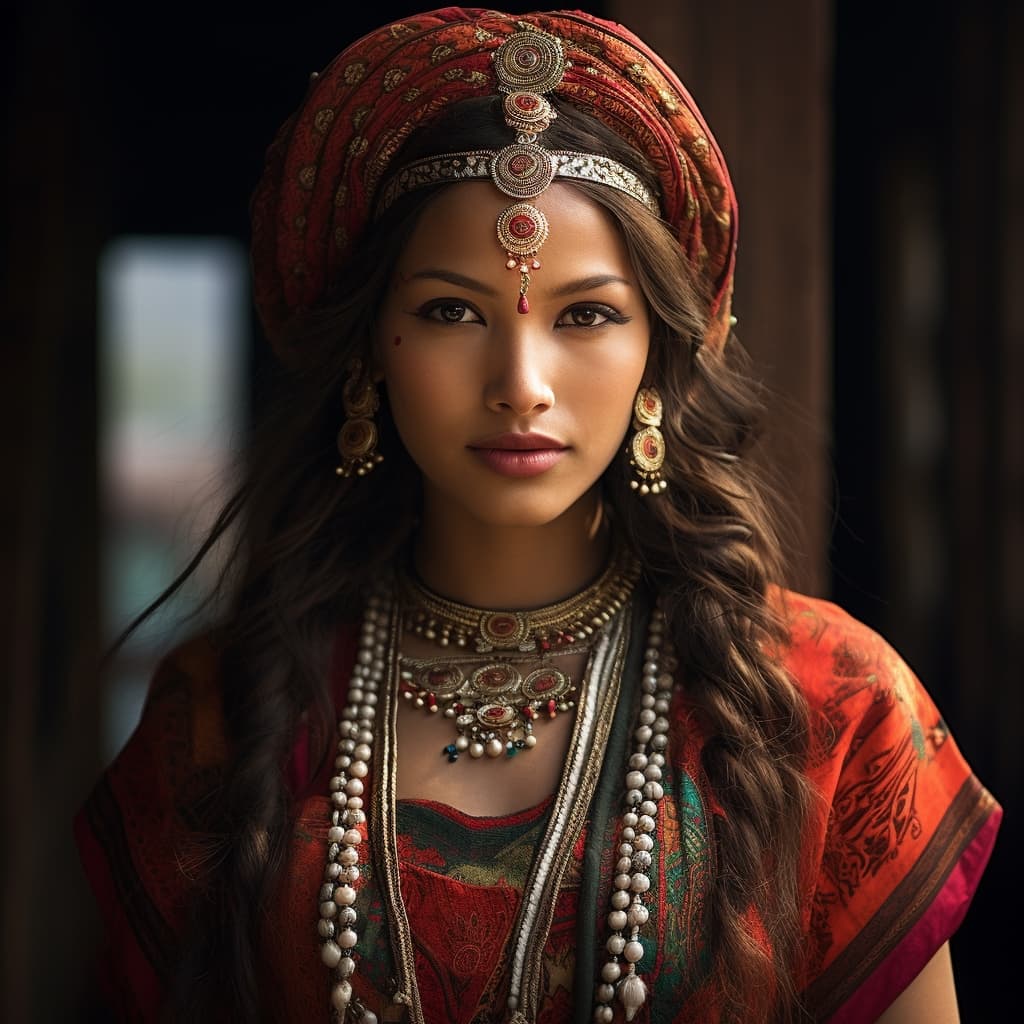
Magars sit at the Tibeto-Burman end of Nepal's ethnic gradient, and the phenotype reflects that lineage rather than the Indo-Aryan look of Madhesi or Bahun-Chhetri groups. The signature combination is a broad, low-set face with prominent malar bones, a relatively short and slightly flattened nasal bridge with moderate alar width, and a clear epicanthic fold on most adults — usually a pronounced inner fold rather than the deeper Mongolic single-lid form seen further north. Eyes run almond-shaped and set on a slight upward slant; iris color is dark brown to near-black, with the rare lighter brown turning up in older Pun and Gharti lineages from the higher Myagdi and Rolpa valleys.
Hair is uniformly black, straight to gently wavy, coarse-textured, and slow to grey — facial and body hair stays sparse on men, and beards are typically thin and patchy rather than full. Skin tone sits in Fitzpatrick III–IV: a warm wheat-to-light-brown base with yellow-olive undertones, tanning easily into a deeper bronze among hill farmers and Gurkha-soldier families with year-round sun exposure. You rarely see the cool pink undertone common in Pahari Brahmin populations.
Lips are medium-full and well-defined, the lower lip usually slightly fuller than the upper. Jawlines are squared rather than tapered; chins are short and rounded. Build is the most distinctive feature — Magars are famously compact and powerfully proportioned, men typically 5'2"–5'5", women 4'10"–5'1", with deep chests, short strong legs, and dense musculature suited to the terraced mid-hills. This stocky, high-altitude-adapted physique is the reason Magars and their Gurung neighbors have dominated Gurkha recruitment for two centuries, and figures like Nirmal Purja and Tul Bahadur Pun show the type clearly.
Sub-group variation is mild. Pun and Gharti Magars from the western Dhaulagiri foothills tend toward slightly lighter skin and finer features; Ale and Thapa lines from the central hills show heavier cheekbone projection and a fuller midface. Saru Magars fall between the two.
Data depth
51/100Coverage of image-grounded phenotype observations · drives AI generation diversity
- Sample size
- 26/40· 20 images
- Image quality
- 15/30· 30% high
- Confidence
- 10/20· mean 0.70
- Source diversity
- 0/10· wikipedia
- ·Modest sample (n<25)
- ·Wikipedia-only source — not population-representative
Observed Distribution — Image Sample
Empirical observations from analyzed photographs · supplementary signal, not population truth
Sample: 20 images analyzed (20 wikipedia). Quality: 6 high, 8 medium, 6 low, 0 very_low. Avg analyzer confidence: 0.70.
Skin tone (Fitzpatrick): III (10%), IV (80%), V (10%)
Hair color: black (80%), gray/white (20%)
Hair texture: straight (50%), coily (5%), covered (45%)
Eye color: dark brown (95%), unclear (5%)
Epicanthic fold: 65% present, 30% absent, 5% unclear
Caveats: Sample size 20 is modest — secondary patterns may not be reliable. Sample is 100% Wikipedia notable people — skews toward male, public-life, and modern figures, not population-representative.
Last aggregated: May 7, 2026
Explore phenotype categories
Structured taxonomy with peer-reviewed scales · 22 anatomical categories
Notable Magars People
28 reference figures — sourced from Wikipedia
- Ram Shah — Saint Lakhan Thapa (17th century), a spiritually famed associate and adviser …
- Kaji Biraj Thapa Magar of Gorkha — the 'King Maker'. From the list of people with title Kaji.
- Biraj Thapa Magar — Kaji Biraj Thapa Magar, the first Chief of Gorkhali Army, 18th century.
- Jayant Rana Magar — Kaji Jayant Rana Magar (Kaji of Gorkha and Kantipur) who commanded one battle…
- Sarbajit Rana Magar — Kaji Sarbajit Rana Magar, Nepalese Army Chief and prominent politician, 18th …
- Lakhan Thapa Magar — Martyr Lakhan Thapa Magar (19th century), the first martyr of Nepal.
- Abhiman Singh Rana Magar — Kaji Abhiman Singh Rana Magar, Nepalese Army Chief, 19th century. He was the …
- Master Mitrasen Thapa — famous Nepali folk singer, social worker, resident of Bhagsu/Dharmasala, (Ind…
- Giri Prasad Burathoki — only Bada Hakim from Magars, Defense Minister, Honorary Major General of Nepa…
- Narayan Singh Pun — a former cabinet minister in Nepal, former King's trusted minister & chief ne…
- Balaram Gharti Magar — held different ministries for 11 times including Defense Minister of Nepal Go…
- Gore Bahadur Khapangi — former minister and founding leader of Prajatantrik Janamukti Party.
- Rom Bahadur Thapa — First Inspector General of Nepal Police from Magar ethnic group.
- Onsari Gharti Magar — the first female speaker of Parliament of Nepal.
- Ram Bahadur Thapa — Badal, Home minister of Nepal, leader Nepal Communist Party.
- Barsaman Pun — First finance minister of Nepal from Magar community. He is from Rolpa district.
- Nanda Bahadur Pun — First vice president of federal republic Nepal, former chief commander of the…
- Tham Maya Thapa — Women and Children Minister.
- Ram Kumari Jhakri — a Nepalese politician, member of parliament and former president of All Nepal…
- Kuber Singh Rana — Ex IGP Chief of Nepal Police from Palpa.
- Mahabir Pun — Magsaysay Award winner for extending wireless technologies in rural parts of …
- Dipprasad Pun — CGC) Conspicuous Gallantry Cross Winner During War in Afghanistan.
- Tul Bahadur Pun — Honorary Lieutenant Victoria Cross Winner. Grandfather Of Dipprasad Pun. He i…
- Arun Thapa — popular Nepali singer.
- Teriya Magar — Nepali dancer, winner of Dance India Dance Little Masters 2014
- Nirmal Purja — famous mountaineer and Ex-British Gurkha soldier, (SBS) special forces Royal …
- Laure (Nepalese rapper) Ashish Rana Magar — a Nepalese rapper, actor and Television personality popularly known by his st…
- Prem Bahadur Ale — ex-minister of Forest and Environment. Minister of Culture, Tourism and Civil…
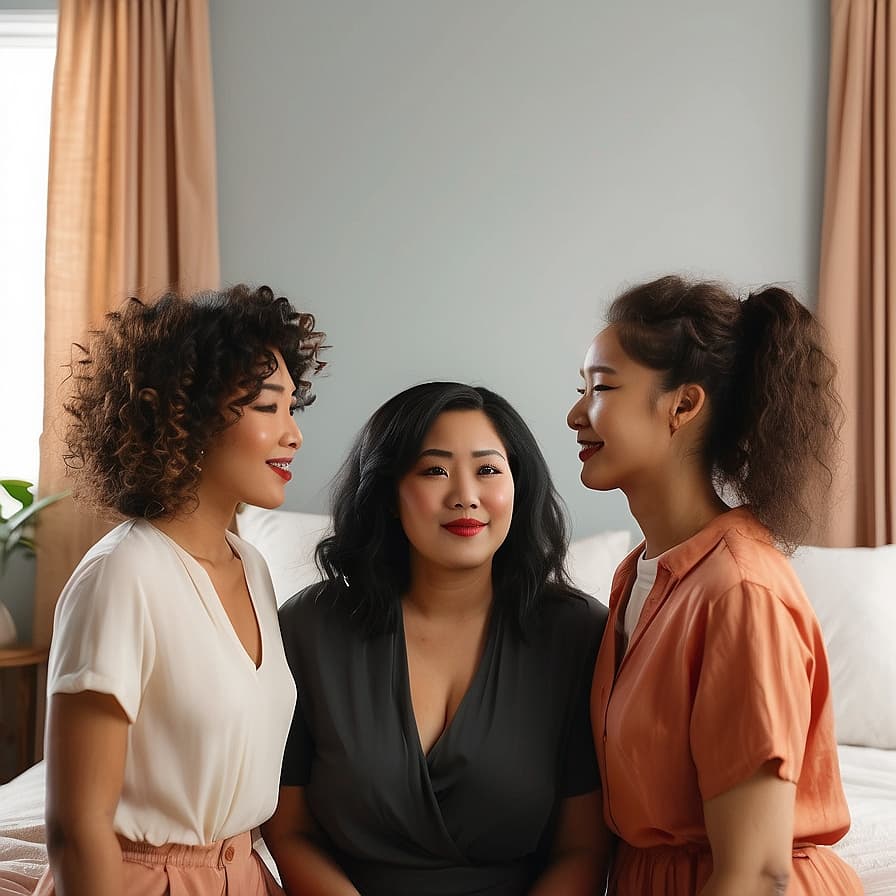

Generate Magars AI Content
Use this ethnicity's phenotype data to create AI-generated content with accurate physical traits and cultural context.
Open Creator Studio