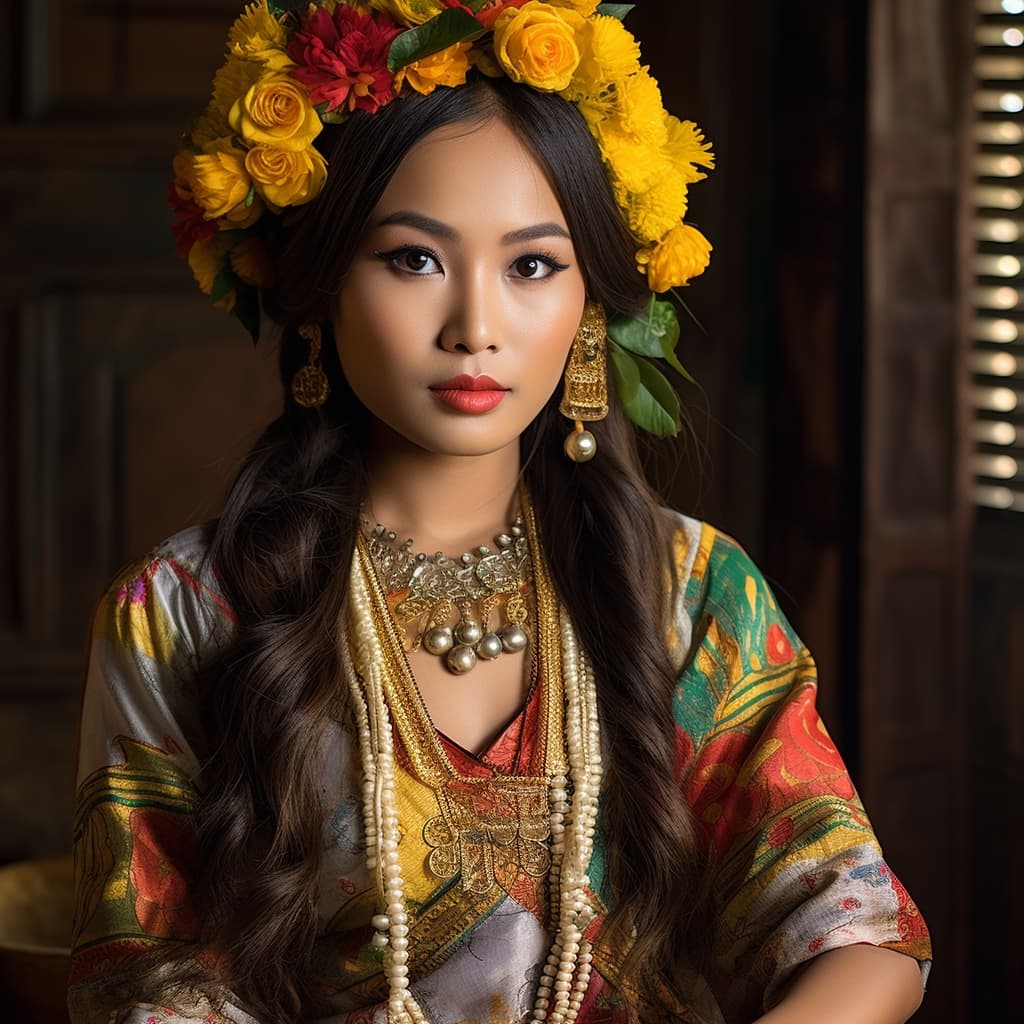
Khmer Erotic
Cambodia, Mekong Delta, Isan
Austroasiatic / Khmer
Buddhism / Theravada Buddhism
Northern Khmer people, Khmer Krom and Significant populations in the United States
Southeast Asia
About Khmer People
The Khmer are the people whose ancestors built Angkor — and that fact still does a lot of work in how Khmer see themselves, even a thousand years on. The empire that ran from roughly the ninth to the fifteenth century left more than ruins; it left a template for what Khmer civilization looks like, and modern Cambodia, where Khmer make up the overwhelming majority, treats Angkor less as a tourist site than as a living national center of gravity. The flag carries it. Children learn to draw it before they can place it on a map.
Their homeland is the basin of the Tonle Sap and the lower Mekong, a wet, flat country whose annual flood reversal — the lake that swells and shrinks with the monsoon — shaped the rice agriculture, fisheries, and stilt-house architecture that still define rural life. Khmer territory extends past the modern border: the Khmer Krom are the indigenous Khmer of the Mekong Delta, in what is now southern Vietnam, lands held by Cambodia until the eighteenth century. The Northern Khmer, sometimes called Khmer Surin, live across the Dangrek mountains in the Isan provinces of Thailand and speak a dialect that diverged centuries ago. A sizable diaspora settled in the United States after 1975, especially in Long Beach, Lowell, and the Twin Cities — refugee communities formed by the Khmer Rouge years and the camps that followed.
The Khmer language belongs to the Austroasiatic family, making it a cousin of Vietnamese and Mon rather than of the Thai and Lao spoken by immediate neighbors — a linguistic outlier in a Tai-dominated region. It is non-tonal, which sets it apart audibly, and is written in a script descended from south Indian Pallava, the same root that produced Thai and Lao writing. The vocabulary is layered: a Khmer substrate, then heavy borrowing from Sanskrit and Pali through Hinduism and later Theravada Buddhism, with French loanwords from the colonial period sitting on top.
Theravada Buddhism arrived in earnest around the thirteenth century, replacing the Hindu-Mahayana synthesis of the Angkor court, and it remains the working religion — the saffron-robed monk on the morning alms round is a fixture of village mornings, not a postcard. Older spirit beliefs persist alongside it without much friction; the neak ta, ancestral land spirits, get offerings at the same households that send sons to the monastery. Pchum Ben, the fifteen-day festival when the dead are believed to walk among the living and must be fed, is observed with a seriousness that outsiders sometimes underestimate.
Typical Khmer Phenotypes
Reference for AI generation — hair, eyes, skin, facial structure, build
Khmer phenotype sits visibly apart from neighboring Thai and Vietnamese populations, reflecting deeper Austroasiatic roots and South Asian admixture from the Angkor-era Indianized period. The build is generally compact and wiry — adult male stature averages around 162–165 cm, female around 152–155 cm — with relatively long torsos, shorter limbs, and a tendency toward lean, sinewy musculature rather than the slighter frames common further north in mainland Southeast Asia. Body fat distribution tends to stay even into middle age, with limited gluteofemoral accumulation.
Hair is almost universally black or near-black, coarse to medium in diameter, and predominantly straight, though a meaningful minority — more visible among rural populations in Kampong Thom, Kampot, and the Cardamoms — show loose waves or gentle curl, a feature Khmer themselves often associate with older indigenous lineage. Premature graying is uncommon. Eyes range from dark brown to near-black; the epicanthic fold is present but typically softer and less pronounced than in Han Chinese or Korean populations, and a noticeable share of Khmer have only a partial fold or none at all, producing the rounder, more open eye shape often noted in classical Angkor sculpture.
Skin tones run wider than the East Asian range — Fitzpatrick III through V is normal, with golden-brown and warm olive undertones dominant, and genuinely dark brown skin common in rural and southern populations. Khmer are, on average, the darkest-skinned of the major mainland Southeast Asian ethnicities, a fact reflected in local colorism and beauty standards. Facial structure leans toward broad, rounded cheekbones, a relatively flat midface, full lips (upper and lower in similar proportion), and noses that are short with a low-to-medium bridge and moderately wide alae — distinct from the narrower Sino-Tibetan nose form.
Khmer Krom in the Mekong Delta show subtle Vietnamese admixture — slightly lighter skin and more pronounced epicanthic folds — while Northern Khmer in Isan trend toward the broader Lao-Khmer phenotype with somewhat lighter average skin tone.
Data depth
0/100Coverage of image-grounded phenotype observations · drives AI generation diversity
- Sample size
- 0/40· 0 images
- Image quality
- 0/30· 0% high
- Confidence
- 0/20
- Source diversity
- 0/10
- ·No image observations yet
Explore phenotype categories
Structured taxonomy with peer-reviewed scales · 22 anatomical categories
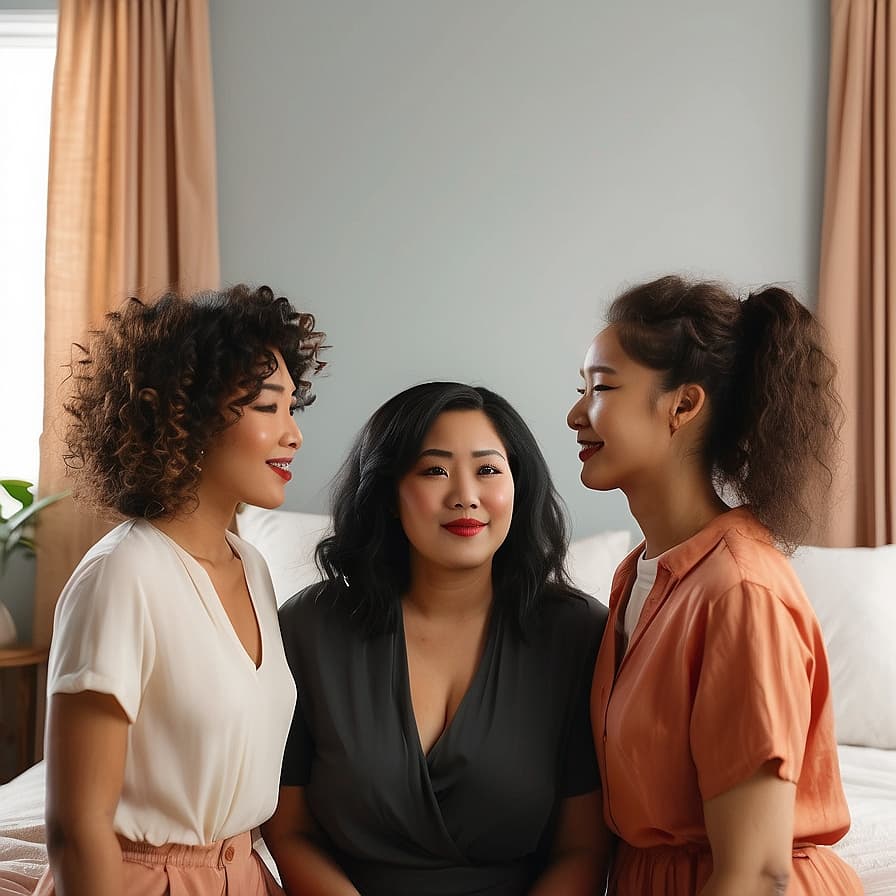


Generate Khmer AI Content
Use this ethnicity's phenotype data to create AI-generated content with accurate physical traits and cultural context.
Open Creator Studio