Karen Erotic
Karen State, Kayah State, Pa'O Self-Administered Zone (Myanmar), Thailand
Sino-Tibetan / Karenic
Buddhism / Theravada Buddhism
S'gaw Karen, Pwo Karen, Karenni (including Kayan), Pa'O
Southern Asia
About Karen People
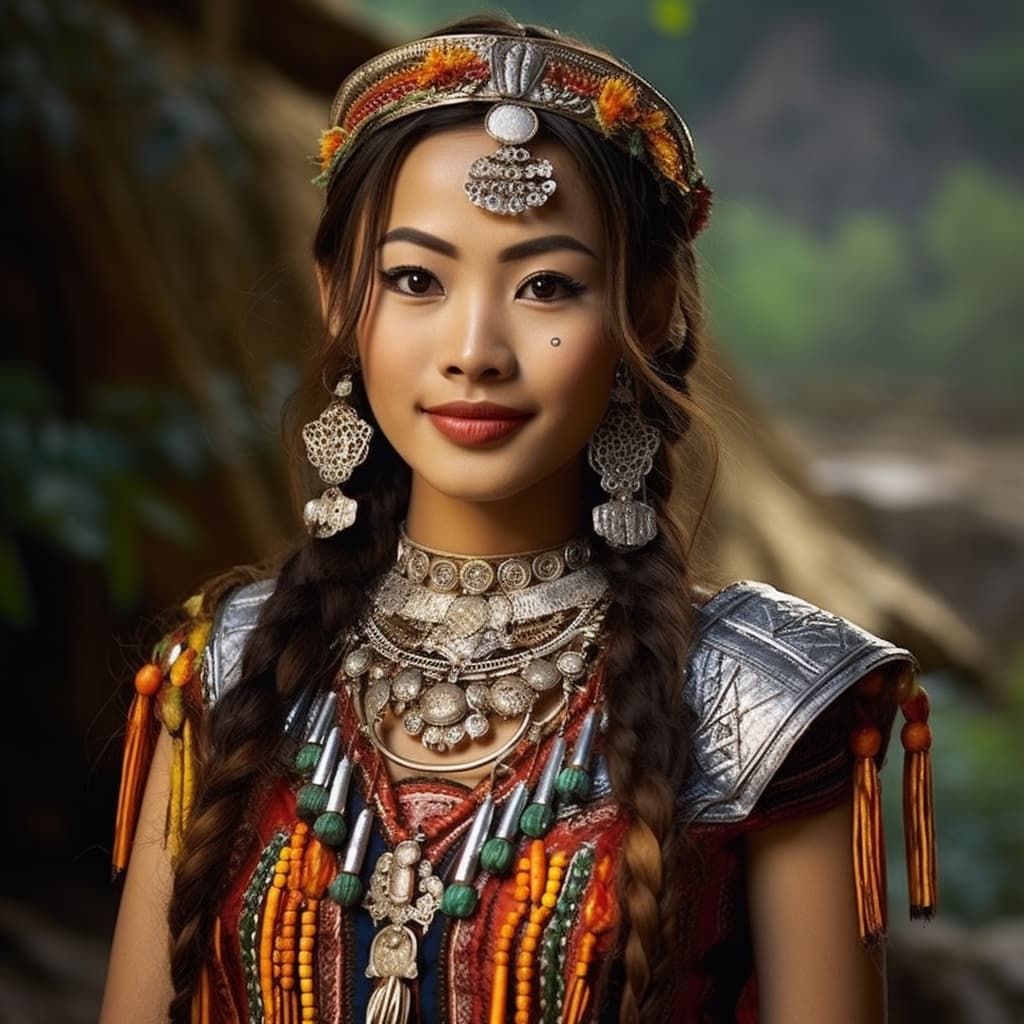
The Karen are not one people in the tidy sense the name suggests. The label gathers together a cluster of related peoples — S'gaw and Pwo Karen on the central plateaus and the Irrawaddy delta, the Karenni (sometimes called Red Karen) in the hills further east, the Kayan whose women are known abroad for the brass coils that lengthen the neck, and the Pa'O in their dark turbans further north. They share a Karenic branch of the Sino-Tibetan family, but the languages within it diverge enough that a S'gaw speaker and a Pwo speaker often switch to Burmese to handle anything complicated. What ties the branches together is less a single tongue than a long history of living in the rough country between the Burmese lowlands and the Thai hills, and a long history of being squeezed by both.
The homeland runs along the eastern spine of Myanmar — Karen State and Kayah State, the Pa'O zone in southern Shan, and across the border into the Thai provinces where Karen villages have existed for centuries. It is upland country, terraced where it can be terraced, forested where it cannot, and the older economy turned on swidden rice, betel, and the slow rhythms of forest stewardship. Karen elders still speak of the land in custodial terms rather than ownership ones; the kaw, the ancestral territory of a village cluster, is something held in trust.
Religion does not sort cleanly along sub-group lines. Most Karen are Theravada Buddhists, often layered over older animist practice — a household will keep the Buddhist precepts and still feed the lord of the water, the lord of the field. A substantial Christian minority took root after nineteenth-century Baptist missions, particularly among the S'gaw, and that conversion shaped Karen literacy, Karen schooling, and eventually Karen political identity. The Karenni hills lean more strongly Catholic. The Pa'O, by contrast, are among the most observantly Buddhist of the branches, and Pa'O monks carry real weight in local affairs.
The defining inflection point of the modern era is the war. Since 1949, only months after Burmese independence, Karen organisations have been fighting one of the longest-running insurgencies on earth. That conflict is the reason Karen communities now exist across Thai refugee camps, in resettlement towns from Minnesota to Melbourne, and in a diaspora that has carried S'gaw hymnals and Pwo weaving patterns far from the hills they came from.
Typical Karen Phenotypes
Reference for AI generation — hair, eyes, skin, facial structure, build
The Karen phenotype sits in the Tibeto-Burman corridor between mainland Southeast Asian and southern Chinese populations, and the visual signature is generally lighter and finer-featured than neighboring Mon or Bamar populations, with a more pronounced highland-Asian cast than lowland Thai. Hair is uniformly black to very dark brown, straight to faintly wavy, with a thick round shaft that holds blunt cuts well; greying tends to come late and stays salt-and-pepper rather than going fully white. Body hair is sparse and facial hair on men is typically light and patchy.
Eyes range from medium brown to near-black. The epicanthic fold is near-universal but usually softer and lower-set than in Han Chinese or Korean faces — the eye opening reads as almond rather than narrow, and double eyelids are common, especially among S'gaw Karen. Skin spans Fitzpatrick III through V, clustering around a warm light-olive to golden-tan with yellow undertones; Pwo Karen from lower-elevation paddy regions tend toward the darker end, while highland Karenni and Pa'O often present noticeably lighter, cool-ivory complexions that flush easily. Sun-exposed agricultural workers develop deep, even tans without freckling.
Facial structure is the giveaway: a relatively broad, flat midface, low and soft nasal bridge with a rounded tip and moderate alar width, high but gently rounded cheekbones, and a tapered chin producing a heart- or oval-shaped face rather than the squarer Bamar jaw. Lips are medium-full and well-defined, often with a pronounced cupid's bow. Louisa Benson Craig is a useful anchor for the more refined end of this morphology.
Build is small-framed and gracile. Adult women typically stand 150–158 cm, men 160–168 cm, with narrow shoulders, short torsos, and slim limbs that retain definition rather than carrying much subcutaneous fat. Kayan women of the Karenni branch are visually distinct only by the brass neck coils — the underlying phenotype is the same compact, fine-boned build seen across the group.
Data depth
46/100Coverage of image-grounded phenotype observations · drives AI generation diversity
- Sample size
- 11/40· 4 images
- Image quality
- 25/30· 50% high
- Confidence
- 10/20· mean 0.61
- Source diversity
- 0/10· wikipedia
- ·Small sample (n<10)
- ·Wikipedia-only source — not population-representative
Observed Distribution — Image Sample
Empirical observations from analyzed photographs · supplementary signal, not population truth
Sample: 4 images analyzed (4 wikipedia). Quality: 2 high, 2 medium, 0 low, 0 very_low. Avg analyzer confidence: 0.61.
Skin tone (Fitzpatrick): II (25%), IV (25%), V (25%), unclear (25%)
Hair color: gray/white (25%), light/medium brown (25%), other (25%), black (25%)
Hair texture: straight (50%), wavy (25%), unclear (25%)
Eye color: dark brown (75%), other (25%)
Epicanthic fold: 75% present, 0% absent, 25% unclear
Caveats: Sample size 4 is small — observed distribution should be treated as suggestive, not definitive. Sample is 100% Wikipedia notable people — skews toward male, public-life, and modern figures, not population-representative.
Last aggregated: May 7, 2026
Explore phenotype categories
Structured taxonomy with peer-reviewed scales · 22 anatomical categories
Notable Karen People
11 reference figures — sourced from Wikipedia
- Taung Galay Sayadaw — Karen Buddhist monk, prolific writer and historian
- Cynthia Maung — doctor, winner of the Ramon Magsaysay Award
- General — Bo Mya, (1927–2006), Commander of the Karen National Union and former Chairma…
- Johnny and Luther Htoo — boy soldiers
- Naw Zipporrah Sein — Karen political activist
- Naw Phaw Eh Htar — Karen actress
- Louisa Benson Craig — two-time beauty pageant winner and rebel leader
- Karen — Lucas Blesser, the first Karen licensed teacher in Minnesota
- Minnesota — Ehtalow Za, a Minnesota teacher and one of the first teachers in the state li…
- Karen language — Remona Htoo, author of one of the first Karen language children's books
- St. Paul, Minnesota — Ler Htoo, sergeant in the St. Paul, Minnesota police department and the first…
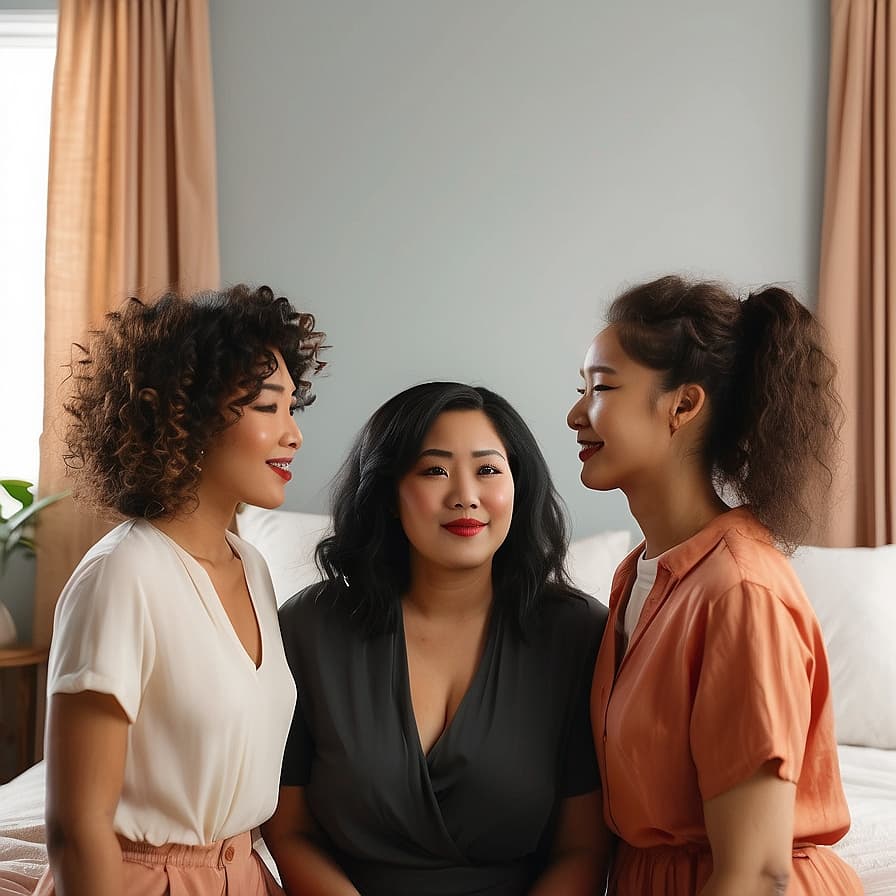
Generate Karen AI Content
Use this ethnicity's phenotype data to create AI-generated content with accurate physical traits and cultural context.
Open Creator Studio