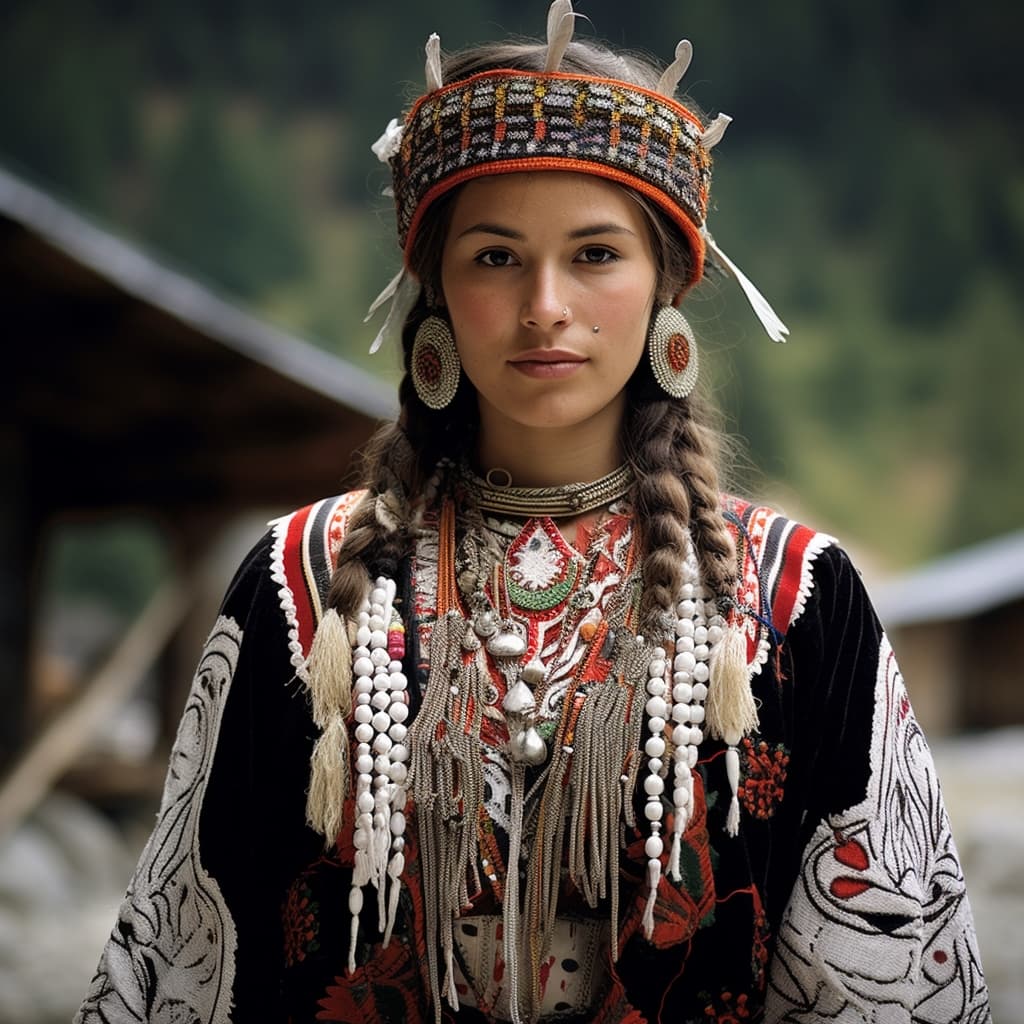
Kanaks Erotic
Kanakia (France)
Austronesian / Kanak
Christianity / Catholicism
Haveke, Ajië, Arhâ, Xârâgurè, Haeke
Southeast Asia
About Kanaks People
The Kanaks are the indigenous Melanesian people of New Caledonia — the archipelago they call Kanaky, a French overseas territory roughly 1,200 kilometres east of Australia. They have lived on Grande Terre and the Loyalty Islands for at least three thousand years, long before the French annexation of 1853 turned the territory into a penal colony and, later, a settler society built on nickel. That history is not background. It shapes everything about how Kanaks present themselves today: as a first people whose claim to the land precedes the state administering it, and whose political status remains contested through three independence referendums held between 2018 and 2021.
There is no single Kanak language. Roughly thirty distinct tongues — Drehu, Nengone, Paicî, Ajië, Xârâcùù, and others, including the Haveke, Arhâ, Xârâgurè and Haeke spoken by smaller communities — belong to the Oceanic branch of Austronesian, the same vast family that runs from Madagascar to Easter Island. Each language tends to map onto a customary area, and the customary areas are the durable unit of Kanak society: eight of them, recognised by the territory's institutions, organising chieftaincies, land tenure, and the senate of customary chiefs that sits alongside the elected congress. French is the lingua franca that ties the whole thing together, but a Kanak's first allegiance is usually to clan and customary area, not to a pan-Kanak identity — that identity is itself a political construction, forged in the independence movement of the 1970s and 80s.
Most Kanaks are Christian, the result of nineteenth-century Catholic and Protestant missions, with the eastern coast and Loyalty Islands leaning Protestant and the west largely Catholic. Christianity sits comfortably alongside the older order rather than displacing it: ancestors, totemic clans, and the protocols of la coutume — the formal exchange of gifts (yams, cloth, money) that opens any significant social transaction, from a marriage to a condolence visit — remain the architecture of daily life. The yam itself carries weight beyond food; its planting calendar still structures the ceremonial year in many valleys. Kanak material culture is best known abroad through the soaring carved flèches faîtières that crown the great houses, and through the woven money and shell strings that circulate in customary exchange — objects that are not folklore but functioning instruments of social obligation.
Typical Kanaks Phenotypes
Reference for AI generation — hair, eyes, skin, facial structure, build
Kanaks are the indigenous Melanesian people of New Caledonia, and their phenotype reflects the deep Melanesian baseline of the western Pacific rather than the Polynesian or Southeast Asian patterns sometimes assumed from the regional label. The structural signature is dark skin paired with naturally tightly coiled hair — a combination that distinguishes Melanesians from neighboring Austronesian-speaking populations despite the shared language family.
Hair is typically Type 4 — densely coiled, springy, often worn in a high natural halo or shaped Afro. Color sits in the deep brown to black range, and Kanaks are part of the Melanesian population famous for the genuine blond and honey-brown hair that appears in a meaningful minority of children and some adults, produced by a TYRP1 variant unique to this region rather than European admixture. Texture remains coiled regardless of color.
Eyes are usually deep brown to near-black, almond-shaped, with no epicanthic fold — the lid morphology is open and rounded, closer to African or Papuan patterns than to East or Southeast Asian ones. Brows are strong and often heavy.
Skin spans Fitzpatrick V to VI, with warm reddish-brown to deep umber undertones. Coastal communities trend slightly darker through sun exposure; Grande Terre interior populations show the same baseline range.
Facial structure carries the Melanesian profile: a broad nose with low-to-medium bridge and wide alae, full and well-defined lips, prominent cheekbones, and a square or moderately broad jaw. The midface tends to project forward more than in Polynesian neighbors.
Build is typically medium-height and solidly constructed — adult men commonly 168–175 cm, women 158–165 cm — with broad shoulders, muscular limbs, and a tendency toward stocky, powerful proportions rather than lean ones. Rugby's grip on the territory reflects this build.
Sub-group variation among the Haveke, Ajië, Arhâ, Xârâgurè, and Haeke is primarily linguistic and territorial; phenotype differences across these branches are subtle, mostly minor shifts in average stature and facial breadth between coastal and interior valleys.
Data depth
0/100Coverage of image-grounded phenotype observations · drives AI generation diversity
- Sample size
- 0/40· 0 images
- Image quality
- 0/30· 0% high
- Confidence
- 0/20
- Source diversity
- 0/10
- ·No image observations yet
Explore phenotype categories
Structured taxonomy with peer-reviewed scales · 22 anatomical categories






Generate Kanaks AI Content
Use this ethnicity's phenotype data to create AI-generated content with accurate physical traits and cultural context.
Open Creator Studio