
Itawes Erotic
Cagayan Valley (Philippines)
Austronesian / Philippine / Cordilleran / Itawis
Christianity / Catholicism
Southeast Asia
About Itawes People
The Itawes are a lowland people of the middle Cagayan Valley in northern Luzon, concentrated in the towns along the Chico and Matalag rivers — Tuao, Piat, Rizal, Sto. Niño — where the floodplain opens out before the Cordillera rises to the west. They take their name from the river itself: i-tawa, "those of the Tawa," the old term for that stretch of water. To outsiders they are often grouped together with the more numerous Ibanag downstream, and the two languages are close enough that speakers can usually follow each other with effort, but Itawes is its own tongue inside the Cagayan branch of the northern Philippine languages, holding onto vowel and consonant patterns the Ibanag have shed.
Catholicism arrived early and stuck. Dominican missionaries reached Piat in the seventeenth century and built the shrine of Our Lady of Piat, a small dark image of the Virgin that has since become the most visited Marian site in the Cagayan Valley; the July fiesta still pulls pilgrims from across the north, and for many Itawes families the trip to Piat is the fixed point of the religious calendar rather than Christmas or Holy Week. The faith is layered over older practice in the usual Philippine way — a quiet attentiveness to ancestors, to the dead in the house, to the unseen tenants of riverbanks and old trees — but the surface is unambiguously Catholic, and the parish church is the social center of the town.
Itawes life is agricultural and riverine. Wet rice in the lowlands, corn and tobacco on the higher ground, freshwater fish out of the Chico — Cagayan tobacco shaped the local economy under the Spanish monopoly and the residue of that history is still visible in the field patterns and the older houses. The cuisine leans on what the river and the rice paddy give: pancit batil patung from neighboring Tuguegarao has spread into Itawes kitchens, and the regional taste for carabao meat, bitter melon, and strongly soured broths runs through home cooking. Conversation moves easily between Itawes at home, Ilocano in the market — Ilocano migration into Cagayan was heavy through the twentieth century — and Filipino or English in school. The result is a people thoroughly embedded in lowland Christian Luzon, but distinct enough in language and devotional life that "Itawes" still answers a real question about who someone is.
Typical Itawes Phenotypes
Reference for AI generation — hair, eyes, skin, facial structure, build
The Itawes are a lowland Cagayan Valley people whose phenotype sits squarely within the northern Luzon Filipino spectrum, but with the slightly heavier, broader-featured cast typical of valley populations along the Rio Grande de Cagayan rather than the finer-boned look of nearby Cordilleran highlanders. Hair is uniformly black to very dark brown, straight to gently wavy, with a thick, coarse shaft that holds shape well; the loose curl seen in some Visayan or southern Filipino populations is rare here. Premature graying is common by the late forties.
Eyes run dark brown to near-black, set with a near-universal epicanthic fold and a single eyelid in roughly half the population — the double crease is common but not dominant. Eye shape tends almond and moderately deep-set, less hooded than among Han or Korean populations. Skin tone spans Fitzpatrick III to V, clustering around a warm light-to-medium brown with yellow-to-olive undertones; farmers and tobacco workers in the valley sun deepen toward a coppery brown that reads noticeably darker than urban Manileños of the same heritage.
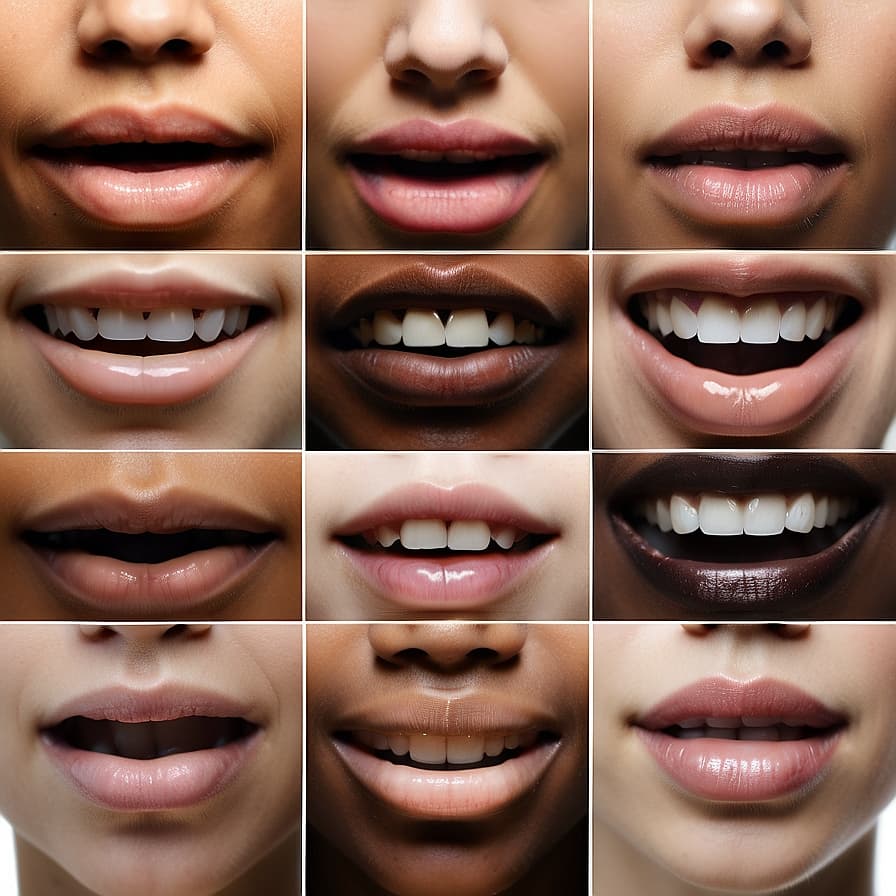
Facial structure is the most distinguishing register. Noses are short with a low-to-medium bridge and a moderately wide alar base — broader than the typical Ilocano nose but not as wide as among Aeta or Lumad groups. Lips are medium-full, the lower lip often slightly fuller than the upper. Cheekbones are prominent and laterally set, giving a wide midface, while the jaw tapers to a softer, rounded chin rather than a defined angle. Faces read as broad rather than long.
Build is compact and stocky relative to other Filipino lowlanders. Average male stature lands around 162–165 cm, female around 150–153 cm, with shorter limbs in proportion to torso and a tendency toward muscular density in the shoulders and thighs from generations of agricultural work. Body hair is sparse; facial hair in men is light and slow to fill in. The Itawes register as broader, sturdier, and warmer-toned than their Ibanag and Ilocano neighbors, while remaining unmistakably within the northern Luzon phenotype.
Data depth
0/100Coverage of image-grounded phenotype observations · drives AI generation diversity
- Sample size
- 0/40· 0 images
- Image quality
- 0/30· 0% high
- Confidence
- 0/20
- Source diversity
- 0/10
- ·No image observations yet
Explore phenotype categories
Structured taxonomy with peer-reviewed scales · 22 anatomical categories





Generate Itawes AI Content
Use this ethnicity's phenotype data to create AI-generated content with accurate physical traits and cultural context.
Open Creator Studio