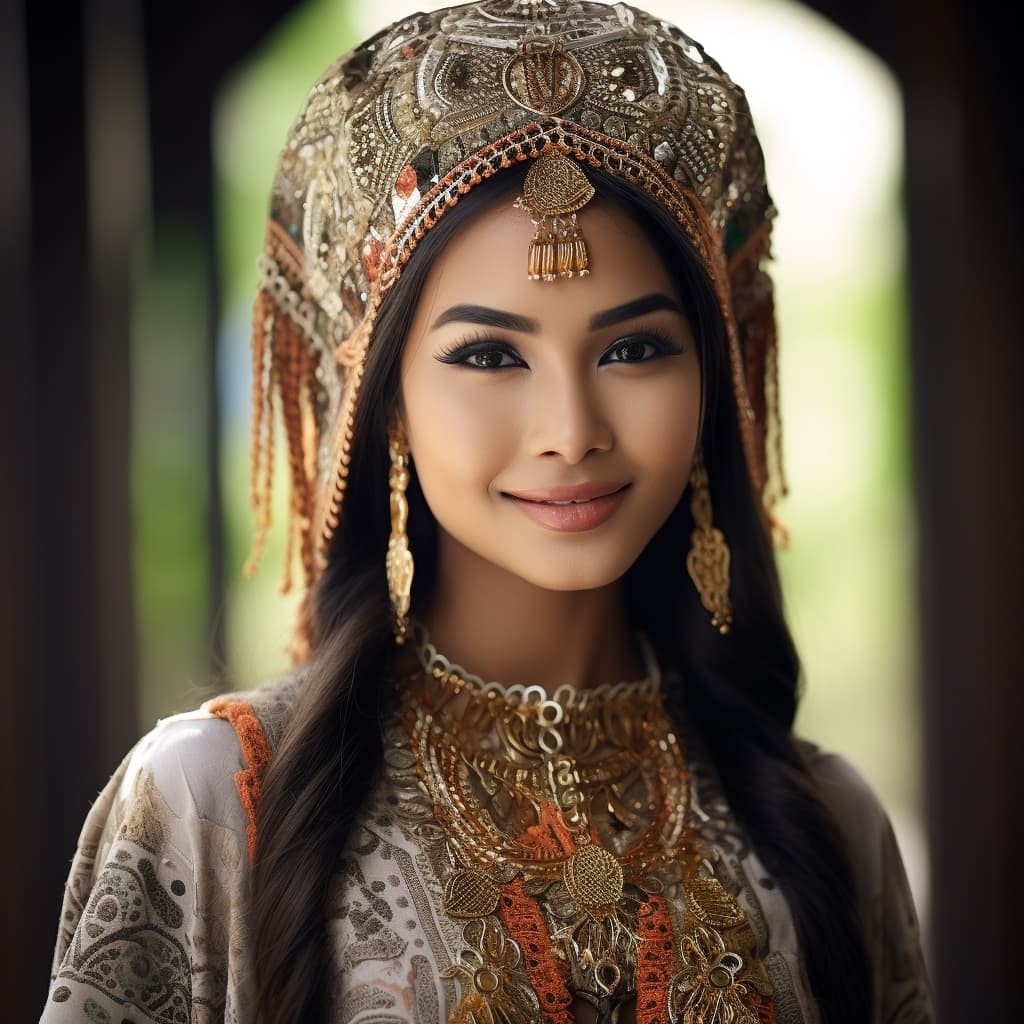
Gayonese Erotic
Indonesia (Bener Meriah, Central Aceh, and Gayo Lues Regencies)
Austronesian / Northwest Sumatra–Barrier Islands / Gayo
Islam
Southeast Asia
About Gayonese People
The Gayonese live in the highlands of Aceh, in the cool interior valleys around Lake Laut Tawar — a different Sumatra from the coastal one most outsiders picture. Their territory sits inland from the Acehnese plain, ringed by mountains that long made the highlands a world apart from the trading ports below. That isolation shaped almost everything: a distinct language, a strong sense of being neither Acehnese nor Batak nor Malay, and a quiet pride about it.
Their language, Gayo, is Austronesian but sits awkwardly inside its family. Linguists place it in the Northwest Sumatra–Barrier Islands branch, distantly related to Batak and the languages of Nias and Mentawai rather than to Acehnese or standard Malay. Speakers maintain it alongside Indonesian and, in the lowland-facing areas, Acehnese. There are recognized sub-groups — Gayo Lut around the lake, Gayo Deret to the east, Gayo Lues to the south — with dialect differences sharp enough that locals can usually place a stranger's home valley after a few sentences.
Islam is the universal religious frame and has been since the seventeenth century, when the Sultanate of Aceh's reach pulled the highlands into the Muslim world. But Gayonese practice carries its own texture. Adat — customary law governing land, marriage, inheritance, and dispute — runs in parallel with sharia rather than under it, and elders still arbitrate matters that elsewhere would go to a court or a mosque council. The two systems coexist without much fuss; Gayonese tend to describe themselves as Muslim and adat-keeping in the same breath.
The cultural signature outsiders remember is the saman, the seated dance from Gayo Lues — rows of men in tight formation, clapping chests and thighs in interlocking rhythms that accelerate to something close to physical impossibility. UNESCO listed it as intangible heritage in 2011, and the recognition turned a village ritual into a national export, with all the strain that implies. At home it remains tied to weddings, holidays, and the long evenings of Ramadan rather than to the stage.
Economically the highlands run on coffee. Gayo arabica, grown on smallholder plots above a thousand meters, is one of Indonesia's premium exports and the backbone of household income across the three regencies. The Free Aceh conflict of 1976–2005 reached the highlands but did not define them in the way it did the coast; the post-conflict decades have been quieter, focused on coffee prices, road access, and the slow negotiation between adat councils and provincial sharia rules.
Typical Gayonese Phenotypes
Reference for AI generation — hair, eyes, skin, facial structure, build
The Gayo are a highland Austronesian people of the Aceh interior, and their phenotype reflects that geography: they read as recognizably Sumatran but consistently lighter, finer-featured, and more gracile than the coastal Acehnese or Batak populations that ring them. Centuries of relative isolation in the Gayo highlands around Lake Laut Tawar produced a fairly cohesive look rather than the heavy admixture seen on Sumatra's trade coasts.
Hair is almost uniformly black or near-black, straight to gently wavy, with the soft, fine-shafted texture typical of mainland-derived Austronesian populations — heavier and glossier than Han East Asian hair, but without the dense coil seen further south in Nusa Tenggara. Premature graying is unremarkable; true brown or auburn tones do not occur natively.
Eyes are dark brown to near-black. The epicanthic fold is present in most individuals but tends to be lighter and more variable than in northern East Asian groups — many Gayo show a partial or "half" fold, and a minority lack it entirely, giving the eye a more open, almond-rounded shape than a Javanese or Chinese-Indonesian comparison would suggest.
Skin sits in the Fitzpatrick III–IV range, generally a warm honey-to-light-brown with yellow rather than red undertones. Highland Gayo skew lighter than lowland Acehnese neighbors — a difference locals themselves remark on. Sun exposure from coffee farming weathers the IV end toward a deeper bronze on forearms and faces while torsos remain noticeably paler.
Facial structure is the group's most distinctive register: a relatively narrow, straight nasal bridge with a moderate, non-flared alar base; medium lip fullness without the heavier eversion seen in Melanesian-influenced eastern Indonesians; and high but softly contoured cheekbones over a tapered jaw. The overall facial impression is finer-boned and more sharp-featured than the average Sumatran.
Build is small to medium — adult men commonly 160–168 cm, women 150–158 cm — with lean, wiry proportions, modest shoulder width, and low typical body fat shaped by generations of upland agricultural labor.
Data depth
0/100Coverage of image-grounded phenotype observations · drives AI generation diversity
- Sample size
- 0/40· 0 images
- Image quality
- 0/30· 0% high
- Confidence
- 0/20
- Source diversity
- 0/10
- ·No image observations yet
Explore phenotype categories
Structured taxonomy with peer-reviewed scales · 22 anatomical categories






Generate Gayonese AI Content
Use this ethnicity's phenotype data to create AI-generated content with accurate physical traits and cultural context.
Open Creator Studio