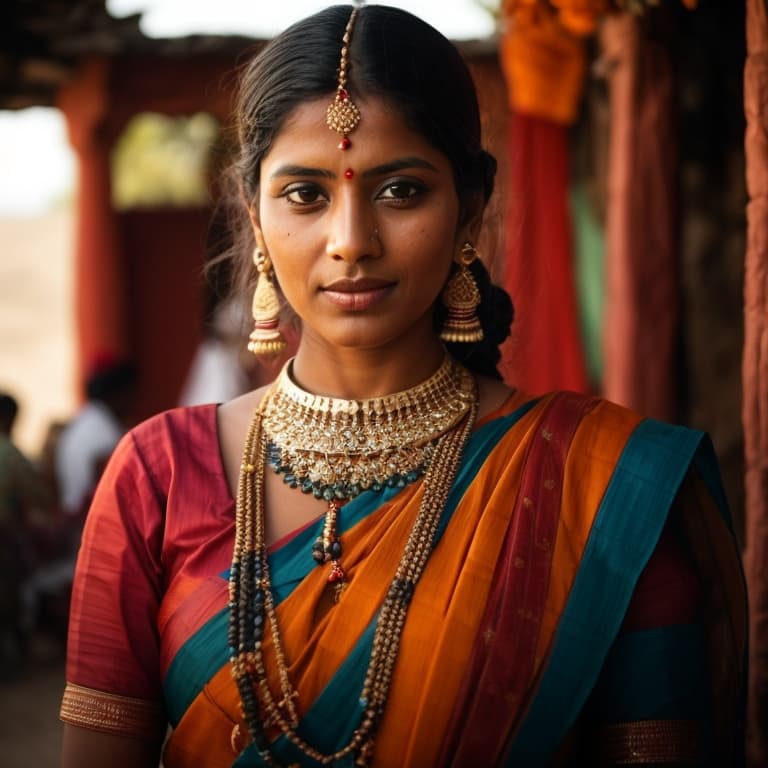
Dubla Erotic
Gujarat (India)
Indo-European / Indo-Aryan / Bhil / Dubli
Hinduism
Southern Asian
About Dubla People
The Dubla are a Scheduled Tribe of southern Gujarat, concentrated in the coastal districts of Surat, Valsad, and Navsari, with smaller populations in the union territories of Dadra and Nagar Haveli and Daman and Diu. They sit within the broader Bhil cluster of western India, but their distinct identity is shaped by something most Bhil groups don't share: a long history as a settled, agriculturally bound population on the fertile plains rather than a forest-interior people. For generations the Dubla worked as halis — bonded agricultural laborers — under a system called halipratha, which tied families to landlord households across generations. The system was formally abolished after independence, but its social residue is part of why the community remains economically vulnerable and why so much Dubla activism over the last half-century has centered on land, wages, and debt rather than on cultural recognition alone.
Their language, Dubli, belongs to the Bhil subgroup of Indo-Aryan and behaves as most Bhil tongues do — heavily influenced by surrounding Gujarati, with enough divergence in vocabulary and grammar to mark its speakers as outsiders to mainstream Gujarati society. In practice many Dubla today are bilingual, and Dubli is increasingly a household language while Gujarati handles school, market, and administrative life. There are recognized internal divisions, the Talavia and Halpati being the most commonly cited, with Halpati now functioning as a preferred self-designation for many in the community because it carries less of the older caste-coded weight than Dubla does.
Religious life is Hindu in affiliation but textured by tribal practice. Village deities, ancestor observance, and possession-mediated healing coexist comfortably with the broader Hindu calendar; the line between folk religion and orthodox practice is porous and not particularly contested. Marriage tends to be within the community and negotiated rather than arranged in the north Indian sense, with bride-price still common where dowry has displaced it among neighboring groups. Funerary practice mixes cremation with older burial customs depending on locality. The Dubla are not a community with a high public profile outside Gujarat — there is no diaspora literature, no cinematic moment, no cultivated heritage industry — and that relative quietness is itself part of how they're situated: a working population on some of the richest agricultural land in India, still negotiating the terms of full economic citizenship.
Typical Dubla Phenotypes
Reference for AI generation — hair, eyes, skin, facial structure, build
The Dubla are a Bhil-descended Adivasi community concentrated in coastal south Gujarat — Surat, Valsad, Navsari, and the Dangs — and their phenotype reads as classically tribal western Indian: smaller-framed, darker-skinned, and morphologically distinct from the Patel and Bania populations that surround them in the same districts. Generations of agricultural labor in the Gujarat coastal belt have pushed and held skin tone toward the deeper end of the Indian range.
Hair is uniformly black, occasionally dark brown in strong sun, with no native variation toward lighter shades. Texture is most often straight to gently wavy and medium-thick; tight curls are rare. Greying tends late, and male-pattern recession is moderate rather than early. Eyes are dark brown to near-black, with the warm reddish-brown undertone common across Bhil populations; epicanthic folds are absent, and eye shape is almond to slightly rounded with notably thick lashes. Light eyes do not occur natively.
Skin sits in Fitzpatrick IV–V, with a meaningful share of working-age adults reading as solid V — distinctly darker than the Gujarati mercantile-caste average and closer to Dravidian-belt tones than to north-Gujarati ones. Undertones are warm — olive-bronze through reddish-brown — and sun exposure deepens rather than reddens.
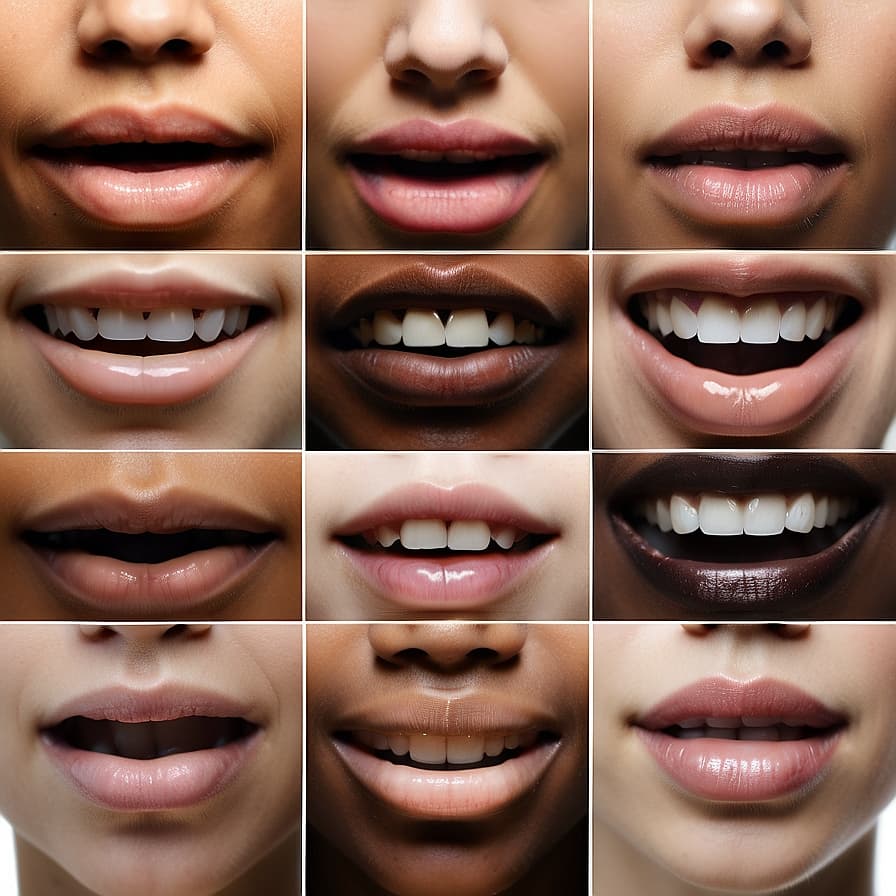
Facial structure is the clearest tribal marker: a broader nose with a low-to-medium bridge and noticeably wider alae than in upper-caste Gujarati neighbors, full but not everted lips, a relatively short midface, and rounded rather than sharply angular cheekbones. Jawlines are soft in women and squared but not heavy in men. Foreheads are moderate, brows full and straight.
Build is small and wiry. Adult male stature typically falls in the 158–168 cm range and female in 148–157 cm — meaningfully shorter than the Gujarati state average. Frames are narrow-shouldered with low body fat, lean musculature from manual and agricultural work, and a tendency toward compact proportions rather than long-limbed ones. Subgroup variation across Halpati, Talavia, and Dubla proper is minor and largely indistinguishable on phenotype alone.
Data depth
0/100Coverage of image-grounded phenotype observations · drives AI generation diversity
- Sample size
- 0/40· 0 images
- Image quality
- 0/30· 0% high
- Confidence
- 0/20
- Source diversity
- 0/10
- ·No image observations yet
Explore phenotype categories
Structured taxonomy with peer-reviewed scales · 22 anatomical categories


Generate Dubla AI Content
Use this ethnicity's phenotype data to create AI-generated content with accurate physical traits and cultural context.
Open Creator Studio