Copts Erotic
Egypt
Afroasiatic / Coptic
Christianity / Coptic Orthodoxy
Sudan and Libya along with the Coptic diaspora
Northern Africa
About Copts People
The Copts are Egypt's Christian community, and the thread that connects modern Egypt back to its pre-Arab, pre-Islamic past more directly than any other living population. The name itself is a clue: "Copt" derives from the Greek Aigyptios, meaning simply "Egyptian." For most of the first millennium they were Egypt; today they are a minority of roughly ten percent in their own homeland, the largest Christian population in the Middle East.
Their language tells the same story. Coptic is the final stage of the Egyptian language — the tongue of the pharaohs, written in a Greek-derived alphabet with a handful of extra letters carried over from demotic script. As a spoken everyday language it died out, slowly, between roughly the 13th and 17th centuries, replaced by Arabic. But it survives as the liturgical language of the Coptic Orthodox Church, which means an Egyptian priest reading the Divine Liturgy is, at moments, using vocabulary that would not have been alien to a scribe at Karnak. Few living traditions have that kind of continuity.
Coptic Orthodoxy is itself a distinct branch of Christianity, separated from the Eastern Orthodox and Roman Catholic worlds after the Council of Chalcedon in 451 over questions about the nature of Christ. The Church traces its founding to Saint Mark in Alexandria, and it is the institution around which Coptic identity has consolidated through fourteen centuries of life under successive Muslim rulerships. Monasticism in the Christian world essentially begins here — the desert fathers of the Egyptian wilderness, Anthony and Pachomius, set the template that European monastic orders would later inherit.
Daily Coptic life carries markers that have hardened into identity over generations: a small cross tattooed on the inside of the right wrist, often given in childhood; fasting calendars that cover more than half the year, with abstention from animal products during the major fasts; saint's days observed at a household level. Communities outside Egypt proper — in Sudan, in Libya, and in a substantial diaspora across North America, Europe, and Australia — keep church attendance and Coptic-language instruction central to second-generation life in a way that is not always typical of immigrant Christian populations.
They are, to put it plainly, a people who have spent two thousand years declining to disappear, and who treat that endurance not as a political claim but as a quiet liturgical fact.
Typical Copts Phenotypes
Reference for AI generation — hair, eyes, skin, facial structure, build
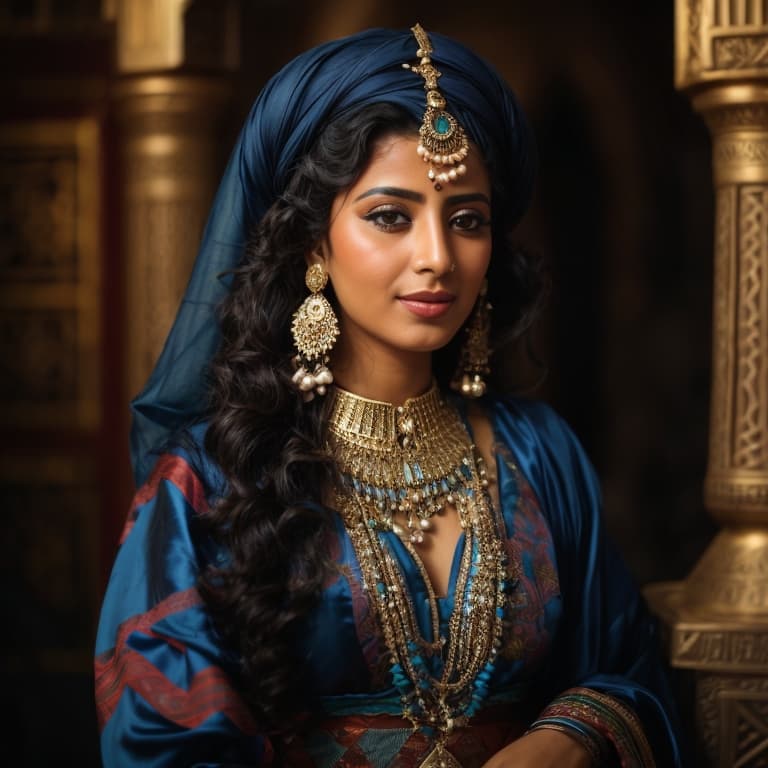
Copts represent one of the oldest continuous populations in the Nile Valley, and their phenotype reflects that deep continuity — closer to the ancient Egyptian substrate than to the later Arab influx that reshaped the surrounding population. The result is a North African Mediterranean look with subtle Sub-Saharan and Levantine threads, distinct enough that Copts often recognize one another on sight in mixed Egyptian crowds.
Hair is overwhelmingly dark — black to dark brown — with a wave-to-loose-curl texture being the most common pattern. Tight coils appear at low frequency, more often in Upper Egyptian and Sudanese Coptic lines. Body and facial hair growth is moderate to heavy in men, consistent with broader Mediterranean patterns. Eyes run dark brown to near-black in the strong majority, with hazel and lighter brown surfacing occasionally; green and blue are rare but documented. The eye shape is almond, often deep-set under a defined brow ridge, with no epicanthic fold.
Skin tone clusters in Fitzpatrick III–IV — olive to light-medium brown with warm golden or yellow-olive undertones rather than the pinker undertones of European Mediterraneans. Upper Egyptian and Sudanese Copts shade toward IV–V, retaining a deeper tan-brown base. Facial structure tends toward oval-to-long faces with high, fairly narrow nasal bridges and moderate alar width — the same nose form repeatedly preserved on pharaonic-era portraiture. Lips are medium-full, neither thin nor markedly everted. Cheekbones are present but not high-set in the East Asian sense; the jawline is typically defined rather than square.
Build runs lean to medium for both sexes, with average male stature around 170–172 cm and a tendency toward slim shoulders and longer torsos rather than heavy musculature — visible in figures like footballer Hany Ramzy. Diaspora Copts in North America and Australia carry the same core phenotype, while the Sudanese branch shows the clearest darkening of skin and tightening of hair texture, and the Libyan branch occasionally shows lighter eyes and a slightly fairer skin range.
Data depth
64/100Coverage of image-grounded phenotype observations · drives AI generation diversity
- Sample size
- 28/40· 23 images
- Image quality
- 26/30· 52% high
- Confidence
- 10/20· mean 0.56
- Source diversity
- 0/10· wikipedia
- ·Modest sample (n<25)
- ·Wikipedia-only source — not population-representative
Observed Distribution — Image Sample
Empirical observations from analyzed photographs · supplementary signal, not population truth
Sample: 23 images analyzed (23 wikipedia). Quality: 12 high, 7 medium, 4 low, 0 very_low. Avg analyzer confidence: 0.56.
Skin tone (Fitzpatrick): II (13%), III (35%), IV (22%), V (4%), unclear (26%)
Hair color: gray/white (52%), black (17%), light/medium brown (9%), other (9%), red/auburn (4%), unclear (9%)
Hair texture: straight (22%), wavy (30%), curly (4%), coily (4%), bald (4%), covered (22%), unclear (13%)
Eye color: dark brown (57%), other (4%), hazel (4%), unclear (35%)
Epicanthic fold: 0% present, 83% absent, 17% unclear
Caveats: Sample size 23 is modest — secondary patterns may not be reliable. Sample is 100% Wikipedia notable people — skews toward male, public-life, and modern figures, not population-representative.
Last aggregated: May 7, 2026
Explore phenotype categories
Structured taxonomy with peer-reviewed scales · 22 anatomical categories
Notable Copts People
36 reference figures — sourced from Wikipedia
- Coptic — Literature Coptic Copto-Arabic
- North America — United States (churches), Canada (churches))
- Australia — churches)
- Africa — Sudan, Libya)
- Protestantism — Evangelical Church
- Ash Atalla — British television producer
- Henry Barakat — director
- Khairy Beshara — director
- Asaad Kelada — Hollywood director
- Sandra Nashaat — director
- Yousry Nasrallah — director
- Daoud Abdel Sayed — film director
- Nabila Erian — Opera singer
- Nader Anise — founder of Coptic American Chamber of Commerce (Coptic Chamber) and attorney
- Monir Fakhri Abdel Nour — banker and businessman
- Fayez Sarofim — billionaire, Houston financier
- Onsi Sawiris — founder of Orascom Group, Patrick of Sawiris Family
- Naguib Sawiris — one of the wealthiest 100 people worldwide
- Samih Sawiris — Orascom Tourism
- Nassef Sawiris — Orascom Construction & Industrial. The richest man in Egypt
- Anthony the Great — founder and pioneer of Christian monasticism
- Athanasius the Apostolic — 20th Pope of Alexandria
- Cyril I — 24th Pope of Alexandria
- Dioscorus the Great — 25th Pope of Alexandria
- Pope Cyril VI — 116th Pope of Alexandria
- Pope Shenouda III of Alexandria — 117th Pope of Alexandria
- Origen — Christian scholar
- George Habib Bebawi — Patrologist and Biblical scholar
- Gerges Magdy — football player (ENPPI Sporting Club)
- Hany Ramzy — football player (Egypt national football team)
- Charlotte Wassef — Miss Egypt 1934 and Miss Universe 1935
- Meriam George — Miss Egypt 2005
- Nick Kaldas — retired Deputy Commissioner
- Fathia Nkrumah — wife of Kwame Nkrumah, Ghana's first president, born Fathia Rizk
- Lara Debbane — Miss Egypt 2014
- Thutmose Kamel Gabrial — Egyptian military pilot


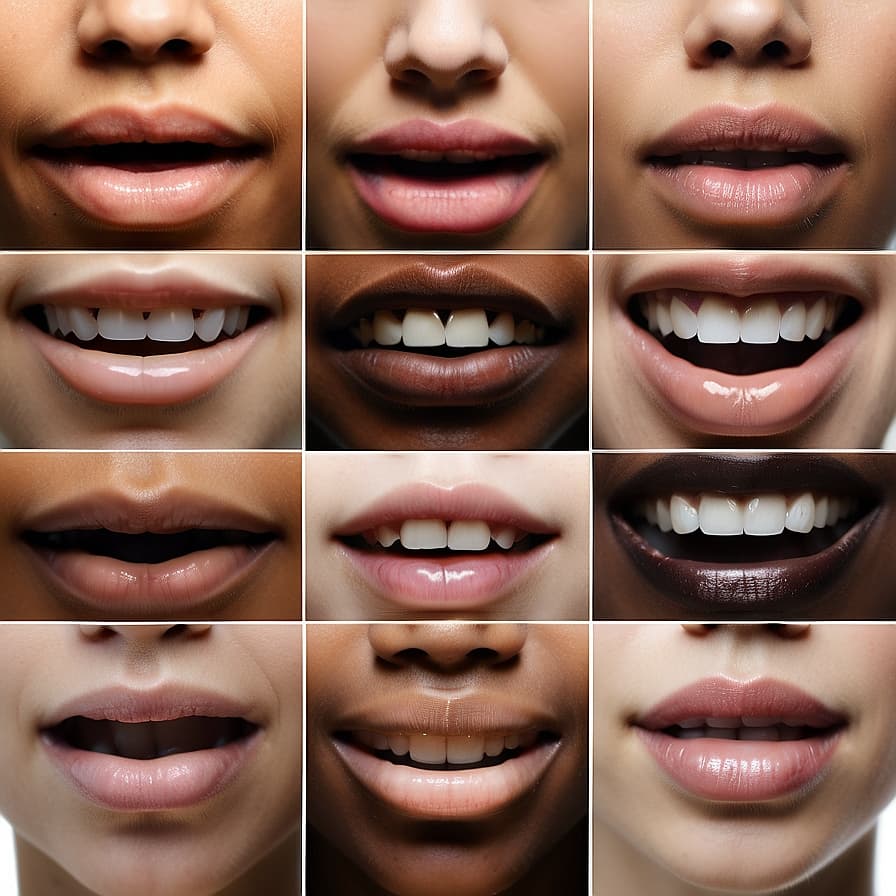
Generate Copts AI Content
Use this ethnicity's phenotype data to create AI-generated content with accurate physical traits and cultural context.
Open Creator Studio