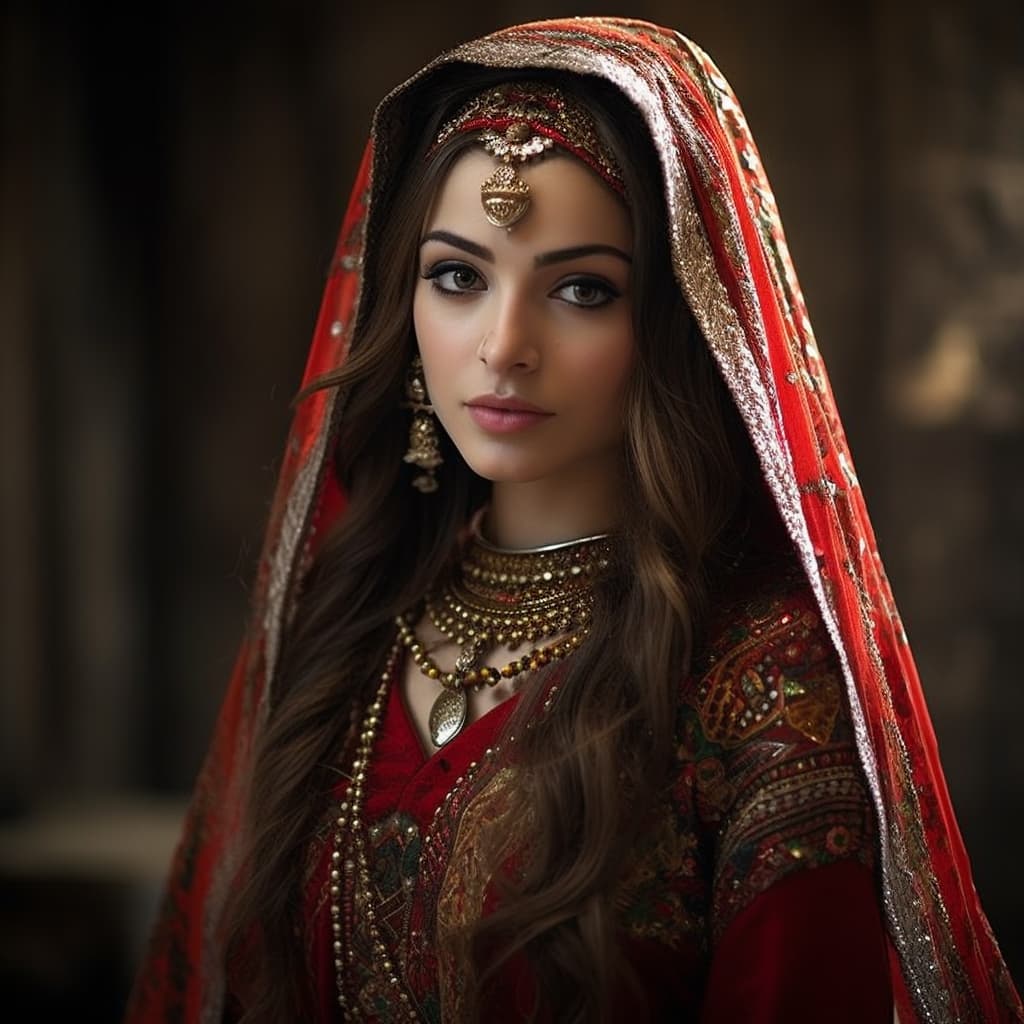
Semnanis Erotic
Semnan, Iran
Indo-European / Iranian languages / Western Iranian / Semnani
Islam / Shia Islam
Central Asia
About Semnanis People
The Semnanis are a small Iranian people clustered around the city of Semnan and the surrounding villages along the southern slope of the Alborz, where the mountains drop into the salt desert of the Dasht-e Kavir. That hinge between two extreme landscapes — snowmelt above, bone-dry plain below — has shaped how they live: irrigation by qanat, gardens of pomegranate and pistachio worked against the desert, and a long history as a waystation on the Khorasan road that ran from Tehran toward Mashhad and beyond.
What sets them apart linguistically is sharper than their geography suggests. Semnani is a Western Iranian language, but it sits oddly among its relatives. It is not Persian, and a Tehrani visitor will not follow it. It preserves grammatical features — including remnants of grammatical gender and a case-like distinction in pronouns — that mainstream Persian shed centuries ago, which has made it a recurring object of interest for Iranian linguists. The Semnani group is usually treated as a small cluster of closely related tongues spoken across a handful of nearby towns — Sangsari, Sorkhei, Lasgerdi, Aftari — each with enough divergence that speakers from neighboring villages notice the seams. Persian is the language of school, work, and television; Semnani is the language of the household and the older generation, and like many minority Iranian languages it is under quiet pressure.
Religiously the Semnanis are Twelver Shia, in line with the Iranian mainstream, and the city's calendar runs on the same Muharram processions and Ramadan rhythms found across the country. The region carries some weight in the history of Iranian Sufism — Semnan was the home of the fourteenth-century mystic Ala al-Dawla Simnani, whose writings on the stages of the inner journey still circulate — but day-to-day practice is the ordinary observance of a provincial Iranian town rather than anything self-consciously esoteric.
One useful internal distinction worth knowing: the Sangsaris, centered on the highland town of Sangsar (now Mahdishahr) just north of Semnan, are traditionally transhumant pastoralists who move large flocks between summer pastures in the Alborz and winter grounds further south. They speak their own variant, keep a reputation across Iran as serious sheep-and-goat people, and supply a meaningful share of the country's red meat. The settled Semnanis of the city below and the herding Sangsaris above are part of the same linguistic family but live quite different lives.
Typical Semnanis Phenotypes
Reference for AI generation — hair, eyes, skin, facial structure, build
The Semnanis are a small Iranian-speaking population centered on Semnan city and the surrounding belt of villages on the southern edge of the Alborz range, where the mountains drop off into the Dasht-e Kavir. Their phenotype reflects that transitional geography — northern Iranian highland stock with measurable contact from Khorasani, Mazandarani, and Turkmen neighbors — rather than a single uniform look.
Hair runs dark brown to black across most of the population, with a meaningful minority of mid-brown and the occasional chestnut tone, particularly in older village lineages closer to the foothills. Texture is typically straight to loosely wavy; tight curl is uncommon. Body and facial hair on men is moderate to heavy, with full beards growing in densely and early. Eyes are predominantly brown — warm hazel to near-black — with green and grey-green appearing at low but visible frequency, more often among Sangsari and Sorkhei sub-groups in the mountain villages. The epicanthic fold is essentially absent; eye shape is almond, often deep-set under a defined brow ridge.
Skin tone clusters in Fitzpatrick III–IV with olive and warm beige undertones; lighter II skins appear in the Alborz foothill subgroups, while darker IV tones are more common toward the desert edge. The kavir sun produces strong tanning patterns on exposed forearms and faces while torsos remain noticeably paler. Noses tend to be straight to convex with a defined bridge and a narrow-to-medium alar base — the so-called Iranid profile is well represented. Lips are medium in fullness, mouths moderate in width. Cheekbones sit high but not broad; jaws are firm and often slightly squared in men, tapering in women.
Build is medium-statured and wiry-to-mesomorphic — men commonly 168–175 cm, women 155–162 cm — with relatively long torsos and proportionate limbs. Sangsari highlanders skew slightly taller, fairer, and lighter-eyed than valley-floor Semnanis, a pattern locals themselves recognize.
Data depth
0/100Coverage of image-grounded phenotype observations · drives AI generation diversity
- Sample size
- 0/40· 0 images
- Image quality
- 0/30· 0% high
- Confidence
- 0/20
- Source diversity
- 0/10
- ·No image observations yet
Explore phenotype categories
Structured taxonomy with peer-reviewed scales · 22 anatomical categories






Generate Semnanis AI Content
Use this ethnicity's phenotype data to create AI-generated content with accurate physical traits and cultural context.
Open Creator Studio